Barcelona 2026: The Complete Guide to Gaudí's City
20 October 2026 · 14 min read

Antoni Gaudí was struck by a tram on the Gran Via on June 7, 1926, mistaken for a beggar in his shabby clothes, and died three days later. A century on, in 2026, Barcelona is throwing him a year-long party — and the headline is that the Sagrada Família has finally crowned its central Tower of Jesus Christ, pushing the basilica toward its planned 172.5-meter height and the title of tallest church in the world. If you have been putting off this trip, this is the year the skyline changes.
Barcelona is also a city that has grown tired of being loved to death. The council is phasing out tourist-apartment licenses (the plan is to scrap them entirely by 2028), the big-ticket Gaudí sites sell timed slots that vanish weeks ahead, and locals will happily point you away from the paella traps on La Rambla. None of that makes the city less worth it. It just means you plan: book the landmarks early, stay somewhere licensed, keep your phone out of your back pocket, and leave room for the parts of Barcelona that do not charge admission. Here is exactly how to spend three days doing that.
🏛️ Essential Experiences
La Sagrada Família
Gaudí's unfinished basilica is not a church you glance at — it is one you sit inside while the light moves. The forest of branching stone columns and the stained glass are the point: book a morning slot and the eastern windows throw cold blues and greens across the nave; a late-afternoon slot lights up the western reds and oranges. A standard ticket with the audio-guide app is €26 (about $28); adding a tower lift is €36 (~$39), a guided tour €30. Reduced entry is €24 for under-30s and students, €21 for seniors, free under 11.

Insider tip: Buy online two to four weeks ahead in peak season — this is the city's most oversubscribed ticket, and same-day entry is a fantasy from April to October. Grab the 9:00 slot to get a near-empty nave before the tour groups. The towers need the separate timed add-on and are worth it only if you like tight spiral staircases and queues; skip them and spend the money on more museums. Opening hours run 9:00–20:00 Mon–Fri April–September, trimming to 18:00 in winter, with Sundays opening at 10:30. Metro L2/L5 drops you at the door (Sagrada Família station).
Park Güell
Gaudí's failed housing estate became the city's most photographed park, and the Monumental Zone — the mosaic serpentine bench, the Dragon Stairway with its tiled salamander, the Hypostyle Hall — is where that story lives. Entry jumped to €18 (~$20) in 2025, up from €10, and it is timed and online-only; kids 7–12 and over-65s pay €13.50, under-7s free. It is open daily 9:30–19:30.

Insider tip: Book the 9:30 opening slot. Between roughly 11:00 and 15:00 the coach tours arrive and the Dragon Stairway becomes a selfie scrum. To get there, take the metro to Vallcarca and ride the outdoor escalators up, or — the lazier, flatter option — bus 24 to the Carmel entrance at the top, so you walk down through the park instead of up to it. The surrounding woodland with Gaudí's stone viaducts is free; only the Monumental core charges.
Casa Batlló
On Passeig de Gràcia, Casa Batlló is the one with the bone-shaped balconies and the scaled, iridescent roof — Gaudí's 1904 remodel of a dull apartment block into something that looks grown rather than built. The self-guided visit uses an augmented-reality tablet that reconstructs the rooms as they were furnished. Standard entry starts at €29 (~$32), and the evening ticket is the same price for a far quieter house.

Insider tip: Go at opening or take the evening slot — Casa Batlló is noticeably emptier after dark, and the facade is floodlit. The pricey early-access upgrade only makes sense if you are a photographer who needs clean rooms. Next door sits Casa Amatller and, a few doors up, La Pedrera — this stretch is the "Illa de la Discòrdia" (Block of Discord), and the exteriors cost nothing to admire from the pavement. Metro Passeig de Gràcia (L2/L3/L4).
La Pedrera (Casa Milà)
Two blocks north at Passeig de Gràcia 92, Casa Milà — everyone calls it La Pedrera, "the stone quarry" — is Gaudí's last secular building, a wave of grey limestone with no straight lines. The draw is the rooftop: a terrain of sculpted chimneys and vents, the espanta-bruixes ("witch-scarers"), that look like a stone-helmeted army. The day ticket is €29 (~$32); the Night Experience runs €39.50 (~$43) and puts you on that roof after dark with a projection show and a glass of cava.

Insider tip: The Night Experience is the version to book — the roof is the whole show, and having it under projections with cava beats shuffling through in the midday sun. If you go by day, aim for a weekday morning (last entry on the day ticket is 17:15) before the Gaudí circuit clogs up. Metro Diagonal (L3/L5) or FGC Provença.
Barcelona Cathedral & the Barri Gòtic
The Gothic Quarter is the medieval core, a tangle of stone lanes where you should deliberately get lost. The 14th-century Cathedral of Santa Eulàlia (La Seu) anchors it; its cloister keeps thirteen white geese, one for each year of the martyred saint's life. Entry is free during worship hours and a modest tourist-visit ticket covers the nave, cloister and the roof terrace at other times. The whole quarter costs nothing to wander.

Insider tip: Find Carrer del Bisbe for its photogenic neo-Gothic bridge — which, despite the medieval alley around it, was only added in 1928, so take the "ancient" captions with salt. Duck into Plaça Sant Felip Neri, where the church wall still carries shrapnel scars from a 1938 bombing, and Plaça Reial for its Gaudí-designed lampposts. This is prime pickpocket territory: keep your phone in a front pocket, especially on the adjacent La Rambla and in Plaça de Catalunya.
Museu Picasso & El Born
The Picasso Museum, spread across five medieval mansions on Carrer de Montcada in El Born, is not where you go for his famous Cubist canvases — it is where you see how he got there, with the largest collection of his early Barcelona work and the full series of his reinterpretations of Velázquez's Las Meninas. Entry is €14 online, €15 at the door (~$15), closed Mondays; the nearest metro is Jaume I (L4), three minutes away.
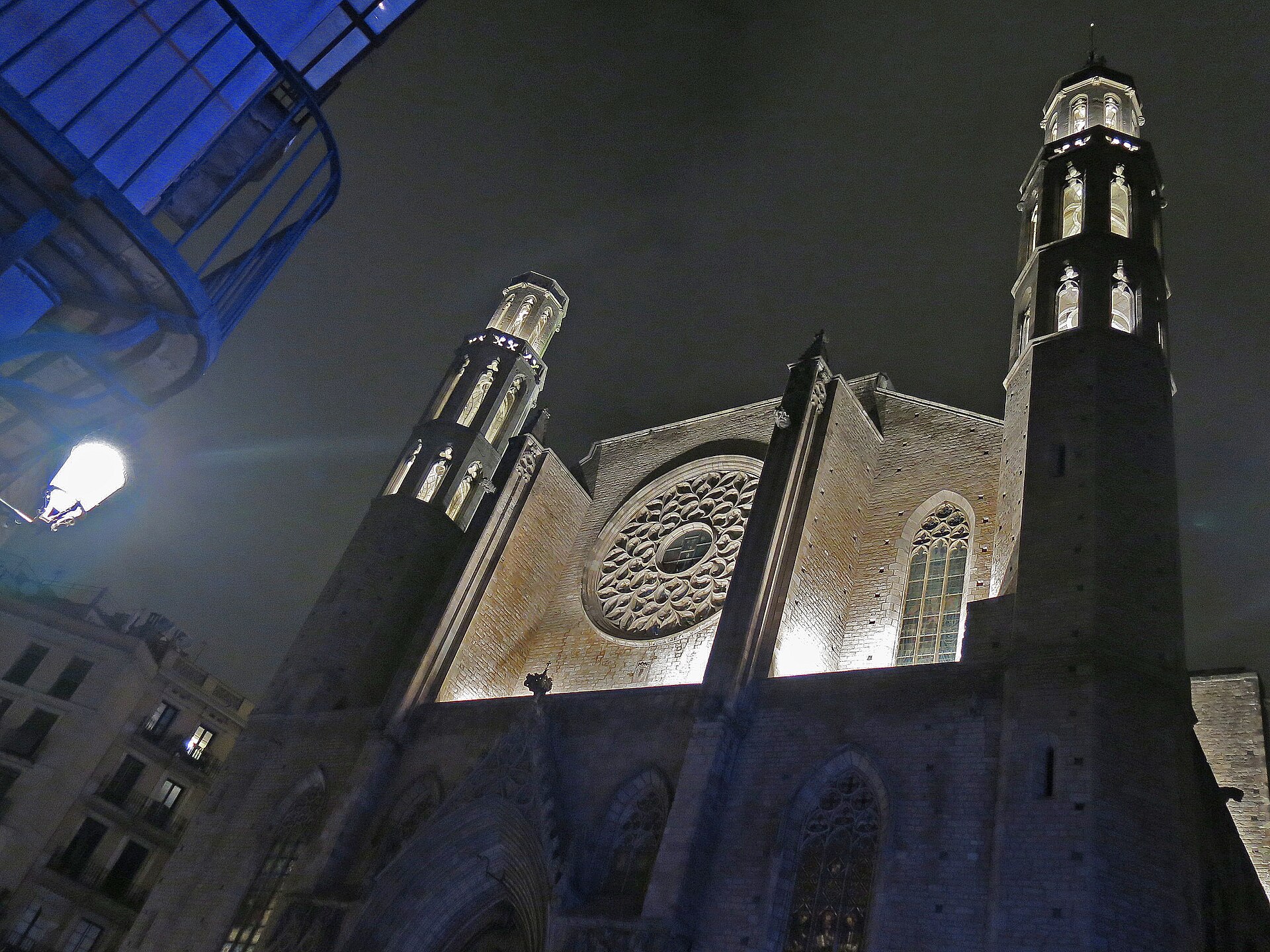
Insider tip: Entry is free Thursday to Saturday 19:00–21:00 and on the first Sunday of each month, but you still need an online reservation, which opens four days ahead at 10:00 Barcelona time — set an alarm, because those slots go fast. Afterward, walk two minutes to Santa Maria del Mar, the pure 14th-century "Cathedral of the Sea," free to step into outside tour hours, then grab a vermut on the Passeig del Born.
Montjuïc
The hill on the city's southwest side is a day's worth of sights stacked on one slope: the Museu Nacional d'Art de Catalunya (MNAC) in the domed Palau Nacional, with the world's best collection of Romanesque frescoes; the 1929 cascade and Magic Fountain below it; the Joan Miró Foundation; and the castle on top. The Telefèric de Montjuïc cable car is €17.10 round trip (~$19), €11.70 for kids, running from 10:00 (to 21:00 June–September, earlier in winter).

Insider tip: Ride the cable car up for the harbor panorama, then walk down past the castle (separate entry, bought at the gate). The Magic Fountain light-and-water show is free, Thursday to Saturday evenings (around 21:00 in October, 20:00 in November–December) — but it has been switched off repeatedly during Catalonia's droughts, so check barcelona.cat that it is actually running before you trek over. MNAC's front terrace gives you a free, sweeping view back over Plaça d'Espanya either way.
🗓️ A Three-Day Itinerary
Day 1 — The Old City
Start in the Barri Gòtic before the crowds: the Cathedral, then thread through the lanes to La Rambla and into the La Boqueria market for breakfast at El Quim's counter (a fried-egg-and-seafood plate runs about €12 / $13). Spend the late morning at the Picasso Museum (€14) in El Born, then let the afternoon dissolve into the neighborhood's boutiques and the Passeig del Born. In the evening, do a tapas crawl: house cava and anchovies at El Xampanyet, then sit-down croquetes at Bar del Pla. Reckon on €55–75 (~$60–82) per person for the day with food and one museum.
Day 2 — The Gaudí Circuit
Book the 9:30 slot at Park Güell and start uphill while it is cool and quiet. Mid-morning, cross the city to the Sagrada Família for a late-morning slot (metro L5 links them in about 25 minutes). Break for lunch, then walk Passeig de Gràcia in the afternoon, touring Casa Batlló and admiring La Pedrera's exterior. End with the La Pedrera Night Experience (€39.50) on the rooftop with cava. Big-ticket day: budget €95–120 (~$104–131) per person for the three paid sites plus food.
Day 3 — Montjuïc & the Sea
Take the metro to Paral·lel and the funicular up to Montjuïc: the cable car (€17.10), the castle, and an hour in MNAC (€12). Come down for the afternoon at Barceloneta, swapping the packed main beach for a spot further up toward Bogatell, with a stop at La Cova Fumada for the original bomba (a spiced potato-and-meat croquette, about €3, cash only). If the Magic Fountain is running, close the trip there after dark. Figure €50–70 (~$55–76) per person.
🧠 Essential Tips
When to go
The sweet spots are May and late September into October: daytime highs around 20–24°C (68–75°F), warm enough for terrace dinners, with thinner crowds and softer prices than summer. July and August are hot (highs near 28–30°C / 82–86°F), the most crowded, and the most expensive — fine if you are here for the beach, painful for queuing at Gaudí sites. Time your visit around a festival if you can: Sant Jordi (April 23), when the streets fill with book and rose stalls; Primavera Sound in late May/early June; and La Mercè around September 24, the city's patron festival with human towers, fire-running dragons and free concerts (book beds weeks ahead). All year, the 2026 Gaudí centenary adds extra programming across his buildings.
Getting around
Skip single tickets (€2.90 each) and buy a T-casual: 10 metro/bus journeys for about €13 (~$14), though note it is single-person and not valid at the airport metro stations. If you will ride a lot and want the airport metro included, the Hola Barcelona travel card starts around €12.50 for 48 hours. Download the official TMB app for tickets and live routing; locals pair it with Citymapper. From the airport: the Aerobús runs 24/7 to Plaça Catalunya in about 35 minutes (€7.75 single, €13.30 return); the R2 Nord train is cheaper at €4.60 but leaves only from Terminal 2; metro L9 Sud costs a special €5.90 airport fare; a taxi runs €30–45 with the airport surcharge. If you fly into T1 and want the train, take the free shuttle to T2 first.
Staying safe
Barcelona's problem is pickpockets, not violence — but the pickpockets are world-class. The hotspots are specific: La Rambla (distraction teams and phone grabs, all day), the metro at carriage doors on lines L1, L3 and L5 during the 8:00–9:30 and 17:00–20:00 crush, the Sagrada Família perimeter while you are lining up a photo, Barceloneta beach (bag and towel theft, 13:00–18:00 in summer), and La Boqueria's crowds. The classic moves are the bump-and-grab from behind, the bag lifted off the back of your café chair, and the phone plucked from a back pocket. Carry your bag in front, keep nothing in back pockets, and put your phone on a strap. Emergency number is 112.
What to eat
Beyond the Gaudí circuit, eat like it is the main event. Start with pa amb tomàquet (bread rubbed with tomato, garlic and oil), patatas bravas, esqueixada (salt-cod salad), and, in Barceloneta, the bomba. For a proper rice dish order fideuà (made with short noodles instead of rice) rather than the tourist-menu paella. Named spots worth your appetite: El Xampanyet in El Born for house cava at about €2.50 a glass and anchovies; Quimet & Quimet in Poble-sec for standing-only montaditos; Tapas 24 in the Eixample for Carles Abellan's truffle-and-ham "bikini" toastie; and La Cova Fumada for the bomba it claims to have invented. Rule of thumb: if a restaurant has a photo menu and a tout out front on La Rambla, keep walking.
🏨 Accommodation Guide
Budget (dorms €25–70, doubles roughly €60–150 / $65–165): The Gothic Quarter and El Raval are packed with hostels — central, lively, and noisy at night. Examples: Hostal Fernando in the Gothic Quarter, or Yeah Barcelona Hostel up in Gràcia. You trade quiet for being able to walk everywhere.
Mid-range (€150–275 / $165–300): Base yourself in Gràcia for a village feel away from the crush, El Born for atmosphere and nightlife, or the Eixample for wide streets and the Gaudí houses on your doorstep. Reliable picks include Yurbban Trafalgar (El Born, with a small rooftop pool), Room Mate Carla (Eixample) and Aparthotel Silver (Gràcia).
Luxury (€450+ / $490+): The Eixample and the waterfront hold the five-stars — Almanac Barcelona on the edge of the Eixample, The Serras near the old port, and the sail-shaped W Barcelona right on Barceloneta beach.
Two things to budget for: a nightly tourist tax (a Catalan regional levy plus a Barcelona city surcharge) is added to every bill — a few euros per person per night, more at top-end hotels — and with short-term rental licenses being phased out, book a licensed hotel or hostel rather than risking a cancelled apartment.
🎭 Beyond the Tourist Trail
Sant Antoni, on the western edge of the Eixample, is where Barcelonins go when they want the Eixample without the Gaudí queues. Its restored 19th-century iron market, the Mercat de Sant Antoni, hosts a Sunday book-and-collectors' market (the Dominical), and the surrounding grid has filled with vermut terraces and specialty coffee — Bar Calders, on a pedestrianized stretch, is the neighborhood's living room.
Poblenou, the old industrial district now rebranded as the 22@ tech zone, is the other local secret. Walk the leafy Rambla del Poblenou, a boulevard with almost no tourists, and use the beaches here — Bogatell and Mar Bella — which are calmer and cleaner than Barceloneta. Old factories now house galleries and bars.
Wherever you land, do the Sunday vermut: vermouth poured from the tap over ice with a soda and a banderilla (a skewer of olive, anchovy and pickled pepper), late morning into the afternoon. And if your dates line up, nothing beats La Mercè in late September — stand well back for the correfoc, when costumed devils and fire-breathing dragons run sparks through the crowd, and wear cotton you do not mind singeing.
❤️ Plan Your Barcelona Trip with VoyaBear
Barcelona rewards the planner: the right ticket slot, the right neighborhood, the right hour to beat the crowds at Park Güell. That is exactly the fiddly part VoyaBear handles for you. Tell us how many days you have, whether you are here for Gaudí, the food, the beach or all three, and we will build you a day-by-day itinerary with the sights pre-sequenced, the tapas bars mapped to your route, and the bookings you need to make flagged before they sell out. Start planning your 2026 Barcelona trip with VoyaBear, and spend your time on the terrace instead of in the queue.
Want this as an actual itinerary?
VoyaBear turns a guide like this into a day-by-day plan built around how you travel.
Plan my trip free