Bergen 2026: The Complete Guide to Norway's Fjord Capital
17 September 2026 · 12 min read
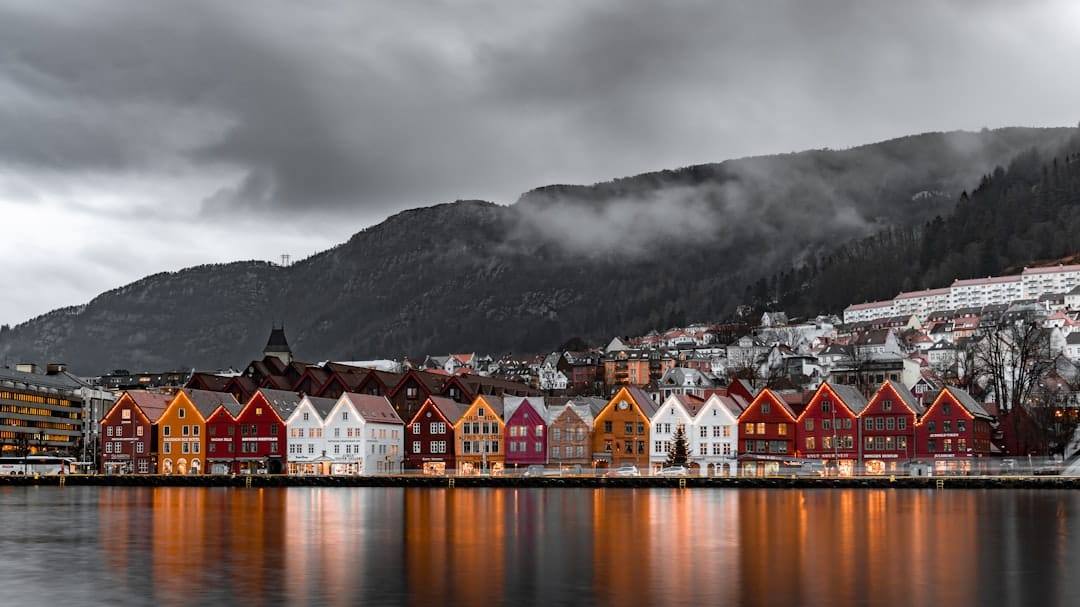
Bergen is the second-largest city in Norway and it rains here more often than not — locals will tell you the year splits into "the rainy season" and "the season it also rains." That is not a reason to stay away. It is the reason the wooden houses of Bryggen have that saturated ochre-and-red glow, the reason the seven mountains ringing the city stay green, and the reason no local heads out in summer without a rain shell folded into their bag. Bergen is where most people start or end a Norwegian fjord trip, and the compact center means you can walk from a 14th-century Hanseatic wharf to a Munch collection to a fish market in about fifteen minutes. UNESCO put Bryggen on the World Heritage list in 1979 and named Bergen a Creative City of Gastronomy in 2015; both are earned. Here is how to spend three days here in 2026 without wasting a krone or an hour.
Note on prices: costs below are 2026 rates. Norway is expensive and pays in Norwegian kroner (NOK). At the September 2026 exchange rate, roughly NOK 9.4 = $1 and NOK 10.8 = €1. Nearly everywhere takes contactless cards — you can go the whole trip without touching cash.
🎭 Essential Experiences
Bryggen — the Hanseatic wharf
Bryggen is the row of narrow, gabled wooden trading houses along the east side of Vågen harbour, and it is the single reason many people come to Bergen. German merchants of the Hanseatic League ran a trading post here from the 14th century until the 1700s, dealing mostly in dried cod from the north. About 62 buildings survive, rebuilt repeatedly after fires but keeping the medieval property lines. Walking the waterfront row takes five minutes and everyone does it; the actual reward is turning into the smau — the tilting, creaking alleys between the buildings, where the wood leans at angles that would fail any modern building code and the ground-floor workshops now hold jewellers and craftspeople.
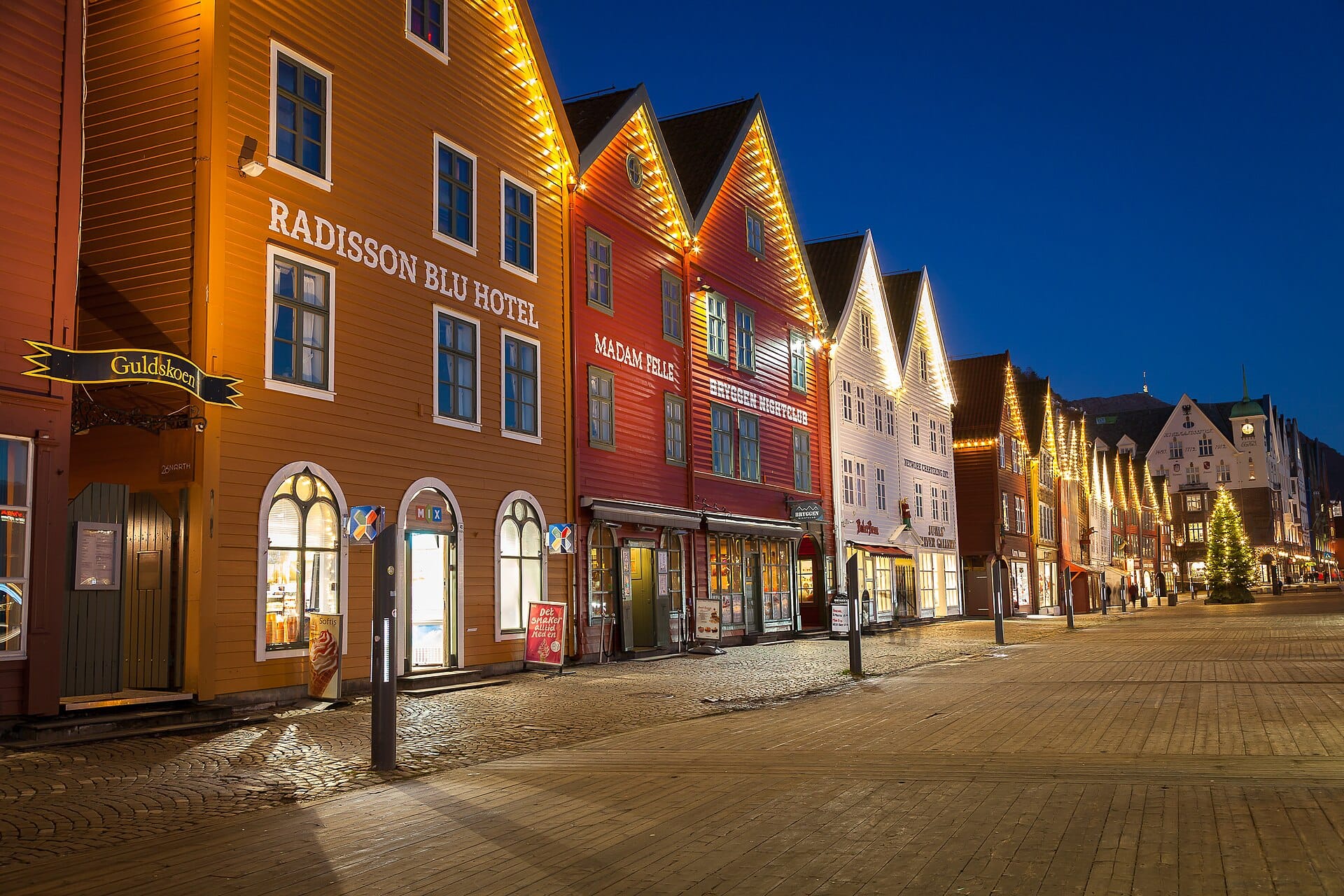
Cost: Free to walk, at any hour. Insider tip: Come at 8am before the day's cruise-ship crowds arrive, or in the rain — the wet wood turns deep amber and you'll have the alleys to yourself. The original Hanseatic Museum in the Finnegården building is closed for a major restoration through 2026, but its sister site Schøtstuene (the old assembly rooms) stays open, NOK 160 for adults, free under 18. Bryggens Museum, built over the medieval excavation, is worth it if you want the archaeology behind the pretty façades.
Mount Fløyen and the Fløibanen funicular
Fløyen is the mountain directly behind the city center, and the Fløibanen funicular has been hauling people up its slope since 1918. The lower station is a two-minute walk from the fish market; the ride climbs to 320 meters in about six minutes and drops you at a viewpoint that takes in the whole harbour, the city bowl, and the islands beyond. It is touristy and it is still worth it — the geography of Bergen only makes sense from up here.
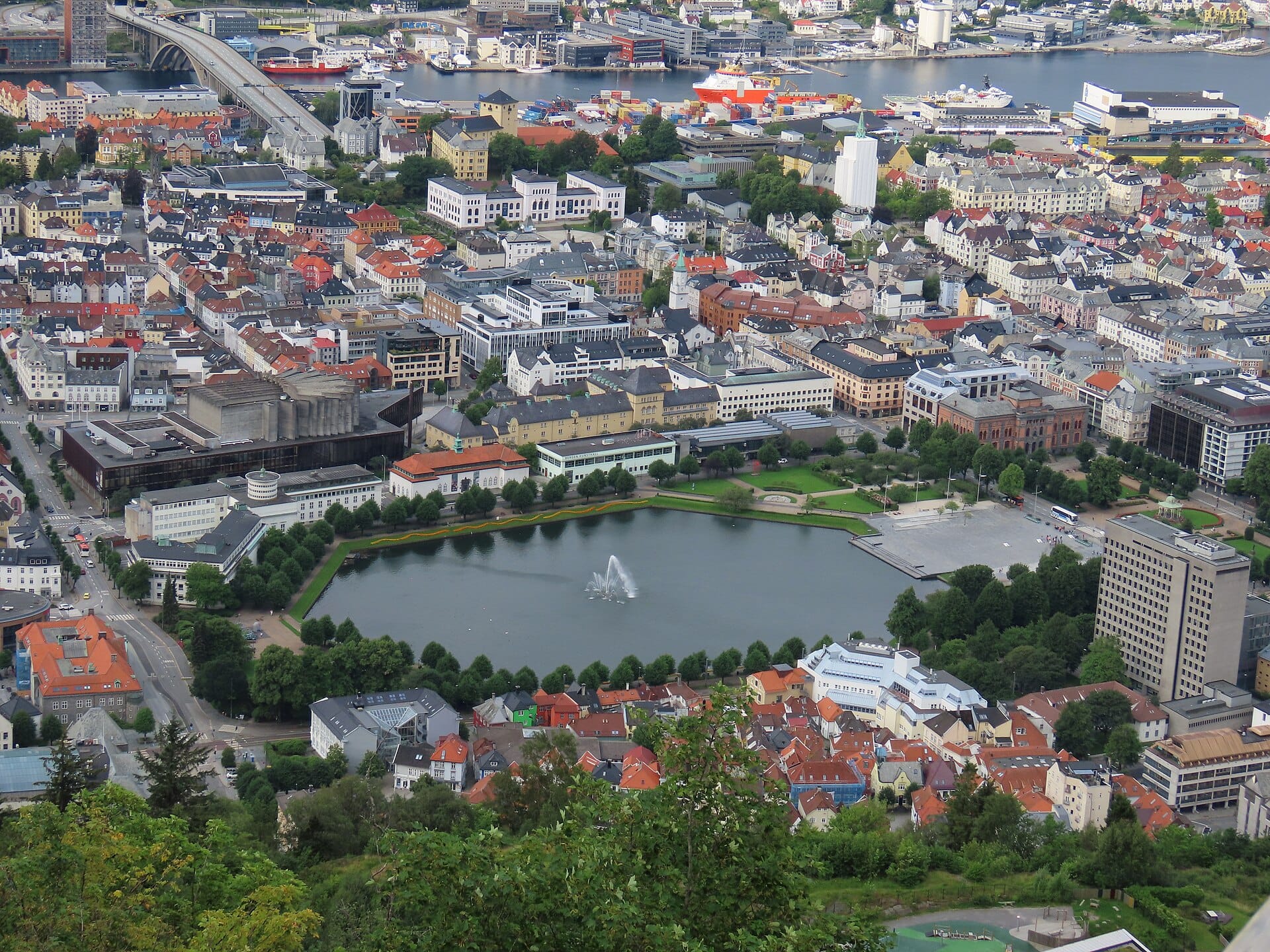
Cost: Adult return NOK 145 in the off-season (October–March), rising to around NOK 215 in peak summer; single NOK 80. The funicular runs from 7:30am to midnight. Insider tip: Buy a single up and walk down — the signed forest path back to town takes 30–45 minutes, is free, and passes the troll statues and the goats that graze the hillside in summer. Better still, ride up at 10pm on a clear evening for the city lights, when the queues are gone.
The Fish Market (Fisketorget)
There has been a fish market at the head of the harbour since the 1200s. The modern version is part open-air stalls, part the indoor Mathallen hall, and it is unashamedly aimed at visitors — which means the prices are tourist prices, not what a Bergen local pays. That said, it is still the easiest place in town to eat fresh seafood standing up: grilled scallops, a paper cup of shrimp, smoked whale if you're curious, or a bowl of Bergen fish soup.
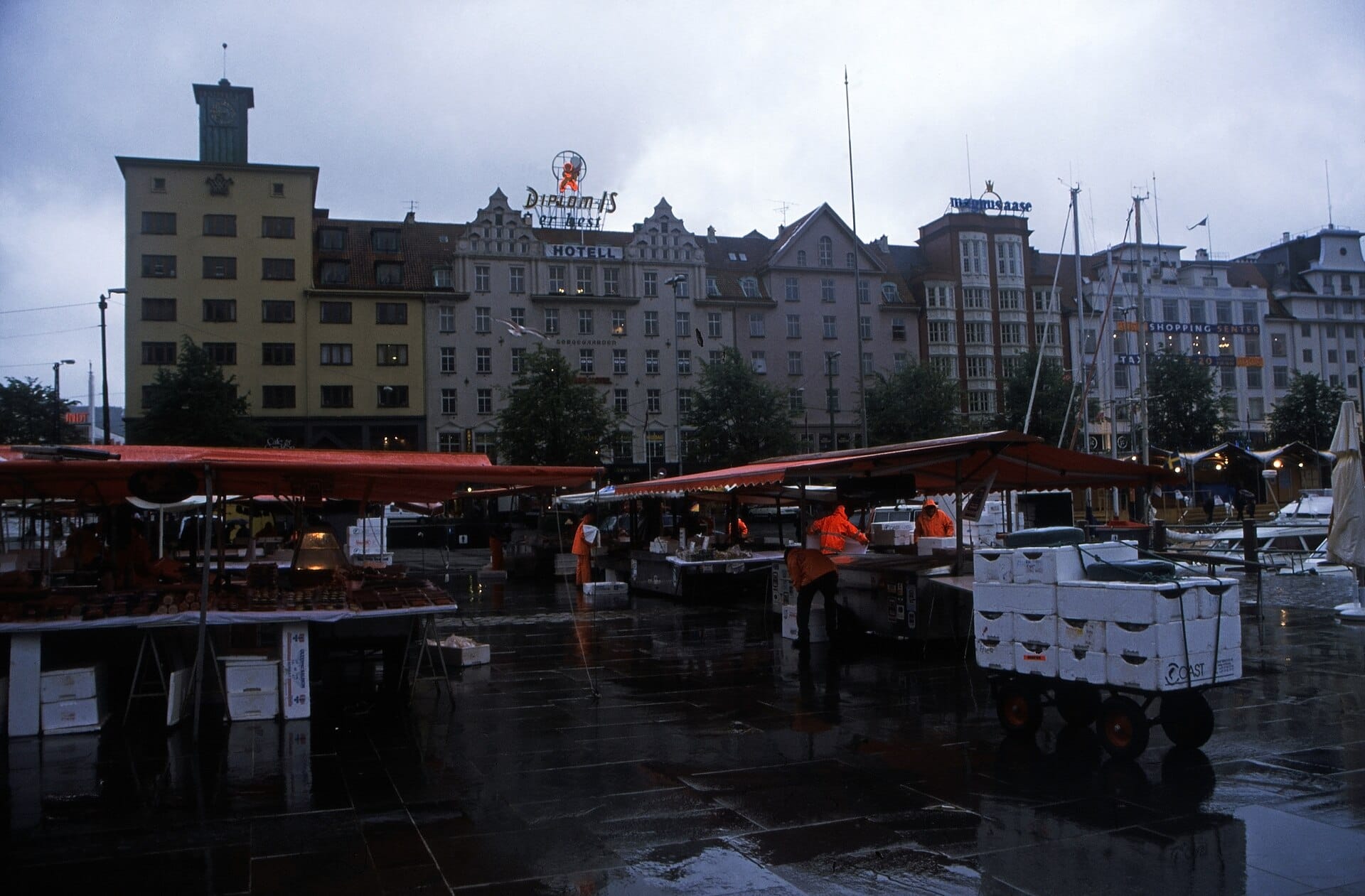
Cost: Free to browse; a seafood plate runs NOK 200–400. Insider tip: The indoor Mathallen keeps more consistent quality and shelter from the weather than the outdoor tents, and the vendors will let you taste before you commit. Ask the price per 100 grams before you point at anything — king crab is sold by weight and the bill escalates fast. For a proper sit-down fish soup at a fraction of the theatre, walk five minutes to a traditional spot instead (see the food section).
KODE Art Museums
KODE is four museum buildings strung along the ornamental lake Lille Lungegårdsvannet, and one ticket covers all of them. The headline is the Rasmus Meyer collection, which holds the world's third-largest collection of Edvard Munch — you can see major works here in a calm, uncrowded room, which is impossible at the Munch museum in Oslo. The same buildings hold Norway's own greats: the luminous landscapes of Nikolai Astrup, the fjord paintings of J.C. Dahl, and work by Harriet Backer.
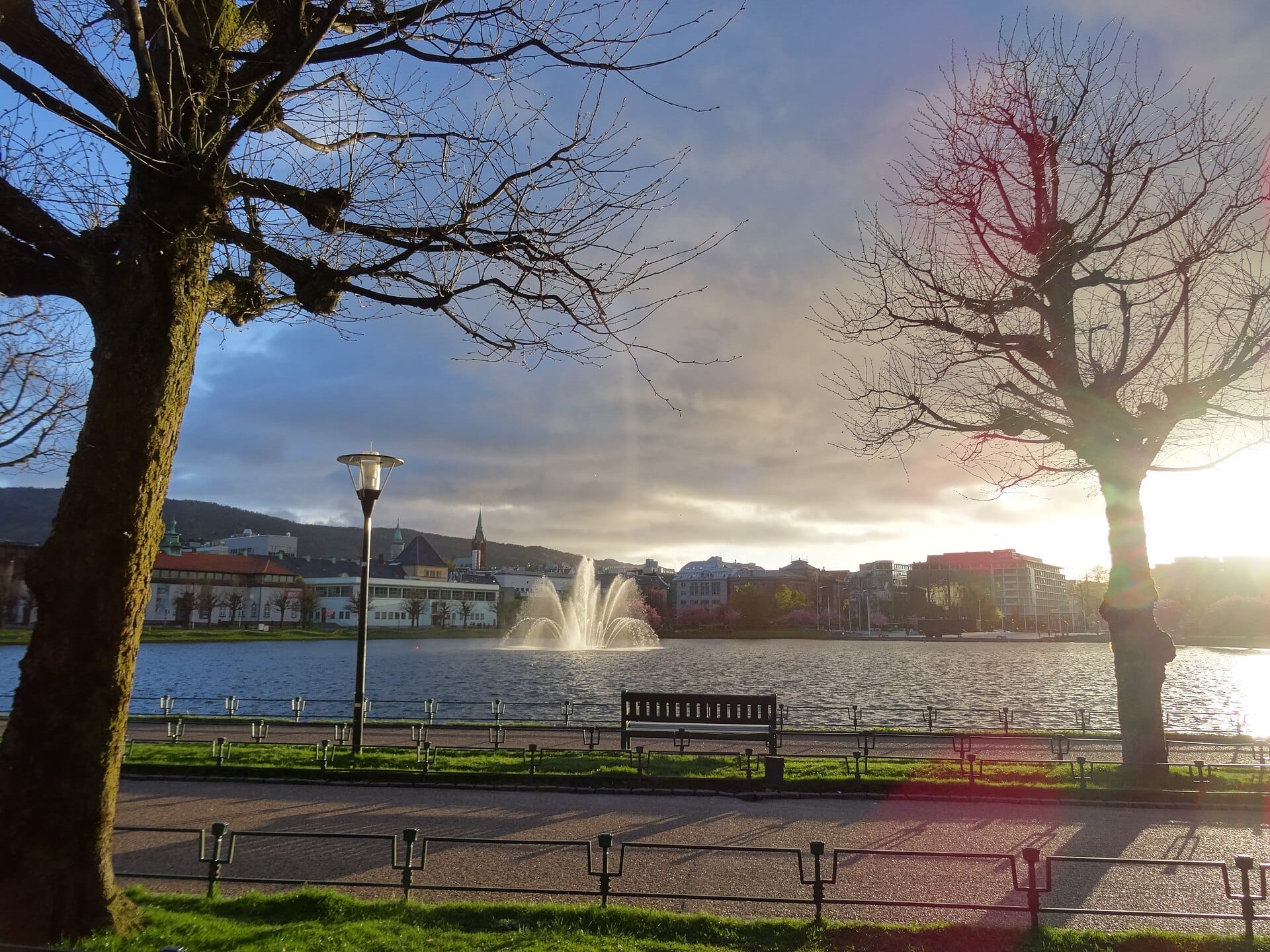
Cost: NOK 200 for adults, free for under-18s, and the ticket is good for all four buildings. Insider tip: Check the day before you go — KODE is closed Mondays and Tuesdays in winter, and hours are shorter (11am–4pm on weekends) outside summer. Start at Rasmus Meyer (KODE 3) for the Munch and Astrup rooms; if you only have an hour, that's the building to see.
Bergenhus Fortress and the Rosenkrantz Tower
At the mouth of the harbour sits one of Norway's oldest and best-preserved fortresses. Håkon's Hall is a stone royal banqueting hall completed around 1261 for King Håkon Håkonsson — the first of its kind built in stone in Norway — and the adjacent Rosenkrantz Tower is a 16th-century fortified residence you can climb for narrow-window views over the water. The fortress grounds are a genuine local space: people jog and picnic here, and it's one of the quieter corners of the center.
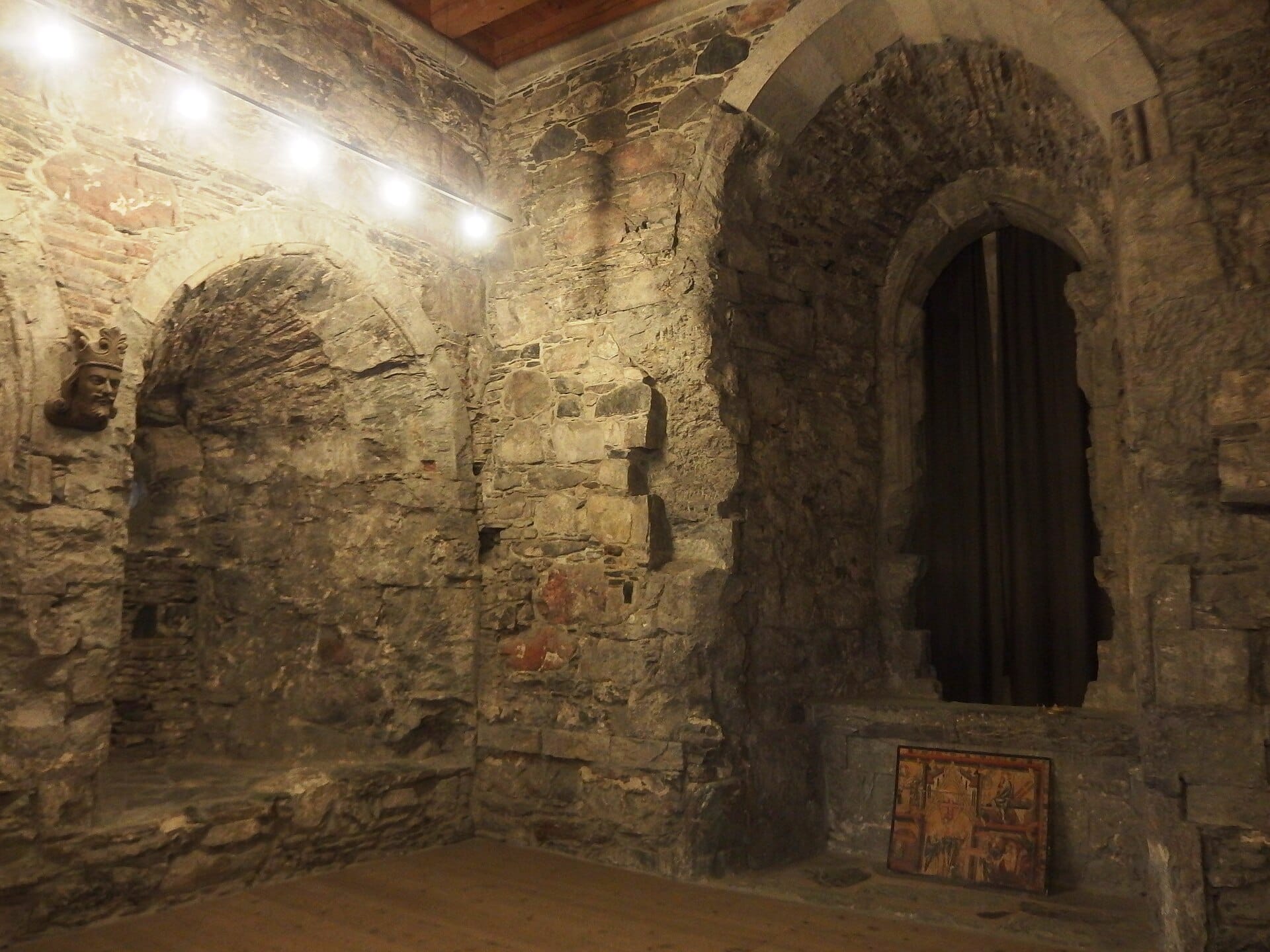
Cost: The grounds are free to walk; Håkon's Hall is NOK 120 for adults, NOK 60 for students, free under 18. Insider tip: The hall closes on event days without much notice, so it's smart to combine the visit with the free grounds rather than making a special trip. Walk out to the tip of the fortress point for the best angle back at Bryggen — it's the shot everyone else is queuing for on the wharf, without the queue.
A fjord cruise to Mostraumen
You can reach postcard fjord scenery from central Bergen in three hours without an overnight or a tour bus. Rødne's Mostraumen cruise leaves from Zachariasbryggen, right by the fish market, and heads up the Osterfjord to the narrow Mostraumen strait — a passage so tight the catamaran barely fits — passing waterfalls close enough that the crew fills a jug of glacier water off one of them. Sea eagles are a regular sighting.
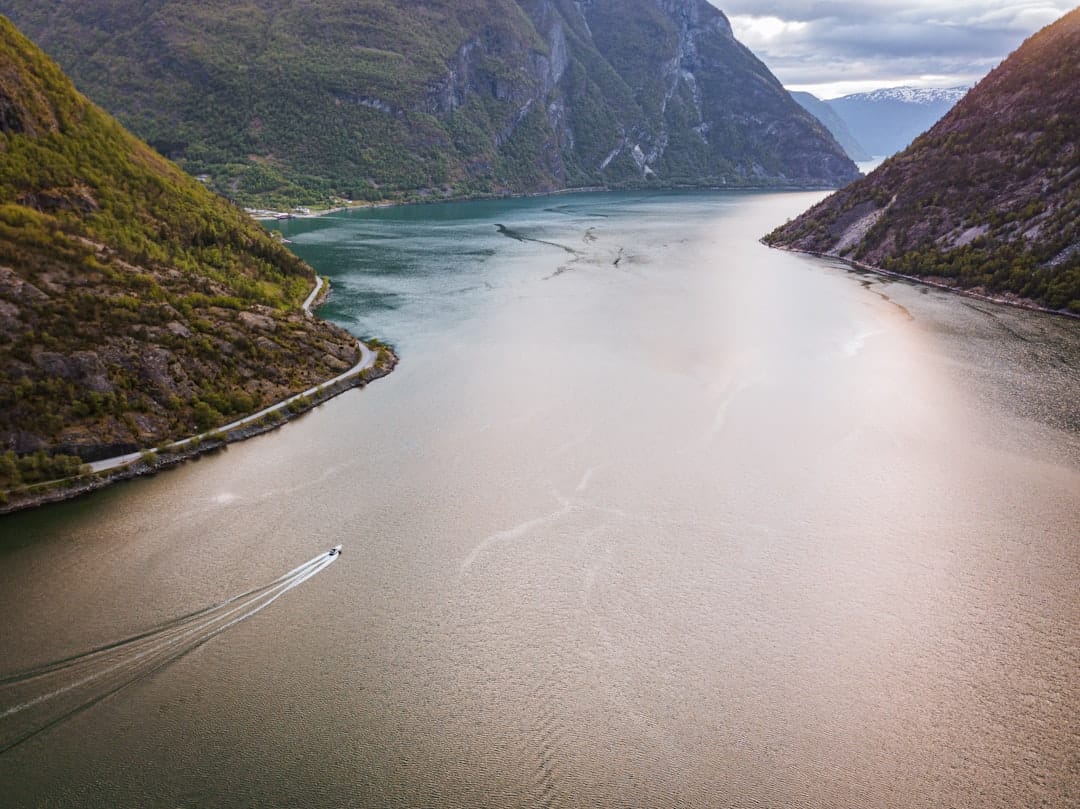
Cost: NOK 890 for adults, round trip, 3–3.5 hours with no stops ashore. Insider tip: Sit on the open top deck rather than the heated lounge — the whole point is the mist and the eagle-spotting, and there's a covered section a few steps away when it turns wet. If you'd rather see the truly famous fjords, this is the boat that connects toward Mostraumen; for Nærøyfjord you'd commit a full day via Flåm. For a first taste with limited time, Mostraumen is the efficient choice.
Mount Ulriken and the Vidden hike
Ulriken is the highest of Bergen's seven mountains at 643 meters, and the Ulriken643 cable car gets you to the top in a few minutes. The summit has a café and a viewing platform, but the real prize is what connects Ulriken to Fløyen: the Vidden trail, a roughly 15-kilometer route across the high plateau between the two peaks. On a clear day you can see all the way to the Folgefonna glacier.
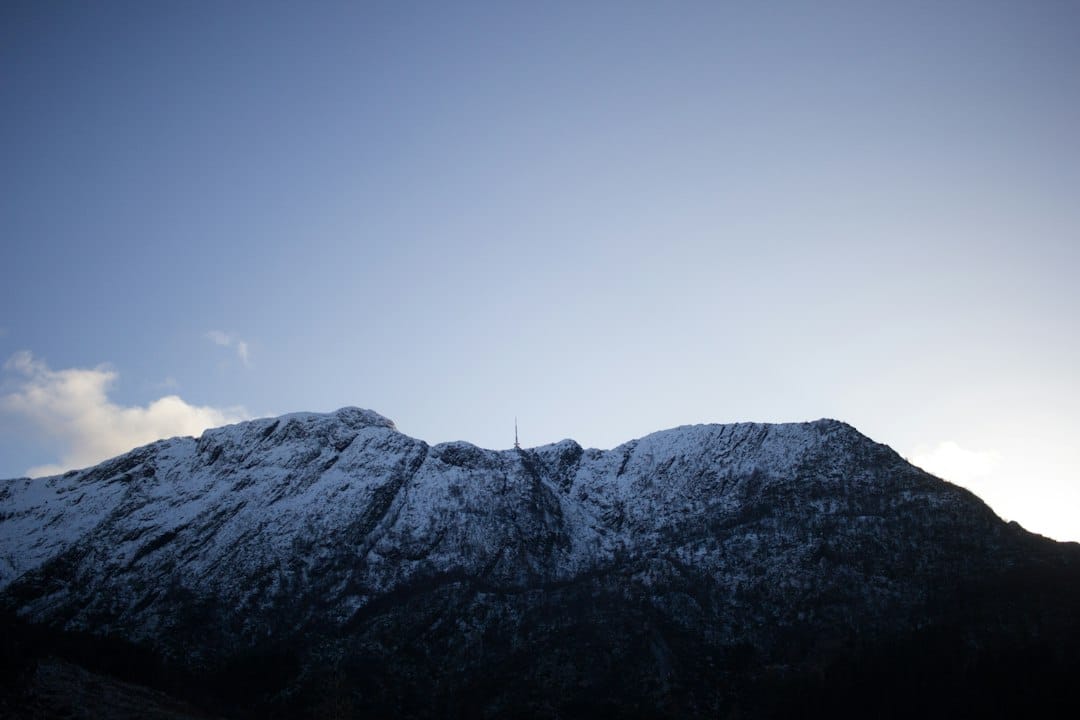
Cost: Cable car round trip NOK 435 for adults, NOK 180 for children; the Ulriken shuttle bus from near the tourist office runs about every 30 minutes for NOK 150 return. The Vidden hike itself is free. Insider tip: Do Vidden from Ulriken to Fløyen, not the other way — you take the cable car up the higher mountain, spend the walk mostly on the level or descending, and ride the Fløibanen funicular down at the end. Budget five hours, only attempt it May–October, and bring a waterproof layer even in July: the plateau has no shelter and Bergen weather turns on a coin.
Troldhaugen — Edvard Grieg's home
Norway's most famous composer lived at Troldhaugen, on a hill above Nordåsvannet lake, for 22 years. The estate includes his villa, the tiny lakeside hut where he actually composed, his grave cut into the rock face, and a modern concert hall, Troldsalen, built with a glass wall behind the stage looking out over the water. In summer there are intimate lunchtime piano recitals, some played on Grieg's own 1892 Steinway.
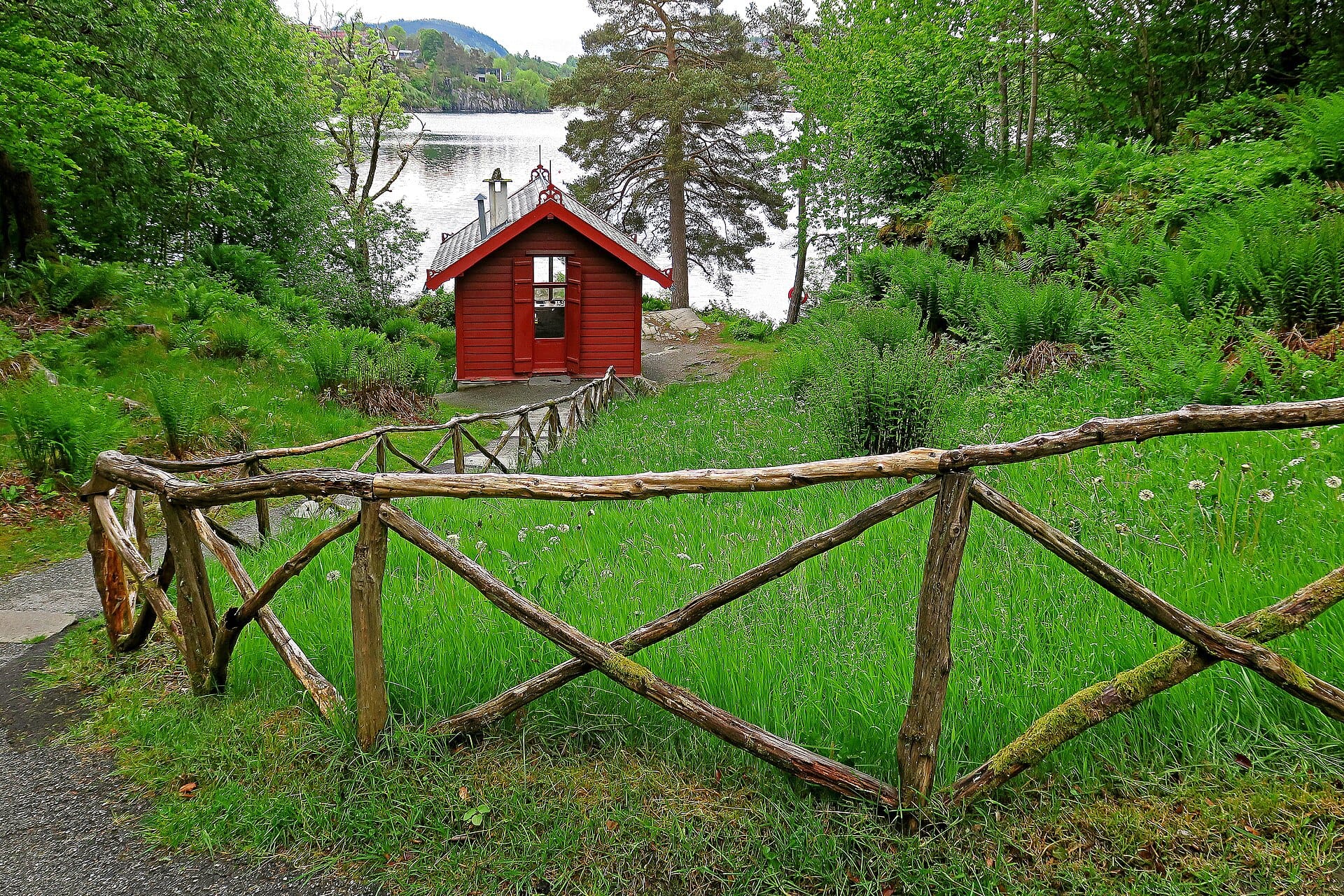
Cost: NOK 200 for adults. Take Bybanen light rail line 1 to the Hop stop, then it's a signed 20-minute walk. Insider tip: Grieg's villa itself is under renovation in 2026 and the museum and café open only on concert and event days — but the park and the composer's hut are always accessible, and the estate is genuinely lovely to walk even when the house is shut. Check the concert schedule before you go; catching a recital in Troldsalen is what makes the trip out here worth the half-day.
🗓️ A Three-Day Itinerary
Day 1 — The old city on foot
Start at Bryggen at 8am, before the crowds, and lose yourself in the smau alleys for an hour (free). Walk five minutes to the fish market for a mid-morning seafood plate (NOK 200–400). Continue to Bergenhus Fortress at the harbour mouth, walk the free grounds and duck into Håkon's Hall (NOK 120). After lunch, ride the Fløibanen funicular up Mount Fløyen (single NOK 80), take in the view, and walk the forest path back down for free — about 45 minutes. Finish with dinner in the center. Rough spend: NOK 400–700 ($43–75 / €37–65) plus meals.
Day 2 — Art, music and the water
Spend the morning at the KODE museums (NOK 200), giving the Munch and Astrup rooms in Rasmus Meyer the most time. Grab a skillingsbolle and coffee from a bakery near the lake, then take the early-afternoon Rødne cruise to Mostraumen from Zachariasbryggen (NOK 890, 3.5 hours) for the fjord scenery. You'll be back by early evening; if the timing suits, ride Bybanen line 1 out to Troldhaugen (NOK 200) for a lunchtime or afternoon recital instead of the cruise if you're more musician than sailor. Rough spend: NOK 1,090–1,290 ($116–137 / €101–120) plus meals.
Day 3 — Up the mountain
If the forecast is clear, commit the day to the Vidden hike: cable car up Ulriken (NOK 435 return, or one-way if you'll descend by funicular), then the 15-kilometer plateau walk to Fløyen, riding the Fløibanen down. Pack lunch and water; there are only a couple of simple cafés en route. If the weather is grim — and it might be — swap in a slow morning around the Nordnes peninsula and the aquarium, then the indoor Mathallen for lunch and the KODE buildings you skipped. Rough spend: NOK 300–500 ($32–53 / €28–46) plus meals.
🧠 Essential Tips
When to go
May and June are the sweet spot. Days are long — near-midnight light by late June — temperatures sit around 15°C and climb into the low 20s on good days, and the crowds haven't peaked. Late May brings the Bergen International Festival, the country's biggest performing-arts event, and June brings Bergenfest and Nattjazz. July and August are warmest but busiest and priciest, with cruise ships feeding the Bryggen crush. Bergen is one of the rainiest cities in Europe and it can rain in any month, so the honest advice is to pack a real waterproof shell and treat a dry day as a bonus rather than plan around it.
Getting around
From Bergen Airport (Flesland), the Bybanen light rail (line 1) runs straight into the center in about 45 minutes for NOK 51 — the same as any single ticket in the city zone. The Flybussen airport coach is faster at roughly 30 minutes but costs NOK 189 bought in advance (NOK 220 on board); a fixed-rate taxi runs NOK 580–890. In the city itself you rarely need transport — the center is walkable end to end. When you do, buy tickets on the Skyss app (the operator for both buses and light rail): a single is NOK 51 and valid 60 minutes, a 24-hour ticket is NOK 136. Don't board without a valid ticket — inspectors do check and the fine is steep.
Staying safe
Bergen is very safe by international standards, and violent crime against visitors is rare. The realistic risks are two. First, opportunistic pickpocketing in the densest tourist spots — the Bryggen waterfront, the fish market, and Torgallmenningen square — so keep your phone and wallet zipped away in the crush. Second, and more likely to hurt you, the weather: mountain paths like Vidden turn slippery and visibility drops fast when the rain rolls in, and people get into trouble underdressed far more often than they get robbed. If you're out late, the one area locals steer clear of after dark is Nygårdsparken, where the city's small drug scene lingers; it's easily avoided. Use marked taxis (07000 Bergen Taxi is the reliable one) rather than anything unmetered.
What to eat
Start with the skillingsbolle, Bergen's cinnamon bun — the name means "shilling bun" because it once cost a single skilling. The Hanseatic Germans brought the recipe in the 16th century and it never left; Baker Brun on Bryggen and Godt Brød in Marken both do a proper one, big and sticky with sugar on top. For seafood, fiskesuppe (Bergen fish soup, creamy and mild) is the local staple. Skip the marked-up market stalls for a sit-down bowl at Pingvinen on Vaskerelven, a gastropub that serves honest Norwegian home cooking — meatballs, fish pie, and potato dumplings (raspeballer) every Thursday, which is the day locals show up for them. It feels, as one description put it, "a bit like entering grandma's living room." Expect a main course to run NOK 200–320.
🏨 Accommodation Guide
Budget. Bergen has no truly cheap beds, but the best value sits just outside the tightest tourist zone. Citybox Bergen (city center) and City Hostel Bergen offer dorm beds and no-frills private rooms; Marken Gjestehus is a long-running guesthouse steps from the center. The Sandviken district, just north along the water, keeps its wooden-house charm with lower rates than Bryggen. Expect roughly NOK 350–600 ($37–64) for a dorm bed and from about NOK 900 ($96) for a basic private room.
Mid-range. This is where most visitors land. Comfort Hotel Holberg and Hotel Park Bergen (near the university, in the pretty Nygård area) deliver reliable Scandinavian comfort, and Magic Hotel Bergen City Center puts you near the Skostredet dining street. Reckon on NOK 1,300–2,200 ($138–234 / €120–204) a night for a double, breakfast usually included.
Luxury. Stay in or beside Bryggen for the setting. Opus XVI, an Edvard Grieg heritage hotel in an 1876 bank building in the center, and the waterfront Bergen Børs and Bergen Harbour hotels are the upper tier; Hotel Norge by Scandic is the grande dame on Torgallmenningen. Expect NOK 2,500–4,500+ ($266–479 / €232–417) a night, more in peak summer.
🧭 Beyond the Tourist Trail
When you've had your fill of Bryggen, walk ten minutes inland to Skostredet, a pedestrian street of old wooden buildings that has quietly become the center's most interesting eating-and-drinking quarter. It's where you'll find Villani for wood-fired pizza in a courtyard, the Thai kitchen at Piman, the "living-room" gastro-bar Såpas, and Last Monkey for cocktails — the crowd here is far more local than the wharf.
The Nordnes peninsula, jutting out past the fortress, is a residential neighbourhood of narrow lanes and clapboard houses that most day-trippers never reach. Walk out to Nordnes Park at the tip for a swim spot and open water views, past the aquarium, and you'll trade tour groups for people walking their dogs. And rather than only photographing Bryggen from the front, cross the harbour to Sandviken, where the same style of wooden warehouses stands without the crowds — the walk along the water toward the Norwegian Fisheries Museum, set in the old Sandviksboder harbour warehouses, is the version of Bergen that Bergensers actually live in.
❤️ Let VoyaBear plan your Bergen trip
Three days in Bergen is enough to see the city and touch a fjord, but the right sequence depends on one thing you can't control: the weather. That's exactly the kind of judgement call VoyaBear is built for. Tell us when you're coming, how you like to travel, and how far you want to push into the fjords, and we'll build you a day-by-day plan that keeps the outdoor days flexible, books the cruise and the recitals at the right times, and matches the neighbourhoods to your budget. Start planning your personalized Bergen itinerary with VoyaBear today — and let the rain be the only surprise.
Want this as an actual itinerary?
VoyaBear turns a guide like this into a day-by-day plan built around how you travel.
Plan my trip free