Bogotá 2026: The Complete Guide to Colombia's Capital
25 October 2026 · 22 min read

Bogotá starts with altitude. At 2,640 metres, Colombia's capital is one of the highest big cities on earth, and the thin air is the first thing you notice walking uphill in La Candelaria — then the second thing you notice is the cold, because this city of eight million people sits close to the equator but never gets tropical. What it gets instead is a dense, serious, slightly chaotic Andean capital with the best gold museum in the world, a mountaintop church you ride a funicular to reach, some of Latin America's most respected restaurants, and street art good enough that the city effectively legalised it.
Most travellers used to treat Bogotá as a one-night layover before Cartagena or the coffee region. That is a mistake. Give it three days and it rewards you: colonial plazas and brutalist courthouses on the same square, a Sunday when 120 km of roads close to cars, hot chocolate you drink with cheese melting in the bottom of the cup. This guide covers exactly what to see, what it costs in 2026, how to get around, what to eat and where, and how to not do anything stupid with your phone.
💡 Quick Answer: Bogotá at a Glance
Everything you need to plan a Bogotá trip in one place:
- How many days? Three — two for the centre and Monserrate, one for a day trip to the Zipaquirá Salt Cathedral.
- Best time to visit? December to March for the driest, clearest skies (December adds Christmas light displays).
- Book ahead? Little is essential, but reserve top restaurants like Leo or El Chato, and buy Salt Cathedral tickets (COP 125,000 / ~$39 for foreigners) and Monserrate tickets online to skip queues.
- Airport to centre? ~15 km; regulated taxi COP 25,000–40,000 ($8–12), or Uber/DiDi, ~30 minutes.
- Getting around? TransMilenio and SITP buses with a rechargeable TuLlave card; one ride is COP 3,550 (~$1.10). No metro yet.
- Daily budget? Roughly $40–60 (€36–54) for budget travellers, $90–150 (€80–135) mid-range, excluding flights.
- Top safety note? Never hail a street taxi — use Uber, DiDi or InDriver — and keep your phone hidden. "No dar papaya."
- Currency? Colombian peso (COP); roughly 3,200 COP to $1 and 3,550 COP to €1 in late 2026.
🏙️ The Best Things to Do in Bogotá
1. Museo del Oro (the Gold Museum)
This is the one unmissable museum in Bogotá, and arguably in the country. The Museo del Oro holds more than 30,000 pieces of pre-Hispanic goldwork from the Muisca, Quimbaya, Calima, Tairona and other cultures — the largest collection of its kind anywhere. The star is the Balsa Muisca, a palm-sized golden raft showing a chieftain and his attendants mid-ceremony on Lake Guatavita: the real scene that spawned the El Dorado legend that sent Europeans tearing across the continent. The top-floor "Offering" room, a darkened circular vault that lights up around you, is genuinely moving rather than gimmicky.
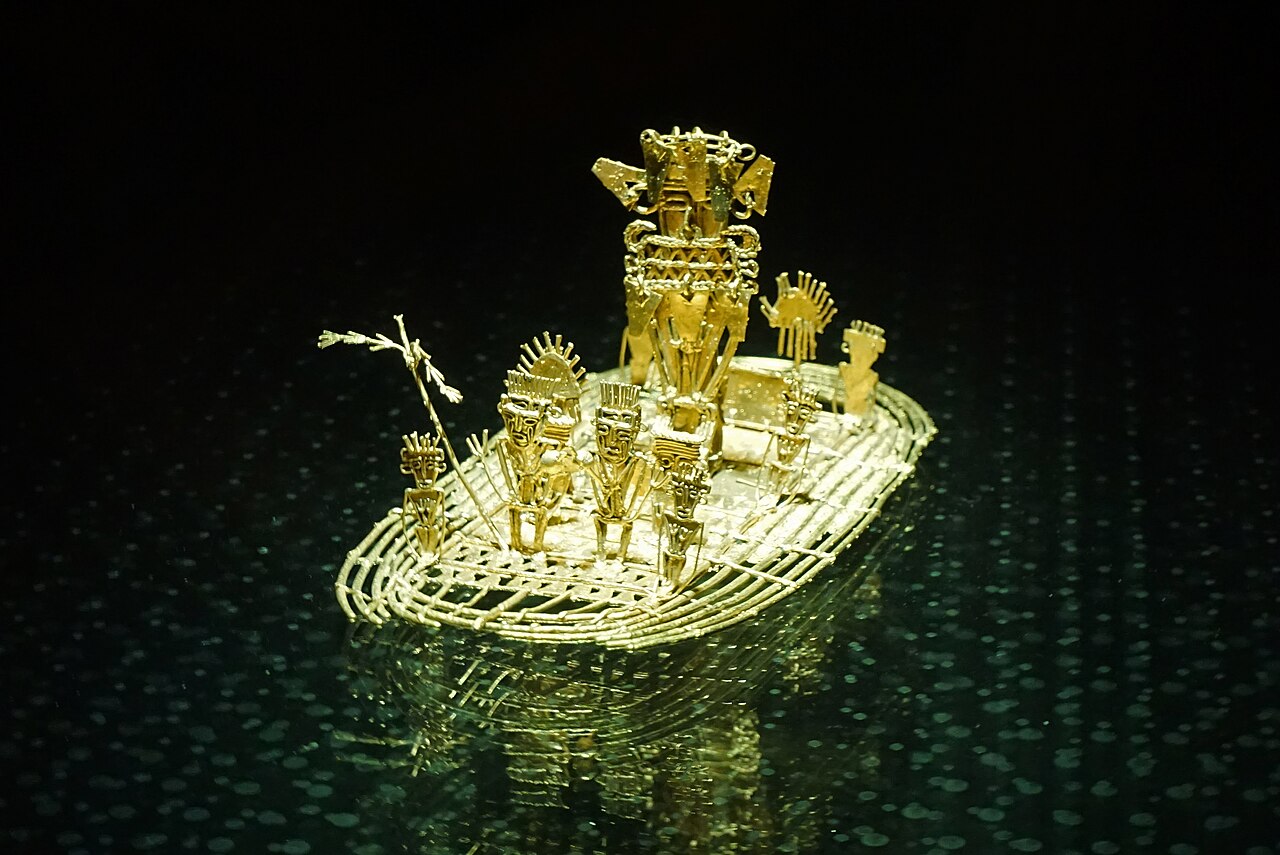
What to do: Go top-down — take the lift to the third floor and work your way back to the raft and the Offering room. Allow 1.5–2 hours. Insider tip: foreigners pay COP 21,000 (about $6.50/€6) Tuesday to Saturday, but it's free for everyone on Sundays — which also means Sunday is packed, so arrive at opening (10am Sun) or just pay on a quiet weekday morning. It's closed Mondays (Tue–Sat 9am–6pm). Cost: COP 21,000 / free Sundays.
2. Monserrate
The white sanctuary on the ridge east of the centre sits at 3,152 metres — roughly 500 metres above the already-high city — and it is both a serious pilgrimage site (the shrine of the Señor Caído, the Fallen Christ) and the best viewpoint in Bogotá. On a clear morning you can see the whole grid of the city spill west across the savanna until it dissolves into haze. You can walk up the stone path in about an hour if you're acclimatised, but most people take the funicular or the cable car.
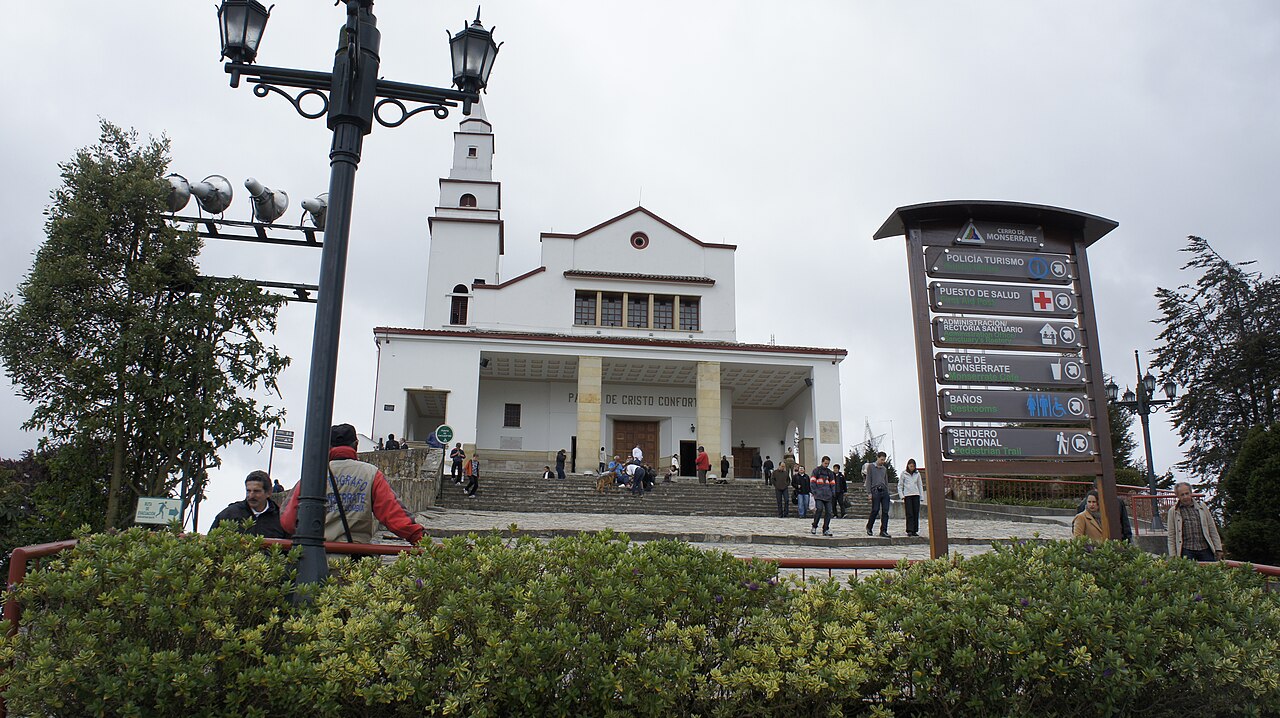
What to do: Ride up, walk the ridge behind the church past the food stalls and the recreated colonial lane, and have an agua de panela con queso at the top. Insider tip: go up first thing (it opens 6:30am Mon–Sat, 5:30am Sun) before the midday cloud builds, and go up on the funicular, down on the cable car for two different views. During some maintenance windows only the funicular runs, so check before you set out. Skip the walking path alone early or late. Cost: round trip COP 35,000 (~$11/€10) Mon–Sat, COP 21,000 Sundays.
3. La Candelaria and Plaza de Bolívar
La Candelaria is the colonial old town, and Plaza de Bolívar is its hinge: one enormous square that stacks four centuries of Colombian power on top of each other. On its edges stand the neoclassical Catedral Primada, the columned Capitolio Nacional (the congress), the stark modernist Palacio de Justicia rebuilt after the 1985 siege, and the French-style Liévano Palace city hall. Around it, narrow streets of ochre and cobalt colonial houses climb toward the mountains, filling with students, street performers and the smell of coffee and arepas.

What to do: Wander the square, duck into the Catedral, then wind up Calle 11 and Carrera 2 toward the Chorro de Quevedo, the tiny plaza where the city was supposedly founded in 1538 and where the graffiti tours begin. Insider tip: this is a daytime neighbourhood — it's lively and policed until early evening, but thin out and take a taxi or Uber after dark. Pair it with lunch at La Puerta Falsa a block off the square. Cost: free to wander.
4. Museo Botero
Fernando Botero — Colombia's most famous artist, the man who painted and sculpted everyone and everything plump — donated his personal collection to the nation on the condition that entry stay free forever. It does. Inside a restored colonial mansion in La Candelaria you get 123 of Botero's own works (the rotund Mona Lisa, the fat hand, the oversized cats) alongside pieces he collected by Picasso, Monet, Dalí, Renoir and Degas. For a free museum it punches absurdly above its weight.
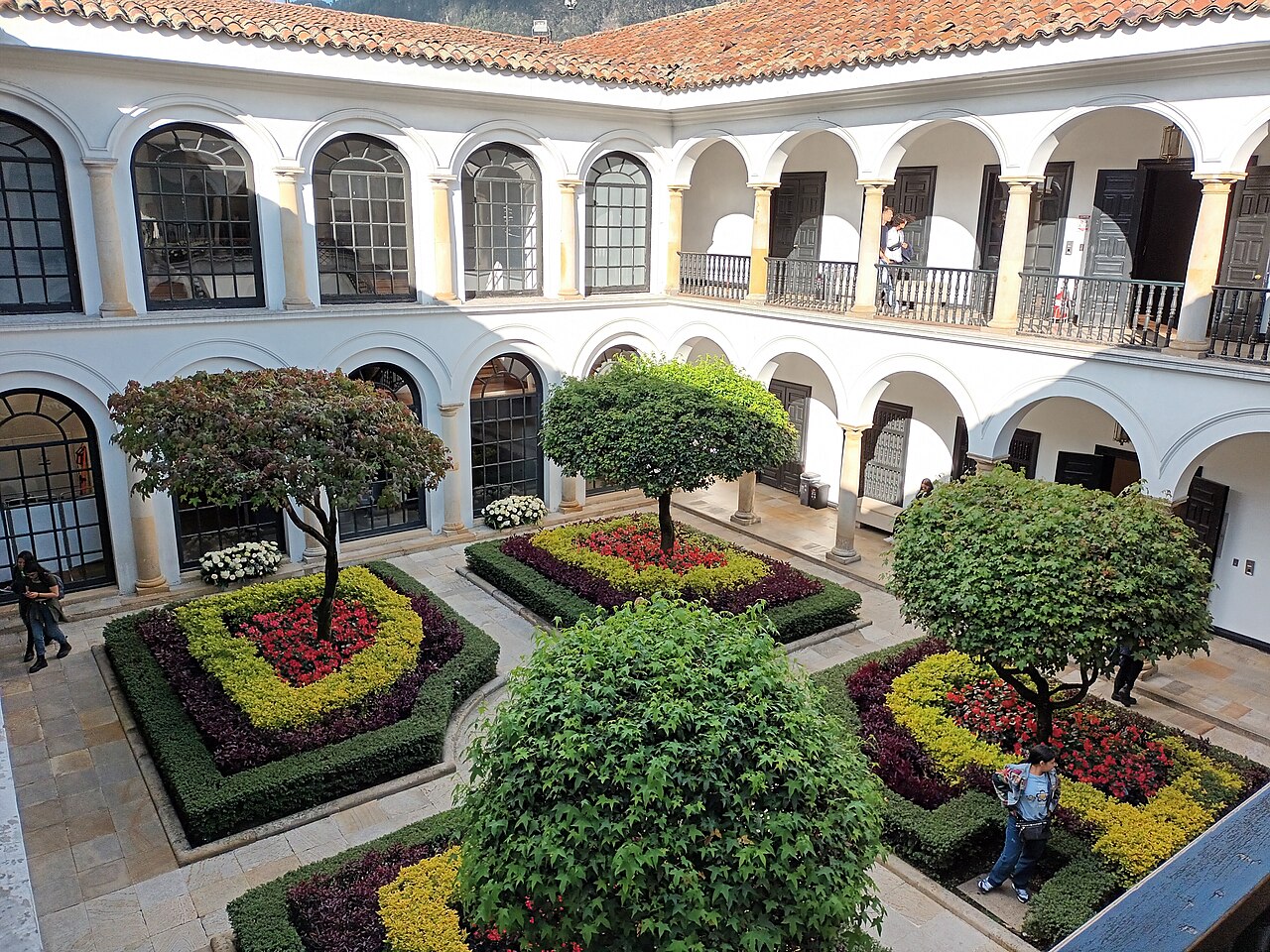
What to do: It's compact — an hour is plenty. Don't miss the manicured central patio, one of the prettiest colonial courtyards in the city. Insider tip: it's closed Tuesdays (open Mon and Wed–Sat 9am–7pm, Sun 10am–5pm), so build your Candelaria museum day around that. The neighbouring Casa de Moneda (coin museum) and the Banco de la República art collection are also free and connected. Cost: free.
5. The Bogotá Graffiti Tour
After a police officer shot a teenage graffiti artist in 2011, Bogotá took an unusual turn and effectively decriminalised street art. The result is one of the best open-air mural scenes in the Americas, concentrated in La Candelaria and around Carrera 7. A guided graffiti walk is the single best way to read it — guides explain which pieces are political, which are commissioned, which are by crews like APC or artists like Guache and Bastardilla, and why a given wall looks the way it does.

What to do: Join the long-running Bogotá Graffiti Tour, which runs on a tip basis (budget COP 40,000–50,000 per person) and starts near the Chorro de Quevedo / Parque de los Periodistas; it lasts about 2.5 hours. Insider tip: take the morning departure — light is better for photos and the Candelaria streets are quieter and safer earlier in the day. Cost: free / tip-based.
6. Paloquemao Market
If you want to understand what Colombians actually eat, skip the restaurant for a morning and go to Plaza de Mercado de Paloquemao, the big working market just west of the centre. It's where the city's chefs and grandmothers buy flowers, fish, meat and above all fruit — and Colombia's fruit is the real show: lulo, guanábana, granadilla, mangostino, uchuva, curuba, and a dozen things with no English name. Vendors will hand you slices to try.

What to do: Eat breakfast here — a tamal and hot chocolate, or a fresh juice — then graze the fruit aisles. The flower section is spectacular in the early morning. Insider tip: arrive between 7 and 9am when it's busiest and freshest; a guided market tour (several run daily) gets you fruit tastings and vendor introductions you'd never manage alone. Keep your bag in front of you — it's crowded. Cost: free to enter; breakfast a few dollars.
7. The Salt Cathedral of Zipaquirá
About 50 km north of Bogotá, inside a mountain of rock salt that's been mined since the Muisca era, is a working Roman Catholic cathedral carved roughly 180 metres underground. The Catedral de Sal is part geology lesson, part engineering stunt, part genuinely atmospheric church — you descend past 14 Stations of the Cross hewn into the salt tunnels before the nave opens up around a vast illuminated cross. It's the most popular day trip from the capital for good reason.

What to do: Walk the Stations of the Cross down to the main chambers; the basic passport covers the cathedral itself. Pair it with lunch and a wander around colonial Zipaquirá's main square. Insider tip: go on a weekday to dodge the Bogotá crowds, and consider the weekend Tren de la Sabana tourist train for a more scenic approach than the bus. Cost: basic foreigner ticket COP 125,000 (~$39/€35); nationals COP 75,000.
🗓️ How to Spend Three Days in Bogotá
Day 1 — La Candelaria and the historic centre
Start in Plaza de Bolívar early, when it's quiet. Walk up to the Museo del Oro (COP 21,000, ~10 min from the plaza) and give it two hours. Walk 10 minutes back into La Candelaria for lunch at La Puerta Falsa — order the ajiaco and a chocolate completo (about COP 30,000–45,000 / $9–14 total). In the afternoon, take the Bogotá Graffiti Tour (2.5 hrs, tip ~COP 45,000) and finish at the free Museo Botero before it closes. Taxi or Uber to Chapinero for dinner. Day total excluding hotel: roughly $35–55 (€32–50).
Day 2 — Monserrate and the markets
Go up Monserrate at opening for clear views (round trip COP 35,000; 10-minute taxi from the centre to the base station). Back down by late morning, head to Paloquemao Market for an early lunch and fruit grazing (a few dollars). Spend the afternoon in Chapinero / Zona G — specialty coffee, bookshops and street art — then a standout dinner (book Leo or El Chato ahead; tasting menus run higher, around $80–130). If it's a Sunday, swap the morning for the Ciclovía and rent a bike. Day total excluding hotel and fine dining: roughly $25–45 (€23–41).
Day 3 — Zipaquirá Salt Cathedral
Take a day trip to the Salt Cathedral. The cheapest route is TransMilenio to Portal del Norte (COP 3,550) then a bus to Zipaquirá (~COP 10,000, about 1.5 hrs total); an organised tour runs $35–55 and removes the logistics; the weekend Tren de la Sabana is the scenic option. Entry is COP 125,000 for foreigners. Back in Bogotá by evening for a farewell meal in Usaquén or the Zona Rosa. Day total excluding hotel: roughly $45–75 (€41–68) independently, more by tour.
🧠 Essential Bogotá Travel Tips
When is the best time to visit Bogotá?
Temperature is a non-issue in Bogotá — at 2,640 metres on the equator it hovers around 19°C (66°F) by day and 7–9°C (45–48°F) at night essentially all year. Pack layers and a rain jacket regardless of season. What actually changes is rainfall. The driest, clearest months are December to March, with a second drier window in July and August; the wettest are April–May and October–November. December is especially good for the citywide Alumbrados Christmas light displays. For festivals, time a visit to Rock al Parque (free, around June/July, one of Latin America's largest free music festivals), Jazz al Parque (September), or the ArtBo art fair (October).
How do you get around Bogotá?
There's no metro yet — Line 1 is under construction and not open — so the backbone is TransMilenio, the red articulated buses that run in dedicated lanes, plus the blue/green SITP city buses. One ride is COP 3,550 (about $1.10) as of January 2026, paid with a rechargeable TuLlave card (a small one-time card fee). TransMilenio is fast but notoriously crowded at rush hour and a known pickpocket spot — ride with your bag in front. For door-to-door, locals use Uber, DiDi, InDriver and Cabify; they're cheap and much safer than flagging a cab. From El Dorado airport (~15 km, ~30 min off-peak), take a regulated white taxi from the official rank (COP 25,000–40,000 / $8–12), an app car, or the K86/M86 SITP bus toward the centre for the standard fare plus a card.
Is Bogotá safe for tourists?
Bogotá is manageable with street sense, and the guiding phrase is "no dar papaya" — roughly, don't hand thieves an easy opportunity. Specifics that matter: keep your phone out of sight on the street and on TransMilenio, where motorcycle phone-snatching is common. Never hail a taxi off the street — the "paseo millonario" express-robbery scam (forced ATM runs) targets street cabs, so use Uber, DiDi or InDriver, which log the driver and car. In nightlife zones like Zona T and Chapinero, never leave a drink unattended or accept one from a stranger: scopolamine ("burundanga" or Devil's Breath) spiking is a real risk. Ignore emerald sellers on Avenida Jiménez and anyone in plainclothes claiming to be police who wants to "inspect" your cash — real officers are uniformed and won't. La Candelaria is fine by day with police about; take a car at night and steer clear of the southern peripheral districts, which aren't tourist areas.
What should you eat in Bogotá?
The city's signature dish is ajiaco santafereño, a thick soup of chicken and three kinds of potato (including the little yellow papa criolla) flavoured with the herb guasca and served with corn, capers, avocado and a dollop of cream. Eat it, plus a tamal santafereño and a chocolate completo — thick hot chocolate you drop a slab of cheese into — at La Puerta Falsa on Calle 11, open since 1816 and one of the oldest eateries in the Americas. Try a milky changua breakfast soup, grab fruit and tamales at Paloquemao, and for a big night out there's Andrés Carne de Res in Chía (or Andrés DC in the Zona Rosa), a riotous steak-and-aguardiente institution. At the top end, Bogotá has serious kitchens: Leo (chef Leonor Espinosa, on the World's 50 Best list), El Chato, and Salvo Patria in Chapinero. Wash it down with the city's excellent specialty coffee.
🏨 Where to Stay in Bogotá
Bogotá splits neatly by neighbourhood, and where you stay shapes the trip. Prices below are typical 2026 nightly rates.
Budget — La Candelaria
The historic centre is the backpacker hub: you can walk to most of the sights, and dorms and guesthouses are cheap. Hostels such as The Cranky Croc or Masaya run dorms around $12–25 (€11–23) and privates from about $35. The trade-off is that La Candelaria empties and feels edgier after dark, so factor in evening taxis. Great for a first-timer on a budget who wants to be in the thick of the old town.
Mid-range — Chapinero and Zona G
The best base for most travellers: central, full of cafés, restaurants and street art, and generally safe. Boutique hotels and smart apart-hotels here run roughly $70–130 (€65–120). It's walkable to the Zona G fine-dining cluster and a short ride to both the centre and the north. A good pick for couples, foodies and remote workers.
Luxury — Zona Rosa, Parque 93 and the north
The polished, high-rise north — Zona T, Parque 93 and El Chicó — is where the international hotels and the best nightlife and shopping sit, and where you'll feel most secure late at night. Expect $200–450+ (€180–400+) at properties like the two Four Seasons hotels (the Casa Medina is a landmark), the W Bogotá, the Grand Hyatt and boutique stays such as Casa Legado. For colonial-village charm with upscale dining, Usaquén in the far north is a quieter alternative.
🎭 Beyond the Tourist Trail
Once you've done the greatest hits, Bogotá opens up. On any Sunday or public holiday from 7am to 2pm, the city runs Ciclovía: around 120 km of major arteries — including Carrera 7 and Carrera 15 — close to cars so that cyclists, runners, skaters and dog-walkers take over. Rent a bike and join a few hundred thousand bogotanos; it's the single best way to feel the city's real rhythm, and it's completely free.
In the north, Usaquén is a former colonial village swallowed by the city, with a leafy main square, good restaurants and a sprawling Sunday flea market (the Mercado de las Pulgas / Toldos de San Pelayo) heavy on crafts, antiques and brunch. Closer to the centre, La Macarena — tucked below the hills just east of downtown — is the arty, low-key food-and-gallery district locals love, while Quinta Camacho in Chapinero hides Tudor-style houses turned into cafés and cocktail bars. For the El Dorado story at its source, serious day-trippers head beyond Zipaquirá to Lake Guatavita, the sacred Muisca lagoon where the gilded-chief ceremony actually took place.
❓ Bogotá FAQ
How many days do you need in Bogotá?
Three days is the sweet spot. Two covers the historic core of La Candelaria, the Gold Museum and a trip up Monserrate; a third frees you for a day trip to the Zipaquirá Salt Cathedral or a slow morning in Usaquén or Chapinero. With only 48 hours, skip Zipaquirá and stay in the centre and the northern food neighbourhoods.
What is the best time of year to visit Bogotá?
December to March has the clearest skies and least rain, and December adds the citywide Christmas light displays. Bogotá sits at 2,640 metres on the equator, so the temperature barely moves all year (around 19°C by day, 7–9°C at night); rain is what changes. Avoid the wettest stretches of April–May and October–November if you can.
How do you get from El Dorado airport to the city?
El Dorado (BOG) is about 15 km west of the centre, roughly 30 minutes off-peak. Take a regulated white taxi from the official stand for around COP 25,000–40,000 ($8–12), or use Uber, DiDi or InDriver. The cheapest option is the SITP bus toward the city on the K86/M86 route for the standard COP 3,550 fare plus a TuLlave card.
Is Bogotá safe for tourists?
Bogotá is fine for visitors who stay alert. The local rule is "no dar papaya" — don't give opportunity: keep your phone out of sight on the street and on TransMilenio, never hail a taxi off the street (use Uber, DiDi or InDriver to avoid the "paseo millonario" express-robbery scam), and never leave a drink unattended in Zona T or Chapinero bars because of scopolamine spiking. La Candelaria is pleasant by day with police around but take a car at night.
How much does the Gold Museum cost and when is it free?
The Museo del Oro charges foreigners COP 21,000 (about $6.50/€6) Tuesday to Saturday, and admission is free for everyone on Sundays. It is closed on Mondays. It holds more than 30,000 pieces of pre-Hispanic gold, including the famous Muisca raft tied to the El Dorado legend.
How much is Monserrate and how do you get up?
A round trip on the funicular or cable car costs COP 35,000 (about $11/€10) Monday to Saturday and COP 21,000 on Sundays. The summit sanctuary sits at 3,152 metres. Go early for clear views before the afternoon clouds roll in; note that during some maintenance windows only the funicular runs.
What should you eat in Bogotá?
Start with ajiaco santafereño, the capital's chicken-and-three-potato soup with guasca herb, corn, capers, avocado and cream. Add a tamal santafereño, and chocolate completo — thick hot chocolate you dunk cheese into — at La Puerta Falsa, open since 1816. For modern Colombian cooking, book Leo in Zona G, chef Leonor Espinosa's World's 50 Best restaurant.
Is the Zipaquirá Salt Cathedral worth the day trip?
Yes, if you have a third day. The cathedral is carved about 180 metres underground inside a working salt mine roughly 50 km north of Bogotá. A basic foreigner ticket is COP 125,000 (about $39/€35). Reach it by TransMilenio to Portal del Norte then a bus to Zipaquirá (around 1.5 hours), by organised tour, or on the weekend Tren de la Sabana tourist train.
❤️ Let VoyaBear Plan Your Bogotá Trip
Bogotá rewards a bit of planning — knowing which museum is free on which day, when to ride Monserrate, and which taxi to never get into. VoyaBear builds personalised, day-by-day Colombia itineraries around how you actually travel: your pace, your budget, your appetite for altitude and aguardiente. Tell us when you're going and what you're into, and we'll map the Gold Museum, Monserrate, Zipaquirá and the right neighbourhoods into a trip that flows. Start planning your Bogotá adventure with VoyaBear today.
Want this as an actual itinerary?
VoyaBear turns a guide like this into a day-by-day plan built around how you travel.
Plan my trip free