Budapest 2026: The Complete Guide to Hungary's Two-in-One Capital
17 October 2026 · 16 min read

Budapest is two cities that got married in 1873 and never quite merged their furniture. Hilly, medieval Buda sits on the west bank of the Danube; flat, grand Pest spreads out on the east. Between them runs a river wide enough that the view from either side is the other side's skyline — which is why nearly every great Budapest photo is taken from across the water. In 2026 the city is cheaper than Vienna or Prague for what you get, its century-old thermal baths still run at 38°C year-round, and a single ticket on the oldest electrified metro on the European continent costs about a euro and a half. One large caveat up front, because it changes plans: the Art Nouveau Gellért Baths closed in autumn 2025 for a full renovation and will not reopen until 2028. Everyone online still tells you to go. Don't — it's a construction site. Here's what's actually worth your three days.
🏙️ Essential Experiences
The Hungarian Parliament Building
One of the largest parliament buildings in the world, finished in 1902, this neo-Gothic pile of 691 rooms sits on the Pest riverbank at Kossuth tér. You can only see the interior — the grand staircase, the dome hall where the Holy Crown of Hungary sits under armed guard — on a guided or audio tour, and here Hungary runs a two-tier pricing system that trips people up. The 45-minute tour costs about 14,270 HUF (€37 / $40) for EU/EEA citizens and about 23,150 HUF (€60 / $65) for everyone else. Buy the EU-rate ticket without an EU passport and they'll charge you the difference as a fine before you're let in, so don't try to be clever.

Insider tip: Book online at least two weeks ahead for summer dates — tours sell out, and the Parliament closes to visitors on days the National Assembly is in session, which the booking calendar flags for you. Bring your actual passport; they check IDs against the ticket tier. If the ticket price stings, the exterior is free and the best angle on the whole building is from across the river on the Buda embankment or from a night Danube cruise.
Fisherman's Bastion
The white neo-Romanesque terrace on Castle Hill, with its seven pointed turrets (one for each Magyar tribe that founded Hungary in 895), is the single most photographed spot in the city. It looks ancient; it was built in 1902 as a decorative viewing platform. The lower terraces are free and open 24 hours a year-round. Only the upper towers charge — about 1,700 HUF (€4.30 / $4.60), card only, no cash — and even that you can skip entirely with timing.

Insider tip: The upper towers are free before 09:00 and after 19:00 (Oct–May) or after 21:00 (Jun–Sep). Come at sunrise and you get the towers, the empty terraces, and the gold light on Parliament across the river for exactly zero forint and zero crowds. By 10am it's a scrum of tour groups and a man renting out eagle costumes. Right next door, Matthias Church — the one with the dazzling diamond-patterned Zsolnay-tile roof — costs about 2,200–3,500 HUF (€7.50 / $8) and is worth the entry for the painted interior.
Buda Castle and the Royal Palace
The vast Baroque palace crowning Castle Hill has been flattened and rebuilt so many times — Mongols, Turks, a 1945 siege — that calling it "historic" undersells the resilience. Today the complex holds the Hungarian National Gallery (centuries of Hungarian painting) and the Budapest History Museum, while the courtyards, ramparts, and that green-domed central block are free to wander. The views back over the Danube to Pest are the reason to climb up even if you skip the museums.
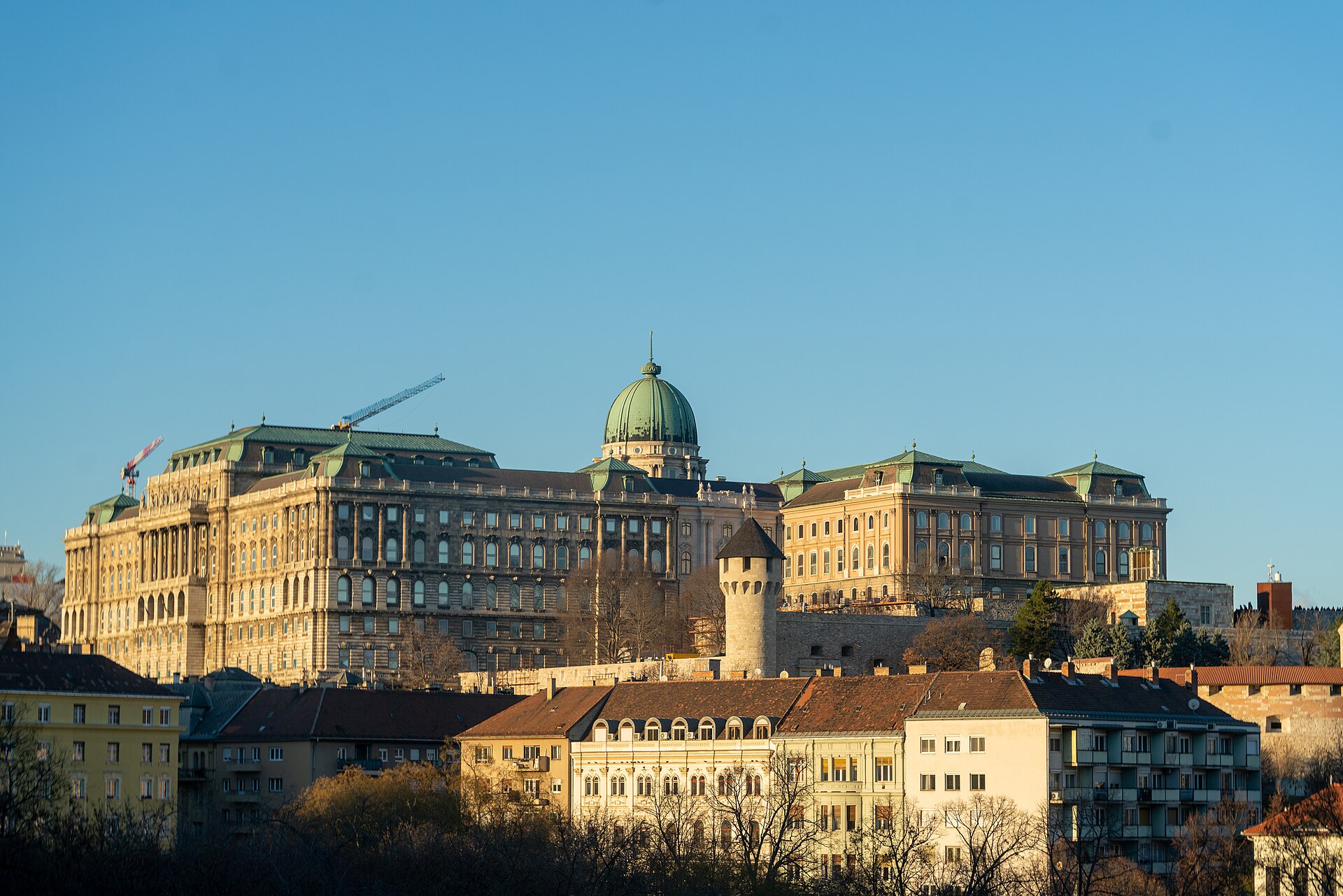
Insider tip: The Budavári Sikló funicular that creaks up the hill from the Chain Bridge is a 90-second ride and costs about 5,000 HUF (€12.50 / $13.50) return. It's a cute 1870 relic, but the queue is often longer than the climb. The stone staircase beside it gets you to the top on foot in about ten minutes for free, and you'll pass the same view. Save the funicular money for a bath.
Széchenyi Thermal Baths
Budapest sits on a geological fault that pushes up roughly 125 thermal springs, and the grand yellow neo-Baroque complex in City Park is the biggest medicinal bath in Europe: 18 pools fed by two hot springs. The famous part is the outdoor section — three large pools that stay around 38°C even when it's snowing, where locals play chess on floating boards and everyone else turns pink. Daily hours are 06:00–22:00 (indoor pools close at 20:00). A locker ticket runs about 11,900 HUF (€30 / $32) on weekdays and 13,500 HUF (€34) Friday–Sunday.

Insider tip: Arrive at opening — 07:30 in summer is the sweet spot — and you'll have the steaming outdoor pools nearly to yourself before the tour buses and the Instagram shoots arrive. Take the M1 metro to Széchenyi fürdő, a two-minute walk from the door. With Gellért shut until 2028, the next-best historic soak is Rudas Baths on the Buda side, where the original octagonal Ottoman pool dates to 1550; the rooftop panorama pool overlooking the Danube costs around 7,000 HUF (€18 / $19) on mixed evenings and weekends. Note the old Rudas thermal section is men-only on most weekdays.
St Stephen's Basilica
Budapest's largest church, finished in 1905 after the first dome collapsed mid-construction, is tied with Parliament as the tallest building in the city at exactly 96 metres — a number chosen to honour the Magyar conquest of 896, and the reason no building in central Budapest is allowed to go higher. Inside, behind glass in a side chapel, sits the mummified right hand of King Stephen I, Hungary's first king, paraded through the streets every August 20th. Entering the nave is free, with a suggested donation of 500–1,000 HUF (about €2 / $2.50) in the box by the door.

Insider tip: Pay the roughly 2,000 HUF (€5 / $5.50) for the panorama terrace around the dome — a lift takes you most of the way up, then a short stair to a 360° walkway above the rooftops. It's a calmer, cheaper climb than most European church towers and the dome terrace keeps longer summer hours (10:00–18:30, June–September) than the church below. Skip the overpriced "organ concert" tickets touts push outside; the view is the thing.
The Dohány Street Synagogue
The largest synagogue in Europe and the second-largest in the world, this 1859 Moorish Revival building in the Jewish Quarter seats around 3,000 and looks more like a cathedral than any synagogue most visitors have seen — twin onion-domed towers, a rose window, striped brick. The ticket (about 9,051 HUF / €24 / $26) is steep but covers a lot: the sanctuary, the Hungarian Jewish Museum, the Holocaust memorial garden with Imre Varga's weeping-willow Tree of Life sculpture, the mass graves of the 1944–45 ghetto, and a guided tour included at no extra cost.

Insider tip: Check the day before you go — it's closed Saturdays for Shabbat and all day Monday, with short Friday hours (10:00–14:00); the rest of the week it runs 10:00–16:00, last entry an hour before close. Men are given a paper kippah at the door; dress modestly (covered shoulders and knees) or you'll be handed a shawl. Take the included guided tour rather than wandering alone — the guides carry the history that the building alone can't tell you.
The Great Market Hall
At the Pest end of Liberty Bridge, the Nagyvásárcsarnok (Central Market Hall) is a cathedral of food under a wrought-iron roof tiled in Zsolnay ceramics, opened in 1897 and still a working market, not a museum. The ground floor is strings of dried paprika, salami hung like curtains, tubs of pickles, and jars of Tokaji wine. Entry is free. It's closed Sundays, opens 06:00 most days, and shuts early — 15:00 on Saturdays, 18:00 Tuesday–Friday — so it's a morning stop, not an afternoon one.

Insider tip: Go upstairs to the first-floor balcony for lángos — deep-fried flatbread the size of a dinner plate, traditionally rubbed with garlic and topped with sour cream and grated cheese. The upstairs stalls are where you eat; the ground floor is where tourists overpay for vacuum-packed paprika they'll never cook with. Buy paprika if you want, but check it's the real Szeged or Kalocsa stuff, and do your souvenir shopping here rather than on tourist-trap Váci utca a block away.
Szimpla Kert and the Ruin Bars
In the early 2000s, enterprising locals took over the crumbling, abandoned buildings of the old Jewish Quarter — left derelict for decades — and filled them with mismatched furniture, fairy lights, and cheap beer. Szimpla Kert, which opened in 2002 on Kazinczy utca, is the original and still the best-known "ruin bar": a warren of graffitied rooms, a Trabant car you can sit inside, a greenhouse courtyard, and bicycle parts bolted to the ceiling. Entry is free and a beer won't break you.

Insider tip: Come before 21:00 if you actually want to see the place rather than the back of someone's head — it's genuinely interesting as a space, and quieter early. On Sunday mornings Szimpla hosts a farmers' market inside, which is a surreal and pleasant way to see it sober. Next door, the Karaván street-food court does a proper lángos burger and solid Hungarian street food. One warning for late nights in District VII: avoid any bar where a friendly stranger invites you in — the "consumption girl" scam ends with a four-figure bill and a bouncer at the door.
🗓️ A 3-Day Itinerary
Day 1 — Grand Pest
Start with your pre-booked Parliament tour at Kossuth tér (about €60 / $65 non-EU; arrive 20 minutes early for security). Afterward, walk five minutes south along the embankment to the Shoes on the Danube memorial — 60 pairs of iron shoes marking the Jews shot into the river in 1944–45. It's free and quietly devastating. Walk inland to St Stephen's Basilica (dome terrace, ~€5 / $5.50) and have lunch on the pedestrian square behind it. In the afternoon, ride the 1896 M1 metro under Andrássy út out to Heroes' Square and City Park (both free). End the day soaking at Széchenyi Baths a few minutes' walk away — evening tickets are slightly cheaper and the steam under floodlights is the memory you'll keep. Budget roughly €75–90 / $80–100 per person including the Parliament tour.
Day 2 — Castle Hill and the River
Beat the crowds: be at Fisherman's Bastion by 08:30, before the upper-tower charge kicks in and before the tour groups, then step into Matthias Church (~€7.50 / $8) when it opens. Walk the ridge to Buda Castle — free courtyards, optional National Gallery. Walk down the stone steps (free) to the Chain Bridge, cross the Danube on foot, and reach the Great Market Hall by early afternoon for lángos before it closes at 18:00. Late afternoon, climb or bus up Gellért Hill to the Citadella for the single best panorama of both banks at sunset. A day of mostly free sights; budget around €25–35 / $27–40 with the church, a museum, and lunch.
Day 3 — The Jewish Quarter and local life
Morning at the Dohány Street Synagogue (~€24 / $26, closed Saturday and Monday) and its memorial garden, then wander the Jewish Quarter (District VII) to find the enormous street-art murals on Kazinczy and Rumbach streets. Lunch at Karaván street-food court beside Szimpla. Spend the afternoon in Gozsdu Udvar, a chain of covered courtyards full of cafés and bars, or detour to the House of Terror museum on Andrássy for the harrowing 20th-century history. In the evening, ease into the ruin-bar scene at Szimpla Kert. Budget around €35–50 / $38–55 per person.
🧠 Essential Tips
Best time to visit
May, June, September, and early October are the sweet spots: daytime highs of roughly 18–26°C, manageable crowds, and hotel rates about 30–40% below the July–August peak. July and August are hot (often 30°C-plus) and busy, though that's when the city throws its biggest parties — the Sziget Festival on Óbuda Island (11–15 August 2026) and the Hungarian Grand Prix at the Hungaroring (late July), both of which spike accommodation prices citywide, so book far ahead if you're coming for them. December brings the Christmas markets at Vörösmarty tér and in front of St Stephen's Basilica (mid-November to early January) — cold, but genuinely lovely, and the baths are even better when it's freezing. March and early spring are the cheapest months if you don't mind 5–12°C days.
Getting around
Budapest's transport is run by BKK and it's excellent: four metro lines, trams, buses, and trolleybuses on one ticket system. A single ticket is 500 HUF (about €1.25) bought in advance, or 700 HUF from the driver — so buy ahead. Better value for a few days: a 72-hour travelcard at 5,750 HUF (€14.50 / $15.50) covers everything unlimited. Download the official BudapestGO app to buy and store tickets on your phone, but carry one paper ticket as a backup; inspectors are frequent and fine fare-dodgers on the spot. Tram 2 along the Pest riverbank is a sightseeing ride disguised as public transport. From the airport, the 100E Airport Express bus runs to Deák Ferenc tér downtown for a dedicated 2,500 HUF (€6.30) ticket — note that no other pass or ticket is valid on it.
Safety and scams
Budapest is a safe city for visitors; the risks are to your wallet, not your person. The biggest one is taxis. Never get in an unmarked cab, and never accept a driver who approaches you — at the airport, at Keleti station (where unlicensed drivers have quoted 15,000–25,000 HUF for a trip that should cost under 2,000), or near Széchenyi Baths, Váci utca, and the Chain Bridge. Use the Bolt app, which locals use for nearly everything, or the licensed yellow Főtaxi rank; a metered 5 km ride is roughly 2,700–3,200 HUF. The other classic is the nightlife "consumption girl" scam in District VII: an attractive stranger suggests a bar, you order a round, and the bill arrives at four figures with a bouncer blocking the door. Also skip the currency-exchange booths on Váci utca with their terrible rates — withdraw forint from a bank ATM instead, and always decline the machine's offer to "convert" to your home currency.
Food worth seeking out
Real Hungarian gulyás is a soup, not the thick stew foreigners expect — that's pörkölt, and both are excellent. Order chicken paprikás (paprika-cream sauce over dumplings) at a traditional vendéglő. On the street, it's lángos at the Great Market Hall balcony and kürtőskalács (chimney cake — sweet dough spun on a spit and rolled in sugar) from the stalls downtown. For dessert, a slice of Dobos torte at a historic café; the gilded New York Café is the grandest (and most touristed) place to have coffee and cake in extravagant surroundings. Pay with card almost everywhere, but keep small forint notes for the markets and for tipping (10% is standard, and check it's not already on the bill).
🏨 Accommodation Guide
Budget (€12–40 / $13–45 a night): Hostels cluster in District VII, the Jewish Quarter — Wombat's City Hostel does dorm beds from around €15–25 and sits in the middle of the nightlife, which is a feature or a bug depending on how you sleep. District VIII (Józsefváros), just south, has cheaper guesthouses and is gentrifying fast.
Mid-range (€75–150 / $80–165 a night): This is where Budapest shines. District V (Belváros/Lipótváros) is the central, walkable heart — Hotel Rum in District VII (around €80–150) and Gerlóczy Boutique Hotel in District V (around €80–130) are solid picks. District VI along Andrássy út, near the Opera House, has a more residential feel with the M1 at the door; Hotel Moments Budapest runs about €130–220.
Luxury (€180–900 / $195–970 a night): The Four Seasons Gresham Palace, an Art Nouveau landmark overlooking the Chain Bridge, is the grande dame at €400–900-plus. The Boscolo (New York Palace) in District VII, home to the New York Café, runs €180–350. For atmosphere over gloss, the Castle District (District I) puts you beside Fisherman's Bastion at dawn — the Hilton Budapest sits €180–350 — though there's no metro up there, so factor in buses or the funicular for evenings out.
🎭 Beyond the Tourist Trail
Most visitors never cross to District XIII and Óbuda, which is where to go for the Budapest locals actually live in. Pest's District XIII hugs the river north of Parliament and leads to Margaret Island, a car-free green strip in the middle of the Danube with a musical fountain, a running track, and the ruins of a 13th-century convent — free, and the city's communal backyard on a warm evening. Further out, Óbuda (the "old Buda" that predates the rest) has Roman ruins at Aquincum and a quiet main square that feels like a village.
For a local soak away from the Instagram crowds, Lukács Baths in District II is where Budapest's regulars go — a fraction of Széchenyi's price (around 5,000–6,500 HUF / €13–16) and full of people who've been coming for forty years. And if you're here in September, the Budapest Wine Festival takes over the Buda Castle courtyards in early September — Hungarian winemakers (Tokaji, Egri Bikavér, Furmint) pouring with the whole city spread out below you. It's one of the few events where the setting and the thing happening in it are equally good.
❤️ Plan Your Budapest Trip with VoyaBear
Budapest rewards a plan — the Parliament tours that sell out, the baths that are best at 07:30, the synagogue that's shut when you turn up on a Saturday. That's exactly the kind of sequencing VoyaBear is built for. Tell us how many days you have, whether you're here for the thermal baths or the ruin bars or both, and what you want to spend, and we'll build you a day-by-day itinerary with the bookings timed right, the neighborhoods matched to how you travel, and the two-tier ticket prices sorted out before you arrive. Start planning your Budapest trip with VoyaBear and spend your time soaking, not scrolling.
Want this as an actual itinerary?
VoyaBear turns a guide like this into a day-by-day plan built around how you travel.
Plan my trip free