Busan 2026: The Complete Travel Guide to South Korea's Coastal City
22 September 2026 · 12 min read
Busan is the city where South Korea stops being about Seoul. It's the country's second-largest city and its biggest port, wrapped around a coastline of beaches, headlands and fishing harbors, with mountains pushing right down to the water so that neighborhoods climb the slopes in stacked rows. In 2026 it's easier to reach than ever: the KTX high-speed train runs from Seoul in about 2 hours 20 minutes for ₩59,800 (roughly $43 / €40) in standard class, and Gimhae International Airport sits 30 minutes from downtown. What you get for the trip is a place that does seafood better than anywhere else in Korea, runs a free drone show over the ocean every Saturday night, and lets you ride a glass capsule along a clifftop rail line that used to be a working railway. Here's exactly how to do it, with real prices, real place names, and the tips that actually save you time.
🏙️ Essential Experiences
Gamcheon Culture Village
A hillside of pastel houses stacked in terraces above the harbor, Gamcheon started as a refugee settlement during the Korean War and was repainted into an art village in 2009. It photographs absurdly well, but the real pleasure is getting lost in the alleys, following the fish-shaped wooden arrows that mark the walking route, and finding the small galleries and cafés tucked between homes. Entry to the village is free; a few galleries and photo spots charge small fees of ₩1,000–2,000. Buy the stamp map (around ₩2,000) from the information center if you want the collect-the-stamps game that leads you past the best viewpoints.
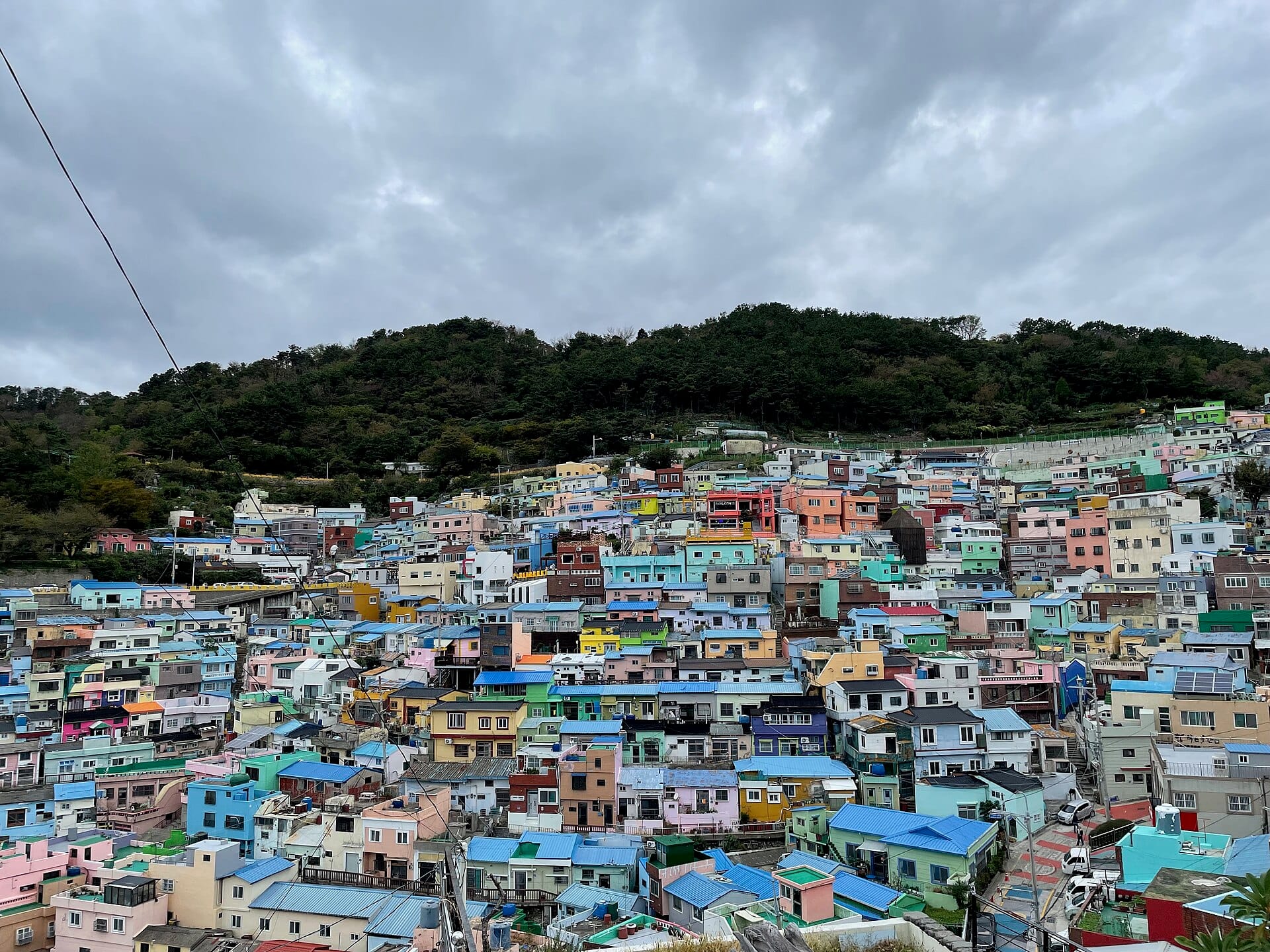
Insider tip: Come on a weekday before 10 a.m. By late morning the main lanes fill with tour groups and the narrow staircases bottleneck. Get there from Toseong Station (Line 1, Exit 6) and take the small local bus (2 or 2-2) up the hill, or walk 15 minutes uphill if your legs are willing. Remember that people actually live here, so keep your voice down and don't photograph into windows.
Haedong Yonggungsa Temple
Most Korean temples sit in the mountains. Haedong Yonggungsa sits on the rocks at the edge of the sea, northeast of the city in Gijang-gun, with waves breaking directly below the shrine halls. Traditionally dated to 1376 and rebuilt in the 1930s, it's one of the few Korean temples built right on the coast, and the combination of gray stone, painted eaves and open water is the reason to make the trip out. Entry is free.
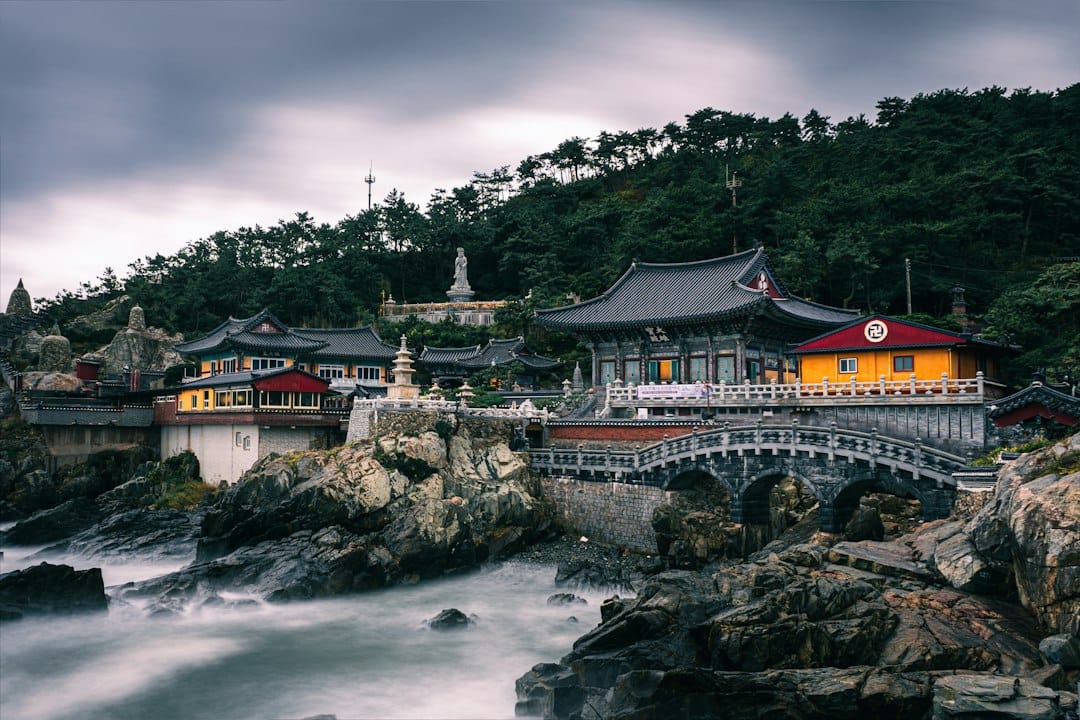
Insider tip: Go at sunrise. The temple opens early, the light comes up directly over the water behind the halls, and you'll have the place to yourself for an hour before the buses arrive around 9–10 a.m. Take bus 181 from Haeundae Station or a taxi (about ₩15,000–18,000, roughly $11–13). It's a genuinely quiet, atmospheric visit early; by midday it's a crowded selfie queue on the stone bridge down to the main hall.
Haeundae Beach & the Blueline Park Sky Capsule
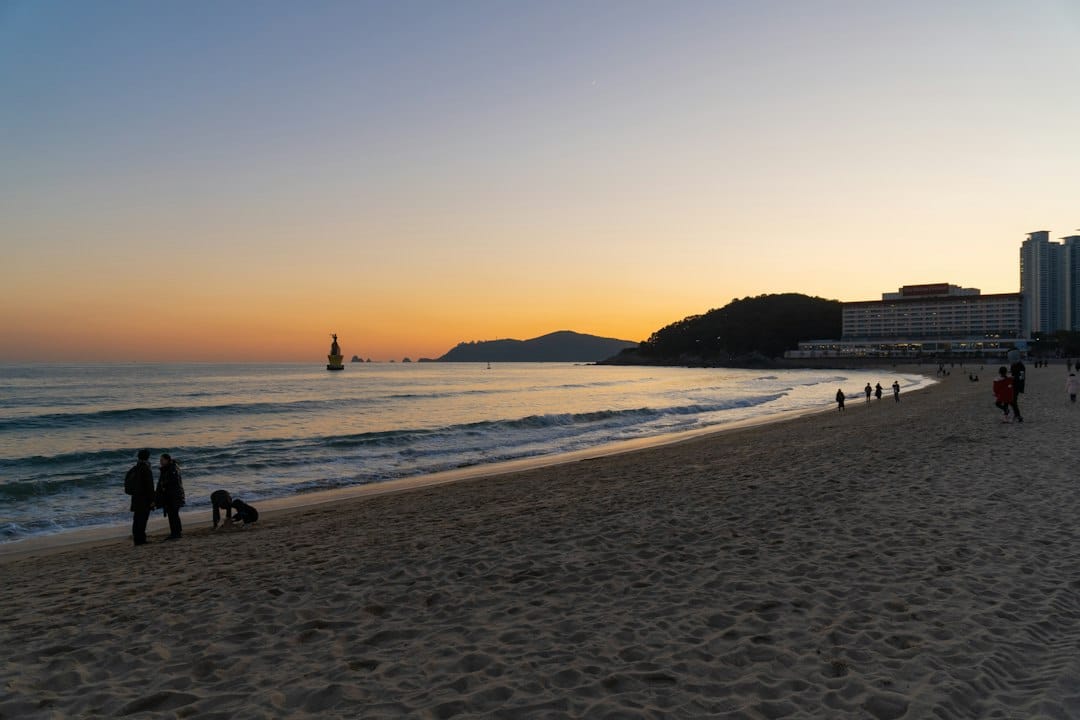
Haeundae is Busan's showpiece beach — a 1.5-km crescent of sand backed by the high-rise skyline of Marine City. The swimming is fine in July and August, but the thing worth planning around is the Haeundae Blueline Park, built on a disused coastal railway. Two ways to ride it: the Sky Capsule, four-person pastel pods that trundle along an elevated rail 10 meters above the shoreline from Mipo to Cheongsapo (the pretty 2.3-km stretch), and the ground-level Beach Train that runs the full 4.8 km to Songjeong.
Costs: the Sky Capsule is priced per capsule, one-way — ₩40,000 for two people (about $29 / €27), ₩45,000 for three, ₩50,000 for four. The Beach Train is ₩8,000 for a single ride or ₩16,000 for an all-stops day pass (about $5.80 and $11.60). Insider tip: Book the Sky Capsule online a few days ahead — weekend slots sell out and the on-site queue can run over an hour. Ride the Sky Capsule one-way from Mipo to Cheongsapo for the sea views, then walk back along the coastal path or take the Beach Train, which is the cheaper and honestly more scenic ride.
Gwangalli Beach & the Gwangan Bridge Drone Show
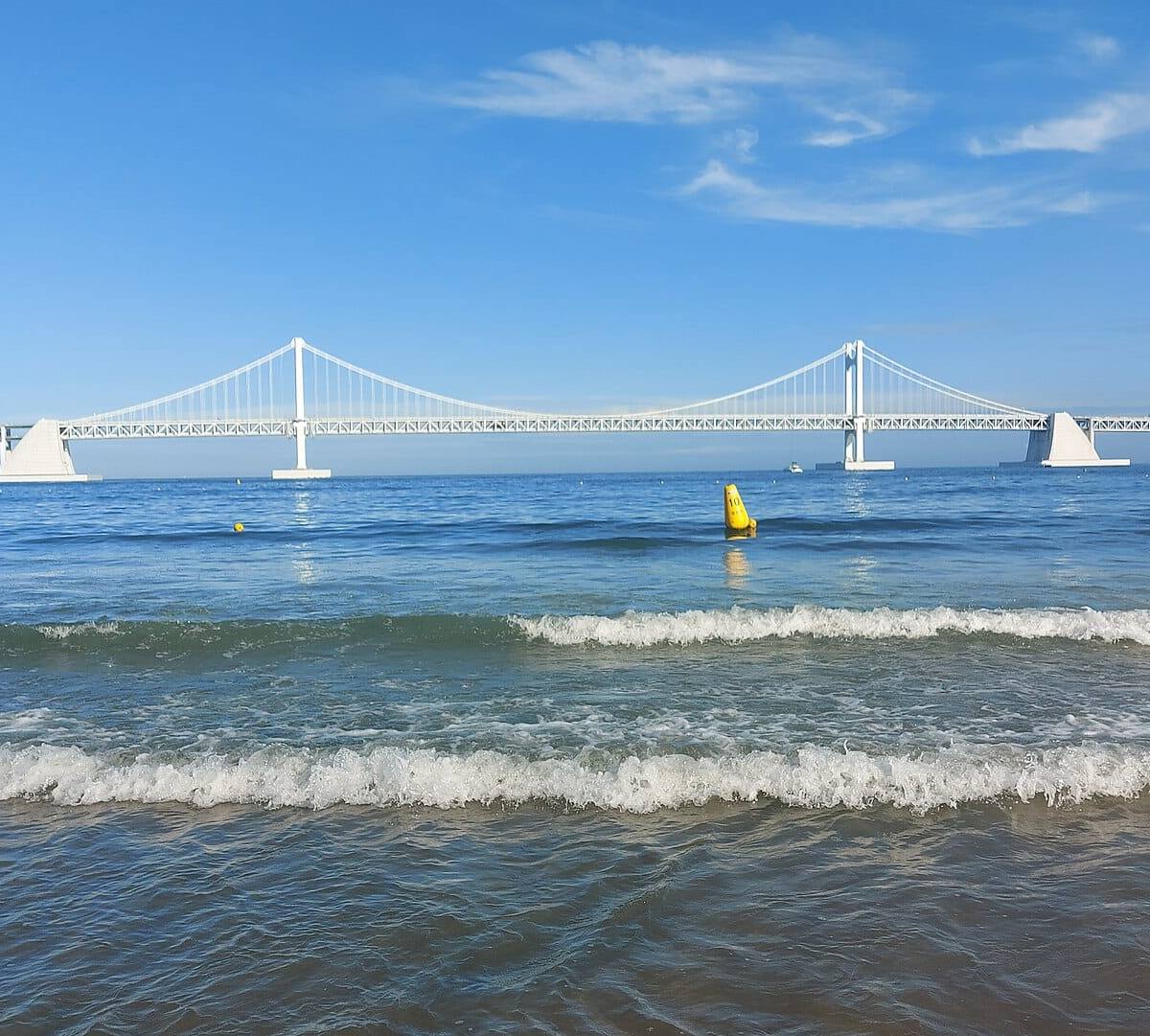
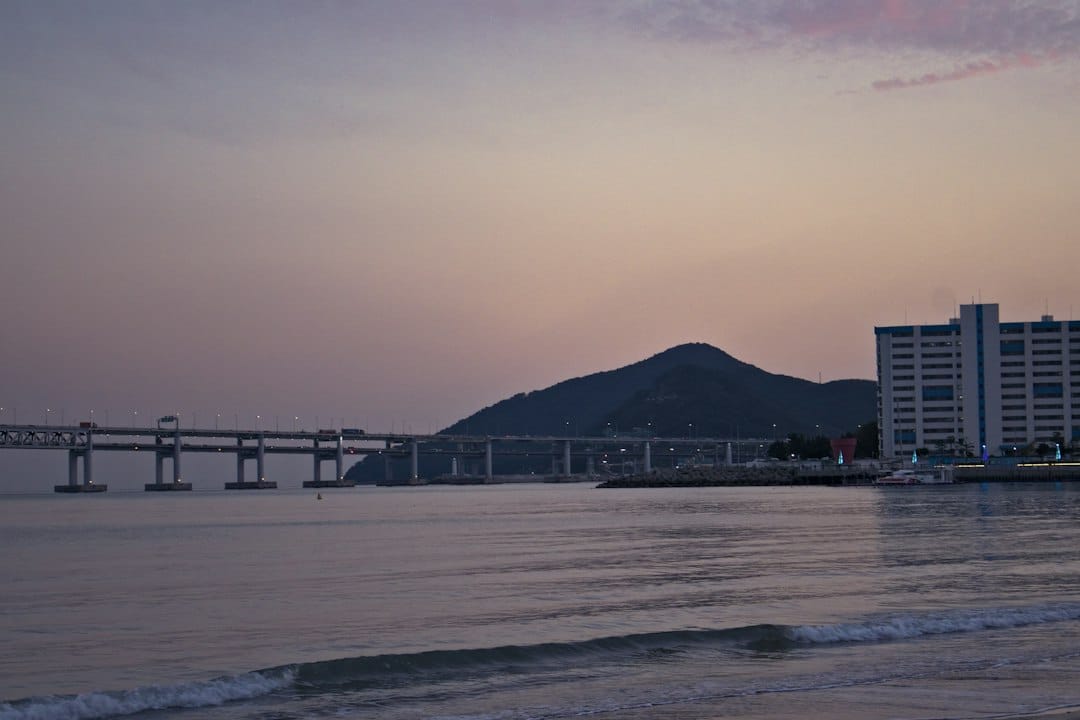
Gwangalli is the beach locals pick over Haeundae: a softer sweep of sand facing the two-tier Gwangan Bridge, lined with cafés, pojangmacha (tented bars) and hoe (raw fish) restaurants. The bridge lights up after dark, but the reason to be here on a Saturday night is the free Gwangalli M Drone Light Show — hundreds of drones forming shifting shapes over the water, run by the city year-round.
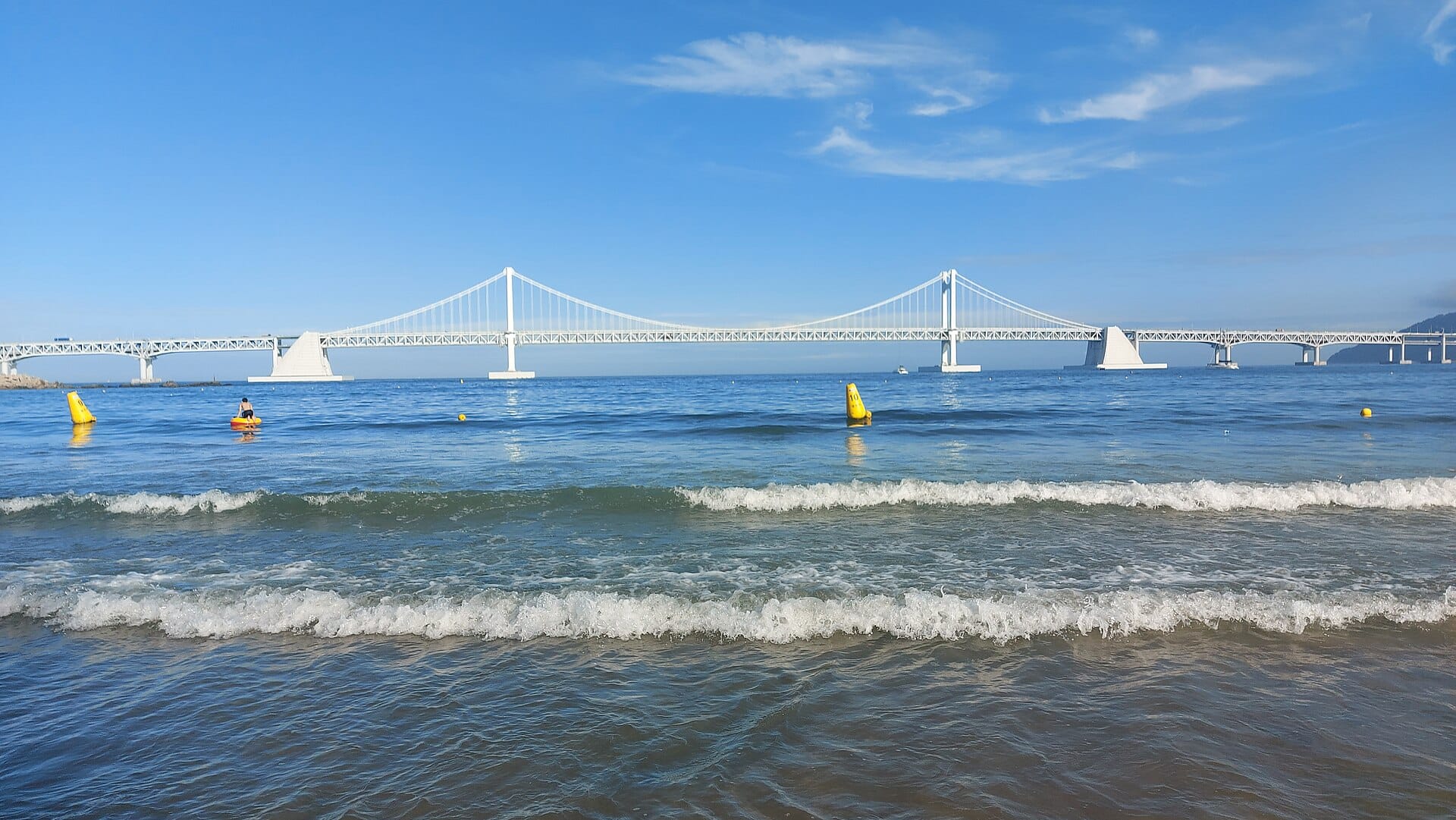
Timing: the show runs every Saturday and is completely free. From March to September it plays at 8:00 p.m. and 10:00 p.m.; from October to February at 7:00 p.m. and 9:00 p.m. Each show lasts about 12 minutes. Insider tip: Stake out a spot on the sand near the center of the beach 30–40 minutes early on summer Saturdays, or grab a second-floor café window seat facing the bridge if you'd rather sit. Shows can be canceled for weather, usually announced the day before on the Visit Busan channels, so check before you commit your evening.
Jagalchi Market & BIFF Square
Jagalchi is Korea's largest seafood market, run for generations largely by the women vendors known as jagalchi ajumma. The ground floor is a wet market of tanks and ice — hagfish, abalone, king crab, octopus — and the deal upstairs is simple: pick your fish downstairs, and a second-floor restaurant will cook or slice it for you (expect a preparation charge on top of the fish price). It's the most direct way to eat Busan's seafood at the source.
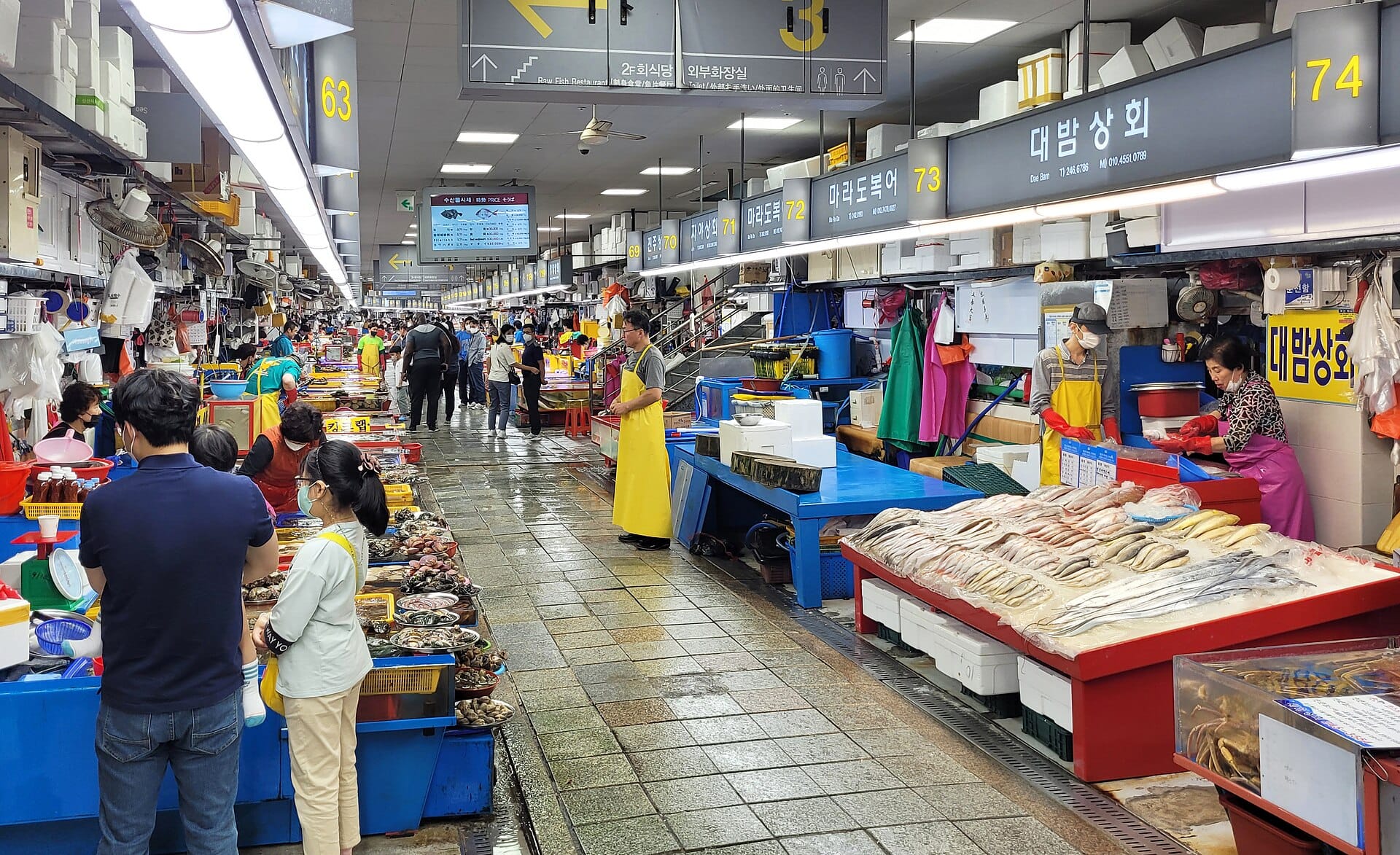
Insider tip: The market is closed on the 1st, 3rd and 5th Tuesdays of each month, so don't plan your seafood day around one of those. Agree the total price — fish plus the upstairs cooking fee — before you hand anything over. Two minutes' walk away is BIFF Square, the cinema district that hosts the Busan International Film Festival, where street stalls sell ssiat hotteok: a fried sweet pancake split open and stuffed with seeds and brown-sugar syrup, ₩2,000–3,000 (about $2). It's the single best snack in the city for the price.
Beomeosa Temple
If Haedong Yonggungsa is the coastal temple, Beomeosa is the mountain one — a large working Seon (Zen) monastery on the slopes of Geumjeongsan, founded in 678 CE during the Silla dynasty. The Iljumun (One Pillar Gate) and the Silla-era stone pagoda are the standouts, and the forested setting means the temperature drops noticeably as you climb up from the city. Entry is free and it's open daily 8:00 a.m.–5:00 p.m.
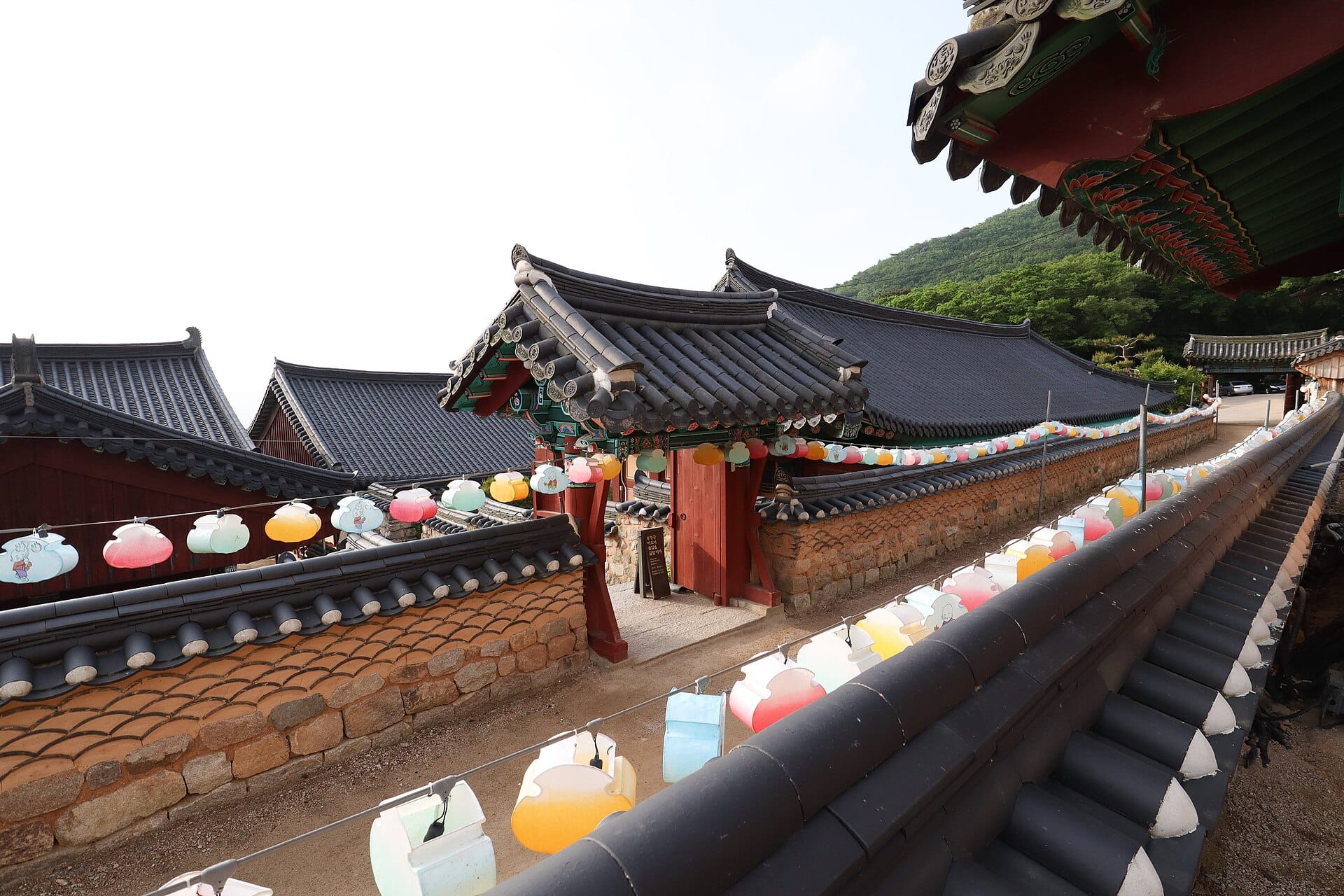
Insider tip: Take Line 1 to Beomeosa Station, leave via Exit 5 or 7, and catch bus 90 to the temple parking area — the walk up from there is short but uphill. Beomeosa runs an overnight templestay program if you want the 4 a.m. chanting and temple-food experience; book through the official templestay site in advance, as English sessions fill up. Combine it with a hike on Geumjeongsan and the old fortress wall if you've got the morning.
Taejongdae
On the southern tip of Yeongdo island, Taejongdae is a park of forested cliffs dropping into the sea, with a lighthouse, an observatory, and rock platforms where locals eat fresh hoe with soju. The loop road is 4.3 km — walkable in about 90 minutes — but the little Danubi tram saves your legs and stops at the main viewpoints. Park entry is free; the Danubi train is ₩4,000 round-trip for adults (about $2.90 / €2.70).
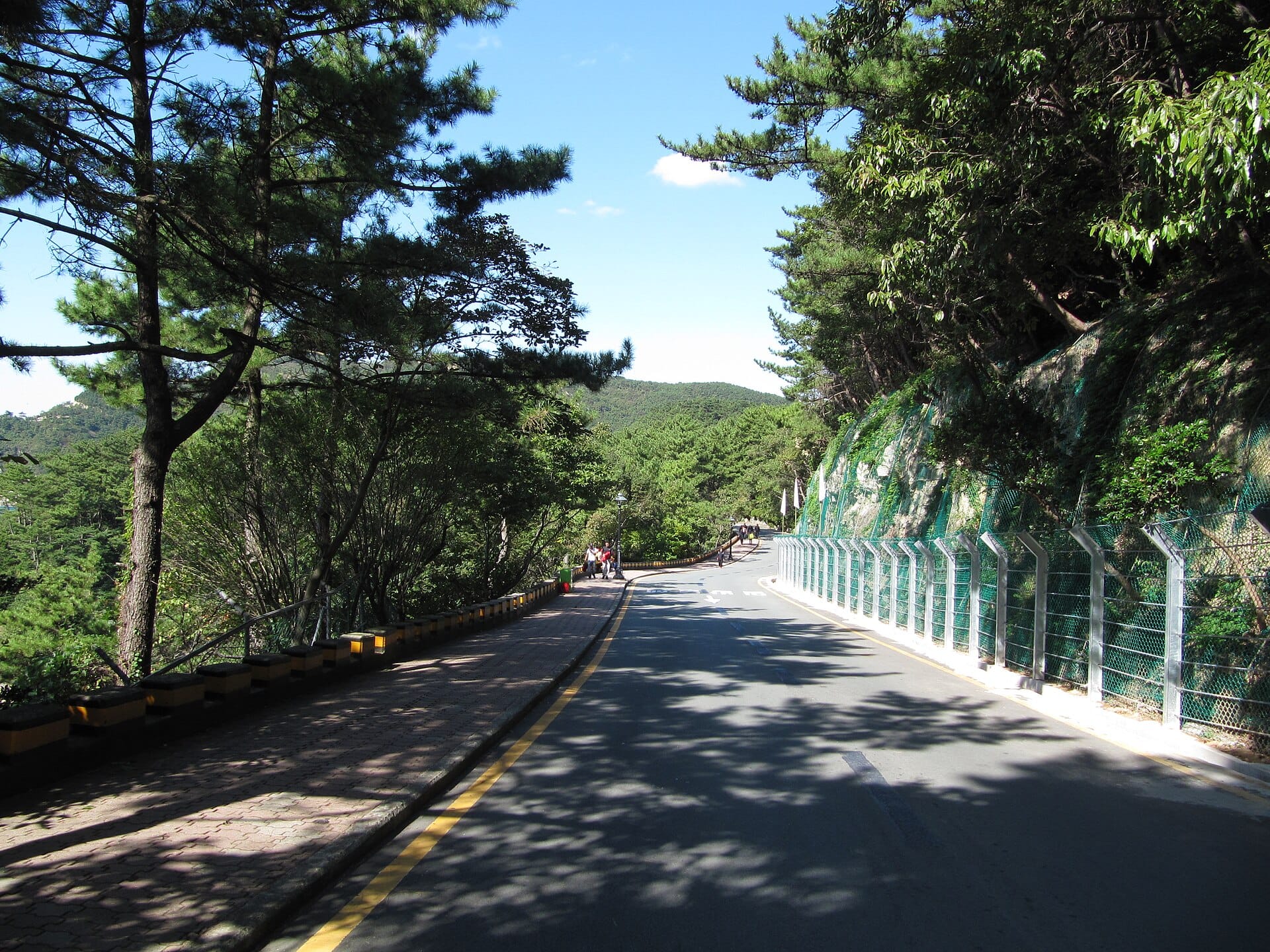
Insider tip: Taejongdae is closed on Mondays, and so is the tram. Get there on bus 8, 30, 66, 88 or 186 from Nampo Station (Line 1, Exit 6). Ride the tram down to the Yeongdo Lighthouse stop first, walk out to the observation deck and the rock shelf below it, then walk the shaded downhill sections back — that way you spend your energy on views, not on the climb.
Songdo Beach & the Busan Air Cruise Cable Car
Songdo was Korea's first public beach, opened in 1913, and it's had a quieter second life since the Busan Air Cruise cable car opened. The line runs 1.62 km across the bay at a height of 86 meters between Songnim Park and Amnam Park, and the ride is genuinely dramatic — open water below, the city stacked behind you. Round-trip fares are ₩15,000 for a standard cabin (about $11) or ₩20,000 for a crystal cabin with a glass floor (about $14.50 / €13.40).
Insider tip: The crystal cabin is worth the extra ₩5,000 only if a glass floor over the sea appeals to you; the view is identical from a standard cabin. Down at beach level, the free Songdo Skywalk — a cloud-shaped pier that curves out over the water — costs nothing and delivers most of the drama. The cable car runs roughly 9:00 a.m. to 8:00 p.m., later in peak summer, and lines are shortest right at opening.
🗓️ A 3-Day Itinerary
Day 1 — Old Busan: hills, market, port
Start at Gamcheon Culture Village by 9 a.m. before the crowds (Toseong Station, then the hill bus). Spend two hours in the alleys, then head back to Line 1 and ride to Jagalchi station for lunch at the seafood market — pick a fish and have it done upstairs, budget ₩20,000–35,000 per person ($15–25) for a shared spread. Walk it off through BIFF Square and grab a ssiat hotteok (₩3,000). In the afternoon, climb to Yongdusan Park and Busan Tower for the harbor overview, then browse the Bupyeong Kkangtong Night Market in Nampo for eomuk (fish cake, from ₩1,000 a skewer) as the stalls light up. Total transit for the day is a handful of metro rides at ₩1,600 each (about $1.15).
Day 2 — East coast: temple, beach, bridge
Beat the buses to Haedong Yonggungsa at sunrise (bus 181 from Haeundae or a ₩15,000 taxi). Back at Haeundae Beach mid-morning, ride the Sky Capsule one-way from Mipo to Cheongsapo (₩40,000 for two, booked ahead) and walk the coastal path. Lunch on milmyeon — Busan's cold wheat noodles, ₩7,000–9,000 — then walk out to Dongbaek Island's wooded loop for the Marine City skyline view. In the evening, move to Gwangalli Beach for dinner facing the Gwangan Bridge, and if it's a Saturday, stay for the 8 p.m. drone show. Sunset drinks at The Bay 101 across the water are the classic move if it isn't.
Day 3 — Mountain, island, city
Head north to Beomeosa Temple first thing (Beomeosa Station, bus 90) for the quiet mountain monastery before the day heats up. Back in town, choose your afternoon: the cliffs of Taejongdae with the Danubi tram (buses from Nampo; avoid Mondays), or the Songdo cable car and Skywalk if you want more sea and less walking. Wind up in Seomyeon, the city's downtown, for a bowl of dwaeji gukbap — the milky pork-and-rice soup that is Busan's signature comfort food, ₩8,000–10,000 ($6–7) — in the Gukbap Alley, then espresso and dessert on Jeonpo Café Street a few blocks over.
🧠 Essential Tips
Best months to visit
Aim for April, May–June, or late September through November. April brings cherry blossoms — the Namcheon-dong Cherry Blossom Road near Gwangalli is the city's best display, usually peaking late March to early April. October is arguably the ideal month: crisp weather, and the Busan International Film Festival (its 31st edition runs October 6–15, 2026, centered on the Busan Cinema Center in Centum City) fills the city with screenings and energy. Avoid July if you can — it's the monsoon month, hot and wet — and note that August is peak domestic-holiday crowds with the highest hotel prices. Winter is cold and windy by the sea but the cheapest time to come, and the beaches are empty and photogenic.
Getting around
Buy a Cashbee or T-money transit card at any convenience store, load it with cash, and tap onto the metro and buses — it drops the base metro fare to ₩1,600 (about $1.15) and lets you transfer for free. Busan's metro is clean, signed in English, and covers most of what you'll want. For anything off the rail map, use Kakao T, the taxi app locals actually use; hailing on the street works too, but the app spares you the language gap. From Gimhae Airport (PUS): the cheapest route is the Busan–Gimhae Light Rail to Sasang, then Metro Line 2 — about ₩2,800 (roughly $2) and 45 minutes to the center. A taxi runs ₩20,000–30,000 ($15–22) and takes 30–45 minutes depending on traffic. The last light rail leaves the airport around 11 p.m.; after that it's Kakao T.
Safety and the small stuff
Busan is very safe — violent crime against tourists is rare and you can walk almost anywhere at night. The real risks are mundane: strong rip currents at Haeundae and Songjeong in summer (swim between the flagged zones and heed the lifeguards), and slippery rocks at Taejongdae and Yonggungsa if you climb down to the water. At Jagalchi and other markets, always confirm the total price before ordering, including the upstairs cooking fee, so there's no surprise at the end — it's not a scam so much as a language and expectation gap. Tipping is not customary anywhere in Korea, so don't. And carry a little cash: market stalls and older restaurants may not take foreign cards.
Food worth crossing town for
Busan's food is its own dialect. Dwaeji gukbap (pork-and-rice soup) is the city's soul food — the Seomyeon Gukbap Alley is thick with specialists, and Ssangdungi Dwaeji Gukbap is a long-running local favorite. Milmyeon, the chewy cold wheat noodles invented here by wartime refugees, is a summer staple at around ₩8,000. Add eomuk (Busan-style fish cake — the Samjin Eomuk brand started here in 1953), ssiat hotteok at BIFF Square, and hoe (raw fish) eaten Gwangalli-style with the bridge lit up behind you. Don't leave without one bowl of gukbap and one plate of hoe.
🏨 Accommodation Guide
Budget (about $25–55 / €23–50 a night): Base yourself in Seomyeon or Nampo-dong, where guesthouses and Korean business hotels cluster near the metro. Seomyeon is the transit crossroads (Lines 1 and 2 meet here), so you're never far from anywhere; Nampo puts you next to Jagalchi and BIFF Square. Dorm beds and small private rooms sit at the lower end of this range, simple business hotels at the top.
Mid-range (about $65–130 / €60–120 a night): Gwangalli is the sweet spot — bridge views, the best casual dining and bar scene, and a more local feel than Haeundae, with boutique hotels like Arton Busan. In Seomyeon, full-service options such as the Lotte Hotel Busan (connected to a department store) sit in this band on weekdays.
Luxury (about $230–500+ / €210–460+ a night): Haeundae is where the big names line the beach — the Park Hyatt Busan and Paradise Hotel Busan on the sand, the Signiel Busan occupying the upper floors of the LCT tower with floor-to-ceiling sea views, and the beachfront Westin Josun Busan beside Dongbaek Island. Rates climb hard in August and during BIFF, so book those windows early.
🎭 Beyond the Tourist Trail
For a different side of Busan, ride out to Huinnyeoul Culture Village on the west coast of Yeongdo island — a strip of white houses along a cliff edge above the water, quieter than Gamcheon and used as a film location, with a seaside walking path below the village and small cafés looking straight out to the shipyards. Back in the center, Jeonpo Café Street in Seomyeon has grown from a former tool-and-machine district into one of Korea's better independent coffee scenes — it's where you go for a proper flat white between temple visits. And in the far southwest, Amnam Park (the far end of the Songdo cable car) has coastal boardwalks and near-empty viewpoints on weekdays. If you're here in autumn, the whole city tilts toward the film festival in early October and the fireworks that follow later in the month over Gwangalli — worth timing a trip around if crowds don't put you off.
❤️ Plan Your Busan Trip with VoyaBear
Busan rewards a plan: knowing that Jagalchi shuts on odd Tuesdays, that the Sky Capsule sells out on weekends, and that the drone show only flies on Saturdays is the difference between a smooth trip and a frustrating one. VoyaBear builds personalized, day-by-day itineraries around exactly this kind of detail — matched to your travel dates, your pace, and whether you're here for the seafood, the temples or the beaches. Tell us when you're going and what you love, and we'll map your Busan trip down to which bus, which bowl of gukbap, and which Saturday to be on Gwangalli sand. Start planning your trip with VoyaBear →
Want this as an actual itinerary?
VoyaBear turns a guide like this into a day-by-day plan built around how you travel.
Plan my trip free