Chiang Rai 2026: The Complete Guide to Thailand's Northern Art-and-Mountain City
28 September 2026 · 13 min read
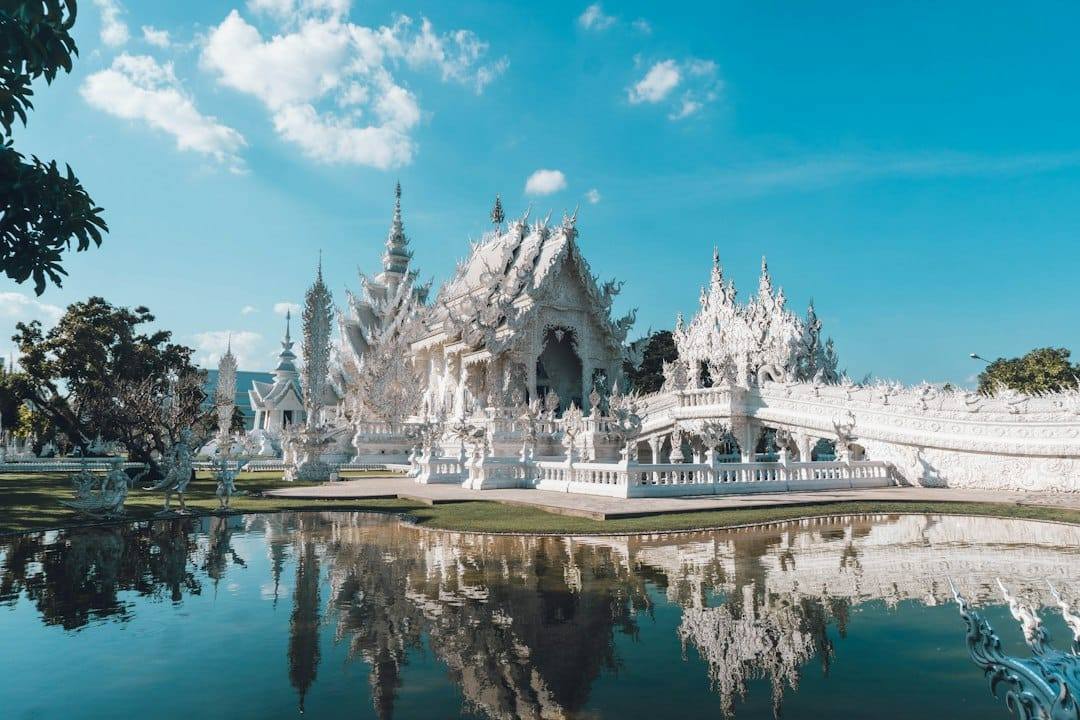
Chiang Rai sits some 800 km north of Bangkok, near the point where Thailand, Laos and Myanmar meet along the Mekong. Most travelers give it a single rushed day-trip from Chiang Mai to photograph one white temple and leave. That is a mistake. This is the province that grows most of Thailand's arabica coffee and oolong tea, the base camp for the mountain-and-mist country around Doi Tung and Phu Chi Fa, and the home of two of the country's strangest contemporary art projects built as functioning temples. The city itself is small enough to cross on foot in twenty minutes and cheap enough that a good dinner runs under 150 baht (about $4.50 / €4). Give it three days and it stops being a photo stop and becomes the reason you came north.
A practical note before you plan: foreigner admission to the White Temple doubled to 200 baht on 1 January 2026, and the cool, clear season that makes the region worth the trip is a narrow window. Time it right and you get 25°C days and mountain sunrises; time it wrong and you get either monsoon mud or March smoke. The details below are current for 2026, with real prices, hours and place names checked against the venues themselves.
🎭 Essential Experiences
Wat Rong Khun (The White Temple)
This is the one on every postcard, and for once the hype is earned. Artist Chalermchai Kositpipat began Wat Rong Khun in 1997 and is still building it; it is a working Buddhist temple financed and designed as a single artist's life project, blindingly white and studded with mirror glass so it flares in the sun. The approach crosses a bridge over a pit of reaching sculpted hands representing desire, and the main hall's murals mix Buddhist iconography with Kung Fu Panda, Neo from The Matrix and a burning Twin Towers. It is deliberately unsettling, not serene.
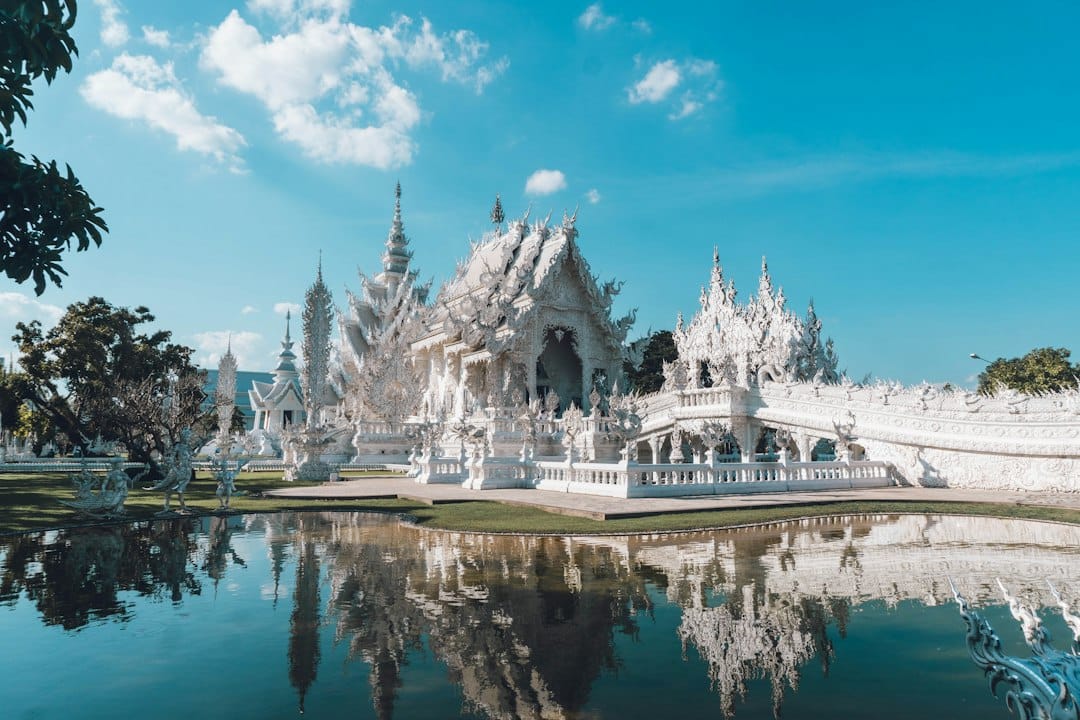
What to do: Cross the bridge of hands, photograph the ubosot exterior (no photos allowed inside the main hall), then find the golden building to the side — it is the toilets, and it is the most ornate restroom you will ever use. Insider tip: The temple is 13 km south of the city and fills with Chiang Mai tour buses from about 9:30am. Arrive at the 8:00am opening and you will have the bridge nearly to yourself for half an hour. Cost: 200 baht for foreigners (about $6 / €5.40), free for Thai nationals; open daily 8:00am–5:30pm, ticket counter closes around 5:00pm. Shoulders and knees must be covered.
Wat Rong Suea Ten (The Blue Temple)
If the White Temple is desire and hell, the Blue Temple is calm. Finished in 2016, it was built by Phuttha Kabkaew, a local artist who trained under Chalermchai Kositpipat while working on Wat Rong Khun, then went off to do the opposite in sapphire blue and gold. The interior is dominated by a large white seated Buddha against walls of deep cobalt, lit so the gold flame-work seems to glow. The name means "Temple of the Dancing Tiger," after the tigers that once crossed the canal here.
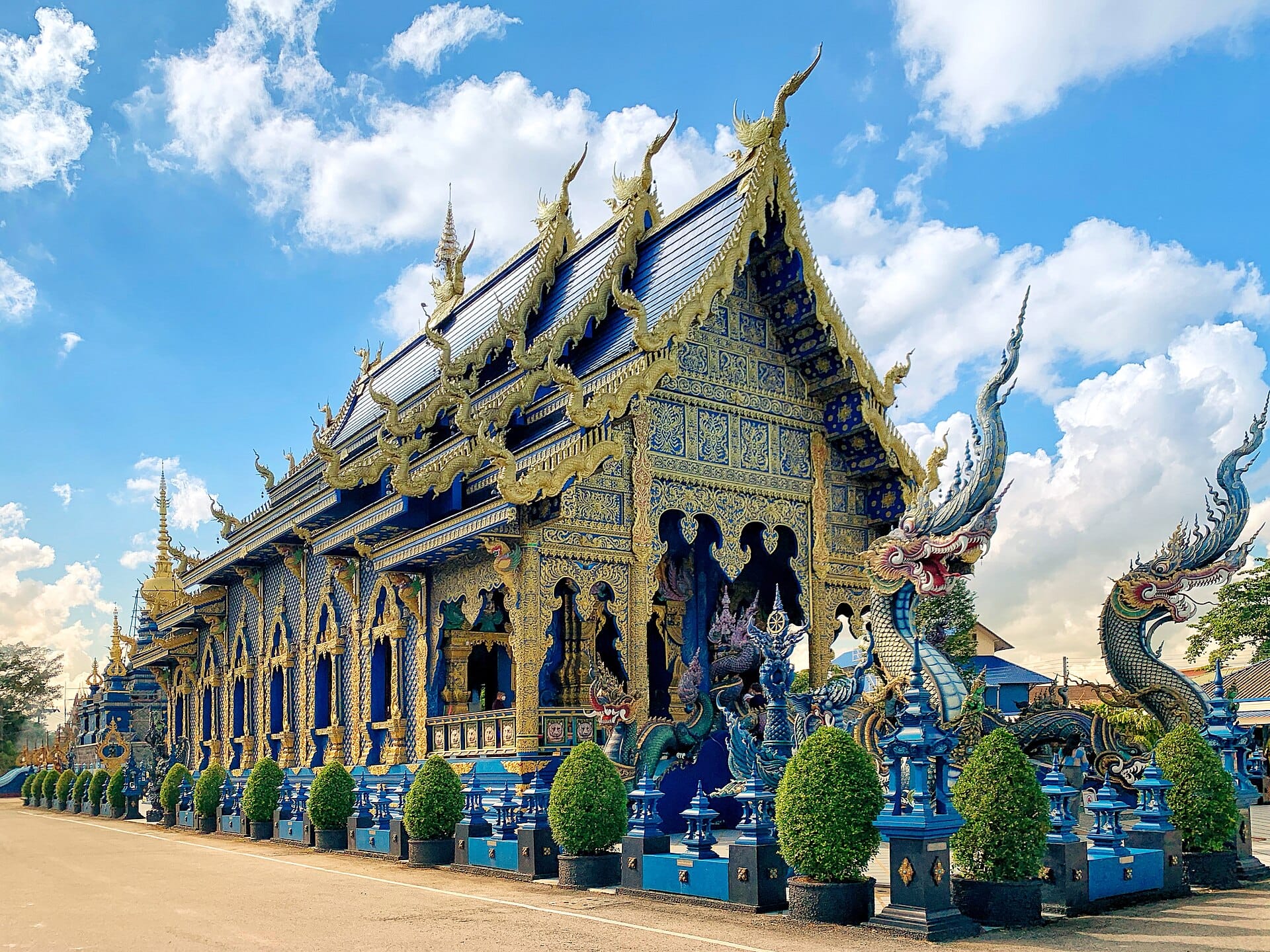
What to do: Sit for a few minutes inside — the blue interior is genuinely one of the calmer temple spaces in the north — then get the classic shot of the white Buddha framed by the doorway. There is a blue soft-serve ice cream stand across the road that has become a small ritual. Insider tip: It is 3 km north of the center and far quieter than the White Temple; go here in the late afternoon after the tour crowds have moved on. Cost: Free; open daily 7:00am–8:00pm.
Baan Dam (The Black House)
Baan Dam is the dark counterweight to the White Temple, and the more rewarding visit for anyone tired of gold Buddhas. It was the life's work of national artist Thawan Duchanee, built over more than four decades until his death in 2014: roughly 40 black timber buildings in Lanna style, filled with animal skulls, bones, snake skins, carved wooden phalluses and enormous dining tables that look set for a demon's banquet. It is a museum of death and impermanence, not a temple, and it is deeply strange.
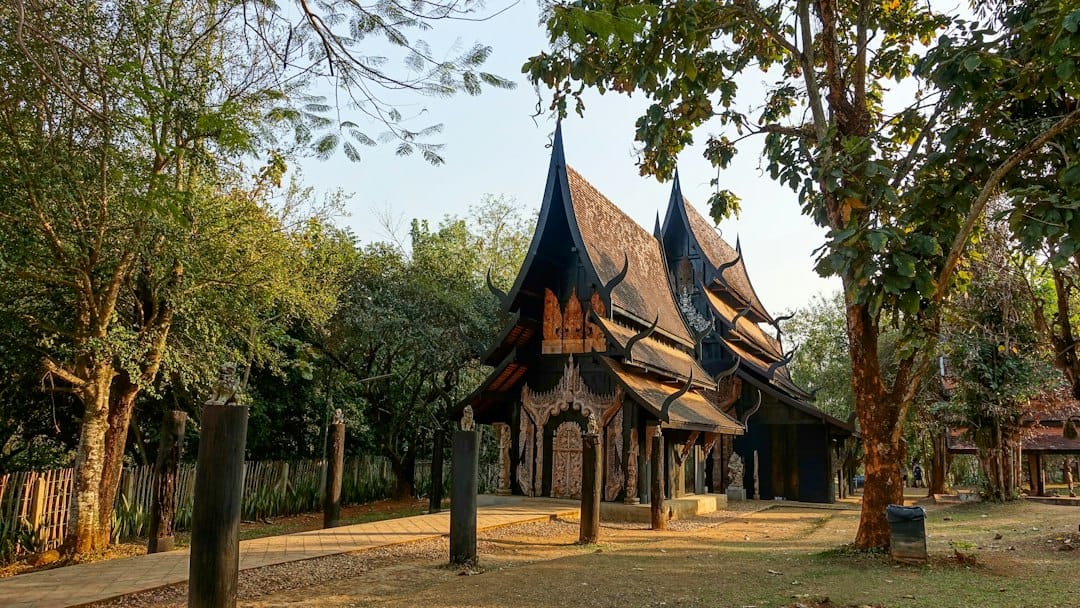
What to do: Wander the whole compound — the small outbuildings hidden at the back hold the oddest pieces, and most visitors miss them. Allow 60–90 minutes. Insider tip: It sits 12 km north of town on the way to Mae Sai, so it pairs naturally with the Blue Temple in one northbound loop; do Black House, then Blue Temple on the way back. Cost: 80 baht (about $2.40 / €2.15); open daily 9:00am–5:00pm but closed for lunch 12:00–1:00pm, so don't arrive at noon.
Wat Phra Kaew
Skip this and you miss the single most historically important site in the city. In 1434 lightning struck a chedi here and cracked open the stucco covering a Buddha image, revealing green jade beneath — the Emerald Buddha, now the most sacred object in Thailand and housed in Bangkok's Grand Palace. Chiang Rai's Wat Phra Kaew is where it was found. A jade replica, Phra Yok Chiang Rai, was carved from Canadian jade in 1990 for the Princess Mother's 90th birthday and sits in its own hall on the grounds.
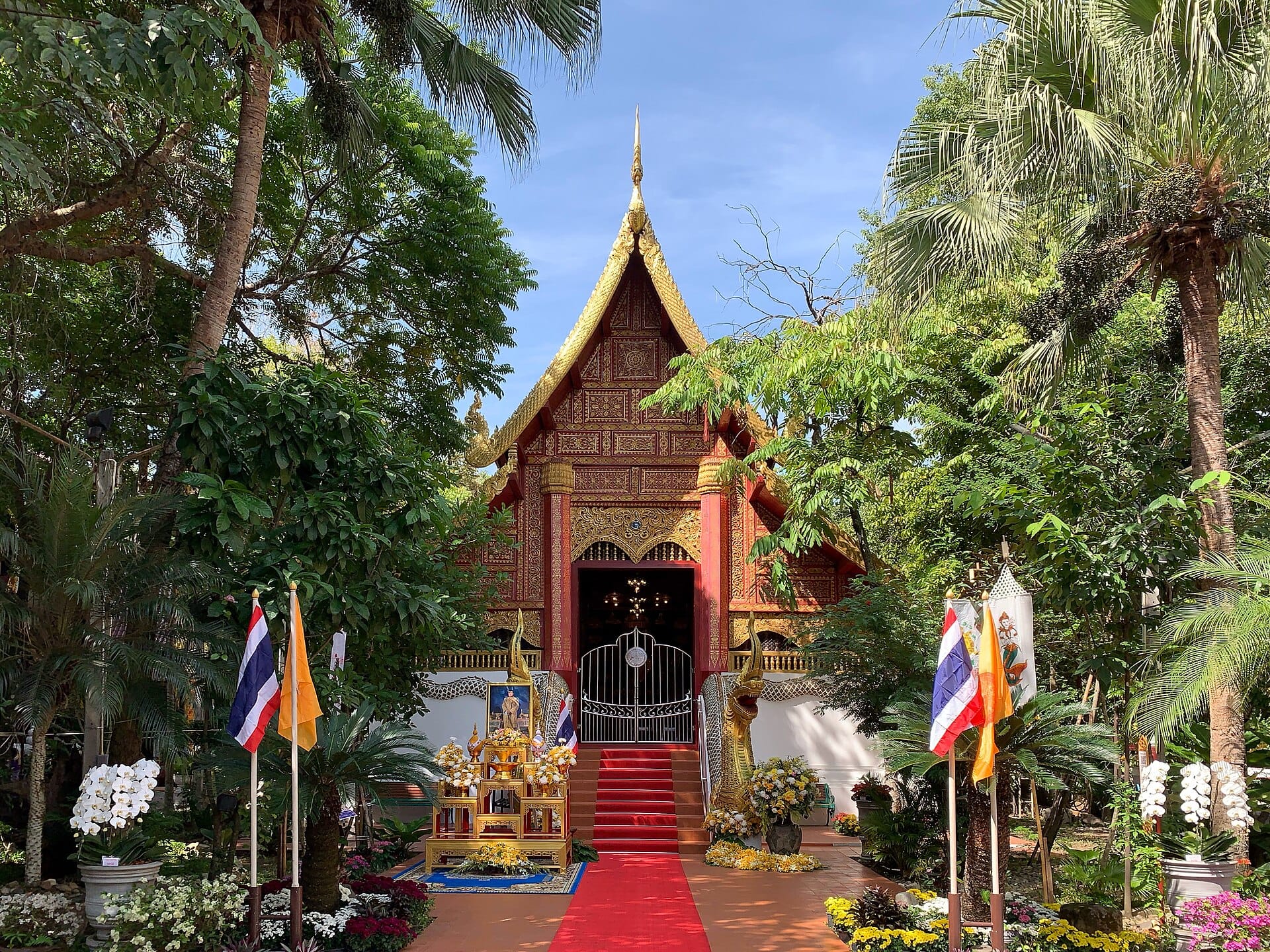
What to do: See the jade replica in the Haw Phra Yok, then the small on-site museum of Lanna artifacts. It is a genuinely active temple, so it is quiet and reverent rather than a tourist circus. Insider tip: It is on Trairat Road, walkable from the Clock Tower, and free — an easy first stop on a morning walking loop of the old center. Cost: Free; grounds open daily, museum 9:00am–5:00pm.
The Golden Clock Tower
Chalermchai Kositpipat — the White Temple artist — also designed the ornate gilded clock tower that stands on a roundabout where Thanon Jet Yot meets Baanpa Pragarn, unveiled in 2008. By day it is a gold Lanna spire in the middle of traffic. After dark it becomes a small, slightly kitsch light-and-music show, the whole tower cycling through pink, gold and green.
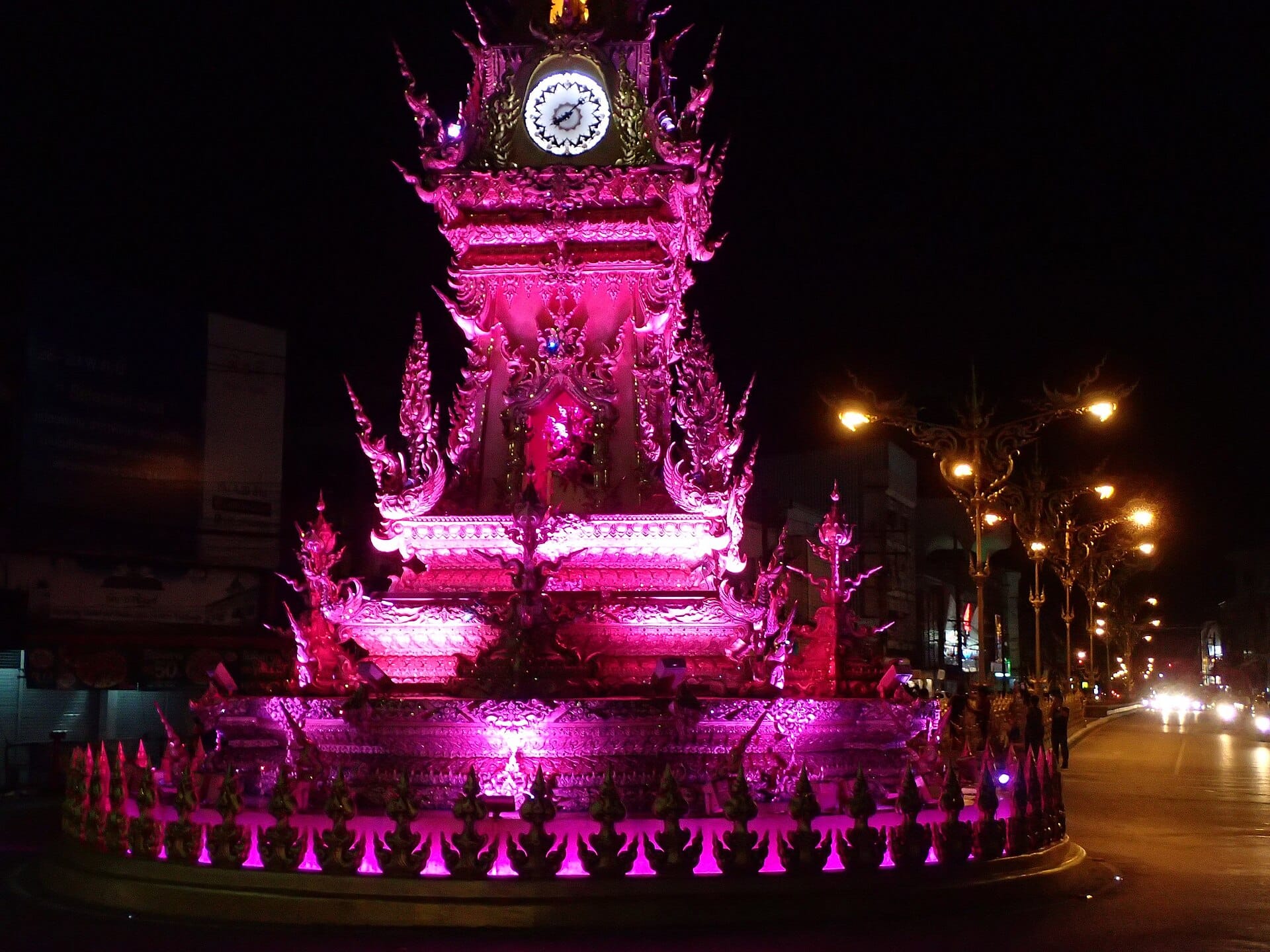
What to do: Catch one of the nightly shows at 7:00, 8:00 or 9:00pm — each runs a few minutes. It is free, brief and worth timing your dinner around. Insider tip: The Saturday Walking Street on Thanalai Road runs 4:00–10:00pm just a couple of blocks away, so on a Saturday you can hit the 7:00pm show and then eat your way down the market. Cost: Free.
Singha Park
Owned by the Boon Rawd brewery (the makers of Singha beer), this is a vast working farm turned agritourism park 10 minutes southwest of the center, near the White Temple. The draw is the manicured oolong tea terraces, best seen by bicycle, plus a giant golden Singha lion statue that marks the entrance, a small zoo, flower fields and a zipline course strung over the valley.
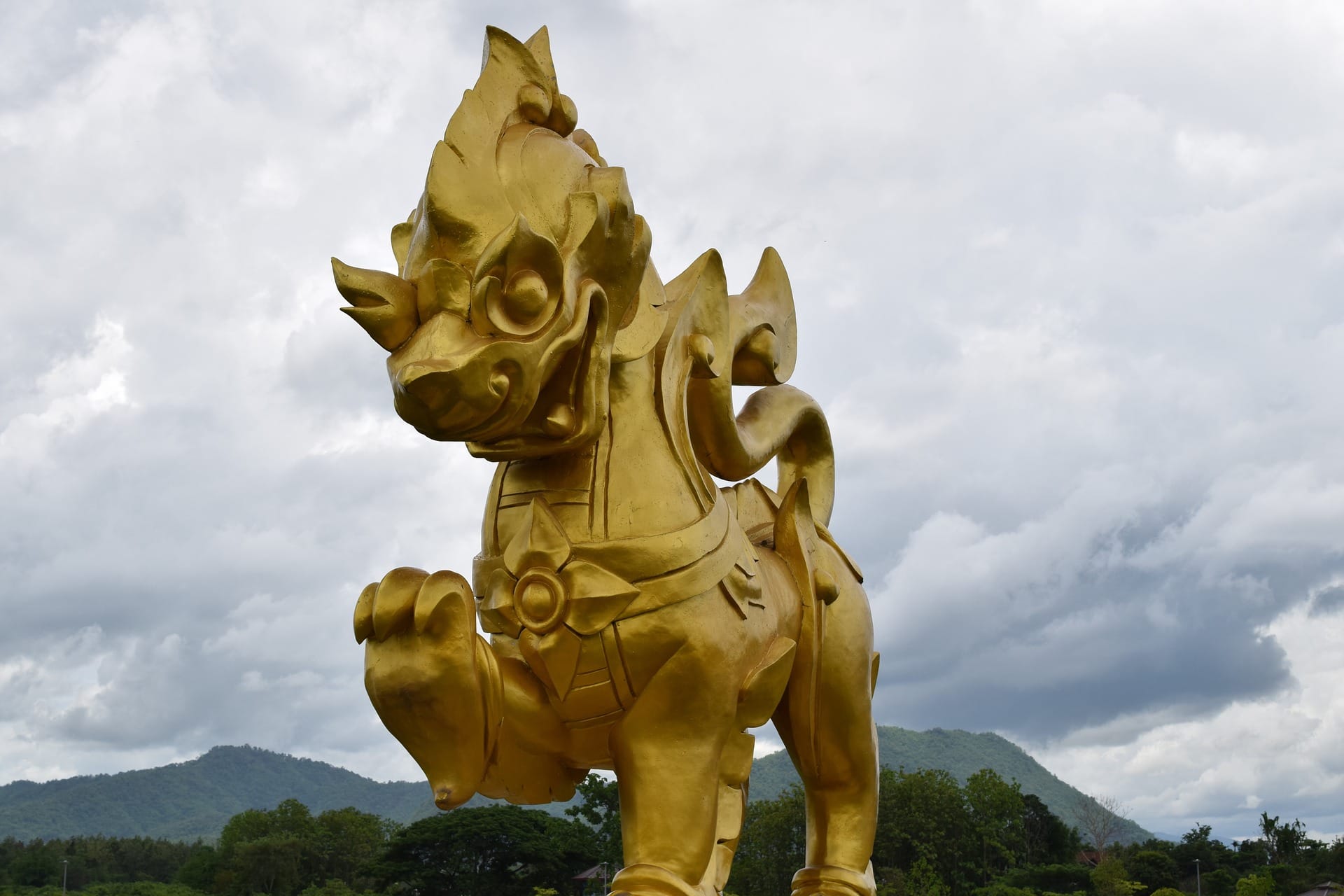
What to do: Rent a bike and ride the tea plantation loop — it is the reason to come, and far better than the tram. Stop at the hilltop tea house for a pot of the estate's own oolong. Insider tip: There is no public transport here, so come by Grab, rented scooter or as part of a White Temple day since they are close. Cost: Park entry free; tram tour 50 baht (about $1.50), bicycle hire 150 baht/hour, zipline 300 baht (about $9). Open 9:00am–6:00pm, tram 9:30am–5:00pm.
Choui Fong Tea Plantation
Chiang Rai grows most of Thailand's tea, and Choui Fong is the plantation that turned it into a day out. About 40 km northwest of the city in the hills of Mae Chan, its rows of tea contour the slopes in green corduroy, and a modern café with a rooftop deck looks straight out over the fields. The green tea cheesecake and matcha soft-serve here have their own small following.
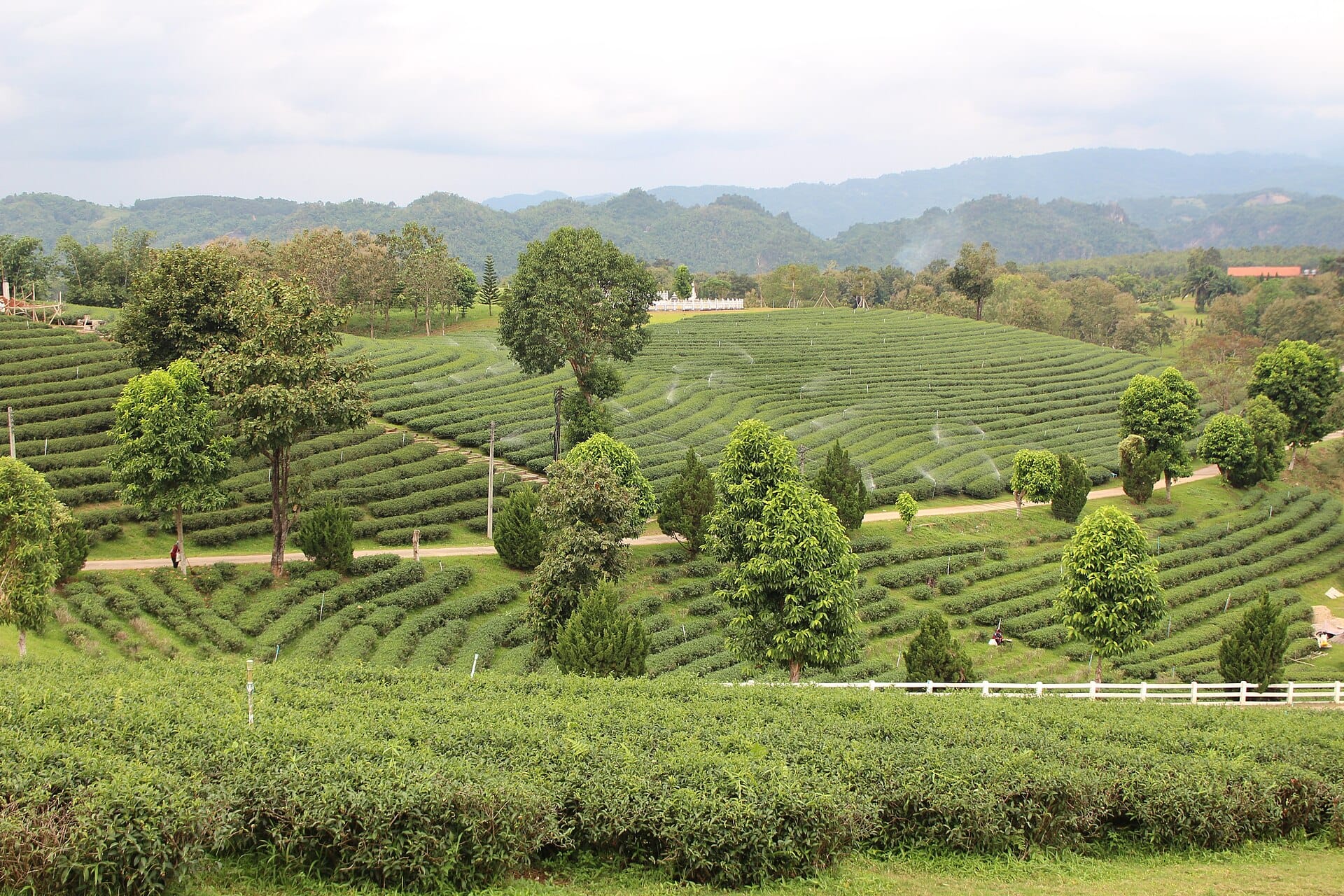
What to do: Walk out into the terraces for the photograph, then sit on the café deck with a cold matcha and a slice of the tea cake. Insider tip: There is no public transport; the drive is about an hour each way, so combine it with the Mae Salong hill area or a Doi Tung run if you have hired a car or driver for the day. Cost: Free entry; open daily 8:30am–5:30pm (you only pay for what you eat and drink).
The Golden Triangle (Sop Ruak)
An hour and a half north, past the old walled town of Chiang Saen, the Mekong and the Ruak rivers meet at the point where Thailand, Laos and Myanmar touch — the historic Golden Triangle, once the world's opium heartland. Today the Thai riverbank at Sop Ruak is frankly touristy, marked by a large golden Buddha seated on a boat-shaped shrine and a viewpoint looking across to Laos and Myanmar. The redeeming reason to come is the Hall of Opium.
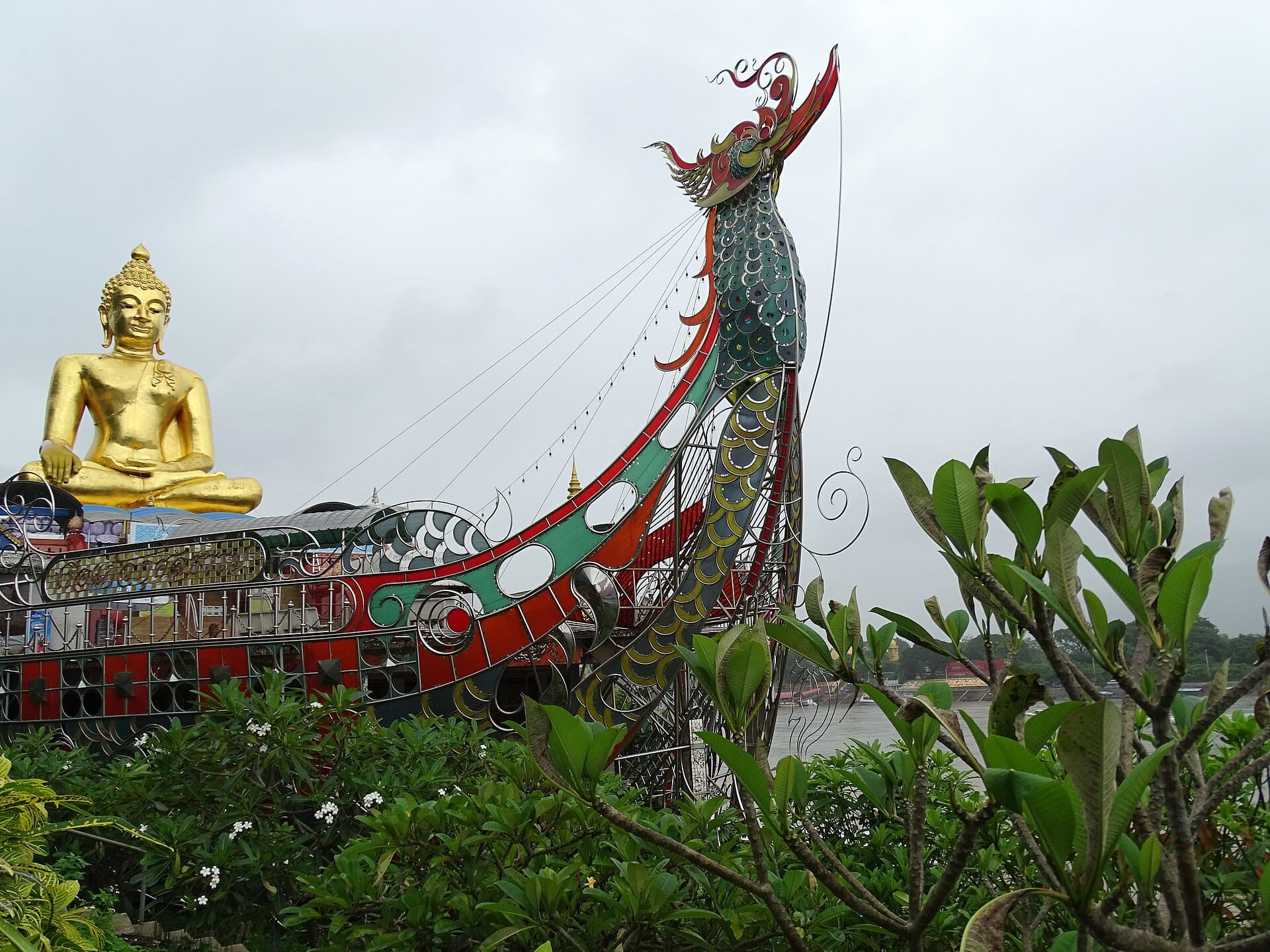
What to do: Give the free riverfront viewpoint 20 minutes, then spend a real 90 minutes in the Hall of Opium, a serious, well-designed museum run under a royal foundation covering the global history of the opium trade and its human cost. Insider tip: Do not confuse it with the smaller, tackier "House of Opium" nearby — the Hall of Opium is the government-backed one worth your time. Cost: Viewpoint free; Hall of Opium 200 baht (about $6). Minivans from Chiang Rai run around 50 baht; a long-tail boat trip on the Mekong costs 400–1,000 baht depending on length.
🗓️ A Three-Day Itinerary
Day 1 — The city and the two artists
Start on foot in the old center. Walk from the Clock Tower to Wat Phra Kaew (free, 10 minutes) for the morning, then a couple of blocks to the Chiang Rai Morning Market off Trairat Road for a bowl of khao soi or grilled sai oua sausage — breakfast for under 60 baht ($1.80). Grab a car south to Wat Rong Khun, the White Temple (200 baht), timing it for the 8:00am opening if you can face an early start, otherwise accept the crowds. In the afternoon, loop back through Singha Park (bike hire 150 baht/hour) for the tea terraces. Return to the center for the 7:00pm or 8:00pm Clock Tower light show, then dinner at the Night Bazaar food court beside Bus Terminal 1. Rough day cost per person: 600–900 baht (about $18–27 / €16–24) including entries, transport and food.
Day 2 — The northbound loop
Head north out of the city. First stop Baan Dam, the Black House (80 baht), 12 km up the Mae Sai road — get there near the 9:00am opening and finish before the noon lunch closure. Continue to the Blue Temple on the way back into town (free) for the cobalt interior and a blue ice cream. Spend the afternoon slowing down: coffee and lunch at Chivit Thamma Da, the riverside colonial-style coffee house on the Kok River, then a wander along the river. If it is a Saturday, the Walking Street on Thanalai Road (4:00–10:00pm) is your dinner. Rough day cost per person: 400–700 baht (about $12–21 / €11–19).
Day 3 — The Golden Triangle and the mountains
This is a full driving day, best done with a hired car and driver (roughly 2,000–2,800 baht for the day, split between a group). Drive 1.5 hours north to Sop Ruak for the Golden Triangle viewpoint and the Hall of Opium (200 baht), with a stop in the ancient river town of Chiang Saen and its ruined chedis. On the way back, climb to the Doi Tung Royal Villa and Mae Fah Luang Garden (90 baht each) for the Swiss-Lanna house of the late Princess Mother and its cool-climate flower garden. If you would rather trade this for tea, swap Doi Tung for Choui Fong plantation. Rough day cost per person: 900–1,400 baht (about $27–42 / €24–38) including the shared driver.
🧠 Essential Tips
When to go
The clear answer is November to February. That is the cool, dry season, with daytime temperatures around 15–28°C and city nights dropping to 10–15°C — genuinely cold at 5–8°C up in the mountains at Phu Chi Fa, so pack a fleece. December and January are the peak, and the reason the region photographs so well: clear skies over the tea hills and mist pooling in the valleys at dawn.
Two seasons to approach with caution. March and April are the agricultural burning months, when farmers clear fields and a smoky haze settles over the whole north; Chiang Rai is usually less choked than Chiang Mai, but if you are sensitive to air quality, avoid these two months entirely. June to October is the rainy season — typically afternoon downpours rather than all-day rain, with clear mornings, greener hills, and hotel prices 30–50% lower. It is a fair trade if you are flexible and carry a poncho.
Getting there and around
Mae Fah Luang–Chiang Rai International Airport (code CEI) is about 9 km northeast of the city, with direct flights from Bangkok in around 80 minutes. From the airport, the official flat-rate taxi is 150 baht (about $4.50 / €4) into the city — the counter is at Entrance 3 on the first floor, running roughly 6:30am–10:00pm. Grab works in Chiang Rai and its airport pickup is at Entrance 1; compare the live fare against that 150-baht flat rate before booking.
From Chiang Mai, the Green Bus is the standard overland option: 13 departures a day between 7:00am and 6:00pm, taking about 3 hours 20 minutes in a VIP coach or 3 hours 45 in Express class, for roughly 260–290 baht Express (about $8) or 360–400 baht VIP (about $11). Buses terminate at Terminal 1 downtown, right by the Night Bazaar; note that coaches first pull into Terminal 2, 7 km south on the highway, so stay on board unless your hotel is out there. In town, distances are short — use Grab for the temples and a rented scooter (around 250 baht/day) if you are comfortable riding.
Safety and scams
Chiang Rai is low-crime and easygoing by any standard, but a few specifics are worth knowing. Rented scooters are the real risk: the mountain roads to Doi Tung, Phu Chi Fa and the tea plantations have steep grades and gravel, so this is not the place to ride for the first time, and check that your travel insurance actually covers motorbikes. At the temples, "closed today, come with me instead" touts occasionally work the White Temple car park — the temple is open every day, so ignore them. At the Golden Triangle, the pitch is to steer you into the smaller paid "House of Opium" or overpriced boat trips; agree the boat price before you step in. Tap water is not drinkable — stick to the refill stations and bottled water that are everywhere.
What to eat
This is Lanna country, and the food is different from central Thailand. The signature dish is khao soi, a coconut curry noodle soup with soft egg noodles under a nest of crispy fried ones; Chiang Rai's version runs a little creamier and sweeter than Chiang Mai's. Also hunt down sai oua, the grilled herb-and-lemongrass pork sausage; khao kan jin, rice steamed with pork blood and herbs in a banana leaf, a Chiang Rai specialty; and nam prik ong, a tomato-and-pork chili dip eaten with vegetables. For specific tables: Lung Eed is a tiny, much-loved spot famous for its chicken larb; Phu Lae does polished Northern Thai for a sit-down dinner; and Khao Soi Islam on Rattanaket Road plates a halal khao soi. For breakfast and snacking, the Chiang Rai Morning Market on Trairat Road is going by 6:00am.
🏨 Accommodation Guide
Chiang Rai is compact, so where you stay matters less than in a big city, but three areas cover most needs: the Clock Tower / old center for walkability to temples and markets, the Night Bazaar area for the bus terminal and evening food, and the Kok River for quieter, greener resorts a short Grab from town.
Budget (300–700 baht / about $9–21 per night): Guesthouses and hostels cluster around the Clock Tower and Jet Yot Road. Places like Sleepy House put you within a 10-minute walk of the night markets in a clean, simple room, and dorm beds run at the low end of that range. This is backpacker territory and very good value.
Mid-range (1,200–2,800 baht / about $36–83 per night): This band buys a pool and breakfast. Sann Hotel is a design-minded option with a good pool; Le Patta sits steps from the Saturday Walking Street; and The Imperial River House Resort trades central location for a quiet spot on the water. Book a few weeks ahead in December and January.
Luxury (4,500–9,000 baht / about $135–270 per night): The two names to know both sit on the Kok River. Le Méridien Chiang Rai Resort has a three-tiered pool running down to the riverbank and large, calm rooms a few minutes from the center. The Riverie by Katathani, a five-star resort on its own stretch of riverfront, is the grande-dame address in town, with the fullest spa-and-pool package Chiang Rai offers.
❤️ Beyond the Tourist Trail
Most day-trippers never get past the White Temple, which means the best of the province is quiet. Doi Tung, 45 km northwest and up into the hills, is the real reward: the Royal Villa (90 baht) is the modest Swiss-chalet-meets-Lanna home the late Princess Mother built while running a project that replaced the area's opium poppies with coffee and macadamia, and the adjoining Mae Fah Luang Garden (90 baht) is a cool-climate flower garden that peaks in December and January. Both are open daily 7:00am–5:30pm, and the Doi Tung coffee you will find all over Thailand starts on these slopes.
For a sunrise that justifies a 4:00am alarm, Phu Chi Fa is a cliff on the Lao border about two hours east, where in the cool season a sea of mist fills the valley below and burns off as the sun comes up; go between November and February or you will just see cloud. Back in the city, Chiang Rai has quietly become a serious coffee town — the province grows the beans, and cafés like riverside Chivit Thamma Da pour them in a colonial-style house-and-garden that feels a world away from the temple circuit. Time your visit for late December into January and the Chiang Rai ASEAN Flower Festival takes over the riverside Suan Tung Lae Khom park, when the cool-season blooms are at their peak.
Plan your Chiang Rai trip with VoyaBear
Chiang Rai rewards the traveler who slows down — who times the White Temple for the 8:00am light, drives out to the tea hills, and stays for the mountain dawn most people skip. Building that itinerary around real opening hours, drive times and the right season is exactly what VoyaBear does. Tell us how many days you have and what you are into — art, coffee, hiking, or just good slow northern food — and we will build you a personalized, day-by-day Chiang Rai plan with the bookings, routes and timing already sorted. Start planning your trip at VoyaBear and let us handle the logistics while you enjoy the north.
Want this as an actual itinerary?
VoyaBear turns a guide like this into a day-by-day plan built around how you travel.
Plan my trip free