Córdoba 2026: The Complete Guide to Argentina's Second City
21 September 2026 · 12 min read
🏙️ Córdoba: Argentina's University City, Fernet Capital, and Jesuit Heartland
Most travelers to Argentina fly into Buenos Aires and stop there. Córdoba, 700 km northwest and the country's second-largest city with roughly 1.5 million people, is where you go to see the other Argentina: the colonial one built by Jesuit priests, the student one that invented the national drink, and the mountain one that starts at the city's western edge. This is home to the National University of Córdoba, founded in 1613 and the oldest university in the country — the third-oldest still operating in the Americas, after Lima and Bogotá. Half a million students give the place its rhythm: dinner at 10pm, bars that fill on a Tuesday, and a Fernet-and-Coke in almost every hand.
The compact historic center is a UNESCO World Heritage Site, walkable end to end in about 20 minutes, and it sits at the foot of the Sierras de Córdoba — the Jesuit estancias, the mountain village of La Cumbrecita, and Che Guevara's childhood home in Alta Gracia are all day trips from the bus terminal. With a peso trading around 1,500 to the US dollar in 2026, prices are low enough that Córdoba earns far more than the overnight stop most itineraries give it. Here's how to spend three days here and what everything actually costs.
🏛️ Essential Experiences
1. The Manzana Jesuítica (Jesuit Block)
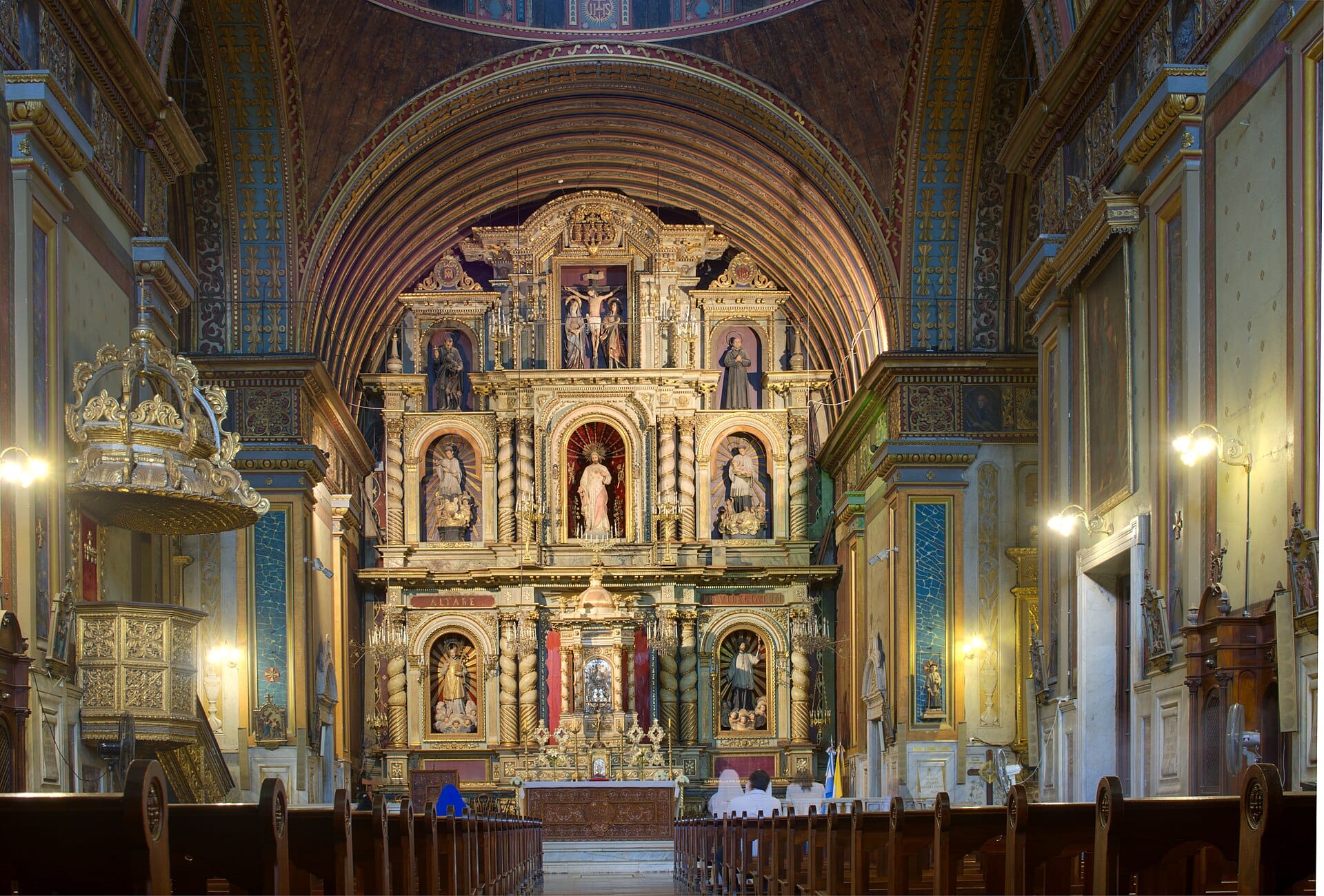
This single city block is the reason Córdoba is on the UNESCO list. Inside it sits the Iglesia de la Compañía de Jesús, finished in 1671 with a barrel-vaulted cedar ceiling built like an upturned ship's hull — the work of a former ship's carpenter, because no local mason could span the nave in stone. Beside it are the old university buildings and the Colegio Nacional de Monserrat, a secondary school still in session after four centuries. The Museo Histórico de la UNC occupies the former rectory, with the original 17th-century library and cloisters.
Insider tip: The museum runs a guided tour in English at 10am (Monday to Saturday) — book it at least 24 hours ahead by emailing reservas@museohistorico.unc.edu.ar, because it's the only English slot and caps at 30 people. Spanish tours run at 11am and 3pm on weekdays and need no reservation. The church itself is free to enter outside Mass; the museum charges a small "bono contribución" of a few dollars. Go into the church first, then the museum — you'll understand the rooms better once you've seen the ceiling.
2. Iglesia Catedral and Plaza San Martín
Córdoba's cathedral is the oldest in continuous service in Argentina. Construction began in 1582 and dragged on until the bell towers were finished in 1787, which is why it's a legible timeline of styles stacked on top of each other: a Renaissance base, a Spanish colonial baroque body, a neoclassical dome, and Mudéjar details. Look up at the tower corners — the trumpet-playing angels were carved by indigenous artisans from the Jesuit estancias, and they gave the figures indigenous faces and features, which is the detail most visitors walk straight past. Inside, the main altar is beaten silver hauled overland from the mines of Alto Perú.
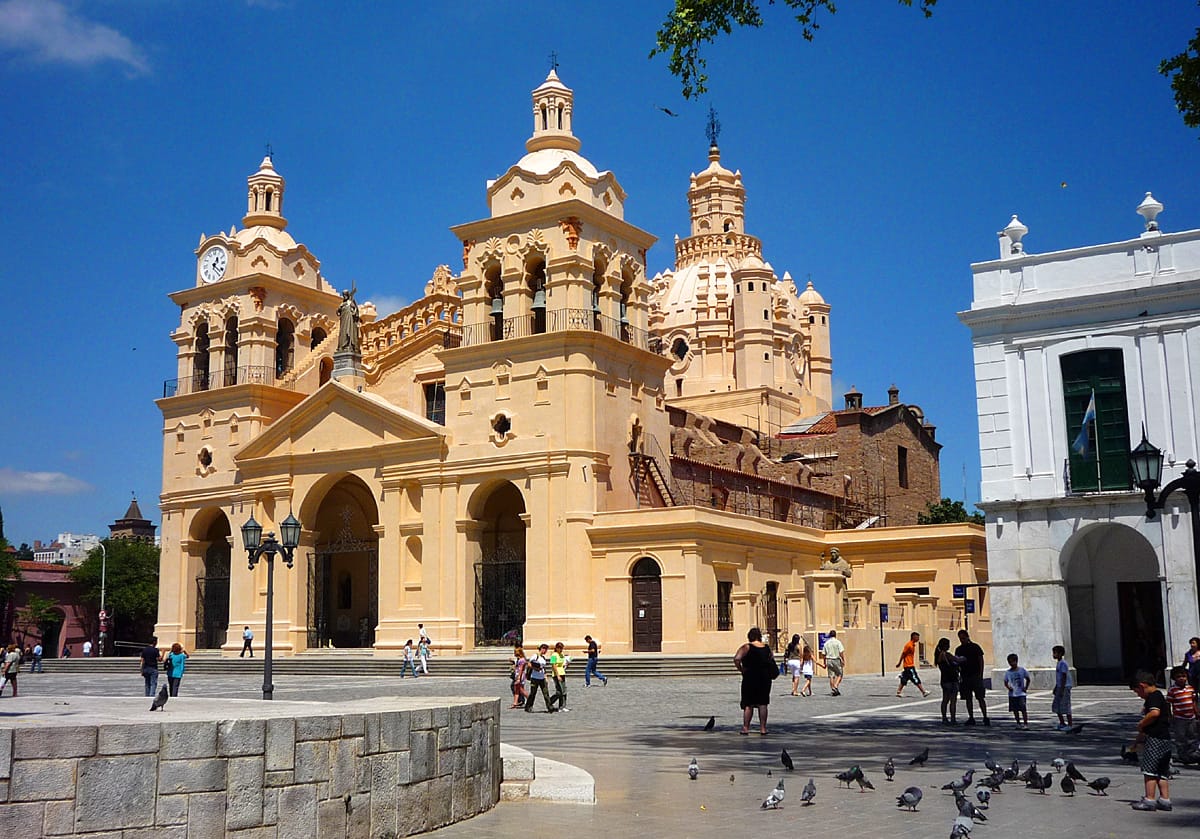
Insider tip: Entry is free. The cathedral faces Plaza San Martín, the main square, and next to it stands the white colonial Cabildo (the old colonial town hall), which now holds temporary exhibitions and a small museum. Come at around 6pm when the low sun hits the silver-grey stone and the plaza fills with students and mate flasks. Skip the paid rooftop "tours" hawked outside — the free interior is the point.
3. Cripta Jesuítica del Noviciado Viejo
This one is genuinely strange: an entire 18th-century Jesuit crypt that the city forgot about, paved over, and then rediscovered by accident in 1989 when telephone workers digging under Avenida Colón broke through into the vaulted chamber below. The Jesuits built it as a chapel and novitiate; after they were expelled in 1767 it passed to another order, and during an 1820 cholera epidemic it was used to store the dead — which is where the name "crypt" comes from. Today it's an underground exhibition and concert space, prized for acoustics good enough that chamber groups perform down here.
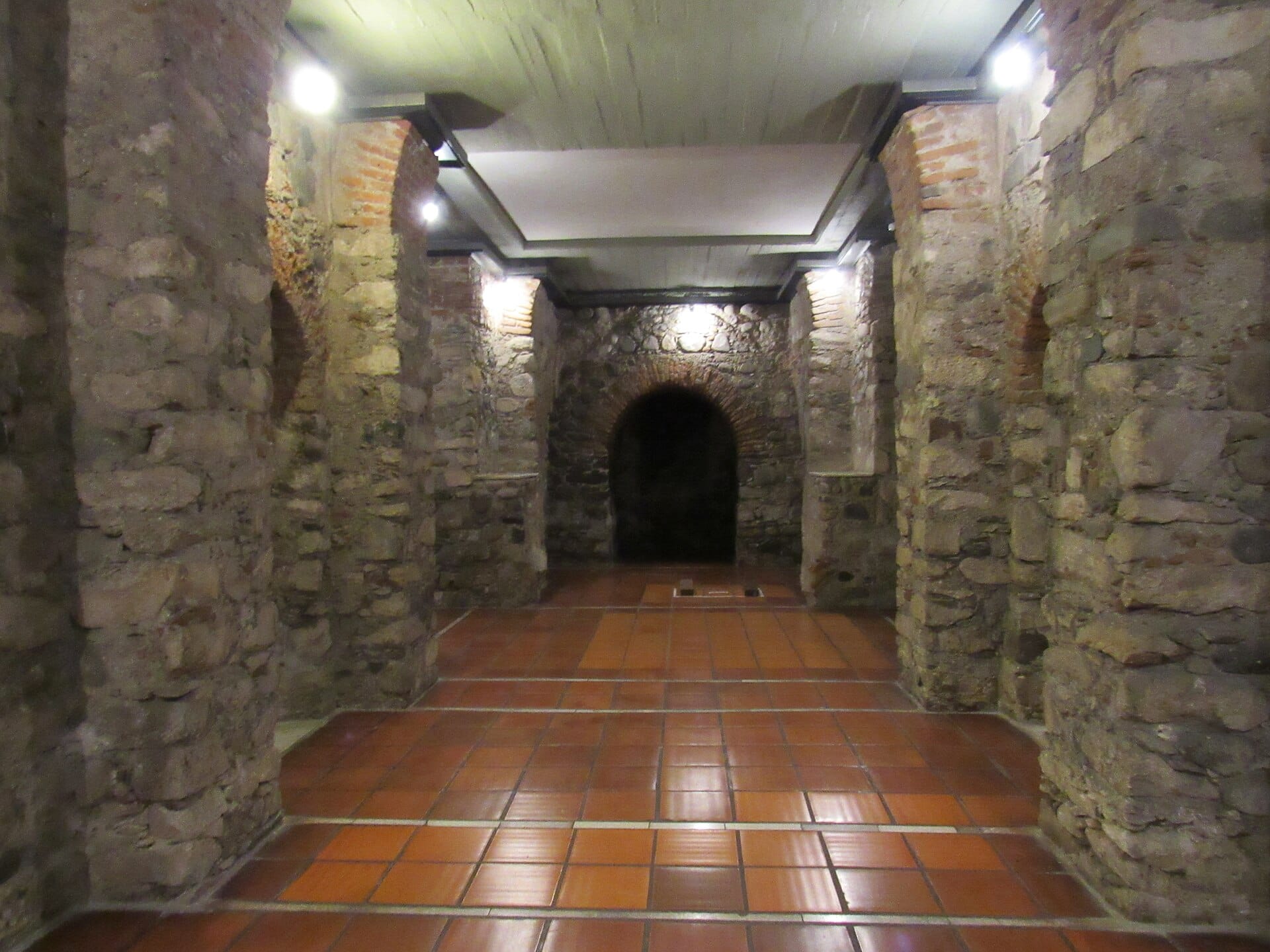
Insider tip: The entrance is an easy-to-miss stairwell at the corner of Avenida Colón and Rivera Indarte, right in the shopping crush of the center. Entry is usually free, but hours track whatever exhibition or concert is on, so check the day's schedule rather than just turning up — and if there's an evening concert listed, that's the best way to hear the vaulting do its work.
4. Iglesia de los Capuchinos (Sagrado Corazón)
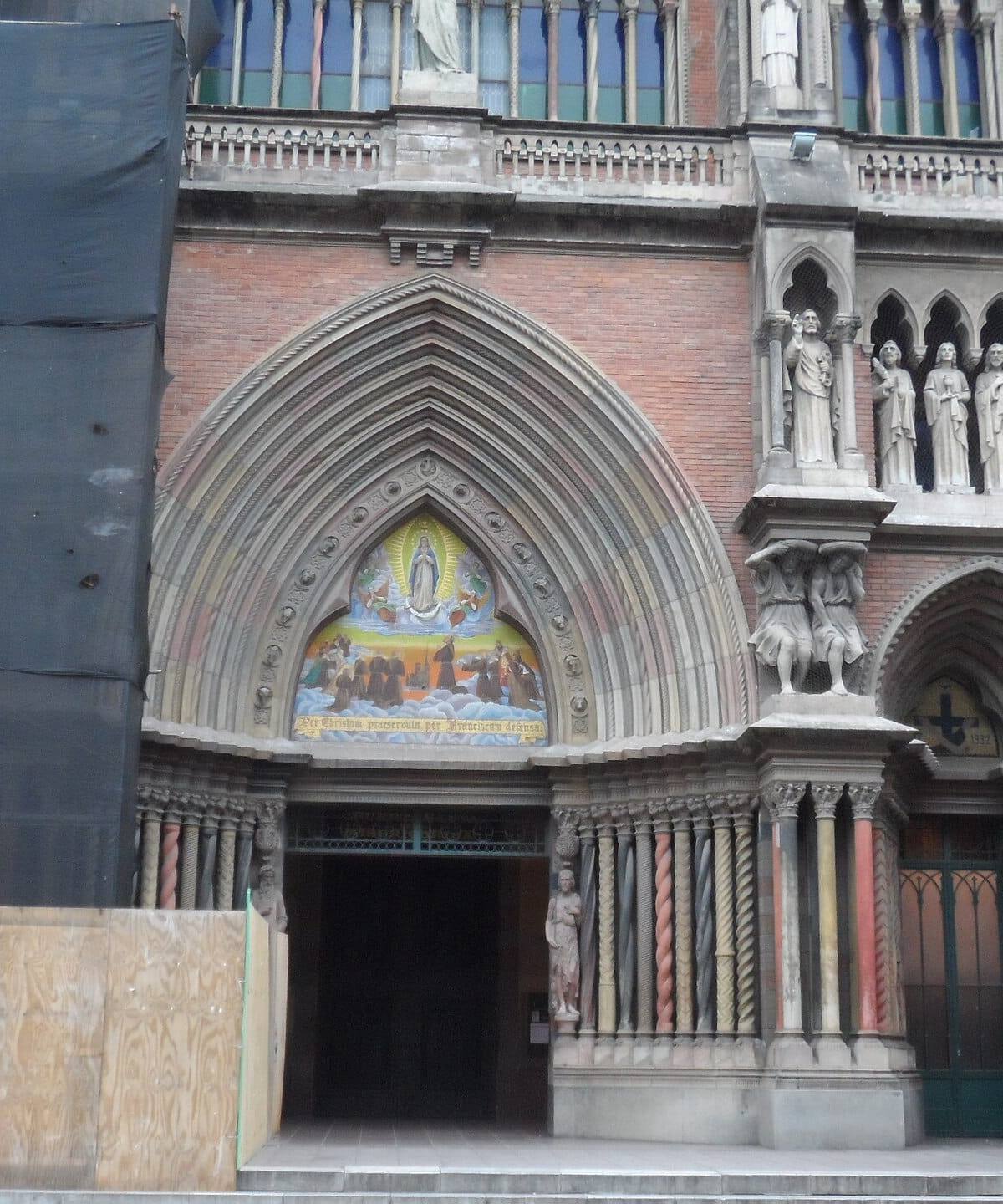
The most photographed building in the city, and worth the reputation. Architect Augusto Ferrari built this neo-Gothic church between 1926 and 1933, and its design is a deliberate sermon in stone: the left tower rises 70 metres to a spire, representing the soul ascending, while the right tower is deliberately left truncated and spireless, representing matter that dies. Once someone points that out, you can't unsee it. The facade is crowded with sculpted saints and atlantes, and the interior ceiling is painted with gold stars mapped to Córdoba's night sky through the seasons.
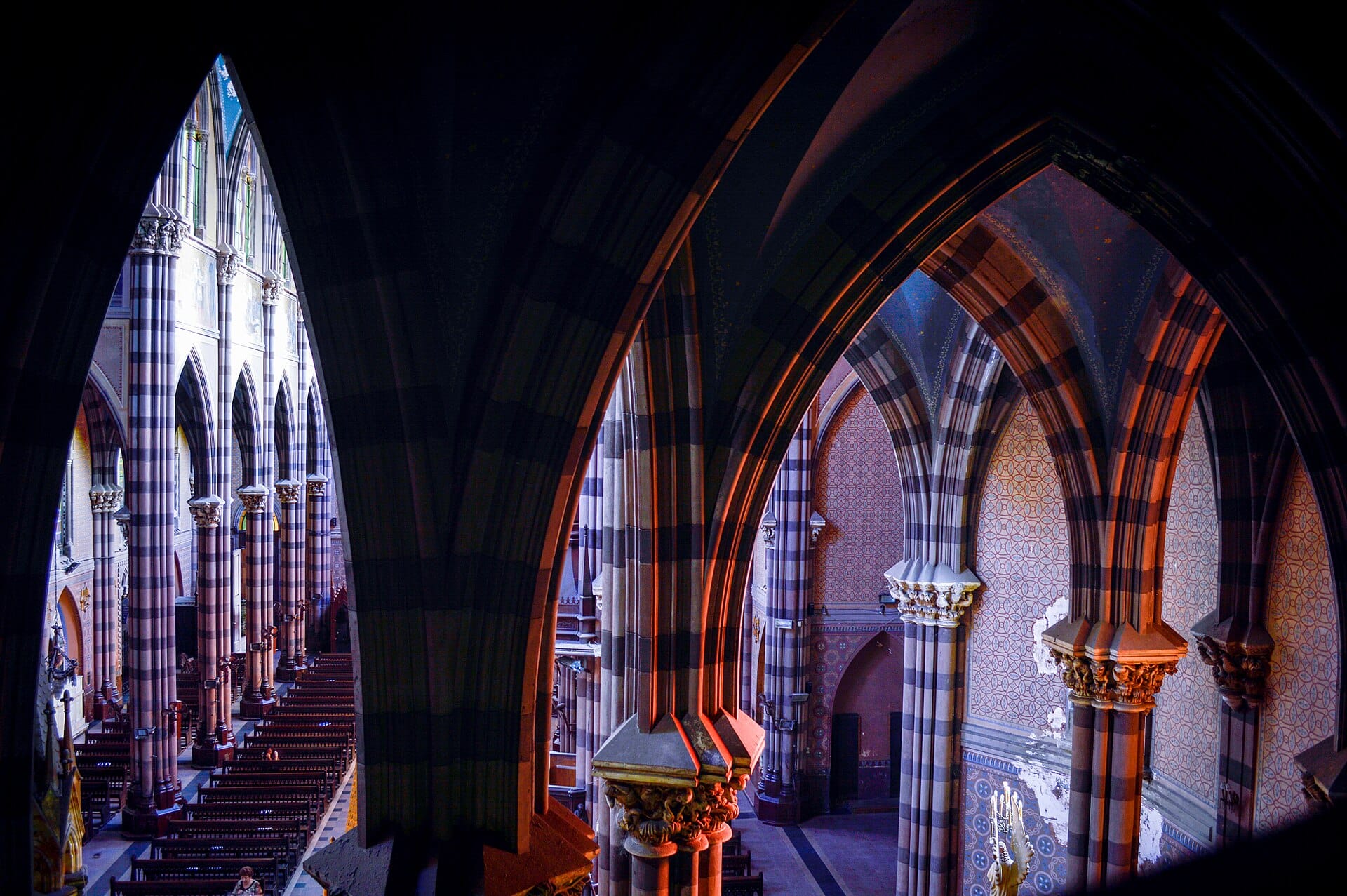
Insider tip: It's at Buenos Aires 600 in Nueva Córdoba, a 10-minute walk from the center. Photograph the facade in the late afternoon when the sun comes around to the front; mornings leave it in shadow. Step inside to see the ceiling — most people shoot the towers and never go in, which is the mistake.
5. Palacio Ferreyra – Museo Superior de Bellas Artes Evita
A French Beaux-Arts mansion built between 1912 and 1916 for Dr. Martín Ferreyra by the Parisian architect Ernest Sanson, now the province's flagship art museum. The building alone justifies the ticket: a grand marble central hall and staircase, twelve exhibition rooms across the floors, and period detailing that survived the palace's conversion. The collection runs to more than 500 works and includes pieces by Picasso, Goya, and Sorolla alongside a strong holding of Argentine art.
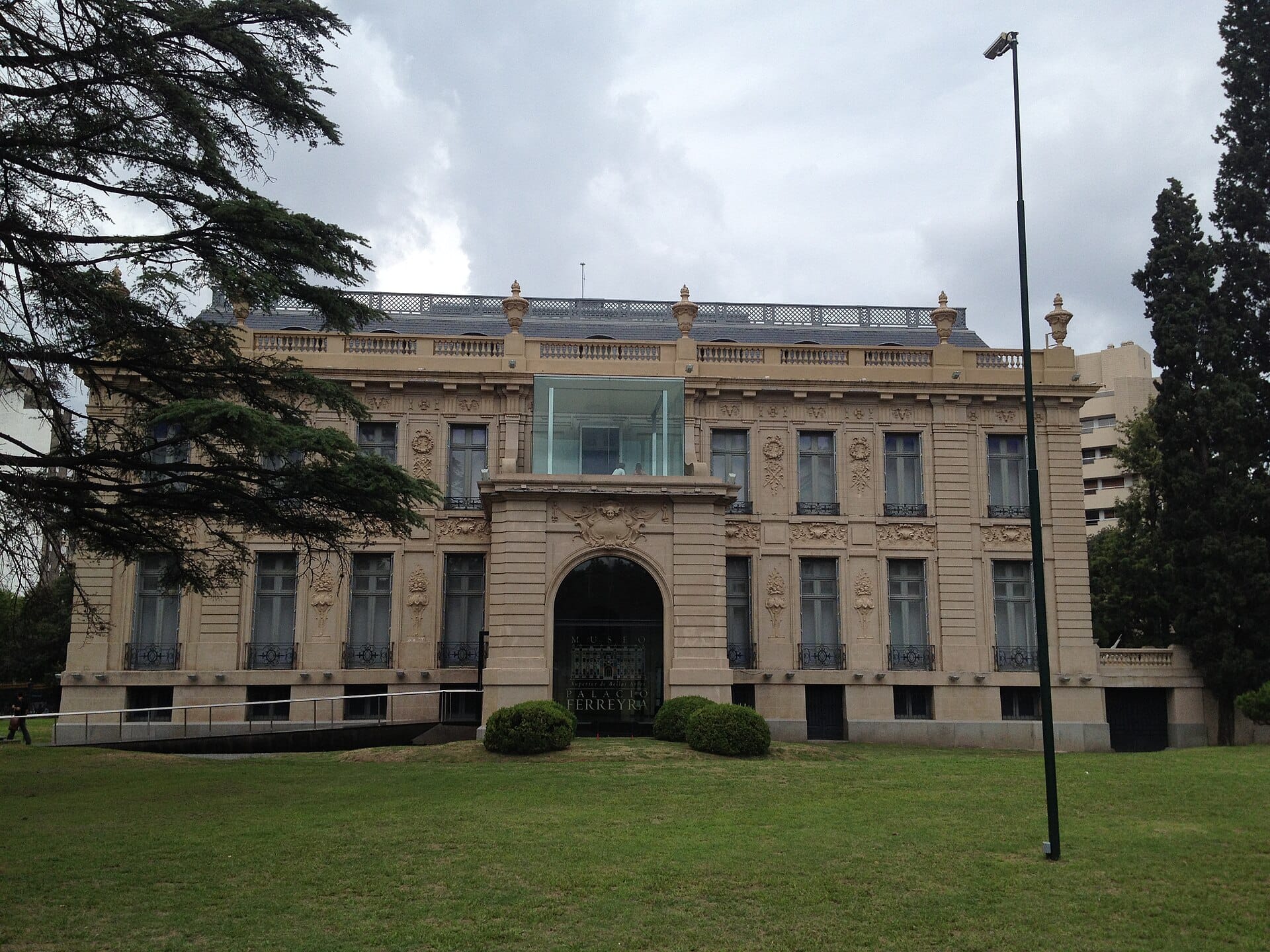
Insider tip: Open Tuesday to Sunday, 10am to 8pm, closed Mondays; admission is a couple of dollars. It sits on Plaza España in Nueva Córdoba, directly across from the Museo Emilio Caraffa (modern and contemporary art) and a short walk from the Jardín Botánico — you can chain all three plus the Capuchinos into one afternoon without a bus. The top-floor rooms are the quietest; start there and work down.
6. Paseo del Buen Pastor
This complex was a women's prison run by the Sisters of the Good Shepherd, completed in 1906 and closed around 1970. A US$5 million redevelopment reopened it in 2007 as a cultural and commercial center: the restored chapel is now an exhibition hall, and the old cell blocks hold cafés, bars, and craft shops. The reason to time your visit for the evening is the Aguas Danzantes — a free choreographed fountain-and-LED-light show set to music.
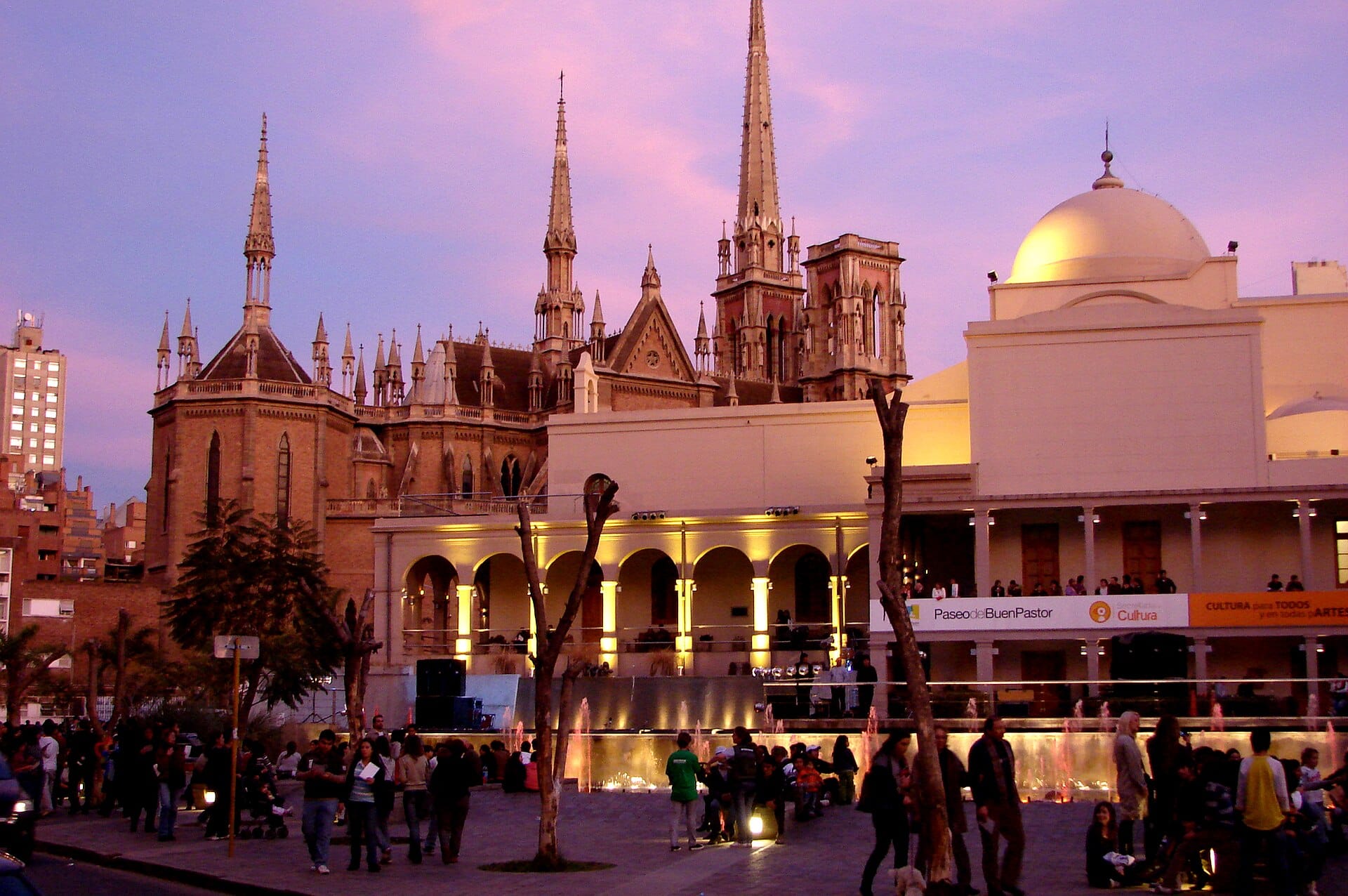
Insider tip: The fountain show runs every day, on the hour from 6pm to 10pm, and it's free. Go for the 9pm or 10pm slot once it's fully dark, when the LED colours read properly — the 6pm show in summer daylight is a letdown. It's in the heart of Nueva Córdoba's nightlife, so line it up as the start of an evening rather than a standalone stop.
7. Mercado Norte
Córdoba's covered market, on Rivadavia a couple of blocks north of Plaza San Martín, is where the city actually shops and eats. Hundreds of stalls sell meat, cheese, olives, spices, and produce, but the reason to come is the food counters: sit at a stall and eat a sanguche de milanesa (a breaded, fried beef cutlet in a bread roll, a Córdoba obsession) or a plate of fresh empanadas for the price of a coffee elsewhere. It's loud, fluorescent-lit, and completely unglamorous — which is exactly why the prices are honest.
Insider tip: Come hungry between noon and 2pm on a weekday when every counter is working and the turnover keeps everything fresh. It winds down in the afternoon and is quiet on Sundays. Pay attention to which stalls have a queue of office workers — that's your signal. Bring cash in small bills; some counters take cards, but the fast ones prefer notes.
🗓️ A 3-Day Itinerary
Day 1 — The colonial core, on foot
Start at Plaza San Martín and the cathedral (free, ~45 min), then the Cabildo next door. Walk two blocks to the Manzana Jesuítica for the 11am Spanish tour or the pre-booked 10am English one (a few dollars, ~1 hr). It's a 5-minute walk to the Cripta Jesuítica at Colón and Rivera Indarte (free). Lunch at Mercado Norte, a 10-minute walk north — a milanesa sandwich and a drink runs about US$5–7 (€4.50–6.50). Spend the afternoon wandering the pedestrianized shopping streets of the center (Calle 9 de Julio, Calle San Martín), then finish with an early Fernet-and-Coke on a café terrace. Total spend: roughly US$20–30 (€18–27) including lunch, drinks, and one tour.
Day 2 — Nueva Córdoba's museums and nightlife
Head south into Nueva Córdoba (a 15-minute walk from the center, or one short bus ride at about US$1.45 / €1.30). Do the Palacio Ferreyra (Evita museum, ~US$2, 1.5 hrs) and the Museo Caraffa across the plaza. Photograph the Iglesia de los Capuchinos two blocks away in the afternoon light, and go inside for the star-painted ceiling. Rest, then reconvene for the Aguas Danzantes fountain show at the Paseo del Buen Pastor at 9pm (free). Dinner nearby — Argentines eat late, so 9:30pm–10pm is normal. A parrilla dinner with wine costs about US$15–25 (€14–23) per person. Total for the day: roughly US$30–40 (€27–36).
Day 3 — Day trip to the Sierras or Alta Gracia
Take a morning intercity bus from the Terminal de Ómnibus to Alta Gracia, 40 km southwest — buses leave roughly every 10–15 minutes, the ride is a bit over an hour, and it costs a few dollars each way. Visit the Jesuit estancia (part of the same UNESCO listing) and the Che Guevara Museum in Villa Nydia, his boyhood home (open daily 9am–7pm, entry only a couple of dollars). Back in the city by late afternoon, spend your last evening in Barrio Güemes (see below). Alternatively, book a full-day Calamuchita Valley tour to reach the alpine village of La Cumbrecita deeper in the Sierras. Day-trip cost by public bus and entries: roughly US$15–25 (€14–23), or US$60–90 (€55–82) for a guided Sierras tour.
🧠 Essential Tips
Best time to visit
Aim for spring (September–November) or autumn (March–April). Those months land in the sweet spot between the extremes: comfortable days in the low-to-mid 20s°C and little rain. Summer (December–February) is hot and stormy — January averages a high near 30°C with the year's heaviest rainfall, and December alone gets around 146mm — though it's also when the student energy and outdoor nightlife peak. Winter (June–August) is the dry season with mild days around 18°C but genuinely cold nights that can drop near 4°C, so pack layers if you come then. If your trip is flexible, October is close to ideal: warm, dry, and jacaranda trees in bloom across Nueva Córdoba.
Getting around
The historic center is walkable, so you'll rarely need transit within it. For city buses, Córdoba switched to the national SUBE card in 2025, and you can now also tap a contactless Visa or Mastercard (physical card or phone) directly on the reader — the old Red Bus card is being phased out. A single fare is $2,150 pesos (about US$1.45 / €1.30) as of mid-2026. Buses don't take cash, so tap a card or buy and load a SUBE at a kiosk. For the airport, Ingeniero Ambrosio Taravella International (COR), also called Pajas Blancas, is about 11 km north. The cheapest link is the AeroBus, which runs airport–bus terminal–downtown roughly hourly in about 45 minutes for around US$4 (€3.80), paid with a SUBE or Red Bus card you can buy at the airport kiosk. A taxi or remis to the center runs more but is straightforward. For getting around, locals use the TuBondi app to track buses in real time, and ride-hailing via Uber, Cabify, and DiDi all operate here.
Money and safety
The peso hovered around 1,500 to the US dollar in 2026, and the gap between the official and unofficial "blue" rates has narrowed to a couple of percent — so unlike a few years ago, chasing cash exchange rates is no longer worth the trouble. Cards are widely accepted, but carry some cash for markets, small cafés, and bus terminals. On safety, Córdoba is generally relaxed by big-city standards, but use normal urban sense: the area right around the bus terminal and the streets south of it get sketchier after dark, and pickpocketing happens in the crowded pedestrian shopping streets and on packed buses. Keep your phone in a front pocket in those specific spots. The tourist-facing "your notes are counterfeit, let me swap them" trick and inflated unofficial taxi fares are the scams to watch — use metered taxis or an app, and count change.
What to eat and drink
Beyond the sanguche de milanesa, work through the lomito (a tenderloin steak sandwich, often loaded with ham, cheese, egg, and lettuce — order it "completo"), empanadas, locro (a hearty corn, bean, and meat stew, especially around the May and July patriotic holidays), and of course asado. For milanesas, locals argue endlessly, but reliable names include La Perla (Olmos 265) downtown and Bullanga Milanga (Caseros 308); in Nueva Córdoba try 3 Tomates (Obispo Trejo 1131). The drink is non-negotiable: Fernet con Coca, a bitter Italian amaro mixed with Coca-Cola over ice, was popularized by Córdoba's university students in the 1980s and the province still drinks roughly a third of all the Fernet consumed in Argentina — itself about 75% of the world's supply. Order one; it's an acquired taste that the whole city has acquired.
🏨 Accommodation Guide
Budget
Hostels cluster in the center and Nueva Córdoba. Aldea Hostel Córdoba is a long-running, well-reviewed option near the center with dorm beds from around US$12–16 (€11–15) and private rooms in the US$30–45 (€27–41) range. Córdoba Backpackers sits two blocks from Plaza San Martín, and Le Grand Hostel is a good pick if you'd rather be among the bars of Nueva Córdoba. Expect breakfast, a shared kitchen, and the social scene that comes with a student city.
Mid-range
For a private hotel with a pool and a central address, the Windsor Hotel & Tower (four-star, downtown, heated rooftop pool) and the Amerian Córdoba Park Hotel both land in roughly the US$70–120 (€64–110) per night bracket. The NH Urbano on La Cañada — the willow-lined canal that runs through the city — is a solid, well-located mid-range choice. Nueva Córdoba is the best neighborhood base for nightlife and museums; the Centro is best for walking to the colonial sights.
Luxury / boutique
The standout boutique stay is Azur Real Hotel Boutique & Spa on San Jerónimo in the Centro — a restored townhouse with a small rooftop pool and spa, typically around US$120–180 (€110–165) a night. For full-service five-star, the Sheraton Córdoba Hotel downtown has a pool, gym, and Sierras views, and the NH Panorama above La Cañada offers a rooftop pool with a citywide panorama. Even at the top end, Córdoba runs well below Buenos Aires prices for a comparable room.
🎭 Beyond the Tourist Trail
Barrio Güemes and its weekend ferias
Güemes is Córdoba's bohemian quarter, southwest of the center — early-20th-century houses converted into design shops, bars, and restaurants tucked into covered galerías like Muy Güemes, Macacha, and Casa Tomada. On weekends the Paseo de las Artes takes over the streets around Belgrano and Achával Rodríguez: a large open-air crafts fair (Saturdays, Sundays, and holidays, from late afternoon) selling leather, silver, mate gourds, and handmade goods — the best place to buy souvenirs that aren't airport tat, in the neighborhood where cordobeses themselves go out to eat.
The Sierras, an hour away
What sets Córdoba apart from other Argentine cities is that the mountains are a commute, not an expedition. Alta Gracia (Jesuit estancia plus the Che Guevara museum) is the easiest half-day. Go further and you reach La Cumbrecita, a car-free alpine village founded by German immigrants in the Calamuchita Valley, with timbered houses, forest trails, and waterfalls — you park at the edge and walk everywhere. Nearby Villa General Belgrano throws an Oktoberfest each October that's among the largest in South America. Any of these works as a day trip from the bus terminal, or as an overnight if you'd rather slow down.
❤️ Plan Your Córdoba Trip with VoyaBear
Córdoba rewards a traveler who knows which tower to look at, which fountain show to skip, and which milanesa counter has the queue. VoyaBear builds personalized, day-by-day itineraries tuned to how you actually travel: your dates, your budget, your pace, and whether you want three colonial churches or one church and two days in the Sierras. Tell us what you're into, and we'll turn this guide into a trip that's yours — reservations, timings, and local costs worked out. Start planning your Córdoba trip with VoyaBear today, and spend your time drinking the Fernet, not researching it.
Want this as an actual itinerary?
VoyaBear turns a guide like this into a day-by-day plan built around how you travel.
Plan my trip free