Dubai 2026: The Complete Guide to the UAE's Megacity
7 November 2026 · 20 min read

Dubai did not exist as a skyline until roughly one lifetime ago. In 1991 the tallest thing on the horizon was the Dubai World Trade Centre; today the Burj Khalifa alone is 828 metres, and the city around it was essentially built, road by artificial-island by road, inside forty years. That is the real reason to come: nowhere else lets you watch a 1-dirham wooden boat chug across a tidal creek in the morning and stand on the 148th floor of the planet's tallest building by sunset. This guide sticks to what things actually cost in 2026, which tickets are worth it, and how to avoid spending your holiday stuck in a taxi on Sheikh Zayed Road.
💡 Quick Answer: Dubai at a Glance
The essentials before you book anything:
- How many days? 3-4 days covers Downtown, Old Dubai and the Palm; add one for a desert safari.
- Best time to visit? November-March (highs 24-31C). Skip July-August (42C+).
- Book ahead: Burj Khalifa At the Top (AED 173 / about $47 non-prime, AED 250 / $68 at sunset) and an evening desert safari (from AED 210 / about $57).
- Airport to centre: Metro Red Line from DXB T1 and T3 (a few dirhams), or a taxi to Downtown for AED 55-75 (about $15-20).
- Getting around: buy a Nol Silver card (about AED 25 with credit); Metro fares are AED 4-8.50 by zone.
- Daily budget: roughly $70-110 (about EUR 65-100) mid-range per person, more if you climb towers and eat in hotels daily.
- Top safety note: crime is minimal; the real enemy is heat, so carry water and use taxis or the Metro at midday in shoulder-season.
- Currency: the dirham (AED) is pegged at about 3.67 to the US dollar, so AED prices barely move against the dollar.
🏙️ The Best Things to Do in Dubai
Dubai's attractions split neatly into two camps: the engineered superlatives and the older trading city that paid for the first few of them. Do both, or you will leave thinking Dubai is only shopping malls.
1. Burj Khalifa and the Dubai Fountain
The Burj Khalifa is the one unavoidable Dubai experience, and the view down onto the man-made islands and desert edge genuinely justifies the queue. At the Top (levels 124 and 125) costs AED 173 (about $47 / EUR 43) in non-prime hours and AED 250 (about $68 / EUR 63) during prime hours, 4-7pm. The pricier At the Top SKY on level 148 starts at AED 400 (about $109). The observation deck opens at 9am and the last entry is 11pm.

Insider tip: prime-hour sunset tickets sell out days ahead and come with the longest queues. Book a non-prime slot for 9-10am on a weekday instead - the light is clear, the haze is lower, and you pay AED 77 less. Afterwards, skip the paid viewpoints and watch the Dubai Fountain for free from the Burj Lake promenade outside Dubai Mall; the choreographed water show runs every 30 minutes from 6pm to 11pm and relaunched in October 2025 after a full refurbishment. The AED 20 (about $5.45) Boardwalk gets you closer, but the free view is already excellent.
2. Old Dubai: Al Fahidi, the Creek and the Souks
Before the oil money, Dubai was a pearling and trading port on a saltwater creek, and that city still exists in Bur Dubai and Deira. Start in the Al Fahidi Historical Neighbourhood (formerly Bastakiya), a free-to-wander grid of restored 19th-century merchant houses with wind-tower air conditioning, tucked-away galleries and courtyard cafes. Then take an abra - a wooden water taxi - across Dubai Creek for AED 1 (about $0.27), paid in cash once the boat pushes off. It is the best-value five minutes in the city.

Insider tip: cross to Deira and walk straight into the Gold Souk, a covered lane of around 300 shops selling 21- and 22-karat jewellery priced by weight - haggle 20-30% off the first quote and nobody will blink. The nearby Spice Souk (free to enter) is heavy on saffron, dried lemons and frankincense. For lunch, Al Ustad Special Kebab in Bur Dubai is a long-running Persian charcoal-kebab grill where you eat well for around AED 30-40 a head. Go late morning before the heat and the tour groups.
3. The Dubai Frame
The Dubai Frame is exactly what it sounds like: a 150-metre gold-clad rectangle in Zabeel Park, built so that you stand on a glass sky-bridge between its two legs and look at old Dubai on one side and new Dubai on the other. It is a gimmick, but an unusually well-executed one, and at AED 52.50 (about $14 / EUR 13) for adults and AED 25 for children it is a fraction of the Burj Khalifa price for a comparable low-rise panorama. It is open 9am to 9pm.

Insider tip: go an hour before closing. The glass-floor panel on the sky-bridge is the whole point, and it photographs far better with the city lights coming on than in flat midday glare. Buy the timed ticket online rather than at the gate to skip the worst of the queue.
4. Palm Jumeirah and The View
The Palm Jumeirah is the famous palm-tree-shaped artificial island, and the clearest way to grasp its scale is from above. The View at the Palm, near the top of the Palm Tower, is a 240-metre observation deck with general admission at AED 110 (about $30 / EUR 28) for adults and AED 75 for children - noticeably cheaper than the Burj Khalifa for an arguably more photogenic subject, since you are looking down at the fronds themselves.

Insider tip: if you are travelling with kids, the better-value day on the Palm is Atlantis Aquaventure, the waterpark at Atlantis The Palm, where a standard day pass runs AED 350 (about $95) for adults and AED 300 for children - book online, where it is reliably cheaper than the gate. Combine it with a cheap tram-and-monorail loop of the island rather than paying for a taxi each way.
5. An Evening Desert Safari
Dubai is a desert city, and the dunes start about 45 minutes from the skyline. A shared evening desert safari is the standard way in: a 4x4 drive over the red dunes (dune bashing), a camel ride, sandboarding, sunset over the sand, then a camp dinner with a BBQ and Tanoura and belly-dance performances. Prices start around AED 210 (about $57 / EUR 53) per person for a basic package and run higher with quad bikes or VIP food service; expect 15-25% more in peak season from November to March.

Insider tip: the AED 210 base rate rarely includes everything the glossy photos show, so confirm in writing whether dune bashing, the camel ride and the dinner are all in your package before you pay. If you are prone to motion sickness, say so and ask for a gentler drive - the dune bashing is genuinely rough. Book a day or two ahead in winter.
6. Dubai Marina and JBR
If the Burj Khalifa is engineered Dubai at its most vertical, Dubai Marina is it at its most liveable: a 3-kilometre artificial canal ringed by residential towers, with a walkable waterside promenade (the Marina Walk) that is genuinely pleasant on a winter evening. Next door, JBR (Jumeirah Beach Residence) has The Walk and The Beach - an open stretch of public sand with free access, cafes and a low-key boardwalk.

Insider tip: this is the one part of Dubai best seen from the water, and you do not need an expensive dinner cruise. The Dubai Ferry and the RTA water-bus routes run through the Marina for a few dirhams on your Nol card. Come at sunset, walk the Marina to JBR for dinner, and let someone else pay for the yacht.
7. Jumeirah Mosque
Jumeirah Mosque is the most photographed mosque in Dubai, a symmetrical sand-coloured building in the Fatimid style, and - crucially - one of the few in the UAE that formally welcomes non-Muslim visitors inside. It runs guided cultural tours through the Sheikh Mohammed Centre for Cultural Understanding (SMCCU) for AED 45 (about $12 / EUR 11) per person, including light Emirati refreshments and a genuinely useful Q&A about local customs.
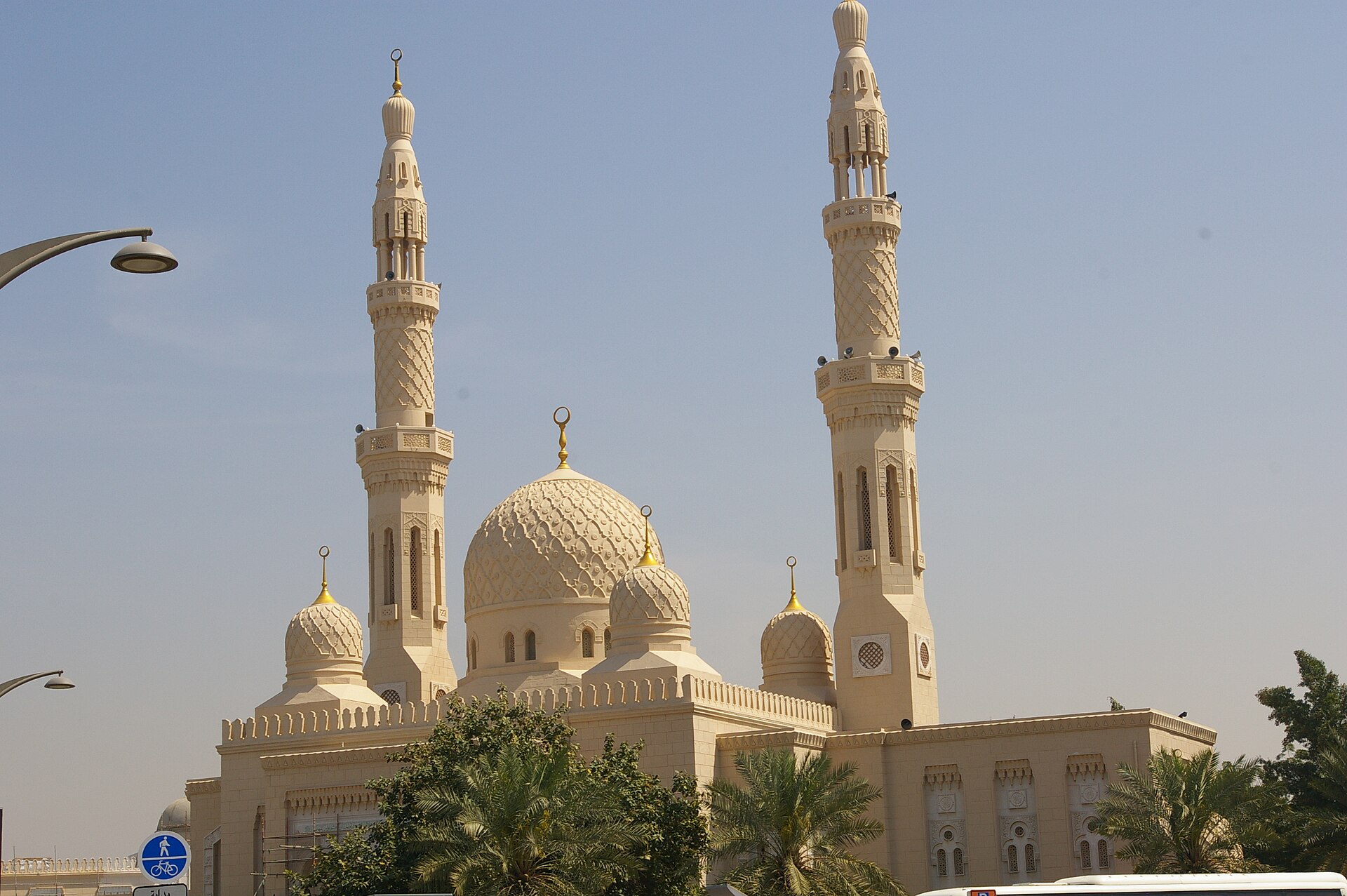
Insider tip: tours run Saturday to Thursday at 10am and 2pm, with no sessions on Friday, and you do not need to pre-book - just turn up 30 minutes early to register. Dress modestly (shoulders, arms and legs covered; women cover their hair), and if you forget, abayas and headscarves are lent at the door.
🗓️ How to Spend Three Days in Dubai
This itinerary assumes a Nol card, a tolerance for walking in the cool months, and a willingness to take short taxis when the Metro does not quite reach (it often does not reach the beach).
Day 1 - Downtown and the Burj Khalifa
Start at Dubai Mall (free to enter, open from 10am) to beat the heat and see the Dubai Aquarium tunnel without paying to go inside. Pre-book a Burj Khalifa non-prime slot for late morning (AED 173 / about $47). Spend the afternoon in air conditioning or at the pool, then return for the Dubai Fountain show after 6pm - free from the promenade. Dinner in Downtown; a mid-range meal runs AED 80-150 (about $22-41) per person. Total sightseeing spend: roughly AED 200 / $54 if you only pay for the tower.
Day 2 - Old Dubai and the Creek
Take the Metro Green Line to Al Fahidi station and walk into the Al Fahidi Historical Neighbourhood (free) for an hour. Cross the Creek by abra (AED 1) to Deira, haggle through the Gold and Spice Souks, and have lunch at Al Ustad Special Kebab (AED 30-40). In the afternoon, book the 2pm Jumeirah Mosque SMCCU tour (AED 45, about a 15-minute taxi from the Creek). Keep the evening free, or add the Dubai Frame (AED 52.50) near closing. Day spend: about AED 100-130 / $27-35.
Day 3 - The Palm, the Marina and the Desert
Morning at the Palm Jumeirah - either The View (AED 110 / about $30) or Aquaventure (AED 350) if you have kids. Midday back at Dubai Marina; walk the Marina to JBR's The Beach and have a long lunch. Late afternoon, get collected for an evening desert safari (from AED 210 / about $57), which usually drops you back around 9-10pm. It is a big day, so travel light and carry water. Day spend: roughly AED 320-560 / $87-152 depending on your Palm choice.
🧠 Essential Dubai Travel Tips
When is the best time to visit Dubai?
November to March is the season, full stop. Average highs run from about 31C in November down to 24C in January and back to 29C by March, with clear skies and low humidity. November is the sweet spot for value: it is technically shoulder season, so hotels and flights are cheaper than the December-February peak while the weather is already comfortable. December to February is prime - best weather, highest prices. From June to September, highs sit above 40C and sightseeing outdoors is genuinely unpleasant, though hotel rates crater to compensate. Note that seasonal attractions like Global Village and Dubai Miracle Garden only run October to May, so a winter trip gets you more.
How do you get around Dubai?
Buy a Nol Silver card (about AED 25 including starting credit) from any Metro station - it is cheaper per trip than the paper Red ticket and works on the Metro, tram and buses. Metro fares are zone-based: AED 4 within one zone, AED 6 across two, up to AED 8.50 for longer trips, and an unlimited day pass is AED 20 (about $5.45). The Red Line links DXB airport (Terminals 1 and 3) straight to Downtown and the Marina end of the city, which covers most of what tourists want. For everything else, taxis are cheap and metered: flagfall is AED 5 (AED 5.50 after 10pm), then about AED 2.26 per kilometre, with a minimum fare of AED 12. The app locals actually use is Careem (now more common than Uber here); its Hala option dispatches standard metered RTA taxis.
Is Dubai safe for tourists?
Dubai is one of the lowest-crime major cities you will visit; violent crime and pickpocketing are rare, and solo and female travellers generally report feeling very safe. The practical risks are different ones. First, heat: even in winter the midday sun is strong, so carry water and do indoor things at noon. Second, taxis: use the metered RTA cabs or the Careem/Hala app and refuse any driver who quotes a flat fare off-meter, which is the main overcharging scam. Third, local law: alcohol is served only in licensed hotels and venues, public drunkenness is an offence, public displays of affection are frowned on, and during Ramadan you should not eat, drink or smoke in public during daylight. None of this is onerous - it just rewards reading the room.
What should you eat in Dubai?
Dubai's food is its immigrant population, so the best eating is rarely Emirati and rarely expensive. Get shawarma from a street counter (AED 10-20), machboos (spiced rice with meat) and other Emirati dishes with a courtyard-cafe breakfast at Arabian Tea House in Al Fahidi, and charcoal kebabs at Al Ustad Special Kebab. For the cult-classic cheap meal, go to Ravi in Satwa, a decades-old Pakistani institution where a filling curry-and-bread dinner costs a fraction of a hotel starter. Finish with luqaimat - crisp fried dough balls drenched in date syrup - which you will find at any Emirati spot and at Global Village stalls in season.
🏨 Where to Stay in Dubai
Dubai's neighbourhoods are spread out and genuinely different in character, so pick by what you came for rather than by the headline rate alone.
Budget (AED 150-350 / about $40-95 a night): Deira and Bur Dubai, the old-city districts on either side of the Creek, have the city's densest cluster of cheap and mid-budget hotels, plus the souks, abras and the most authentic street food on the doorstep. You trade beach access and polish for price and character, but the Metro connects you to everything.
Mid-range (AED 400-800 / about $110-220 a night): Downtown Dubai is the first-timer's choice - you can walk to the Burj Khalifa, Dubai Mall and the fountain, and the Metro is at the door. Business Bay, just south, has newer towers and often better rates for the same access. For beach-plus-nightlife at this price, look at the back streets of Dubai Marina.
Luxury (AED 1,200+ / about $325+ a night): the Palm Jumeirah is beach-resort Dubai - Atlantis, One&Only and the big-name spa hotels - while Jumeirah Beach near the Burj Al Arab is the old-money luxury strip. For a city-view splurge rather than a beach one, the Downtown towers around the Burj Khalifa put the skyline outside your window.
🎭 Beyond the Tourist Trail
Once the superlatives are ticked off, Dubai has a quieter, more local layer that most three-day visitors never see.
Alserkal Avenue, in the Al Quoz warehouse district, is the city's contemporary-art and independent-coffee hub - a cluster of converted industrial units housing galleries, an arthouse cinema (Cinema Akil) and specialty roasters. Entry to the galleries is free, and it is the clearest antidote to the mall-and-tower version of Dubai. For a seaside stroll with no entry fee, Kite Beach and the adjacent La Mer promenade are where Dubai residents actually spend their weekends.
If you are here in the cooler months, two big seasonal attractions are worth timing your trip around. Dubai Miracle Garden (Season 15 opened 8 October 2026, running to May) is a genuinely surreal 72,000-square-metre flower park; general admission is AED 100 (about $27) for adults and AED 80 for children. Global Village (Season 31 opened 14 October 2026, running through May 2027) is a sprawling evening culture-and-food park of national pavilions, open 4pm to midnight with gate entry around AED 25-30 (about $7-8) - a proper local night out rather than a tourist trap, and the best place to graze on street food from forty countries in one go.
❤️ Plan Your Dubai Trip with VoyaBear
Dubai rewards planning - the right Burj Khalifa time slot, a Nol card in your pocket, a desert safari booked before the winter rush, and a hotel in the neighbourhood that matches your trip. VoyaBear builds personalised, day-by-day Dubai itineraries around exactly how you travel: your budget, your pace, whether you are here for the beaches, the skyline or the souks. Tell us when you are going and what you want out of it, and we will handle the timings, the bookings worth making in advance and the logistics of getting from the Palm to the Creek without wasting a day in traffic. Start planning your Dubai trip with VoyaBear today.
❓ Dubai FAQ
How many days do you need in Dubai?
Three to four days covers the headline sights. A long weekend is enough for Downtown (Burj Khalifa and the Dubai Fountain), a half-day in Old Dubai across the Creek, and the Palm Jumeirah. Add a fourth day if you want a desert safari and beach time without rushing.
What is the best time to visit Dubai?
November to March, when daytime highs sit between about 24C and 31C. January is the coolest month (average high around 24C). Avoid July and August, when temperatures pass 42C and outdoor sightseeing becomes punishing.
How much does it cost to go up the Burj Khalifa?
At the Top on levels 124 and 125 costs AED 173 (about $47) in non-prime hours and AED 250 (about $68) during prime hours of 4-7pm. The higher At the Top SKY on level 148 starts at AED 400 (about $109). Book online in advance, especially for sunset slots.
How do you get from Dubai airport to the city?
The Metro Red Line runs directly from DXB Terminals 1 and 3 and is the cheapest option at a few dirhams with a Nol card. A metered taxi to Downtown Dubai costs roughly AED 55-75 (about $15-20) and takes 15-20 minutes off-peak.
Is Dubai safe for tourists?
Yes. Dubai has very low violent and street crime. The genuine risks are heat and dehydration, the occasional unmetered taxi that overcharges, and local rules around modest dress at mosques and drinking alcohol only in licensed venues.
What should you eat in Dubai?
Try shawarma from a street counter, machboos (spiced rice with meat), an Emirati breakfast at Arabian Tea House in Al Fahidi, charcoal kebabs at Al Ustad Special Kebab, cheap Pakistani curries at Ravi in Satwa, and luqaimat, fried dough balls soaked in date syrup.
Do you need to book a desert safari in advance?
Yes, particularly from November to March when demand peaks. A standard shared evening safari with dune bashing and a BBQ dinner starts around AED 210 (about $57) per person, with prices running 15-25% higher in peak season.
Where should you stay in Dubai?
Downtown Dubai suits first-timers who want to walk to the Burj Khalifa and Dubai Mall. Dubai Marina and JBR are best for beach and nightlife. Deira and Bur Dubai, across the Creek, are where the budget hotels and the old-city character are.
Want this as an actual itinerary?
VoyaBear turns a guide like this into a day-by-day plan built around how you travel.
Plan my trip free