Hue 2026: The Complete Guide to Vietnam's Imperial Capital
6 October 2026 · 13 min read
🏙️ Why Hue Earns Three Days in 2026
Most people give Hue an afternoon on the way between Hoi An and the north, see one palace, and leave. That is a mistake born of bad scheduling. Hue was Vietnam's imperial capital from 1802 to 1945, and the Nguyen dynasty left behind a walled citadel, a river lined with royal tombs, and a food culture that is genuinely distinct from Hanoi's or Saigon's — spicier, more fussed-over, built for emperors who expected a different dish at every course.
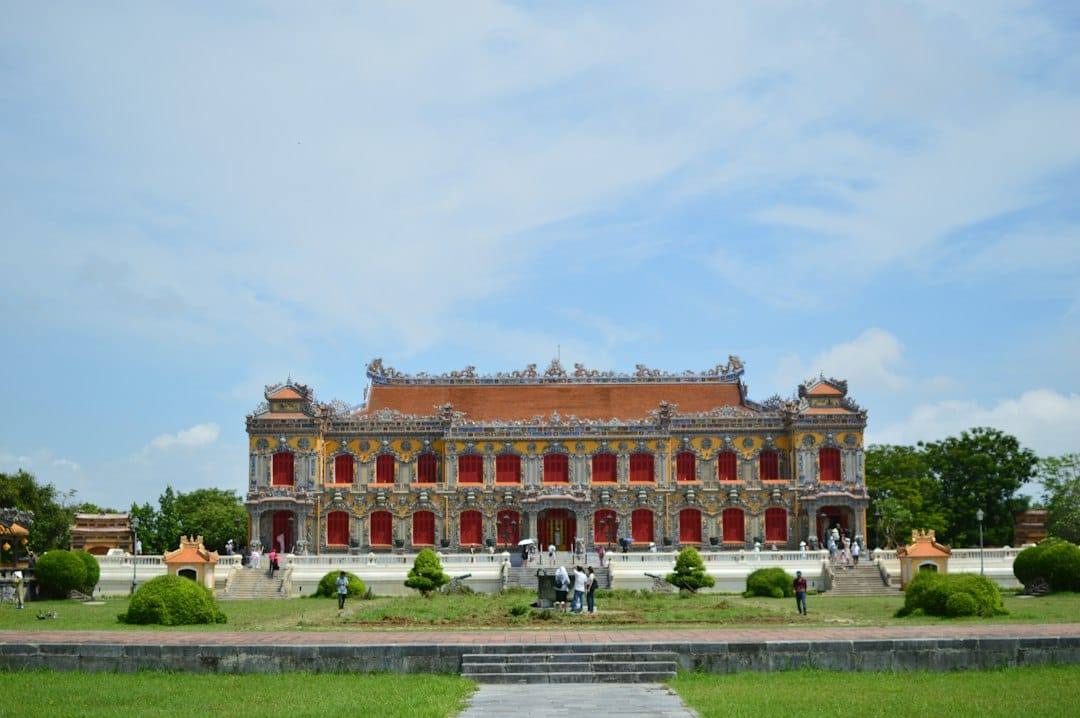
The timing argument for 2026 is concrete. Kien Trung Palace, the last emperors' residence inside the citadel, reopened in 2024 after sitting as a bombed-out foundation since 1947 — so the single most photographed building in the Imperial City is something your friends who came here a decade ago never saw. On top of that, the Hue Festival has shifted from a biennial blowout to a year-round program across all of 2026, which means boat races, Tuong opera, and lantern nights land on the calendar almost whenever you show up. You still need three days to do the citadel, the three major tombs, and the Perfume River properly without sprinting. Here is how to spend them.
🎭 Essential Experiences
The Imperial City (Dai Noi)
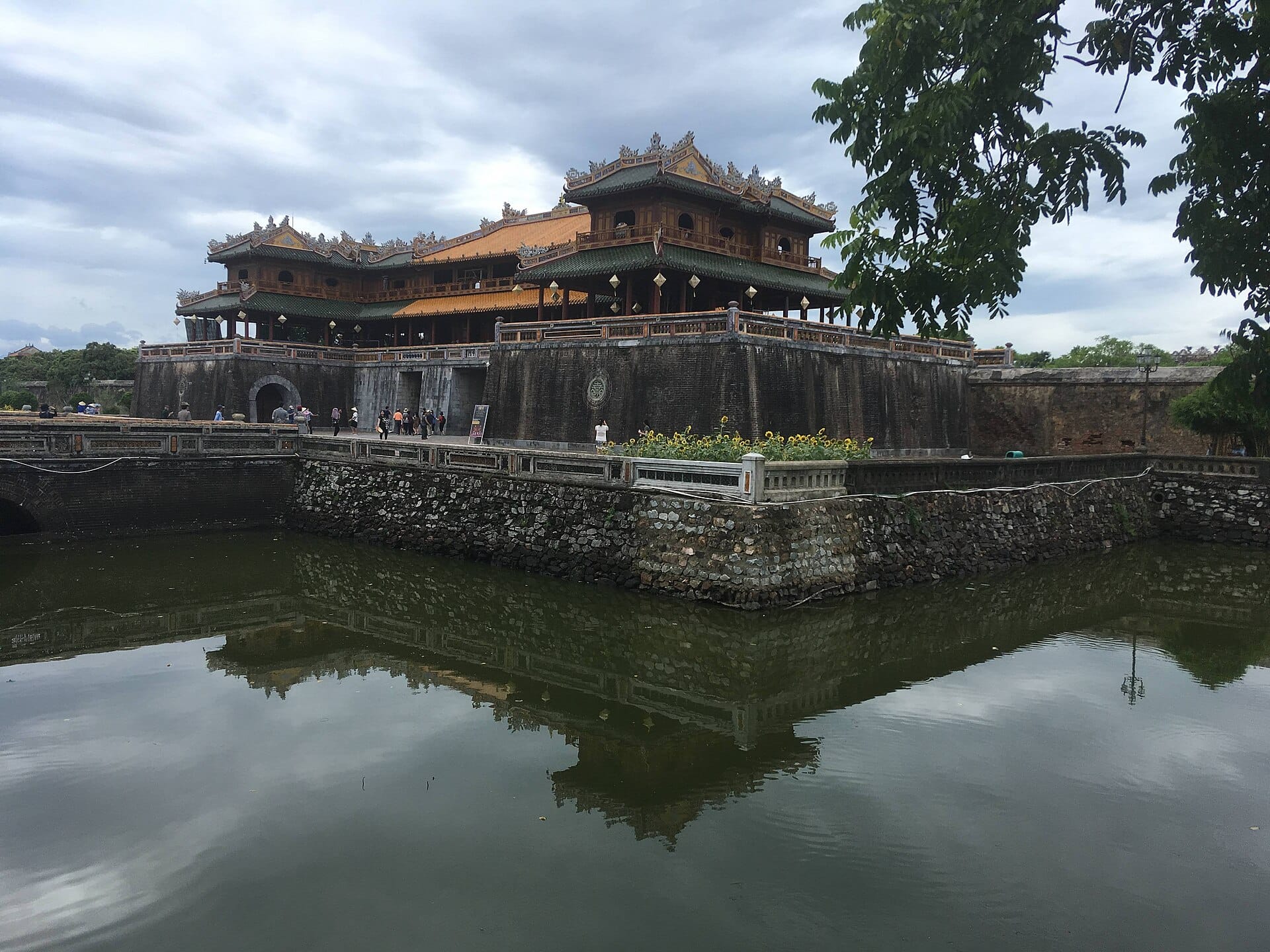
This is the main event: a walled, moated citadel begun by Emperor Gia Long in 1804, modeled loosely on Beijing's Forbidden City, and named a UNESCO World Heritage Site in 1993. You enter through Ngo Mon Gate (built 1833), topped by the Pavilion of Five Phoenixes where the last emperor, Bao Dai, abdicated in 1945. Inside, Thai Hoa Palace — the Palace of Supreme Harmony, finished in 1805 — still holds the throne room under 80 red-and-gold lacquered columns. Be realistic about what survived: the 1968 Tet Offensive turned the citadel into a month-long battlefield and destroyed more than 70% of the buildings inside, so you are walking through a mix of originals, careful reconstructions, and open foundations with explanatory signs. The star reconstruction is Kien Trung Palace, reopened in 2024, a yellow Vietnamese-European confection that photographs better than anything else on the grounds.
Cost: 200,000 VND (about $7.70 / €6.55) for adults, 40,000 VND for children 7–12, free under 6.
Insider tip: Go at opening — 6:30 a.m. in summer, 7:00 a.m. in winter — and walk to the back (the Forbidden Purple City and Kien Trung) first, then work forward. Everyone else clusters at Thai Hoa near the entrance, so you get the restored palaces nearly empty and hit the crowds on your way out. Budget three to four hours; this is not a 45-minute stop.
Tomb of Khai Dinh
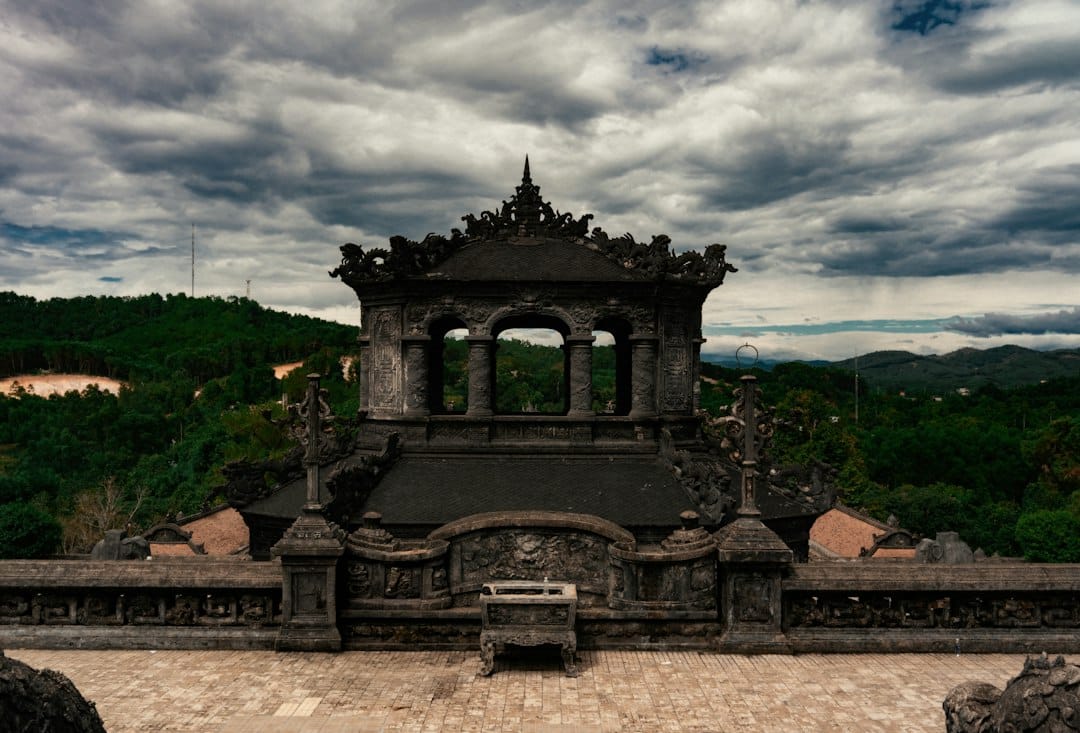
If you only have time for one tomb, this is the one that looks like nothing else in Vietnam. Built between 1920 and 1931 for the second-to-last Nguyen emperor, it is small, steep, and unapologetically weird — a blackened concrete-and-iron structure clinging to Chau Chu Mountain, blending French colonial and Vietnamese design because Khai Dinh had expensive European taste. You climb 127 steps past stone mandarins, elephants, and horses to reach the Thien Dinh Palace, where every surface is covered floor-to-ceiling in mosaics made from smashed porcelain and colored glass. A gilded bronze statue of the emperor sits on the throne, with his body entombed 18 meters below.
Cost: 150,000 VND (about $5.75 / €4.90), open 7:00 a.m.–5:30 p.m. It sits roughly 10 km southwest of the city.
Insider tip: The exterior is gray and grim — do not judge it from the courtyard. The payoff is entirely inside the top hall, so climb all 127 steps before deciding what you think. Morning light hits the interior mosaics best.
Tomb of Tu Duc
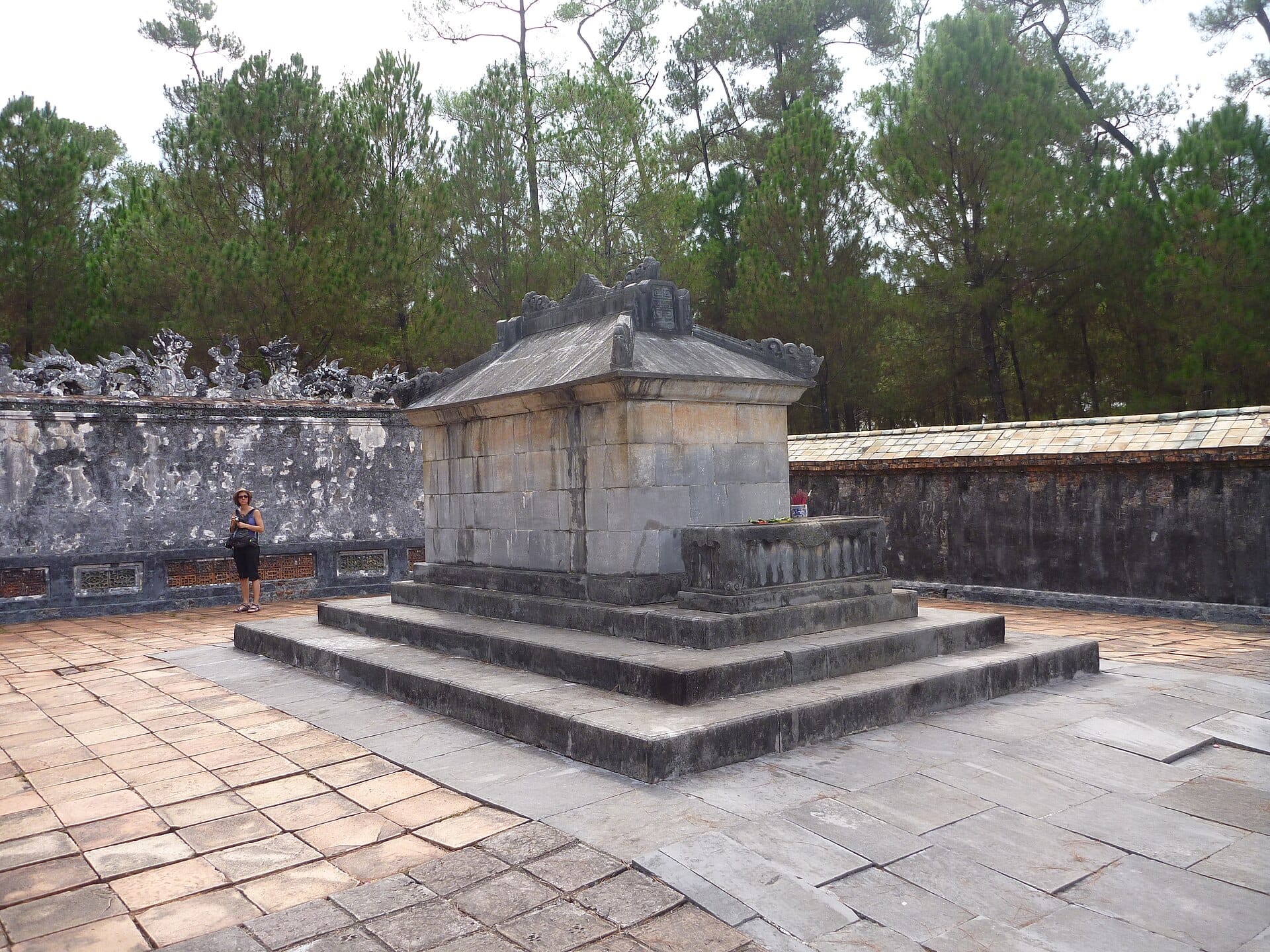
Tu Duc built this between 1864 and 1867 as a working retreat, not just a grave — he lived, wrote poetry, and reportedly kept a harem here while he was still very much alive. The layout reflects that: a pine forest wrapped around Luu Khiem Lake, with the Xung Khiem Pavilion built out over the water where he composed verse. It is the most peaceful of the tombs and the easiest to wander slowly. One good piece of trivia for the walk: the emperor isn't actually buried here. His real grave was hidden to prevent robbery, and by tradition the laborers who dug it were executed to keep the location secret. It has never been found.
Cost: 150,000 VND (about $5.75 / €4.90). It's about 6–8 km southwest of the center.
Insider tip: On-site signage is thin. Download the site map or hire a guide at the gate, because the pavilions and courtyards are spread out and easy to misread as just pretty scenery.
Tomb of Minh Mang
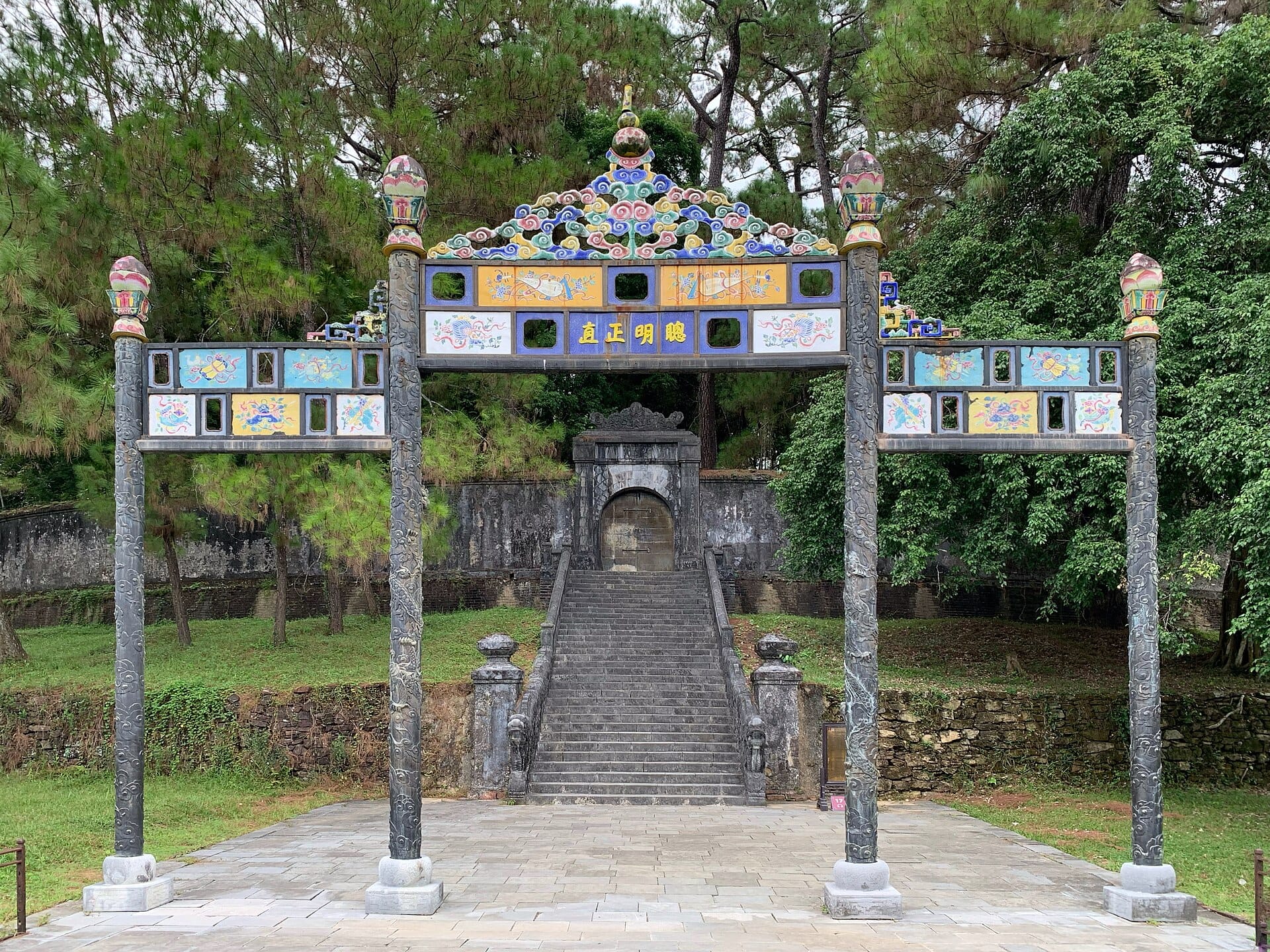
This is the symmetrical one, and it's the tomb that rewards a slow walk more than a quick photo. Construction began in September 1840; Minh Mang died in January 1841 with the work unfinished, and his successor Thieu Tri completed it in 1843. The complex runs 40 structures along a single axis — gates, courtyards, the Minh Lau "Bright Pavilion," and a crescent-shaped lake (Tan Nguyet) wrapping the circular burial mound — all mirrored left and right in strict Confucian order. It sits about 12 km from Hue near the west bank of the Perfume River, slightly farther out than the others, which keeps the crowds thinner.
Cost: 150,000 VND (about $5.75 / €4.90).
Insider tip: The main gate, Dai Hong Mon, has three doors and the central one has been opened exactly once — for Minh Mang's coffin. You enter through the side. Walk the full central axis to the burial mound and back rather than cutting across; the symmetry is the entire point and you only feel it on the spine of the complex.
Thien Mu Pagoda
The seven-story Phuoc Duyen Tower on the Perfume River's north bank is the unofficial symbol of Hue, and it's free. The pagoda was founded in 1601 by Lord Nguyen Hoang; the 21-meter octagonal tower was added in 1844 under Emperor Thieu Tri, each of its seven levels dedicated to a Buddha. It's still a working monastery, so you'll see young monks going about their day. The heaviest piece of history sits in a shed out back: the powder-blue Austin sedan that carried the monk Thich Quang Duc to Saigon in 1963, where he burned himself to death in protest — the photograph that put Vietnam's Buddhist crisis on front pages worldwide.
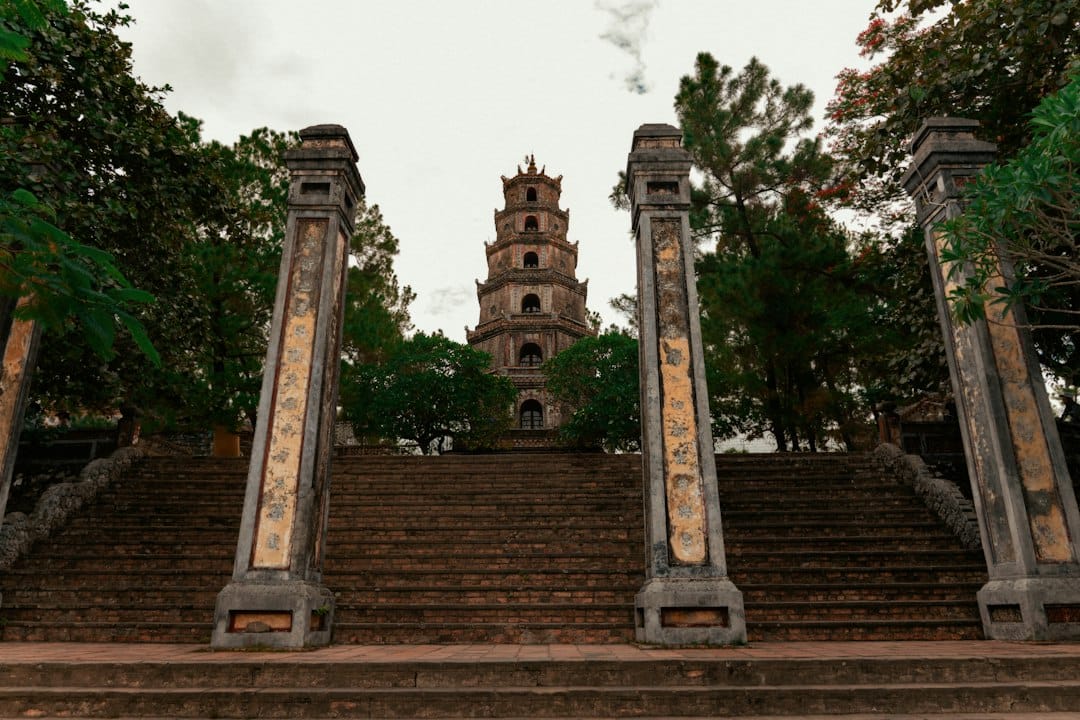
Cost: Free. It's about 4–5 km west of the center on Ha Khe Hill.
Insider tip: Arrive before 8 a.m. and you'll often have the terrace to yourself; by mid-morning the tour boats dock and it fills fast. The best way to arrive is by dragon boat up the river (see below), then grab a taxi back to save time.
A Dragon Boat on the Perfume River
The Perfume River (Song Huong) is the thread that ties the whole city together, and the flat-bottomed dragon boats are the local way to see it. The standard run goes upriver from Toa Kham Pier near the center to Thien Mu Pagoda and, with more time, Hon Chen Temple. The boats are slow and genuinely relaxing — this is a sit-down-and-watch-the-banks experience, not a thrill ride.
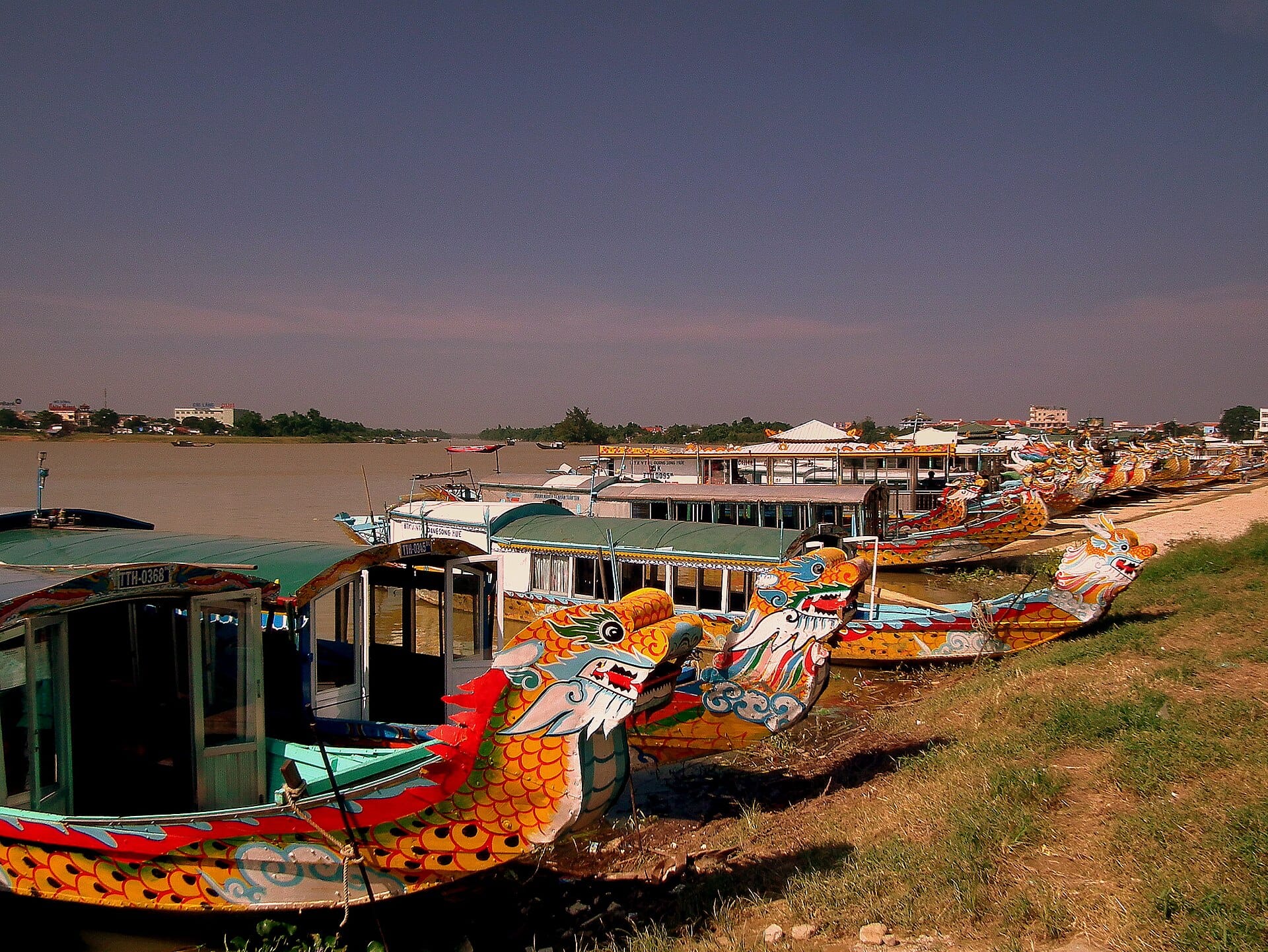
Cost: A seat on a shared boat runs 15,000–30,000 VND (under $1–$1.15); chartering a whole private boat for one or two people is 150,000–300,000 VND (about $5.75–$11.50 / €5–€9.85). Evening dinner cruises with traditional Hue court music run 250,000–400,000 VND per person.
Insider tip: Take the boat one-way to Thien Mu and arrange a Grab car back — the current makes the return leg slow, and you'll waste an hour floating past the same banks. Skip the onboard karaoke boats unless that's genuinely your thing.
Dong Ba Market
Hue's biggest market sits on the river's south bank by Trang Tien Bridge, and it's the right antidote to a day of solemn tombs. This is a real working market — conical hats stacked by the hundred, dried shrimp and chili paste (Hue's famous ruoc and tuong ot), fabric, and a chaotic food court where the city actually eats lunch. It is loud, cramped, and not remotely curated for tourists, which is exactly why it's worth an hour.
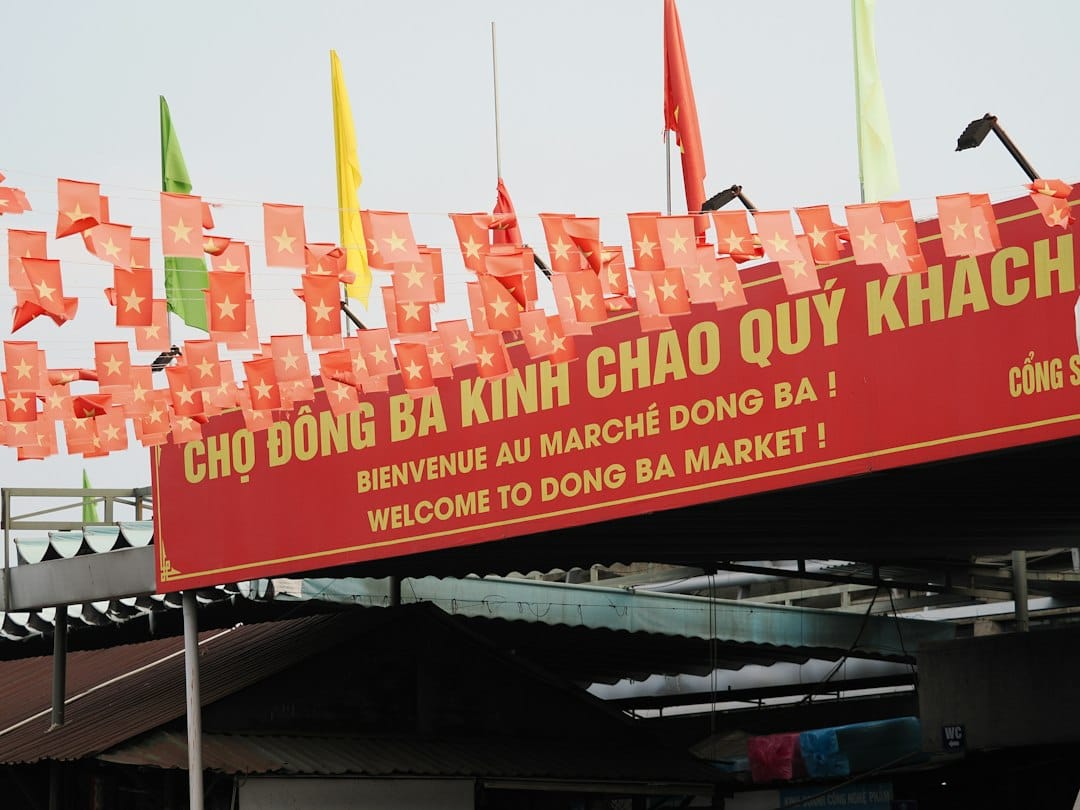
Cost: Free to enter; a bowl of something at the food court runs 20,000–40,000 VND.
Insider tip: Prices here are negotiable and the opening quote for anything non-food is optimistic — counter at roughly half and settle somewhere in the middle. Go mid-morning for the food stalls; by late afternoon the best com hen and che sellers have packed up.
Ho Thuy Tien Abandoned Water Park
For something that is the opposite of imperial, head about 10 km south to the ruins of a water park that opened half-finished in the mid-2000s and was abandoned soon after. The centerpiece is a giant concrete dragon rising out of a lake; you can still climb the spiral stairs inside its body to an aquarium gutted of everything but shattered glass, then stand in its jaws. It became a cult photography spot, got semi-officially "closed" and declared structurally dangerous in 2018, and yet remains very much visitable.
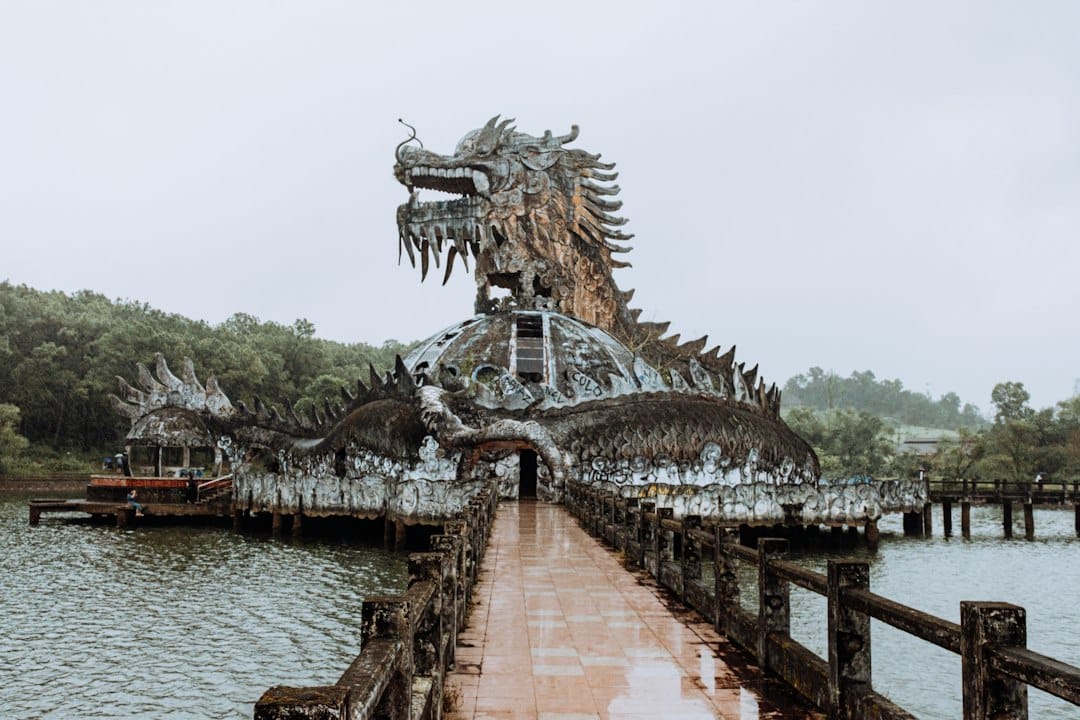
Cost: Caretakers typically collect 20,000 VND entry (about $0.75) plus 10,000 VND for scooter parking.
Insider tip: Wear real shoes, not sandals — the stairs inside the dragon are crumbling and unlit in spots — and don't come alone. It's eerie and empty, which is the appeal and also the reason to bring a buddy.
🗓️ A Three-Day Itinerary
Day 1 — The Citadel and the River
Start at the Imperial City at opening (6:30–7:00 a.m.) and give it three to four hours, heading to Kien Trung Palace first. Walk out across Trang Tien Bridge to Dong Ba Market for a market lunch — a bowl of bun bo Hue runs about 45,000–55,000 VND ($1.75–$2.10). In the early afternoon, catch a dragon boat from Toa Kham Pier upriver to Thien Mu Pagoda (shared seat 15,000–30,000 VND), time your arrival for the late-afternoon quiet, and Grab back to town (a short city hop is 30,000–60,000 VND). End on the weekend walking street around Pham Ngu Lao for grilled skewers and a cheap beer.
Day 2 — The Royal Tombs
This is a day you hire a car or a Grab for a half-day loop, because the tombs are spread 6–12 km out and across the river from each other. Start at Minh Mang (farthest, quietest early), then Tu Duc, then finish at Khai Dinh for the midday mosaic light. The smart money buys the combination ticket: the four-site pass covering the citadel plus Minh Mang, Tu Duc, and Khai Dinh is 530,000 VND (about $20 / €17.40) versus 650,000 VND bought separately, and the all-attractions combo is 580,000 VND with three-day validity. A half-day private car with driver typically runs 500,000–900,000 VND ($19–$35) for the tomb loop.
Day 3 — Food, Oddities, and the Coast
Spend the morning on Con Hen Island eating com hen where the dish was invented (15,000–20,000 VND a bowl), then make the run south to Ho Thuy Tien for the abandoned dragon (20,000 VND). If you'd rather have beach and sky, swap in Tam Giang Lagoon — Southeast Asia's largest lagoon, about 15 km from the city — for a late-afternoon boat and a sunset that locals rate over anything in town. If you're continuing to Da Nang, don't take the bus: the 2.5–3 hour train over the Hai Van Pass is one of the most scenic rail rides in Vietnam, and a soft seat booked directly with Vietnam Railways is just 77,000–190,000 VND ($3–$7).
🧠 Essential Tips
Best months to visit
Aim for January through April. That window is dry and mild (20–24°C), which matters because Hue sits in one of the wettest pockets of Vietnam. The rainy season runs roughly September to December, and it is not a drizzle — October is the peak, with serious downpours and regular street flooding that can shut tomb access entirely. May through August is reliably dry but hot, occasionally spiking to 38–40°C, so start early and hide indoors at midday. If you want festival energy, note that the Hue Festival in 2026 runs across all four seasons; the autumn chapter (August 1–September 30) includes Perfume River boat races, and the "Imperial Full Moon Night" lands on the Mid-Autumn Festival, September 25, 2026, inside the citadel.
Getting in and getting around
Phu Bai Airport is about 15 km southeast, a 25–30 minute drive. A metered airport taxi (stick to Mai Linh or Thanh Cong) runs around 220,000 VND (about $8.50); a Grab car is usually cheaper, and a Grab motorbike is 70,000–80,000 VND if you're traveling light. The old official airport shuttle bus stopped running around 2023–2024, so don't count on it. In the city, Grab is the app locals and travelers actually use for both cars and motorbikes — it kills the fare-haggling that plagues street taxis. The historic center is compact and flat, so walking covers the citadel-and-river core; you only need wheels for the tombs.
Safety and scams
Hue is low-crime and relaxed by big-city standards, but a few specifics are worth knowing. The classic scam is the cyclo or motorbike driver who quotes a round-trip tomb tour, then tacks on "waiting fees" or demands more at each stop — agree the full price and route in writing before you get on, or just use Grab. At the tombs, freelance "guides" may attach themselves and ask for a tip after; a polite, firm no works. The abandoned water park's crumbling structures are a bigger real risk than any thief — the 2018 danger declaration was earned. And during the September–December rains, flash flooding on roads out to the tombs is genuine; check conditions before booking a car on a wet day.
What to eat
Hue food is its own cuisine, engineered for emperors who wanted small, intense, varied dishes. The flagship is bun bo Hue, a lemongrass-and-chili beef noodle soup that's spicier and funkier than pho — try it at long-running local spots like Bun Bo Mu Roi or Bun Bo Ba Tuyet, breakfast institutions that often sell out by early afternoon. Then work through the small plates: com hen (baby clams over rice with crackling and herbs) on Con Hen Island where it originated; banh khoai, a crispy turmeric crepe; nem lui, grilled lemongrass pork skewers you roll in rice paper; and the banh family — banh beo, banh nam, banh bot loc — best sampled as a mixed platter at a banh specialist like Hang Me. Finish with che, Hue's enormous category of sweet soups. Note the schedule quirk: many of the best bun bo shops are breakfast-and-lunch only, closing by 1 p.m. or when the pot runs dry, so eat the famous bowls early.
🏨 Accommodation Guide
Budget ($8–20 / €7–18 a night): The backpacker quarter around Pham Ngu Lao, Chu Van An, and Vo Thi Sau streets, just south of the river, is the place — walkable to the walking street, the bars, and street food, with dozens of hostels and family homestays. Lavande Hue Homestay is a clean, central option near the riverside in this band. You're a five-minute walk from a Grab to anywhere.
Mid-range ($35–75 / €30–65 a night): The Vinh Ninh / city-center riverside area gives you comfort without a resort markup. Alba Spa Hotel and Senna Hue Hotel both sit a couple of blocks from the Perfume River with pools and balconies, surrounded by cafés and craft-beer bars. This is the sweet spot for most travelers.
Luxury ($130–320 / €115–290 a night): Azerai La Residence is the icon — a 1930s Art Deco property built as the French colonial governor's residence, sitting right on the river facing the citadel. For a resort feel, Pilgrimage Village Resort sits in the hills about 15 minutes out with brick bungalows and private-pool villas, and the Ancient Hue Garden Houses in the historic Kim Long neighborhood offer restored wooden garden houses just outside the citadel walls.
❤️ Beyond the Tourist Trail
Three things the day-trippers never get to. First, Con Hen Island, a sliver of land in the middle of the Perfume River reachable by a short bridge — this is the birthplace of com hen, and eating a 15,000-VND bowl where it was invented, surrounded by locals and not a single tour group, is the most honest meal in Hue. Second, Tam Giang Lagoon, about 15 km out and the largest lagoon in Southeast Asia, where fishermen still work bamboo traps at a scale that makes sunset genuinely worth the drive; go late afternoon, hire a small boat, and stay for the light. Third, the weekend walking street on Pham Ngu Lao, Chu Van An, and Vo Thi Sau — pedestrianized Friday through Sunday from around 6 p.m. to 11 p.m., with street musicians, food stalls, and bars like the long-running DMZ Bar. It's social rather than wild, the right speed for a city that spends its days being reverent.
And if your dates land in autumn 2026, the Hue Festival's riverside boat races and the September 25 Imperial Full Moon Night put lanterns and Tuong opera inside the citadel after dark — the one time you can see the Imperial City lit up and alive rather than as a daytime museum.
Plan Hue the Smart Way with VoyaBear
Three days, four combination-ticket math problems, tombs scattered across two riverbanks, and food stalls that close before lunch — Hue rewards a real plan. That's what VoyaBear does. Tell us when you're coming and what you're into — imperial history, deep food, slow river days, or all three — and we'll build you a personalized Hue itinerary with the timing, transport, and bookings sorted, so you spend your mornings in empty palaces instead of untangling logistics. Start planning your Hue trip with VoyaBear today.
Want this as an actual itinerary?
VoyaBear turns a guide like this into a day-by-day plan built around how you travel.
Plan my trip free