Kandy 2026: The Complete Guide to Sri Lanka's Hill Capital
1 October 2026 · 12 min read
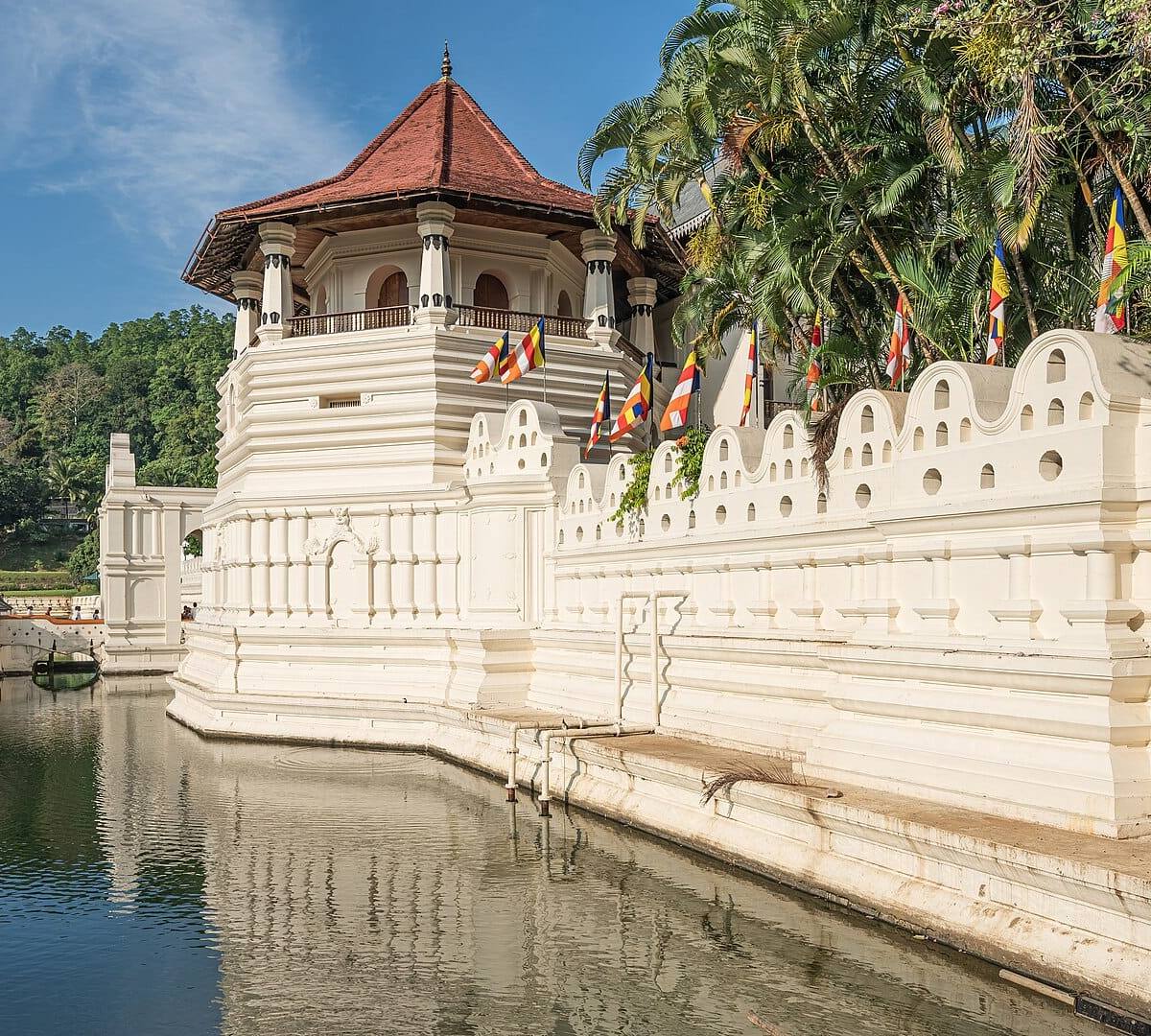
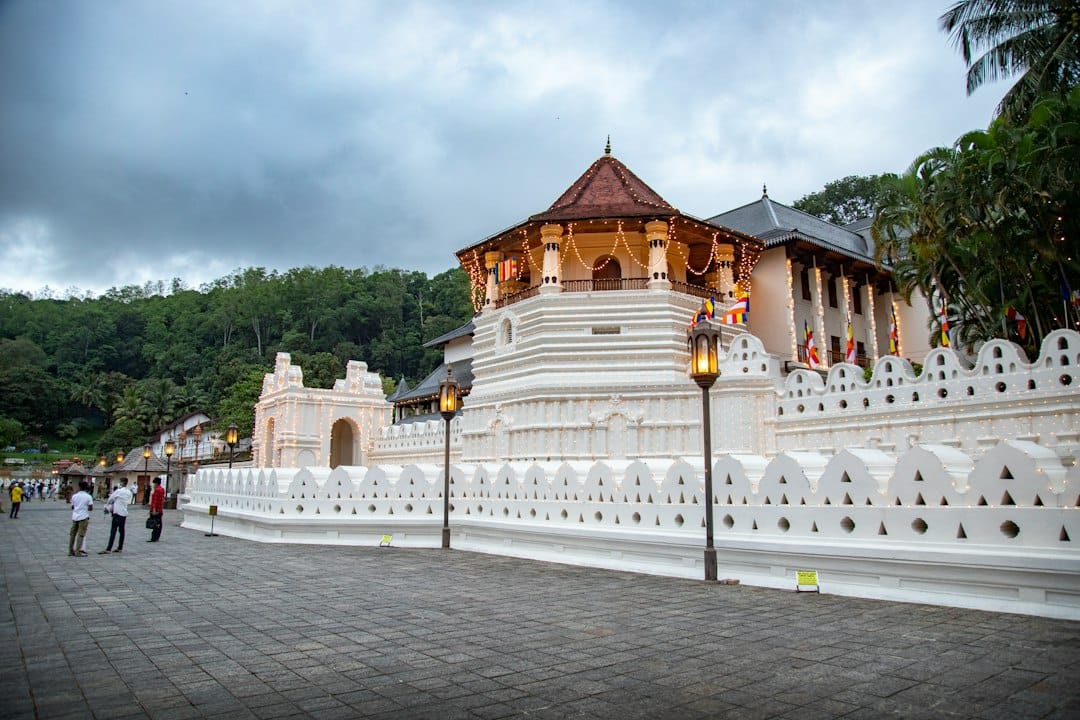
Kandy sits in a bowl of green hills at about 500 metres above sea level, which is the first thing you notice after the sticky heat of Colombo: the air is a few degrees cooler and the evenings actually require a light layer. The second thing you notice is that the whole city orbits one building. The Temple of the Sacred Tooth Relic holds what Sri Lankan Buddhists believe is a tooth of the Buddha, and for more than two centuries possessing that relic has meant possessing the right to rule the island. Kandy was the last independent kingdom to fall to a European power, holding out against the Portuguese and Dutch and finally ceding to the British only in 1815. That late surrender is why the city still feels like the cultural capital it is: the drumming, the dance, and the ten-day Esala Perahera procession all trace back to the relic in the temple by the lake.
You can see the headline sights in two days. Give it three and you can add the botanical gardens, a hill temple at sunset, and a day trip into the surrounding tea country without rushing a single thing. Here is how to spend that time, what each place actually costs in 2026, and the specifics that separate a good Kandy visit from a frustrating one.
🏙️ Essential Experiences
Temple of the Sacred Tooth Relic (Sri Dalada Maligawa)
This is the reason Kandy exists as a pilgrimage city, and it earns the visit. The golden-roofed shrine room holds the tooth relic inside a series of nested gold caskets; you don't see the tooth itself, but during puja (the daily offering ceremony) the inner chamber opens and the queue shuffles past the casket while drummers and horn players fill the courtyard with a wall of sound. Foreign adults pay LKR 2,000 (around $6.70 / €6.20). The temple is open daily from 5:30am to 8:00pm, and the three puja ceremonies run at roughly 5:30am, 9:30am, and 6:30pm.
Insider tip: Go for the 6:30pm evening puja. The light through the shrine is better, the heat has dropped, and the drumming (hewisi) that opens the ceremony is the single best sensory moment in the city. Arrive 30 minutes early to clear the security check and get inside before the casket chamber opens. Dress code is strict and enforced: shoulders and knees covered, and shoes off at the entrance (there's a free shoe-minding counter, so don't pay the touts who offer to "watch" them).
Royal Botanical Gardens, Peradeniya
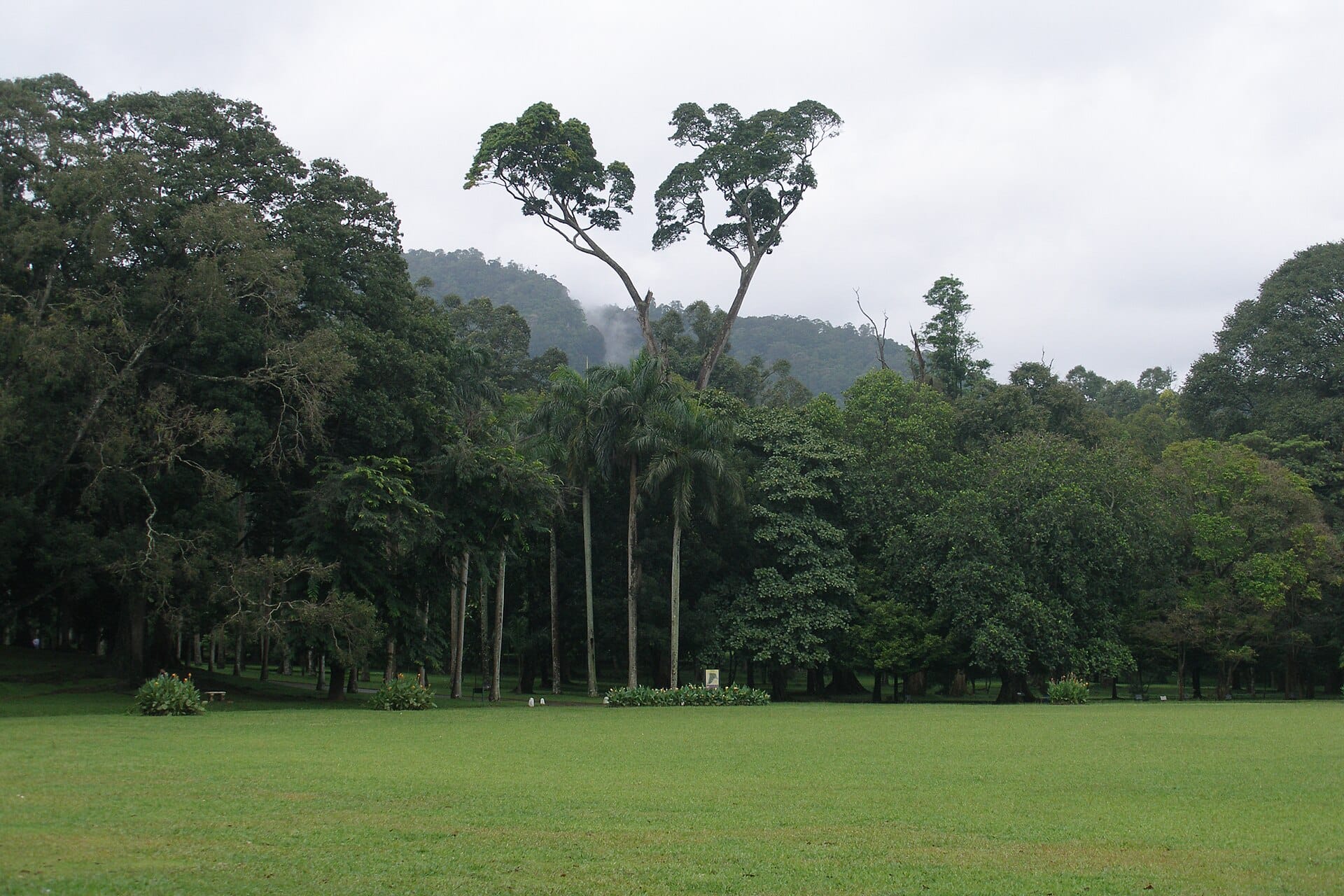
These 147 acres were the royal pleasure garden of the Kandyan kings before the British turned them into one of Asia's great botanical collections in 1821. The set pieces are genuinely worth the walk: the Avenue of Royal Palms, the enormous Javan fig tree whose canopy covers a lawn on its own, the orchid house, and a giant bamboo grove. Foreign entry is LKR 3,000 (about $10 / €9.30), open 7:30am to 5:00pm with last entry at 4:30pm. The gardens sit 5.5km west of the city centre.
Insider tip: Skip the tuk-tuk and take bus 644 from the Clock Tower bus stand — it drops you at the gate for about LKR 30 in 15 to 20 minutes. Come right at opening or after 3pm; midday sun on the open lawns is brutal and there's little shade between the feature trees. Budget at least two hours to do it justice, and bring water, because the on-site café prices are a captive-audience situation.
Kandy Lake (Kiri Muhuda)
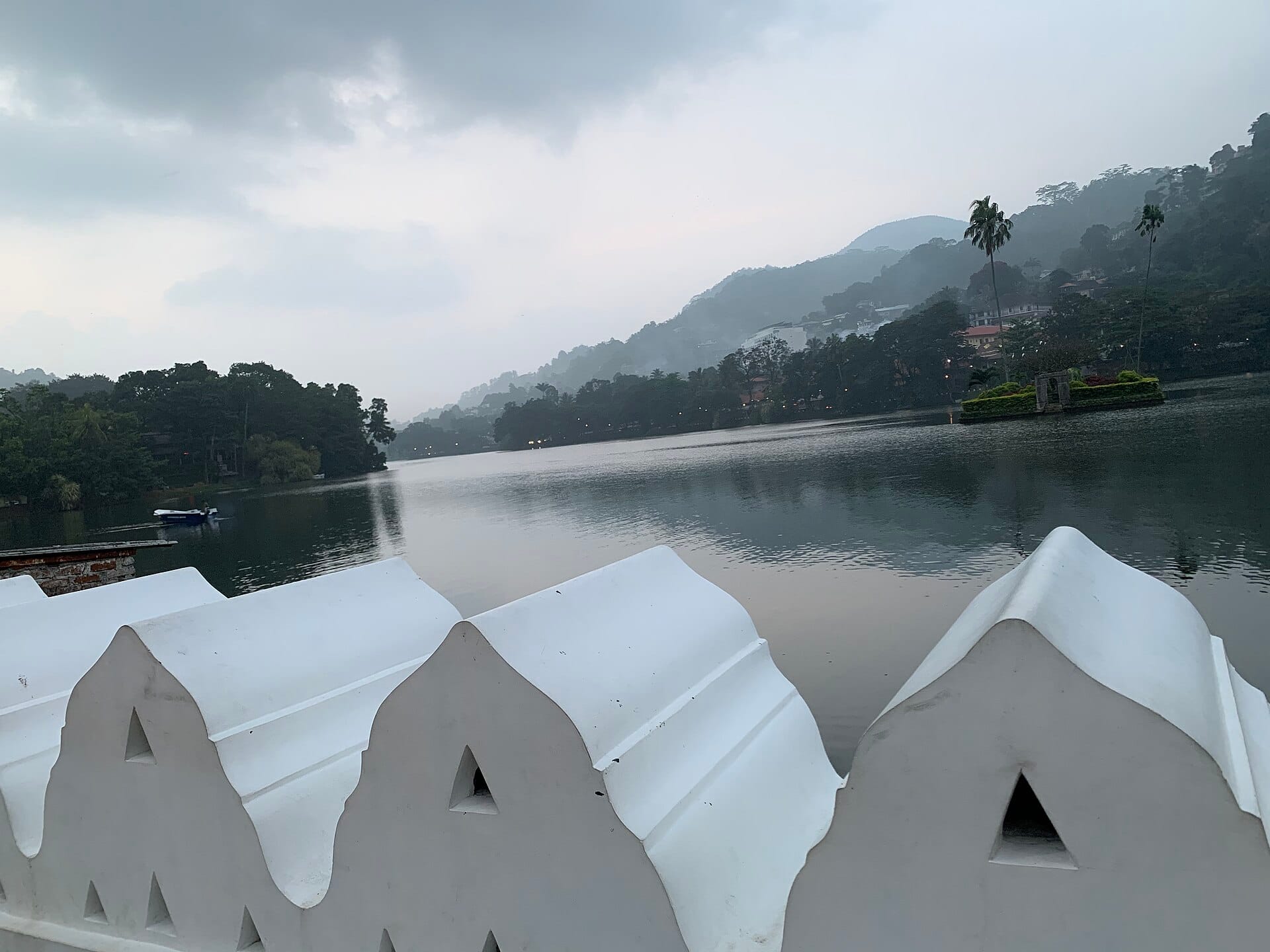
The last king of Kandy, Sri Wickrama Rajasinghe, had this lake dug in 1807, a few years before the British deposed him — one story says he flooded the old paddy fields and executed the chiefs who objected. Today it's the city's loop walk: a roughly 3.2km shoreline path that takes under an hour at a stroll, with the temple on the north bank and the hills rising behind. It costs nothing, which in a city of entry fees is a pleasant change.
Insider tip: Walk it in the hour before sunset, counterclockwise, so the temple and its reflection are lit in front of you as you come around the eastern side. You'll pass egrets, the occasional monitor lizard sunning on the wall, and vendors selling cut mango with chilli salt. Keep your snacks zipped away near the temple — the resident troop of macaques is fast and unsentimental about it.
Bahirawakanda Vihara Buddha Statue
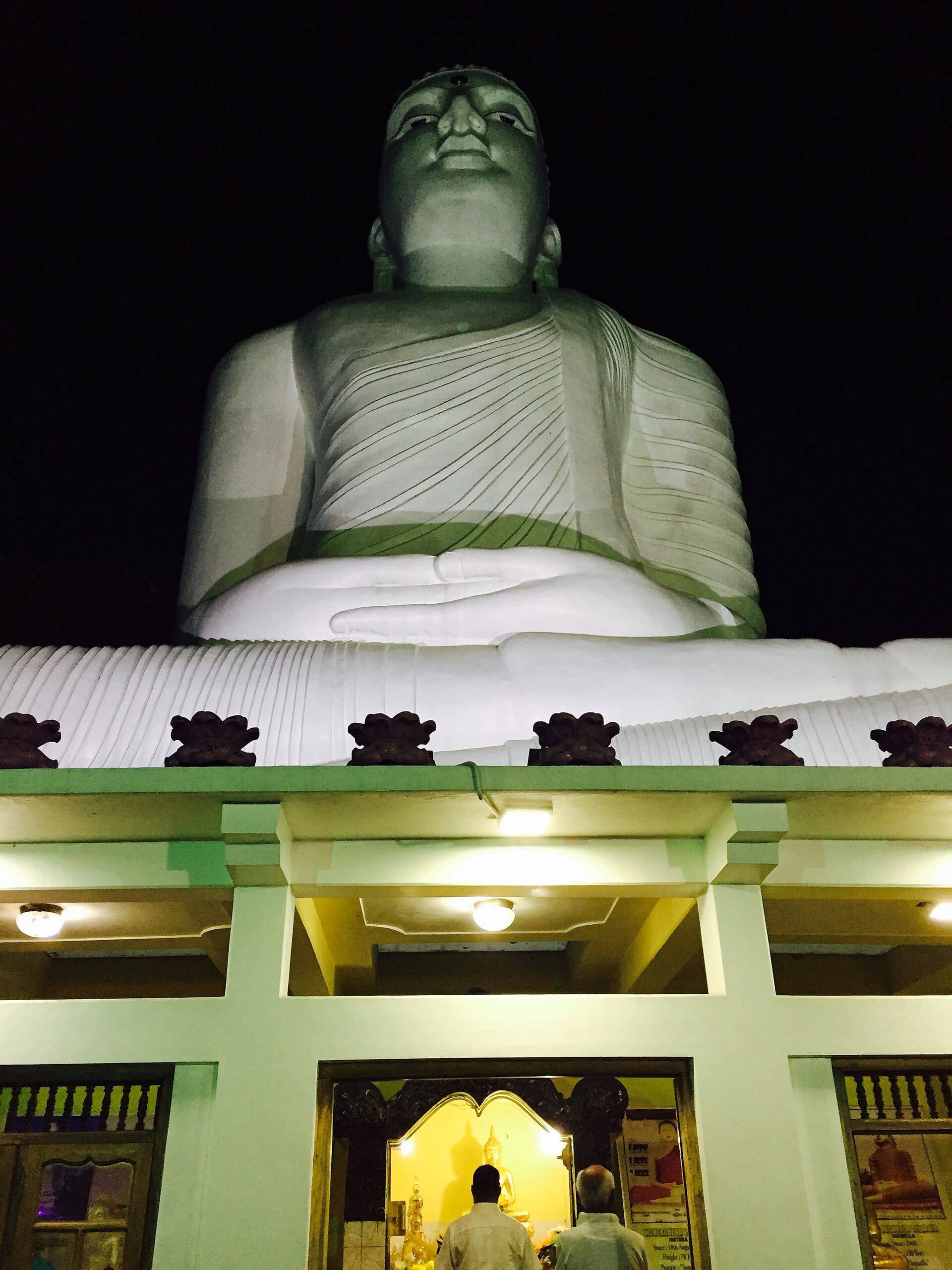
An 88-foot white seated Buddha on the hilltop directly above town, visible from almost everywhere in the valley and floodlit at night. The climb (or short tuk-tuk ride) is really about the view: from the platform at the statue's base you get the full sweep of Kandy, the lake, and the temple laid out below. Foreign entry is a token LKR 250, open 6:00am to 6:00pm.
Insider tip: Time it for late afternoon, around 5pm, so you get the city in warm light and can watch the temple's lights come on as dusk falls. It's a steep 20-minute walk up from the center; a tuk-tuk should be LKR 300 to 400 one way. As at any temple, shoulders and knees covered and shoes off at the shrine.
A Kandyan Dance Show
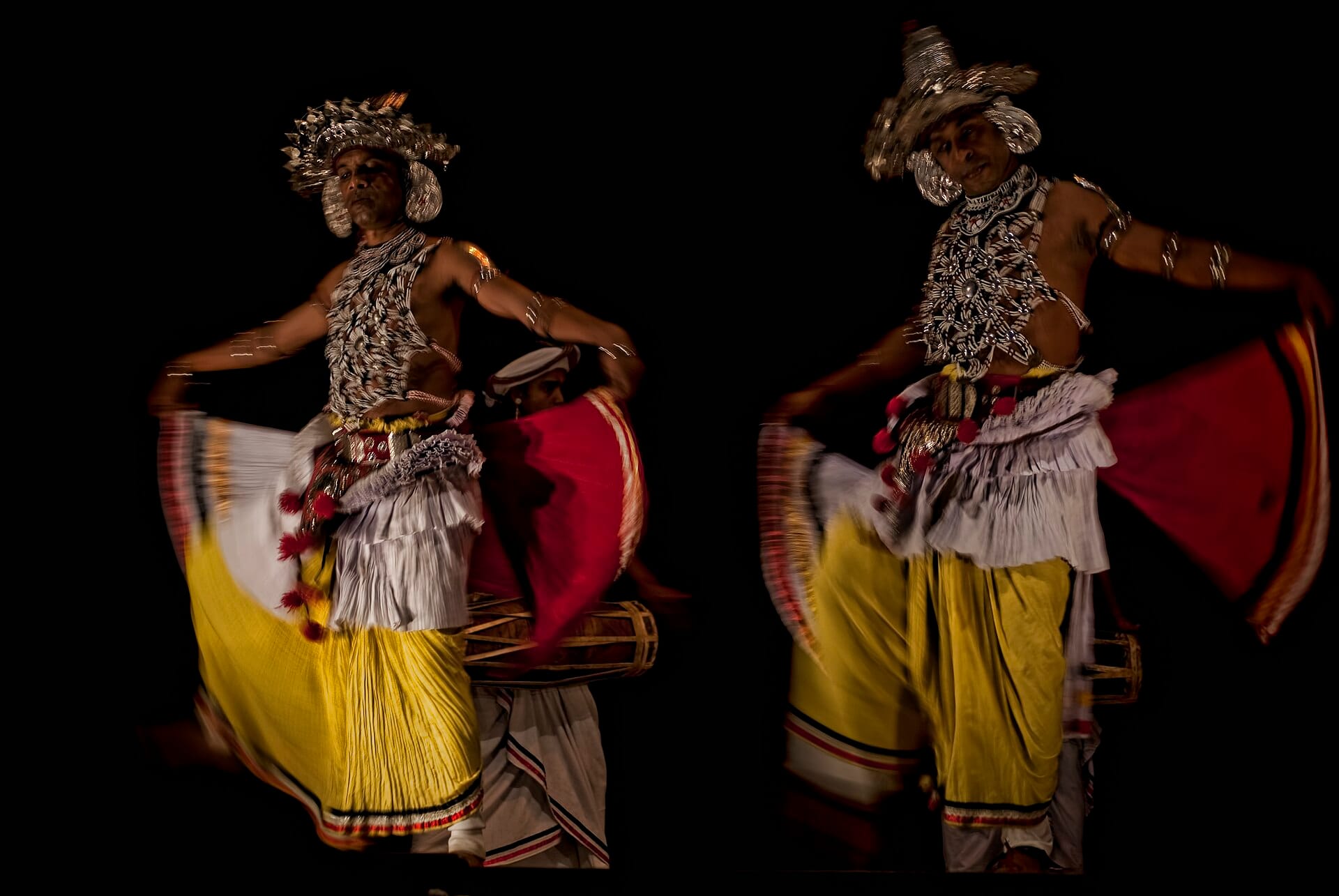
Kandyan dance is its own classical tradition — fast, acrobatic, driven by the barrel-shaped geta bera drum — and the nightly tourist shows are a legitimately good way to see it rather than a tourist trap to avoid. The main venues (Kandy Lake Club on the lake, the Red Cross Hall, and the Kandyan Art Association, which has been running since 1882) all start at 5:00pm and run about an hour. Tickets are LKR 1,500 to 2,500, cash at the door. The programme covers the Ves dance in its silver headgear, the Pantheru and Udekki dances, and a Raksha mask dance, then everyone files outside for the fire-walking and fire-eating finale.
Insider tip: The venues are within a few minutes of each other, the programmes are nearly identical, and none of them sells out — so just walk to whichever is nearest your hotel and arrive 20 minutes early for a center seat in the first few rows. The fire-walking happens outdoors at the end; stay to the front of the crowd as it moves or you'll see nothing but phone screens.
Udawattakele Forest Reserve
Directly behind the Temple of the Tooth, the hillside is covered by a 104-hectare forest that was once the royal pleasure garden ("the garden above the town"), off-limits to commoners. Now it's a working sanctuary of big-buttressed trees, giant lianas, and birdlife — look for the Layard's parakeet and brown-capped babbler — plus troops of macaques and the occasional sleepy python. Foreign entry is around LKR 570. It's the quietest green space in the city and the easiest way to feel a long way from the traffic.
Insider tip: Go in the morning when the birds are active and the paths aren't muddy. The loop takes one to two hours; the trails are signposted but overgrown in patches, so wear real shoes, not flip-flops. Just below the forest's western edge is the colonial-era Garrison Cemetery, a small, moving record of how short British lives here often were — worth the ten-minute detour on your way back down.
Ceylon Tea Museum, Hanthana
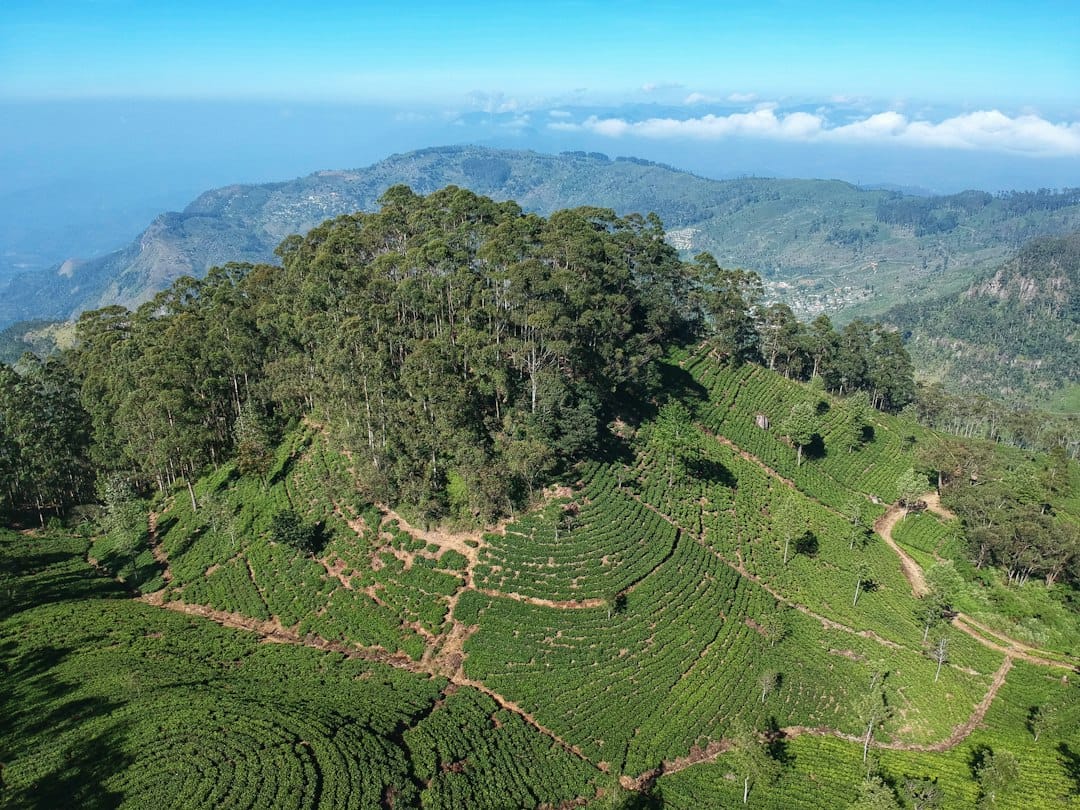
Four kilometres south of town, the old Hantane tea factory has been turned into a four-floor museum of how Ceylon tea is actually made. The lower floors are packed with working-era machinery, including a "Little Giant" tea roller from 1889 and a vintage Venetian drier; upper floors have tea sellers and, on the top floor, a café with a telescope pointed at the Knuckles mountain range. Foreign entry is LKR 1,000. It's open Tuesday to Friday 8:30am–4:00pm and weekends 8:00am–5:00pm, and closed Mondays — which trips up a lot of visitors.
Insider tip: Go for the top-floor café as much as the machinery — a proper cup of estate tea with that view is the point. Combine it with the drive out to the Three Temples loop (below), since they're in the same direction. Don't come on a Monday.
The Esala Perahera (if you're here in August)
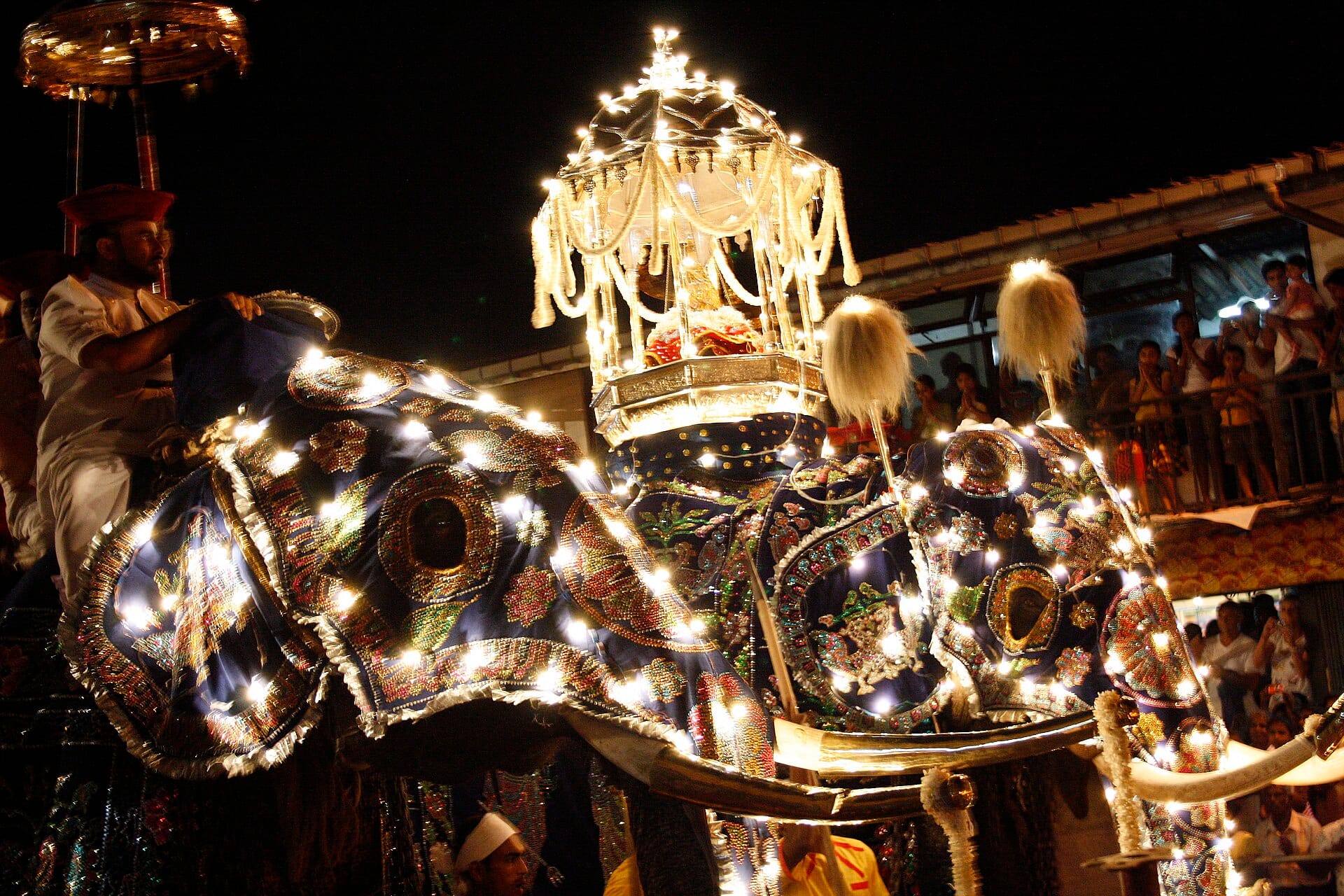
If your dates line up, this is one of Asia's great religious processions. Over ten nights, caparisoned elephants, Kandyan dancers, whip-crackers, fire twirlers, and drummers parade a replica of the tooth relic's casket through the streets. In 2026 the festival runs August 18 to 28, with the grander Randoli Perahera nights falling on August 23 to 27 and a daytime procession closing it out on August 28.
Insider tip: The free option is to stake out a spot on the curb along D.S. Senanayake Veediya or near the lake two to three hours early. If you'd rather sit, shops and guesthouses along the route sell balcony or roadside seats — expect to pay anywhere from LKR 5,000 up to many times that for the final Randoli nights, so book ahead. Book your accommodation months out; the city fills completely during Perahera and rates roughly double.
🗓️ A 3-Day Itinerary
Day 1 — The temple, the lake, and the hill
Start slow with a morning loop of Kandy Lake (free, under an hour) to get your bearings, with coffee at one of the lakeside cafés. Mid-morning, walk up into Udawattakele Forest Reserve (LKR 570) for a couple of hours in the shade and the colonial cemetery on the way down. Have lunch in town — a rice and curry at the Empire Café near the lake is a reliable start to Sri Lankan food. In the late afternoon, tuk-tuk up to the Bahirawakanda Buddha (LKR 250, about LKR 350 for the ride) for the 5pm view, then come back down for the 6:30pm evening puja at the Temple of the Sacred Tooth Relic (LKR 2,000). Total spend, roughly $12 to $15 in entries plus transport and food.
Day 2 — Gardens, dance, and a proper curry
Catch bus 644 from the Clock Tower (LKR 30) out to the Royal Botanical Gardens, Peradeniya (LKR 3,000) for opening at 7:30am, before the heat and the tour buses. Spend the morning among the palms and the giant fig, then head back for lunch. Afternoon: either the Ceylon Tea Museum at Hanthana (LKR 1,000, closed Mondays) or a slow wander through the covered Kandy Municipal Market for spices and fruit. At 5pm, catch a Kandyan dance show (LKR 1,500–2,500) and stay for the fire-walking. Finish with the nightly curry buffet at Sharon Inn, which lays out a dozen-plus Sri Lankan curries for around LKR 2,500 — the best single introduction to the local table.
Day 3 — Tea country and the old temples
Hire a tuk-tuk or driver for a half-day loop southwest of the city (negotiate roughly LKR 5,000 to 7,000 for the morning, or around $20 to $25). Visit the Three Temples — Gadaladeniya, Lankatilaka, and the Embekka Devalaya, famous for the carved wooden pillars in its drummers' hall, all 14th-century and almost empty of visitors. If you'd rather climb than tour temples, swap in the Ambuluwawa Tower near Gampola (LKR 2,000 entry), a spindly multi-faith spire with an external spiral staircase and big views, about 25km south. Back in Kandy, close the trip with a dosa at Balaji Dosai or a sundowner at a lake-view bar.
🧠 Essential Tips
When to go
The driest, most reliable stretch is mid-January through March, with February and March the pick for clear, pleasant days. Kandy gets two rainy influences — it catches the tail of the southwest monsoon (roughly May to September) and the heavier northeast monsoon (October to December), so October and November are the wettest months and the ones to avoid if you can. The big exception is late July or August, when the Esala Perahera is on: it's busier and pricier, but it's also the single best time to see the city at full tilt. Afternoon showers can happen in any month here, so pack a light rain layer regardless.
Getting there and around
The classic approach is the train from Colombo Fort, a scenic 2.5-to-3.5-hour climb into the hills. A reserved first-class or observation seat runs around $12 and second or third class around $7; reserved seats sell out days ahead, so book online (via a platform like 12Go) and collect at the mTicketing counter with your passport, or buy unreserved third-class on the day and take your chances on a seat. From Bandaranaike International Airport (CMB), Kandy is about 104km and a 3-to-3.5-hour drive depending on traffic; a private car transfer runs roughly $55 to $75, and the cheaper route is an air-conditioned intercity bus toward Kandy.
In town, everything central is walkable. For longer hops, tuk-tuks are everywhere — around LKR 50 for the first kilometre and LKR 40 for each after, but meters are rare, so agree the fare first. Save yourself the haggle by using the PickMe app (Sri Lanka's answer to Uber), which gives a metered price and works reliably in Kandy. Local buses are cheap and frequent from the Clock Tower and Goods Shed stands if you want to do it like a local.
Safety and the usual scams
Kandy is a low-crime city and comfortable to walk after dark around the lake and center. The hassles are small-scale and predictable. Near the temple, friendly "guides" will attach themselves to you and invite you to a "special ceremony" or a gem or spice "showroom" where prices are inflated and they take a cut — a polite firm no is all it takes. At the temple shoe counter, use the free official one rather than paying a freelancer. Agree every tuk-tuk fare before you get in, and be specific about the destination, because "it's closed, let me take you somewhere better" is a standard detour to a shop. The macaques around the lake and temple will grab food and loose bags, so keep both zipped and don't eat in front of them.
Food worth seeking out
Start with rice and curry, the national default: a mound of rice ringed by five to a dozen small curries (dhal, jackfruit, beetroot, a sambol or two) that you mix by hand. Sharon Inn's evening buffet is the easiest way to taste the full spread. For street-style food, kottu — roti chopped on a griddle with egg, vegetables and spice, announced by the rhythmic clang of the metal blades — is the sound of Kandy after dark. Balaji Dosai does excellent South Indian dosas and sambar for next to nothing; the Empire Café near the lake is good for a sit-down Sri Lankan lunch; and for a view over the water with your beer, Slightly Chilled above the lake is the long-standing travelers' spot. Wash it down with properly made Ceylon tea, or a king coconut (thambili) from a street cart.
🏨 Accommodation Guide
Budget (around $8–25 a night): The cheapest beds cluster in the center near the lake and the two bus stands, and up the slopes of Anniewatte and Mahaiyawa, where family-run guesthouses have hillside views for guesthouse prices. Hostels and simple rooms here run roughly $8 to $15 for a dorm bed and $15 to $25 for a basic double — convenient for walking to the temple, if occasionally noisy with traffic and the morning call of the mosques and temples.
Mid-range (around $40–90): The sweet spot is a boutique guesthouse on the hills just above the lake, along Rajapihilla Mawatha and Lady McCallum's Drive, where you trade a 10-to-15-minute walk down into town for a terrace, a quiet night, and a view over the water to the temple. This is the best-value tier in Kandy and where most independent travelers should aim.
Luxury (around $120–350+): For a splurge, Earl's Regency in Kundasale (standard rooms roughly $68 to $229) is a full-service resort on the river east of the city, while The Kandy House, a restored 19th-century manor in Gunnepana surrounded by paddy fields, is the atmospheric choice for a colonial-era stay. Both are a short drive out of the center, which is part of the appeal — you get hills and quiet rather than traffic.
🎭 Beyond the Tourist Trail
Most visitors never leave the lake-and-temple core, which means the Kandyan countryside just southwest of the city stays blessedly quiet. The Three Temples loop — Gadaladeniya, Lankatilaka, and the Embekka Devalaya — is the best half-day escape: three 14th-century temples set among paddy and rubber, where Embekka's wooden drummers' hall has some of the finest timber carving in Sri Lanka (wrestlers, swans, a double-headed eagle) and you'll often have the place to yourself. For a walk, the Hanthana mountain range on the southern edge of the city gives you a half-day ridge hike with views back over Kandy, starting near the Tea Museum.
In the center, skip the gem "showrooms" the touts push and go to the Kandyan Art Association, where the craftspeople and the 1882 building are the real thing, or dig through the covered Municipal Market for Ceylon cinnamon, cardamom, and curry blends at local prices rather than airport ones. And if your trip touches late August, reread the Esala Perahera section above and plan everything else around it — there is no bigger night in the Kandyan year.
❤️ Plan Your Kandy Trip with VoyaBear
Kandy rewards good timing more than most cities — the right puja, the dry month, a seat on the hill guesthouse before Perahera fills the town. That's exactly the kind of planning VoyaBear handles for you. Tell us how many days you have, what you're into, and your budget, and we'll build you a personalized Kandy itinerary — down to which dance show is nearest your hotel and which train to book — so you spend your time traveling instead of second-guessing. Start planning your Sri Lanka trip with VoyaBear today.
Want this as an actual itinerary?
VoyaBear turns a guide like this into a day-by-day plan built around how you travel.
Plan my trip free