Krakow 2026: The Complete Guide to Poland's Royal City
15 October 2026 · 14 min read

Krakow spent the Second World War as the capital of the Nazi General Government, which is a grim distinction with one accidental upside: the retreating Germans didn't dynamite it the way they flattened Warsaw. So the Old Town you walk through today is the real medieval article, not a postwar reconstruction. UNESCO put it on the very first World Heritage list in 1978, alongside the Galapagos. The result is a city where you can stand in a 13th-century market square, descend into a salt cathedral 135 meters underground, and confront the most infamous site of the 20th century, all within about 50 kilometers.
It's also cheap by Western European standards, walkable to the point that you may never buy a transit ticket, and small enough to cover properly in three days. Here's how to do that without wasting time on the tourist-trap carriage rides or missing the things that actually justify the trip.
🏙️ Essential Experiences
Wawel Royal Castle and Cathedral
Wawel Hill was the seat of Polish kings for roughly 500 years, and the complex is really several attractions stacked on one limestone outcrop above the Vistula. The castle interiors are ticketed separately by exhibition, and this trips people up: the Royal State Rooms run 49 zł (about $13 / €11), the Crown Treasury and Armoury 35 zł (about $9.50 / €8), and they sell out. The State Rooms are the highlight — look up in the Envoys' Hall for the 30 carved wooden heads staring down from the coffered ceiling. In the Treasury, find the Szczerbiec, the 13th-century coronation sword that is the only surviving piece of Poland's original crown jewels.
Insider tip: On Mondays, individual tickets to selected exhibitions (usually the Treasury and Armoury) are free, but the limited free tickets are typically gone by 10am, so queue early or skip it. The castle grounds, gardens, and the courtyard are free and open from 6am. Don't skip the Dragon's Den, the cave on the riverside slope — a 12 zł (about $3) ticket from a coin machine gets you down the spiral staircase, out past a fire-breathing bronze dragon statue. Buy the grander Wawel Cathedral, burial place of Polish kings, separately at the office opposite its entrance.

Rynek Główny and the Cloth Hall
The Main Market Square dates to 1257 and, at roughly 40,000 square meters, is one of the largest medieval squares in Europe. Cutting through the middle is the Cloth Hall (Sukiennice), a Renaissance trading hall that has been a shopping arcade for 700 years. The ground floor is now souvenir stalls — if you buy anything, make it Baltic amber or handmade lace rather than the mass-produced magnets. Upstairs is the Sukiennice Gallery of 19th-Century Polish Art, a branch of the National Museum, worth it for Jan Matejko's wall-sized history paintings.
Insider tip: For the square without the crowds, duck one block east to Mały Rynek (the Small Market Square), which has the same colorful townhouses and a fraction of the people. Skip the horse-drawn carriages circling the square; they run 200–300 zł (about $55–80) for roughly 30 minutes, and the Old Town is small enough to cover on foot. Beneath the square sits the Rynek Underground Museum, an excavated layer of the medieval market with timed entry — 45 zł (about $12), free on Tuesdays, reserve online because it caps numbers.

St Mary's Basilica
The brick Gothic church on the square's corner has two mismatched towers, and there's a legend about brothers and a jealous murder to explain it, but the real draw is inside: the Veit Stoss altarpiece, a 15th-century limewood retable that is the largest Gothic altarpiece in the world, over 13 meters tall. It's unveiled daily at 11:50am Monday to Saturday (2:10pm on Sundays), so arrive by 11:40 to get a spot. Interior entry is 20 zł (about $5.50) from the ticket office at Plac Mariacki 7; the tourist section opens at 11:30am on weekdays.
Insider tip: Every hour, a trumpeter plays the hejnał from the taller tower window, in all four directions, and it stops mid-note — a nod to a medieval bugler supposedly shot through the throat warning of a Mongol raid. The noon call is broadcast live on Polish Radio nationwide. If you want to climb the Bugle Tower yourself (20 zł, roughly 270 steps), note it only opens May through autumn, Tuesday to Saturday, in capped 30-minute slots sold on the day — no advance booking.

Kazimierz, the Jewish Quarter
For four centuries Kazimierz was a separate town and the center of Jewish life in Krakow, home to seven historic synagogues within a few blocks. After the war emptied it, the neighborhood sat derelict until the 1990s — Schindler's List was filmed on these streets — and it's since become the city's best eating and drinking district without losing its layered, slightly worn feel. Visit the Old Synagogue, the oldest surviving synagogue building in Poland, built partly as a fortification, and the still-active Remuh Synagogue with its 16th-century cemetery.
Insider tip: Head to Plac Nowy, the round former poultry market, for a zapiekanka — an open-face toasted baguette with mushrooms and cheese, sold from the central rotunda, the thing locals actually eat at 2am. A good walking or bike tour of the quarter runs about four hours and is worth it for the context the buildings don't give you on their own. The ghetto itself was across the river in Podgórze, where Ghetto Heroes Square holds 70 oversized empty bronze chairs, one of the city's most quietly affecting memorials.

Oskar Schindler's Enamel Factory
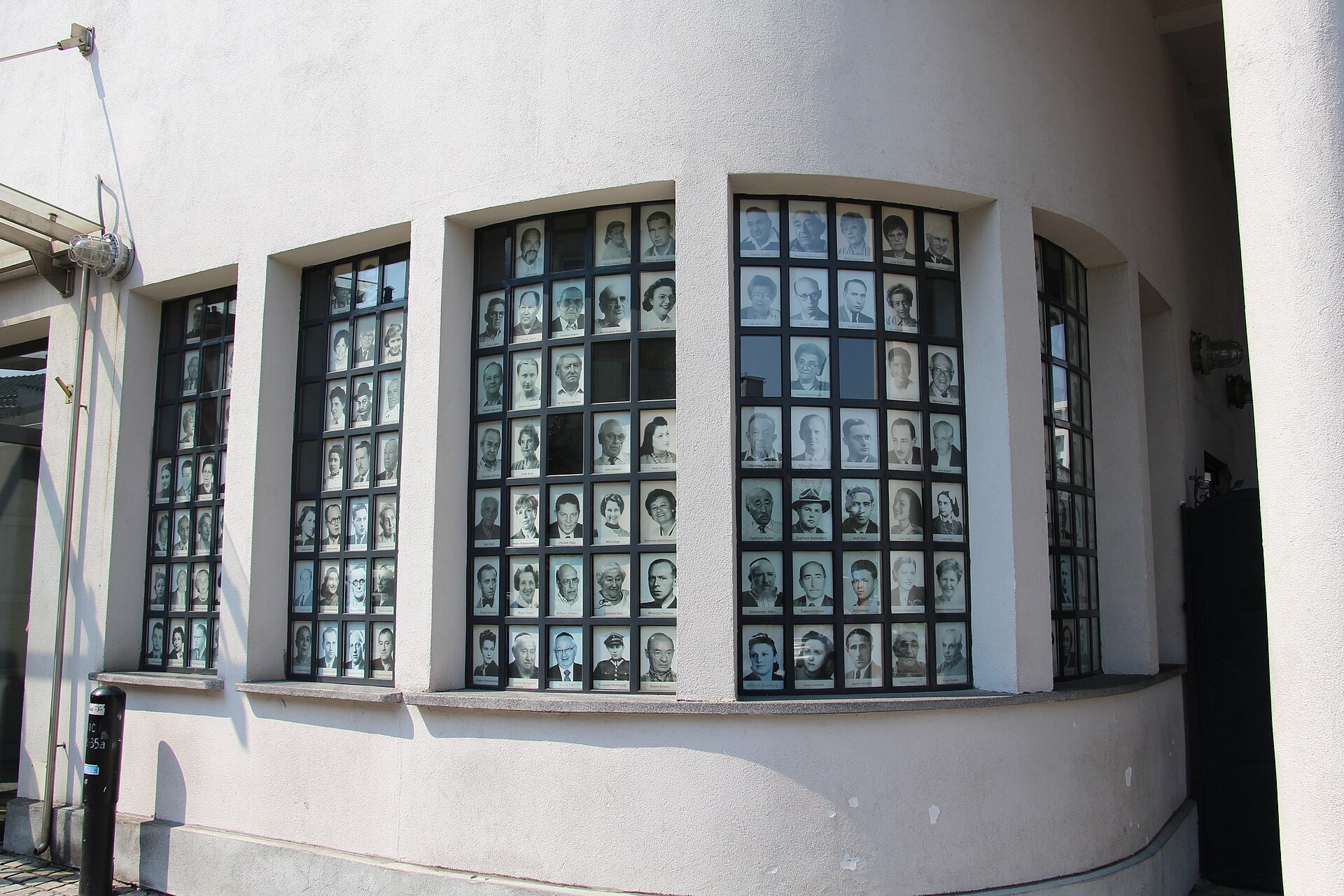
The administrative building of Schindler's actual factory in Podgórze is now a Museum of Krakow branch, and it is not, despite the name, mostly about Schindler. The permanent exhibition, "Kraków under Nazi Occupation 1939–1945," is an immersive, room-by-room walk through the city's wartime experience — reconstructed streets, a tram car, the ghetto, resistance — with Schindler's story woven in. Tickets are 60 zł (about $16), reduced 45 zł, and entry is capped, so book a slot ahead rather than turning up.
Insider tip: Mondays are free, but you can't pre-book on free days and the day-of tickets go fast. The exhibition is dense and emotionally heavy, runs about 90 minutes to two hours, and isn't recommended for children under 14. It's open until 8pm Tuesday to Sunday (only to 3pm Monday, closed the first Tuesday of each month), so going late afternoon dodges both the tour groups and the midday heat. Next door, the MOCAK contemporary art museum makes a sharp tonal palate-cleanser afterward.
Auschwitz-Birkenau (day trip)
The Auschwitz-Birkenau Memorial and Museum sits about 66 km west of Krakow, near the town of Oświęcim, and visiting it is not a comfortable experience nor meant to be. Admission to the grounds is free, but since May 2025 you cannot get an entry card at the gate — you must reserve a timed pass online in advance at visit.auschwitz.org, and summer slots disappear weeks ahead. A guided tour (optional for individuals, roughly €25) is genuinely worth it; the site makes far more sense with an educator explaining what you're looking at across the two camps.
Insider tip: The simplest option is an organized tour from Krakow with round-trip transport, which runs around €39 and removes the logistics headache; an on-site guided tour alone lasts about 3.5 hours, and you'll want roughly 90 minutes at Auschwitz I and another 90 at Birkenau. If you go independently, the bus from Krakow is cheaper than the train and drops you closer than the Oświęcim station, which is about 2 km from the museum. Dress for a lot of outdoor walking in whatever the weather is doing.

Wieliczka Salt Mine (day trip)
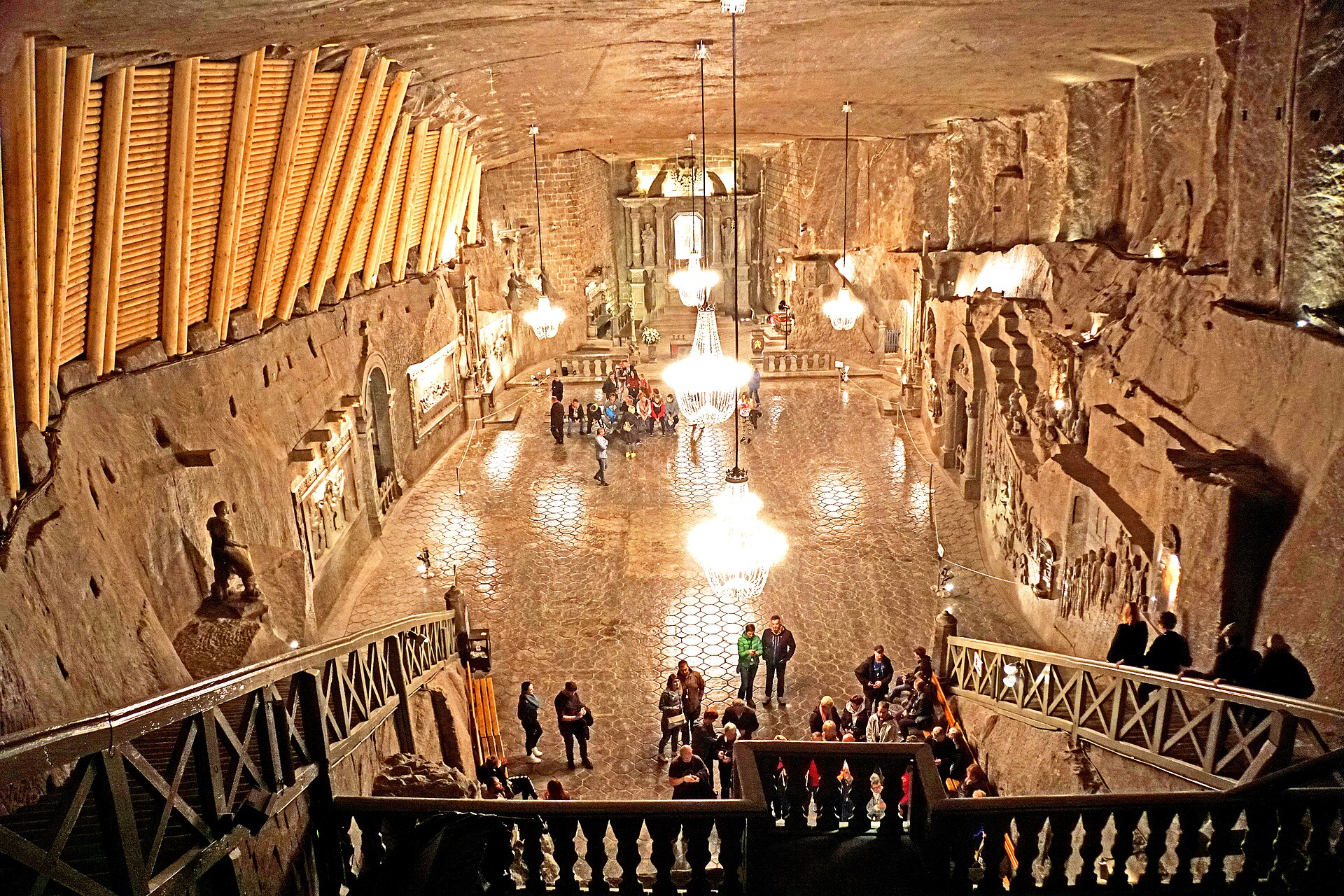
About 30 minutes southeast of the center, the Wieliczka mine has produced salt since the 13th century and was on that same first 1978 UNESCO list. The Tourist Route takes you through 800 steps and some 20 chambers down to 135 meters, past underground lakes and sculptures the miners carved from rock salt in their spare time. The showpiece is St Kinga's Chapel — a full church 101 meters underground, 54 meters long, with chandeliers of salt crystal and altarpieces chiseled into the walls. Everything you touch is salt; go ahead and lick a wall, everyone does.
Insider tip: You cannot wander on your own — entry is only with a guide, and English-language tours are limited and sell out, so book online well ahead. The Tourist Route is about 100 zł (roughly $27 / €23) for a non-Polish tour, 80 zł for children. It's a real descent and a long walk, though a lift brings you back up at the end. Bring a layer: it's a constant 14–16°C down there regardless of the season up top.
🗓️ A 3-Day Itinerary
Day 1 — The Old Town, on foot
Start at the Main Market Square by 9am before the tour groups land. Walk through the Cloth Hall, then be at St Mary's Basilica for the 11:50am altarpiece unveiling (20 zł). Grab an obwarzanek, the ring-shaped sesame bread, from one of the blue carts on the square for about 5 zł. Spend the early afternoon in the Rynek Underground Museum (45 zł, reserve a slot). Walk 10 minutes north to Florian's Gate and the Barbican, the surviving medieval fortifications, then loop back through the Planty, the green ring that replaced the city walls. Dinner at Miód Malina for classic Polish cooking (book ahead on weekends). Total walking: maybe 4 km, all flat.
Day 2 — Wawel and Kazimierz
Be at the Wawel ticket office at opening (9:30am) for the State Rooms (49 zł) and Treasury (35 zł) before they sell out; add the Dragon's Den on the way down to the river. Photograph the castle from Grunwald Bridge. Walk 15 minutes south along the Vistula into Kazimierz for lunch — pierogi at Pierogarnia Krakowiacy or a self-service plate at Polakowski for under 40 zł. Spend the afternoon on the synagogues and streets, then cross the footbridge to Podgórze for Ghetto Heroes Square and Schindler's Factory (60 zł; it's open until 8pm, so a late slot works). End with a zapiekanka at Plac Nowy and a drink in one of Kazimierz's courtyard bars.
Day 3 — The day trip
Pick one serious excursion. Auschwitz-Birkenau (free, reserve online; ~€39 with transport from Krakow) is a half to full day and the more significant; go in the morning when it's quieter and cooler. If you'd rather something less harrowing, Wieliczka Salt Mine (about 100 zł, guided) is closer and takes roughly half a day including travel. Energetic travelers with an organized tour can technically do both in one long day, but you won't do either justice. Back in the city for the evening, climb the Town Hall Tower on the Main Square or just claim a café table and watch the square empty out at dusk.
🧠 Essential Tips
When to go
April, May, September, and October are the sweet spot: mild weather, thinner crowds, and lower room rates than the July–August peak, when the city is hot and the square is wall-to-wall. June brings the Lajkonik pageant and Midsummer; the Jewish Culture Festival fills Kazimierz from July 1–5, 2026 for its 35th edition. December is cold but the Christmas market on the Main Square — mulled wine, oscypek cheese grilled over coals, the annual szopki nativity-crib competition — is one of the best in Central Europe. January typically gets the heaviest snow.
Getting around
From Kraków Airport (Balice), the Koleje Małopolskie (KML) train is the move: 17 zł, about 20 minutes to Kraków Główny, the main station on the edge of the Old Town, running roughly every 30 minutes. Bus 300 is cheaper at 6 zł but slower; an Uber or Bolt runs around 60 zł. In the city you'll mostly walk, but MPK trams are excellent for longer hops — a 20-minute ticket is 4 zł, a 90-minute is 8 zł, and a 24-hour pass is 17 zł. Download Jakdojade, which plans the route and sells the exact ticket. Validate paper tickets in the yellow box on board; plain-clothes inspectors are common and the fine is around 240 zł.
Safety and scams
Krakow is one of the safer European cities, and violent crime against tourists is rare. The real risks are mundane: pickpockets work the packed Main Square and crowded trams, so keep your phone off the café table. Decline the "English-speaking" touts steering you to specific clubs, where the bill arrives with surprise cover charges. Use marked taxis or the Bolt/Uber apps rather than unmarked cars idling by the station, and agree the airport taxi is zone-priced (89–109 zł for a standard cab) before you get in. The tap water is safe to drink.
Food worth planning around
Beyond pierogi and zapiekanki: żurek (sour rye soup, often served in a bread bowl), bigos (hunter's stew of cabbage and meat), and kotlet schabowy (the Polish schnitzel). Eat at least one meal at a bar mleczny (milk bar), the subsidized canteens from the communist era — Milkbar Tomasza on ul. św. Tomasza is a reliable, cheap one in the Old Town. For something sweet, the pączki (filled doughnuts) near St Mary's are worth the queue, and Charlotte does proper French-style croissants.
🏨 Accommodation Guide
Budget: Hostels and simple guesthouses cluster around the Old Town fringe and Kazimierz, with dorm beds often in the 60–120 zł range and basic private rooms from around 180 zł. Kazimierz is the smart budget base — cheaper than the Old Town, 15–20 minutes' walk to the square, and the best nightlife is on your doorstep.
Mid-range: Expect roughly 300–600 zł a night for a comfortable double. In Kazimierz, PURO Kraków Kazimierz is a slick modern boutique hotel with free bike rental, and Hotel M29 has large contemporary rooms. Stradonia Serviced Apartments, between the Old Town and Kazimierz, has some units with Wawel views and sells out early. The quiet Kleparz district, just north of the square, is good value and still central.
Luxury: For the splurge (often 800 zł and well up), Hotel Stary sits on a side street off the Main Square with two pools, a spa, and a rooftop bar overlooking the Old Town roofline. Wyndham Grand Kraków Old Town, on Floriańska Street near St Mary's, has an indoor pool and spa. Both put you inside the medieval core, which is the point — you walk out the door into the square.
🎭 Beyond the Tourist Trail
Zabłocie, the former industrial district around the Schindler factory, is where Krakow's edge has migrated. Time Out ranked it the 11th coolest neighborhood in the world in 2024, ahead of far flashier places — the draw is Hala Lipowa, the city's first food hall, plus pour-your-own craft beer taprooms, roasteries, and MOCAK next to the Schindler museum. It's a 10-minute tram ride from the square and feels like a different city.
For something stranger, take tram 4 out to Nowa Huta, the planned "ideal socialist city" Stalin's planners bolted onto Krakow in 1949 around a vast steelworks. Its monumental central plaza, now Ronald Reagan Square, and the broad boulevards radiating off it are a deliberate counterpoint to the Gothic Old Town — grim on paper, fascinating in person, and best seen on a themed tour (several run in vintage Trabant cars). Back in the center, trade the square's café prices for a drink in a Kazimierz courtyard like Alchemia on Plac Nowy, where the candlelit, mismatched-furniture interior has barely changed in two decades.
❤️ Plan Your Krakow Trip with VoyaBear
Krakow rewards a plan: the tickets that sell out, the altarpiece that opens at a fixed minute, the Auschwitz pass you now have to reserve weeks ahead. Instead of juggling a dozen booking sites, let VoyaBear build your Krakow itinerary around what you actually want — history, food, day trips, or all three — with timed slots, walking routes, and restaurant tables sorted before you land. Start planning your personalized Krakow trip with VoyaBear today, and spend your three days in the city instead of in queues.
Want this as an actual itinerary?
VoyaBear turns a guide like this into a day-by-day plan built around how you travel.
Plan my trip free