Lisbon 2026: The Complete Guide to Portugal's Capital
9 October 2026 · 13 min read

Lisbon is the rare European capital where a 120-year-old wooden tram still grinds up a 13.5% gradient past laundry lines and tiled facades, and in 2026 that friction is the whole point. The city spent the last few years raising monument prices and tightening timed-entry rules — Jerónimos Monastery now costs €18 and the Belém Tower €15, both requiring you to turn up on a specific slot — so showing up and winging it costs you queues. Done right, though, Lisbon is still one of the cheapest Western European capitals to eat and drink in: a custard tart runs about €1.50, a tram ride €1.72 if you tap the right card, and a shot of cherry liqueur you drink standing on the pavement costs less than a bottle of water. Built across seven hills above the Tagus, it is a city you navigate by viewpoint (miradouro) and by how much climbing your knees will tolerate, which is why three days — one for the centre and Alfama, one for Belém, one for Sintra — is the right length. Here is how to spend them without overpaying, over-queuing, or eating a mediocre pastel de nata.
🏛️ Essential Experiences
Jerónimos Monastery
The 16th-century Hieronymite monastery in Belém is the clearest example of Manueline architecture anywhere — limestone carved into ropes, armillary spheres, and sea monsters, funded by the pepper-and-spice money Vasco da Gama's voyages brought home. The two-storey cloister is the reason to pay; the vaulting and the stonework reward a slow lap. Admission is €18 (about $21), open Tuesday to Sunday from 9:30, closed Mondays. Insider tip: the adjoining church of Santa Maria de Belém — which holds the tombs of Vasco da Gama and the poet Luís de Camões — is free to enter and sits right next door, so if the cloister line is brutal you can still see the best interior for nothing. Book a timed slot online and aim for the 9:30 opening, because the Belém tour buses land by 10:30. Entry is free on the first Sunday of each month — which, predictably, is also the most crowded day to try.

Belém Tower (Torre de Belém)
The limestone fort that guarded the mouth of the Tagus since 1519 is the postcard image of Lisbon, bristling with Manueline turrets and a stone rhinoceros carved by a sculptor who had clearly never seen one. Entry is €15 (about $17), Tuesday to Sunday 9:30–17:30, closed Mondays, and a combined ticket with Jerónimos saves a few euros. Insider tip: the inside is a tight medieval squeeze — a single narrow spiral staircase runs traffic one way with a timed light system, so queues back up fast and the payoff is modest. The tower is most impressive from the outside. If the line is longer than 20 minutes, skip the entry, photograph it from the waterfront promenade, and put the €15 toward lunch. Like Jerónimos, it is free on the first Sunday of the month and included on the Lisboa Card.

Castelo de São Jorge
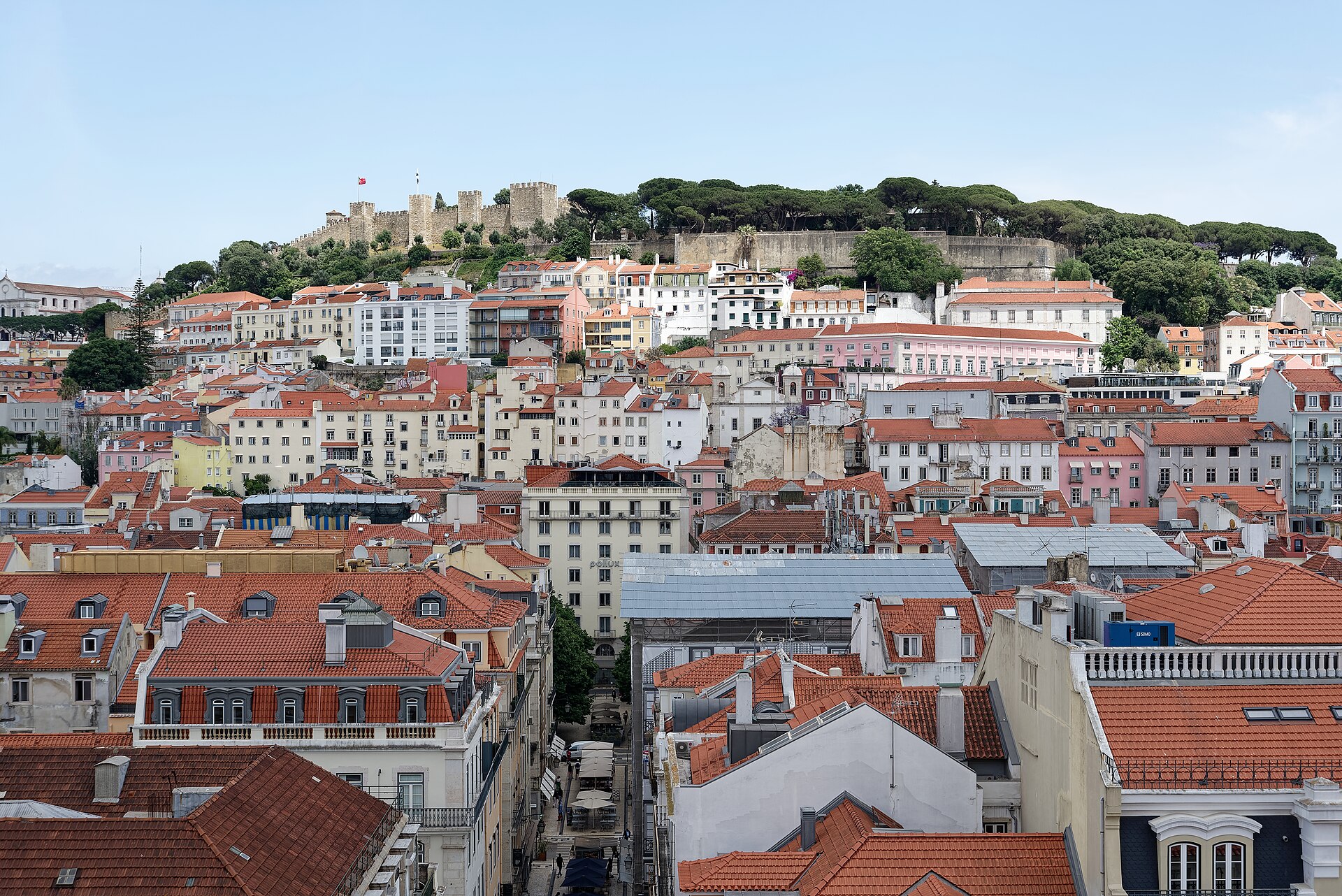
The Moorish castle crowning Lisbon's highest hill gives you the city laid out in terracotta below, the Tagus beyond, and the 25 de Abril bridge in the distance. The ramparts are walkable, peacocks roam the grounds, and the Camera Obscura in the Tower of Ulysses projects a live 360° view of the city (free guided sessions, weather permitting). Admission is €17 (about $20), open daily 9:00–21:00 from March to October and 9:00–18:00 in winter. Insider tip: arrive around 18:00 in summer for sunset light with far thinner crowds, and don't walk up — the climb from Baixa is punishing. Take Tram 28 or the 737 bus to the gate instead.
Tram 28 (Eléctrico 28)
The yellow Remodelado tram on route 28 is a working piece of 1930s transit, not a tourist ride, which is exactly why it rattles through the lanes of Graça, Alfama, Baixa, Chiado and Estrela that no bus can fit. A single on-board fare is €3.30 (about $3.80), but if you load a Navegante card with "zapping" credit the same ride is €1.72 (about $2) — so paying contactless or cash literally doubles your fare. Insider tip: board at the Martim Moniz terminus around 9:00 to get a window seat before the car fills; by mid-route it is standing-room only, and the crush is where pickpockets work. Hold your bag in front of you and keep your phone in a zipped pocket.

Alfama and the Miradouro das Portas do Sol
Alfama is the old Moorish quarter that survived the 1755 earthquake, a maze of stairways and alleys too steep for a grid, and the birthplace of fado. The Miradouro das Portas do Sol and the neighbouring Miradouro de Santa Luzia hand you the classic view over Alfama's rooftops to the river — both free. The Fado Museum nearby explains the music for €5 (about $6), Tuesday to Sunday. Insider tip: wander the lanes between the Sé cathedral and the castle in the morning before the cruise crowds arrive, and for fado skip the €50 tourist dinner shows — go to a small tasca like Mesa de Frades or A Baiuca, reserve ahead, and expect to buy dinner and a bottle of wine rather than a ticket.

Time Out Market (Mercado da Ribeira)
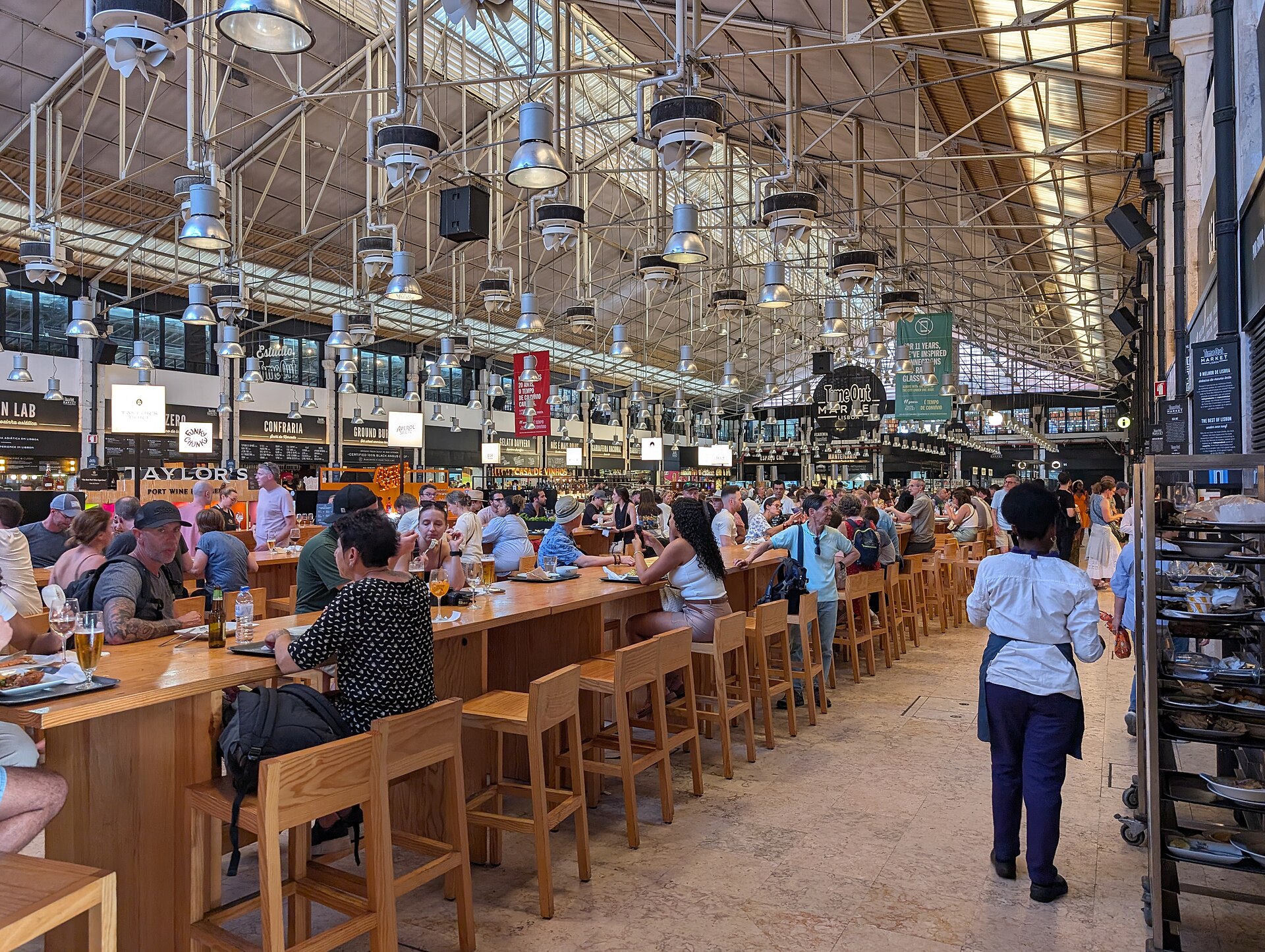
The 19th-century market hall at Cais do Sodré was half-rescued in 2014 when Time Out curated roughly two dozen stalls from Lisbon chefs and restaurateurs under one roof — Henrique Sá Pessoa, Marlene Vieira, Manteigaria for the tarts, Taylor's for port. Entry is free, open daily 10:00 to midnight, and you order from the kiosks and grab a seat at the communal tables. Insider tip: it is slammed at 13:00 and again at 20:00, when finding a seat becomes a competitive sport. Go at 11:30 or after 22:00. The other half of the building still runs as the traditional Mercado da Ribeira fruit, fish and vegetable market in the mornings — walk through it for the version locals actually shop.
LX Factory
Under the deck of the 25 de Abril bridge in Alcântara, a former textile and printing complex has been turned into a warren of design shops, cafés, murals and co-working spaces. The anchor is Ler Devagar, a bookshop built into an old printworks with a flying-bicycle sculpture suspended over the stacks. Entry is free; the Sunday LX Market runs roughly 11:00–18:00 with vintage and craft stalls. Insider tip: come Sunday for the market or a weekday morning if you want to move, because weekend afternoons are a crush. For the view, the rooftop bar Rio Maravilha looks straight at the bridge and the Cristo Rei statue across the river.

Padrão dos Descobrimentos
The 52-metre limestone slab on the Belém waterfront, shaped like a caravel's prow with Henry the Navigator at the bow and 32 explorers, cartographers and kings carved along the ramps, went up in 1960. A lift takes you to a rooftop viewpoint over the river and the Jerónimos complex. The full ticket — viewpoint, exhibition and film — is €10 (about $12), open daily 10:00–19:00 from March to September and until 18:00 in winter. Insider tip: the enormous compass-rose mosaic set into the pavement in front, a gift from South Africa in 1960, is free to walk across and photograph. Pay only if you want the rooftop; the monument itself reads better from the ground.

🗓️ A 3-Day Itinerary
Day 1 — Baixa, the cathedral and Alfama
Start in Praça do Comércio, the riverfront square, and walk north under the Rua Augusta triumphal arch (climbing it to the rooftop viewpoint is an optional €3.50 / $4). Cut through the grid of Baixa to the fortress-like Sé de Lisboa cathedral (free to enter), about 10 minutes on foot, then climb into Alfama's lanes to the Miradouro das Portas do Sol — 15 minutes uphill and worth every step. Continue up to Castelo de São Jorge (€17 / $20) for midday views, break for lunch at an Alfama tasca, then spend the evening on fado. Total paid admissions: roughly €20 ($23) if you add the arch.
Day 2 — Belém
Take Tram 15E or a bus from Cais do Sodré west to Belém, about 20–25 minutes. Hit Jerónimos Monastery (€18 / $21) at its 9:30 opening, then walk two minutes to Pastéis de Belém for the original custard tarts (€1.60 / $1.85 each — order them warm with cinnamon). Cross to the Padrão dos Descobrimentos (€10 / $12) and continue along the water to the Belém Tower (€15 / $17). The contemporary MAAT museum nearby is an optional €16 ($18) for non-residents. Head back for dinner at the Time Out Market or drinks on Cais do Sodré's Pink Street. Paid admissions: about €43 ($50), plus tarts.
Day 3 — Sintra day trip
Catch the suburban train from Rossio station to Sintra — about €2.30 ($2.65) each way, 40 minutes. From the station, the 434 tourist bus loops up to the hilltop Pena Palace, where the palace-and-park ticket is €14 ($16) or park-only €10 ($11.50). Book the palace slot in advance; the 11:00–14:00 window is the worst crush. Back in Lisbon by evening, swap the day trip for LX Factory and the Príncipe Real viewpoints if you would rather stay in the city.
🧠 Essential Tips
When to go
The sweet spots are May–June and September–October: dry, 22–28°C, and noticeably cheaper and less crowded than July and August, when temperatures top 30°C and hotel rates peak. The biggest reason to aim at June is the Festas de Lisboa, running 29 May to 28 June in 2026 — the Santo António street parties peak on the nights of 12 and 13 June (13 June is a city holiday), with the Marchas Populares parade down Avenida da Liberdade on the evening of 12 June and grilled sardines smoking in every alley of Alfama, Mouraria and Graça. Winter (November–February) is mild at around 15°C but wetter, and it is when room rates bottom out.
Getting around
Buy a reusable Navegante card for €0.50 at any metro machine and load "zapping" credit; it charges €1.72 per ride on the metro, buses, trams and funiculars, versus €1.92 by contactless bank card on the metro and €3.30 on the trams. A 24-hour unlimited Carris/Metro ticket is about €7 ($8). From the airport, the Metro Red Line (Linha Vermelha) runs from the Aeroporto station into the city for the same zapping fare — far cheaper than a taxi — changing once for the centre. For door-to-door trips, locals use Bolt, which is usually cheaper than Uber or a metered taxi here. If you plan to visit several paid monuments, price out the Lisboa Card (€31 / €51 / €62 for 24/48/72 hours), which bundles all transport, the airport metro, trains to Sintra and Cascais, and free entry to Jerónimos and the Belém Tower.
Safety and the small scams
Lisbon is a safe city, but it has specific, predictable traps. Pickpockets work the packed Tram 28 and 15E and the metro around Baixa-Chiado and Rossio — nothing violent, just quick hands in a crush, so zip your valuables away. On Rua Augusta and around Cais do Sodré and Bairro Alto at night, men will murmur offers of hashish or cocaine; it is fake, usually crushed herbs, and the move is to keep walking. The calçada portuguesa — the polished limestone mosaic pavement — turns into an ice rink when it rains, and Lisbon's hills are no joke, so bring shoes with grip. In restaurants, the bread, olives and cheese set on your table (the couvert) are not free; they run €2–6, and you can wave them away.
Money and the Santa Justa Lift
Portugal is on the euro, cards are accepted nearly everywhere, and tipping is modest — rounding up or leaving 5–10% for good table service is plenty, not the 20% North Americans reflexively add. Two things worth naming: the Santa Justa Lift, the wrought-iron elevator in Baixa, is closed for maintenance through 2026 with no confirmed reopening, so don't build a plan around it — for a free panorama of the same part of the city, walk to the Miradouro de São Pedro de Alcântara or Santa Catarina instead. And several big state museums — including the National Tile Museum (Museu do Azulejo) and the National Museum of Ancient Art — are closed or partially closed for restoration through 2026, so check before you build a day around one.
What to eat
Beyond the custard tarts, chase the bifana — a thin pork cutlet in a crusty roll, around €3–4 at a counter like O Trevo on Praça Luís de Camões or As Bifanas do Afonso on Rua da Madalena. Bacalhau (salt cod) turns up in a reported 365 preparations; bacalhau à brás, shredded with egg and matchstick potatoes, is the gateway. In summer, sardinhas assadas — charcoal-grilled sardines on bread — are everywhere, and they peak during the June festival. End the night with ginjinha, a sour-cherry liqueur, at the tiny standing-room bar A Ginjinha on Largo de São Domingos, about €1.50–1.80 ($1.75–2) a shot.
🏨 Accommodation Guide
Budget: Hostels cluster in Baixa, Cais do Sodré and increasingly in Arroios and Anjos — a diverse, metro-connected area east of Avenida da Liberdade that is cheaper than the centre and where a lot of the city's newer restaurants have opened. Expect dorm beds around €25–45 ($29–52) and simple doubles or guesthouses from €70–110 ($80–127) a night.
Mid-range: For boutique hotels within walking distance of everything, look at Chiado, Príncipe Real (leafy, independent, slightly removed from the bar noise) and Alfama. Doubles generally run €120–220 ($138–253). Alfama is atmospheric but means hauling a suitcase up stairs and over cobbles — pack light.
Luxury: Avenida da Liberdade, the tree-lined boulevard modelled on the Champs-Élysées, is the luxury strip, home to the Four Seasons Hotel Ritz Lisbon and the Tivoli Avenida Liberdade, with Chiado's Bairro Alto Hotel a more design-led alternative. Rates typically start around €350 and climb past €800 ($400–920+) in high season.
🎭 Beyond the Tourist Trail
Head east past Santa Apolónia station to Marvila and neighbouring Beato, a stretch of riverside warehouses that has turned into Lisbon's craft-beer and gallery quarter. Dois Corvos and Musa run taprooms in old industrial units, the Underdogs gallery shows the street artists whose murals you have been photographing all over the city, and natural-wine bars have moved into the loading docks. It is scruffier and less polished than Alfama, which is the appeal — an afternoon here is how you see where Lisbon is actually heading rather than where it has been. For a dated anchor, time a visit to coincide with the Santo António sardine festival on 12–13 June 2026, when the old neighbourhoods throw open-air parties that run until dawn.
❤️ Plan Your Lisbon Trip with VoyaBear
Lisbon rewards the traveller who books the right timed slots, taps the right transit card, and knows which queue to skip — and that is exactly the kind of planning VoyaBear handles for you. Tell us how many days you have, what you want to eat, and how far you will walk uphill, and we will build you a personalized Lisbon itinerary with the reservations, fares and timing already sorted. Start planning your trip with VoyaBear today and spend your three days in the city, not in line.
Want this as an actual itinerary?
VoyaBear turns a guide like this into a day-by-day plan built around how you travel.
Plan my trip free