Manila 2026: The Complete Guide to the Philippine Capital
6 November 2026 · 22 min read

Manila does not ease you in. You land at Ninoy Aquino International Airport, sit in a jeepney-and-traffic crush along EDSA, and wonder why anyone recommended this place — and then you walk through the gate of Fort Santiago, find brass footsteps tracing a national hero's last walk to his execution, and the city starts to make sense. The capital of the Philippines is loud, hot and gloriously unfiltered, a place where 16th-century Spanish walls back onto glass towers and a bowl of sizzling sisig costs less than a coffee. In 2026 it is also better for visitors than it has been in years: the entire National Museum complex went permanently free and open daily on 1 January 2025, Grab has largely tamed the old airport-taxi racket, and a beep card now gets you onto three train lines that dodge the worst of the gridlock.
Most travellers treat Manila as a two- or three-day gateway to Palawan or Cebu. That is a fair plan, but the city earns the days you give it. This guide is built on what things actually cost and where to actually go in 2026 — real fees, real fares, real restaurant names — so you spend your short time on the Manila that's worth it rather than the Manila that eats your afternoon in traffic.
💡 Quick Answer: Manila at a Glance
The essentials for planning a Manila trip in 2026, each answer self-contained:
- How many days? 2–3 days: one for Intramuros, one for museums and Binondo, an optional third for Rizal Park, Manila Bay and modern Makati or BGC.
- Best time to visit? December–February, the cool-dry season (24–30°C); January is the most pleasant. Avoid July–September typhoons.
- Book ahead? Little is needed — Fort Santiago is ₱75 ($1.30) and the National Museums are free at the gate. Pre-book only guided tours and weekend restaurants.
- Airport to city? Grab ₱300–500 ($5–9) to Makati; coupon taxi ₱450–800; UBE Express airport bus ₱150–200 (from Terminal 3).
- Getting around? A beep card for the LRT/MRT trains (₱13–55 a ride) plus the Grab app for everything else; skip driving yourself.
- Daily budget? Roughly $40–60 for budget travellers, $90–150 mid-range, $250+ for luxury, per person per day.
- Top safety note? Use Grab or an official coupon taxi from NAIA to avoid overcharging, and keep an eye on your phone in crowds.
- Currency? The Philippine peso (₱); roughly ₱58 to $1 and ₱63 to €1 in 2026.
🏙️ The Best Things to Do in Manila
Manila's headline sights cluster in and around Intramuros, the old walled city, which makes a first day efficient on foot. Here are the seven that justify your time, with the fee, the reason to go, and one tip each to beat the crowds or the heat.
Fort Santiago and Intramuros
Intramuros is the Spanish colonial core, a square kilometre of walls, cobbles and plazas that the Spanish began building in the 1570s. Fort Santiago, the citadel guarding the mouth of the Pasig River, is the anchor. Beyond the stone gate — carved with a relief of Saint James — you'll find manicured gardens, the ruins bombed flat in the 1945 Battle of Manila, and the Rizal Shrine, where brass footprints mark the final steps national hero José Rizal took from his cell to his execution on 30 December 1896. Cost: ₱75 ($1.30) for adults, ₱50 for students, seniors and PWDs. Insider tip: Fort Santiago opens at 8am on weekdays and 6am on weekends and stays open until 10pm — come right at opening or after about 4pm to skip both the tour-bus crowds and the midday furnace, and consider renting a kalesa (horse carriage) or a Bambike bamboo bicycle to cover the wider walled city.

San Agustin Church
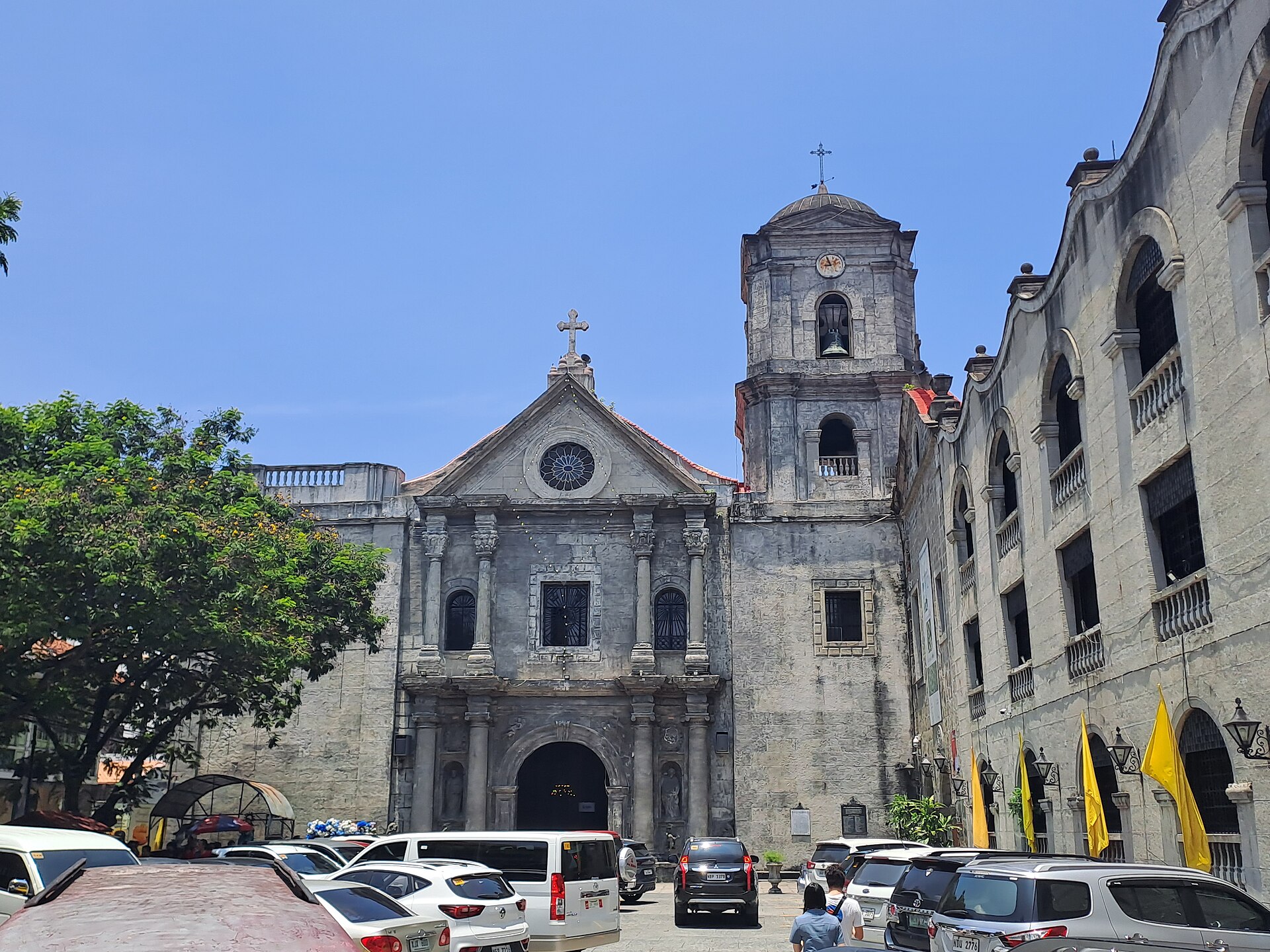
Completed in 1607, San Agustin is the oldest stone church in the Philippines and a UNESCO World Heritage Site, one of four Baroque Churches of the Philippines inscribed in 1993. It survived the earthquakes and the Second World War that levelled almost everything around it. The exterior is austere Baroque with a single bell tower (the second was removed after 19th-century earthquakes), but step inside for the showpiece: a vaulted ceiling painted in trompe-l'oeil by Italian artists in the 1870s to look carved and three-dimensional, plus hand-carved 17th-century molave-wood doors. Cost: the church itself is free; the adjoining San Agustin Museum, set in the old Augustinian monastery, is around ₱200. Insider tip: weekends bring back-to-back weddings that close the nave to visitors — go on a weekday morning, and pair it with the museum's quiet cloisters to escape the heat.
Manila Cathedral
A hundred metres from San Agustin, the Minor Basilica and Metropolitan Cathedral of Manila is the grandest church in the walled city. The building you see is the eighth on the site — earthquakes, fires and the 1945 battle destroyed its predecessors — and was rebuilt in Romanesque Revival style and finished in 1958, crowned by a distinctive teal dome and fronted by bronze doors and statues of saints. Inside is one of the largest pipe organs in Asia. Cost: free to enter outside of Mass and wedding hours. Insider tip: step in for a few minutes of air-conditioned calm between Intramuros stops, but check the schedule board at the door — the cathedral is a working parish and closes to sightseers during services, which are frequent on weekends.

The National Museum Complex
Just east of Intramuros, three world-class museums sit around Rizal Park, and since 1 January 2025 all of them are free and open every day of the week. The National Museum of Fine Arts holds the Spoliarium, Juan Luna's enormous 1884 canvas of fallen gladiators that won gold in Madrid and became a symbol of Filipino identity — it fills an entire wall. The National Museum of Natural History, under a soaring "Tree of Life" glass dome, displays the skeleton of Lolong, the largest saltwater crocodile ever measured in captivity. The National Museum of Anthropology covers pre-colonial gold and the Balangay boats. Cost: free. Insider tip: opening hours still run roughly 9am–6pm; arrive at opening and start with Fine Arts before the school groups, and budget a half-day if you want all three, as they sit within a few minutes' walk of each other.

Binondo, the World's Oldest Chinatown
Established by the Spanish in 1594 as a settlement for Catholic Chinese, Binondo is recognised as the oldest Chinatown in the world, and it remains Manila's most rewarding place to eat. Walk in under the Filipino-Chinese Friendship Arch and graze: pork dumplings and scallion cakes at Dong Bei Dumplings (takeaway only, and worth the wait), Peking-duck rice and dim sum at Wai Ying, hand-rolled fresh lumpia at New Po-Heng, and hopia pastries and tikoy from Eng Bee Tin to carry out. Anchor the wander at the Minor Basilica of San Lorenzo Ruiz (Binondo Church), whose octagonal bell tower dates to 1596. Cost: free to explore; a full food crawl runs maybe ₱500–900 ($9–16) per person if you pace yourself. Insider tip: go hungry and go with a local-led food tour or simply follow the queues — the best stalls have no English signage, and the lanes like Carvajal ("Umbrella Alley") hide the standouts.

Rizal Park (Luneta)
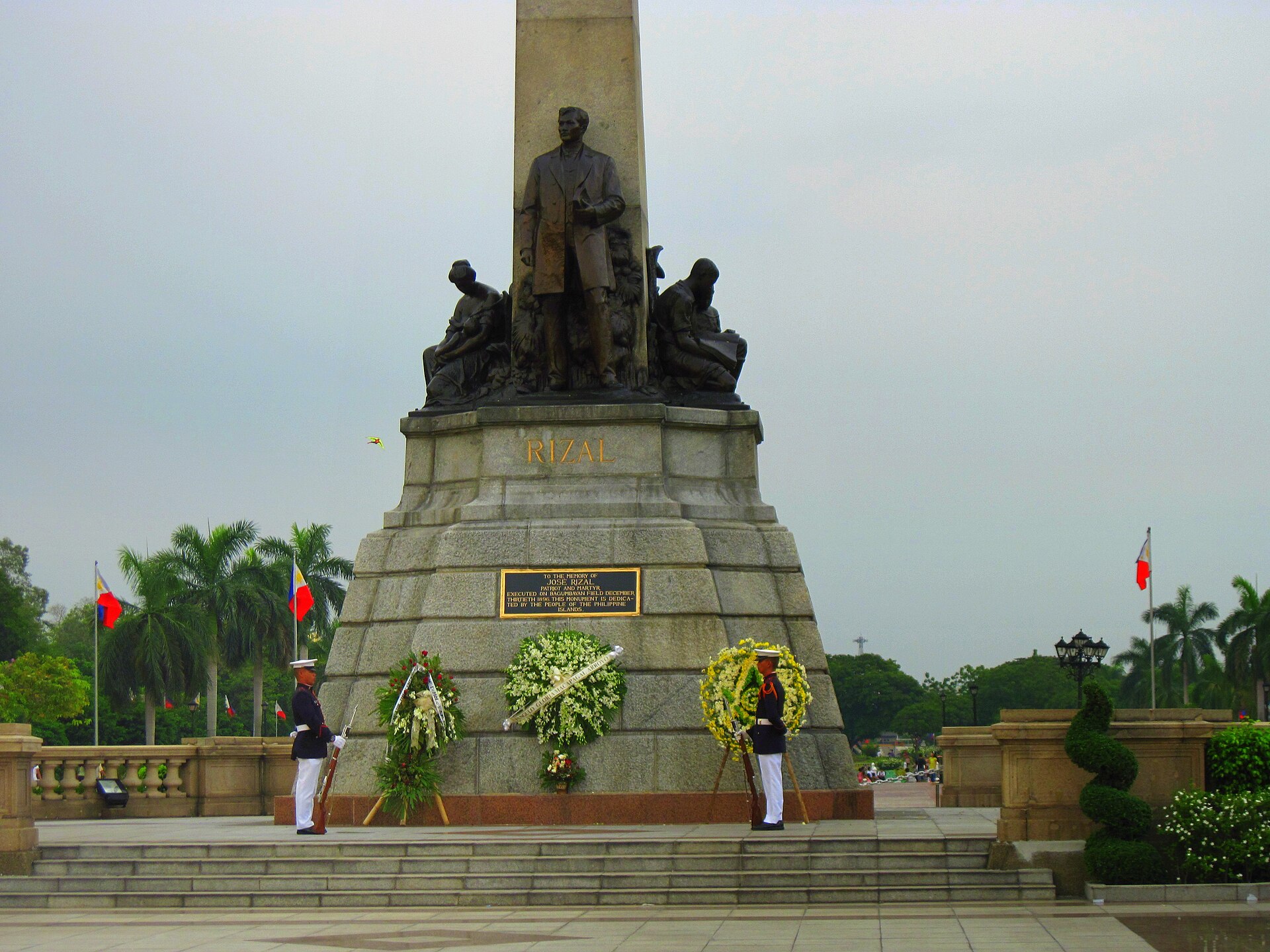
Rizal Park, known to everyone as Luneta, is the green heart of the city and the symbolic centre of the nation. The Rizal Monument — a bronze statue of José Rizal unveiled in 1913, guarded around the clock by sentinels and holding his remains — stands near the spot where he was executed by Spanish firing squad, an event that helped ignite the revolution. Kilometre Zero, from which all distances in the Philippines are measured, sits at its base. Cost: free; the park's Chinese and Japanese gardens charge a small entry of around ₱20. Insider tip: come in the late afternoon when families arrive and the heat breaks, catch the changing of the honour guard, then walk straight across Roxas Boulevard for sunset over the bay.
Manila Bay Sunset
Manila Bay's sunsets are genuinely among the best of any city on earth — the bay faces due west, and the haze that makes the air thick by day turns the sky molten orange and pink by 5.30pm. The Baywalk promenade along Roxas Boulevard is the classic spot, lined with vendors selling taho (warm tofu pudding) and grilled corn. Cost: free. Insider tip: the stretch near the US Embassy and the rehabilitated "white sand" beach area draws crowds; for a calmer view, grab a rooftop bar in Malate or a table at a bayfront hotel. Keep your phone secured — the promenade gets dark and busy, and this is a place to enjoy the view, not advertise your valuables.

🗓️ How to Spend Three Days in Manila
This itinerary keeps walking manageable despite the heat and the traffic, and leans on Grab to jump between districts. Costs below are per person and approximate for 2026.
Day 1 — Intramuros and Old Manila
Start at Fort Santiago at opening (₱75 / $1.30) while it's cool, then walk ten minutes to San Agustin Church (free; museum ₱200) and the Manila Cathedral (free) — the three are within a 15-minute stroll of each other inside the walls. Break for lunch at Barbara's or a canteen along General Luna Street. In the afternoon, rent a Bambike bamboo bicycle (around ₱600/$10 for a guided loop) or a kalesa to ride the walls, then exit east to the National Museum of Fine Arts (free) for the Spoliarium. End with sunset on the Manila Bay Baywalk, a 15-minute Grab (₱150–250) or a walk through Rizal Park. Day total excl. hotel and meals: roughly ₱1,000–1,500 ($18–26 / €16–24).
Day 2 — Museums, Chinatown and the Pasig
Spend the morning at the National Museum of Natural History and Anthropology (both free) around Rizal Park. Around midday, take the LRT-1 or a Grab to Binondo (₱20 by train, ₱200–300 by car) for a Chinatown food crawl — dumplings, dim sum, lumpia and hopia across several stops for ₱500–900 ($9–16). Walk off lunch at Binondo Church and the lively lanes, then consider the Pasig River Ferry (around ₱50) back toward the centre for a cheap, traffic-free cruise past the city's backside. Evening: dinner at the Aristocrat in Malate for chicken barbecue (a plate runs about ₱350/$6). Day total excl. hotel: roughly ₱1,200–2,000 ($21–35 / €19–32).
Day 3 — Modern Manila: Makati and BGC
Swap colonial stone for glass towers. Spend the morning at the Ayala Museum in Makati (around ₱700–750 / $12–13), strong on pre-colonial gold and dioramas of Philippine history, then wander Greenbelt's gardens and malls. In the afternoon, Grab across to Bonifacio Global City (BGC) — the cleanest, most walkable district in the metro — for street art along the "BGC Art" walls, the Mind Museum, and High Street's cafés. Cap the night in Poblacion, Makati's buzzing bar-and-restaurant quarter, where a night of craft beer and modern Filipino small plates runs ₱800–1,500 ($14–26). Day total excl. hotel: roughly ₱1,500–2,800 ($26–48 / €24–44).
🧠 Essential Manila Tips
When is the best time to visit Manila?
Aim for the cool-dry season from December to February, when days sit around 24–30°C, humidity drops and rain is rare; January is the pick of the three. March to May is dry but punishingly hot — May regularly tops 33°C in the low-lying city — while June to October is the rainy and typhoon season, with July to September the wettest and most storm-prone. Late November is a safer shoulder bet than early November, when a late typhoon can still barrel through. Flights and hotels are priciest from December through April (especially Christmas and New Year); May and September are the cheapest months to fly.
How do you get from the airport, and around Manila?
From NAIA, open the Grab app and head to the official ride-hail pickup zone: expect ₱300–500 ($5–9) to Makati and ₱300–600 to BGC. A fixed-rate coupon taxi is ₱450–800, and the UBE Express P2P airport bus is the budget option at ₱150–200 — though it runs from Terminal 3, so you may need the ₱50 NAIA Loop shuttle from Terminals 1, 2 or 4 first. In the city, buy a beep card (a rechargeable stored-value card) and use the elevated trains where they go: LRT-1 runs about ₱20–55, LRT-2 ₱15–35 and MRT-3 roughly ₱13–28 per single journey, and all three dodge the road traffic. For door-to-door trips, Grab is what locals use — fares are fixed and cashless, which removes the meter arguments. Jeepneys are the cheapest and most characterful ride but slow and baffling for first-timers; try one when you have time to spare, not when you have a flight to catch.
Is Manila safe for tourists?
Manila is manageable with ordinary big-city caution, and the main tourist zones — Intramuros, Makati and BGC — are generally fine by day. The single most common rip-off is at the airport, where some taxi drivers refuse the meter or quote inflated flat fares; book a Grab or take an official coupon taxi and ignore the touts offering a "special price." Pickpocketing happens in crowds, so keep bags zipped and phones out of back pockets around Quiapo, Divisoria and on packed trains. The Ermita and Malate districts are safe to walk by day but shade into a red-light nightlife scene after dark, so stay aware there at night. Don't flash jewellery or expensive phones, use ATMs inside malls or banks to avoid skimmers, and you'll be fine.
What should you eat in Manila?
Filipino food is finally getting its global due, and Manila is the place to dive in. Must-tries: sisig (sizzling chopped pork cheek with calamansi), chicken inasal, kare-kare (oxtail in peanut sauce), crispy lechon, the sour-soup sinigang, and halo-halo — shaved ice with ube, leche flan and beans — to finish. The best single meal is a Binondo food crawl (see above). For classic Manila, the Aristocrat in Malate has served its chicken barbecue with Java rice since 1936, and Café Adriatico nearby is a Malate institution. For a polished modern take, Manam and Sarsa serve reinvented Filipino comfort food in Makati and BGC. The brave can try balut (a fertilised duck egg) from a street vendor — it is cheaper than your curiosity will cost you.
🏨 Where to Stay in Manila
Choose your district first, hotel second — Manila's traffic means your neighbourhood decides your day. All prices are per night in 2026.
Budget (₱1,000–2,500 / $18–45 / €16–40): Base yourself in Malate or Ermita, walkable to Rizal Park, the National Museums and Intramuros, with hostels and guesthouses clustered near Robinsons Place. Dorm beds and simple private rooms sit at the low end of this range; it's the cheapest way to be near Old Manila's sights.
Mid-range (₱3,500–7,000 / $60–120 / €55–110): Makati is the smart pick — specifically Poblacion for nightlife or the CBD for convenience — with reliable business hotels like Seda, Red Planet and the Picasso. Bonifacio Global City (BGC) offers newer, cleaner, more walkable rooms at a slight premium. Both put you near good restaurants and easy Grab access.
Luxury (₱12,000+ / $210+ / €190+): The Peninsula Manila and Fairmont/Raffles anchor Makati's five-star scene, Shangri-La at the Fort tops BGC, and the historic Manila Hotel (open since 1912, once General MacArthur's residence) sits beside Rizal Park. For casino-resort glamour near the airport, Okada Manila and Solaire in Entertainment City are the splashy choices.
🎭 Beyond the Tourist Trail
When you've done the walled city, Manila opens up. Poblacion in Makati has gone from red-light district to the metro's best bar-and-restaurant quarter in a decade — speakeasies, Filipino craft beer and late-night street food within a few blocks; Z Hostel's rooftop is the easy entry point. Escolta Street in Binondo, once the grandest avenue in the country, is reviving around the First United Building and the Saturday HUB: Make Lab market, where young designers set up among faded Art Deco façades. For a day trip, the Las Piñas Bamboo Organ — a 19th-century church organ with more than 900 bamboo pipes — hosts an International Bamboo Organ Festival each February. And for a sobering counterweight to the colonial monuments, Corregidor Island at the mouth of Manila Bay (a day tour by ferry) preserves the ruins and gun batteries of the Philippines' brutal Second World War campaign.
❓ Manila FAQ
How many days do you need in Manila?
Two to three days covers Manila well. Two days is enough for Intramuros, the free National Museum complex and a Binondo food crawl; a third day lets you slow down for Rizal Park, a Manila Bay sunset and modern Makati or Bonifacio Global City. Many travellers treat Manila as a 2–3 day gateway before flying on to Palawan, Cebu or Bohol.
What is the best time to visit Manila?
December to February is the best time to visit Manila: the cool-dry season brings 24–30°C days, lower humidity and the least rain, with January the most pleasant month. March to May is hot and dry (up to 33°C, May the hottest), and June to October is the rainy and typhoon season, with July to September the wettest. Late November is safer than early November, when late-season typhoons can still hit.
How do you get from NAIA airport to the city?
A Grab car from Ninoy Aquino International Airport (NAIA) costs about ₱300–500 ($5–9) to Makati and ₱300–600 to Bonifacio Global City. A fixed-rate airport coupon taxi runs ₱450–800. The UBE Express P2P airport bus is the cheapest option at ₱150–200 but departs from Terminal 3, so from Terminals 1, 2 or 4 you first take the free-ish NAIA Loop shuttle (₱50) to T3.
How do you get around Manila?
Buy a rechargeable beep card and use the LRT-1, LRT-2 and MRT-3 trains for trips along fixed corridors (single journeys run roughly ₱13–55, a few US cents to about a dollar). For everything else, use the Grab app, which locals rely on for fixed, cashless fares that sidestep the city's notorious traffic. Jeepneys are the cheapest ride of all but are slow and confusing for first-timers.
Is Manila safe for tourists?
Central tourist areas like Intramuros, Makati and BGC are generally safe by day, but Manila rewards street smarts. The most common problem is taxi overcharging at NAIA, so book a Grab or use an official coupon taxi rather than accepting a tout's fixed price. Watch for pickpockets in crowded spots such as Quiapo, Divisoria and packed trains, don't flash phones or jewellery, and treat the Ermita–Malate nightlife strip with more caution after dark.
What food should you try in Manila?
Try sisig (sizzling chopped pork), chicken inasal, kare-kare (oxtail in peanut sauce), crispy lechon, sinigang and halo-halo for dessert. The best single eating experience is a Binondo food crawl through the world's oldest Chinatown: dumplings at Dong Bei, dim sum at Wai Ying, fresh lumpia at New Po-Heng and hopia from Eng Bee Tin. For classic Filipino barbecue, the Aristocrat in Malate has served its chicken barbecue since 1936.
Do you need to book Manila attractions in advance?
Most of Manila's top sights need no advance booking. Fort Santiago (₱75) and the National Museum complex (free) sell or scan tickets at the gate, and San Agustin Church, Manila Cathedral and Rizal Park are walk-in. Book ahead only for guided Intramuros tours, the bamboo-bike or kalesa experiences, and popular restaurants on weekends.
Which area is best to stay in Manila?
Makati is the best all-round base: safe, walkable, full of restaurants and well connected, with hotels from budget guesthouses in Poblacion to the five-star Peninsula Manila. Bonifacio Global City (BGC) is newer, cleaner and more polished. Stay in Malate or Ermita if you want to be near Intramuros and Rizal Park on a tighter budget. Entertainment City (Okada, Solaire) suits casino-resort travellers near the airport.
❤️ Let VoyaBear Plan Your Manila Trip
Manila rewards a plan — the right neighbourhood, the right hours to beat the heat and the crowds, and a route that doesn't bleed your days into traffic. That's exactly what VoyaBear does. Tell us how long you have, what you want to eat and how hard you want to push, and we'll build you a personalised day-by-day Manila itinerary — with the ticket prices, the Grab-vs-train calls and the Binondo food stops already sorted. Start planning your Philippines trip with VoyaBear today.
Want this as an actual itinerary?
VoyaBear turns a guide like this into a day-by-day plan built around how you travel.
Plan my trip free