Marseille 2026: The Complete Guide to France's Oldest Port City
7 October 2026 · 15 min read

Marseille is the one major French city that never bothered to smooth its edges for tourists, and that is exactly why it's worth a week in 2026. France's oldest city — the Greeks landed here around 600 BC and called it Massalia — spends its days as a working Mediterranean port, not a museum of itself. You get a basilica on a hill with a 360-degree view, a national park of white limestone cliffs inside the city limits, bouillabaisse made to a charter, and a métro that costs €1.70 a ride. It's rougher than Nice and more interesting than Aix, and the sun shows up about 300 days a year to help.
The city has spent the last decade reinventing its waterfront. The MuCEM and Norman Foster's mirrored canopy went up for 2013, when Marseille was European Capital of Culture, and the old docks at La Joliette are now shops and restaurants rather than cargo sheds. This guide covers what's actually worth your time, what it costs, when to come, and how to get around a city where the locals' first piece of advice is usually "watch your phone."
🎭 Essential Experiences
Notre-Dame de la Garde
Marseille's defining landmark sits on the city's highest natural point, a limestone hill rising 154 metres above the harbor and crowned by a gilded statue of the Virgin that locals call "la Bonne Mère." The neo-Byzantine basilica, finished in 1864, pulls around 1.8 million visitors a year, mostly for the unobstructed 360-degree view over the rooftops, the Vieux-Port, the Frioul islands and the Mediterranean. Inside, the walls are covered in ex-votos — model boats, painted plaques, football jerseys — left by sailors and families giving thanks.

Worth knowing: Entry to the basilica is free. The climb from the Vieux-Port is steep and takes 30–40 minutes on foot; bus 60 runs up from the port, or the tourist "petit train" grinds up from the port for a few euros if your knees prefer. Go first thing in the morning or an hour before sunset — midday means tour groups and harsh light for photos. The terrace is the free attraction here, so don't feel obliged to pay for anything.
The Vieux-Port
The Old Port is where Massalia began and where Marseille still clocks in. Fishermen sell the morning catch straight off the boats at the Quai des Belges most mornings until around 1pm — scorpionfish, conger eel and whatever else goes into a proper bouillabaisse, flapping in plastic crates while buyers haggle in Marseillais accents. Overhead, Norman Foster's Ombrière, installed in 2013, is a thin polished-steel canopy that mirrors the crowd and the masts below; it's the most photographed spot in the city and costs nothing to stand under.

Worth knowing: The ferries to Château d'If and the Frioul islands leave from the Quai des Belges, right by the métro (line 1, Vieux-Port stop). Skip the chain cafés lining the north quay — the food is tourist-grade and overpriced. Walk two streets back toward the Opéra or up into Le Panier for anything you'd actually want to eat.
MuCEM and Fort Saint-Jean
The Museum of European and Mediterranean Civilisations is the best piece of architecture built in France this century — Rudy Ricciotti wrapped a black concrete cube in a fishnet lattice of fibre-reinforced concrete that filters the sun into shifting shadow. It opened in 2013 and connects by a slender 115-metre footbridge to the 17th-century Fort Saint-Jean, which guards the harbor mouth opposite Notre-Dame de la Garde. The exhibitions trace how Mediterranean peoples have traded, argued and eaten across three thousand years.

Worth knowing: A single €11 ticket covers every exhibition across the sites. But the genius move is free: the rooftop terrace, the ramps of the J4 building and all of Fort Saint-Jean's gardens cost nothing to walk, and the view across the harbor from the fort is as good as anything you'd pay for. It's closed Tuesdays (and May 1 and December 25), so plan around that. Come late afternoon for the light through the lattice.
Le Panier and the Vieille Charité
Le Panier is the hill behind the Vieux-Port, the oldest quarter in the city, a knot of ochre lanes, laundry lines, stairways and street art that has gone from rough to gentrified in about fifteen years. At its heart is the Vieille Charité, a 17th-century almshouse designed by the Marseille sculptor Pierre Puget, built around a three-tiered arcaded courtyard with a domed Baroque chapel in the middle. It now houses the Museum of African, Oceanian and Amerindian Arts and the Mediterranean Archaeology Museum.
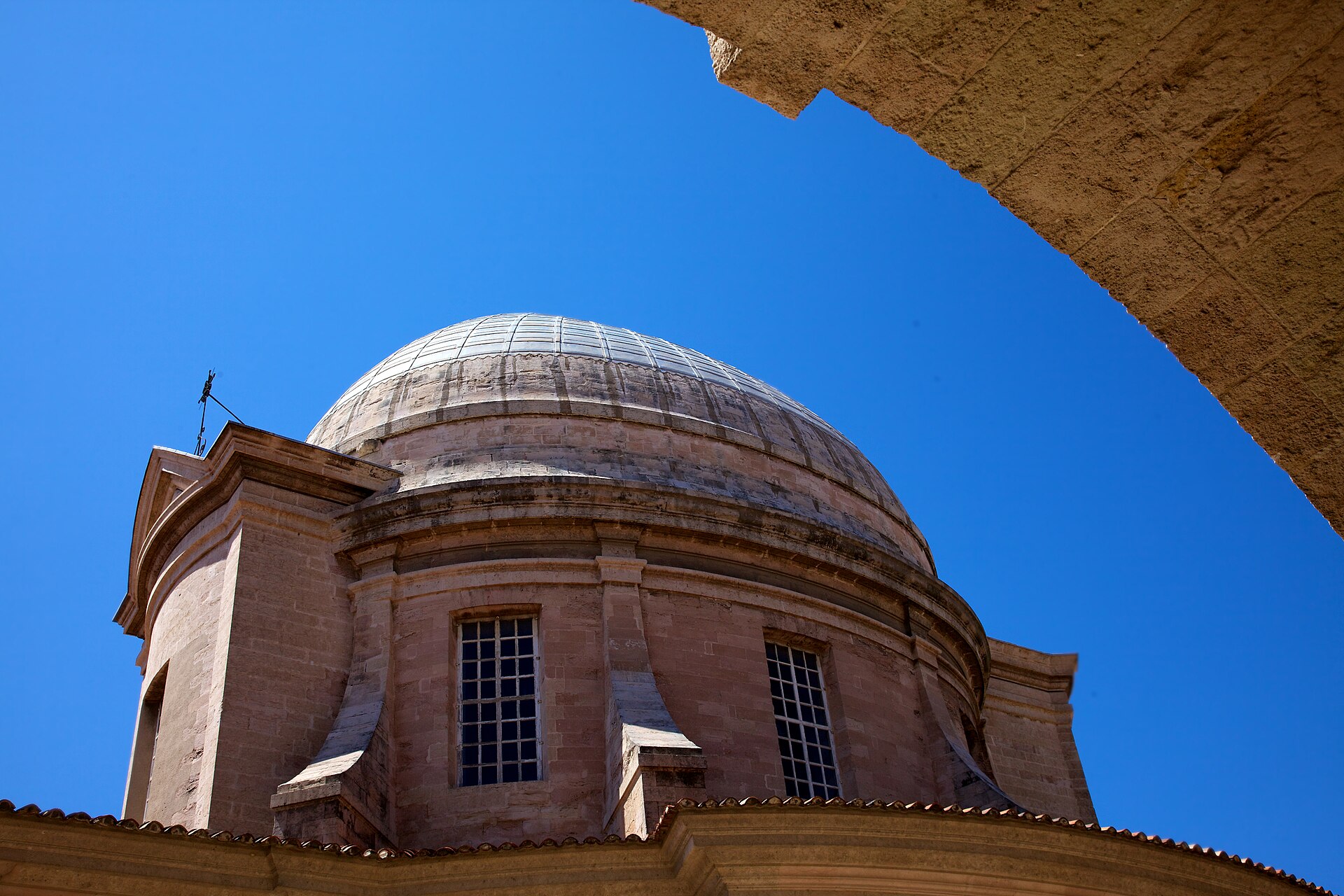
Worth knowing: The courtyard itself is free to wander even if you skip the museums, and it's the calmest corner in the quarter. Get lost on purpose — the best of Le Panier is the small squares like Place des Moulins and the murals, not any single monument. Come in the morning before the lanes fill; by late afternoon the terrace cafés on Place de Lenche are packed.
The Calanques
Few cities have a wilderness this dramatic inside the municipal boundary. The Calanques National Park, created in 2012 as Europe's first peri-urban national park, runs about 20 kilometres southeast from Marseille toward Cassis: a spine of white limestone dropping into water the color of a swimming pool, cut by narrow fjord-like inlets — Sormiou, Morgiou, Sugiton, En-Vau. You reach them on foot, by boat, or in summer not at all without planning.

Worth knowing: In peak summer the trail to the Calanque de Sugiton requires a free timed reservation through the park's website, introduced to stop the coves being trampled — book before you go or you'll be turned back. Start early from the Luminy or Callelongue trailheads, carry two litres of water (there's none out there), and wear real shoes, not flip-flops; the rock is sharp and slick. On fire-risk days in July and August the massif closes entirely, so check the park's daily access map the night before. A half-day boat tour from the Vieux-Port runs roughly €25–35 if you'd rather see them from the water.
Château d'If
The squat island fortress a kilometre off the harbor was built on François I's orders between 1527 and 1529 to defend Marseille, then spent centuries as a prison. Alexandre Dumas made it immortal as the cell from which Edmond Dantès escapes in The Count of Monte Cristo, and the guides lean into it — there's a "Dantès cell" with a hole knocked between chambers. The real draw is the crossing and the view back at the city stacked up under Notre-Dame de la Garde.

Worth knowing: Entry is €7 (free for under-18s and EU citizens aged 18–25). The ferry is separate — Frioul If Express runs from the Quai des Belges, takes about 20 minutes, and costs around €11–16 return; the ride is not included in the monument ticket. The fortress closes Mondays in winter and shuts down entirely when the sea is too rough, so if the mistral is blowing, call ahead. Combine it with the Frioul islands on the same ferry pass if you want a swim.
La Cité Radieuse (Le Corbusier)
On Boulevard Michelet in the 8th arrondissement stands the building that rewrote 20th-century housing. Le Corbusier's Unité d'habitation, built 1947–1952, is a 337-apartment "vertical village" raised on massive concrete pilotis, with an internal shopping street and a rooftop that functions as a communal terrace — gym, paddling pool, running track and sculptural ventilation stacks, all in raw béton brut. It was listed as a UNESCO World Heritage Site in 2016 as part of Le Corbusier's global work.
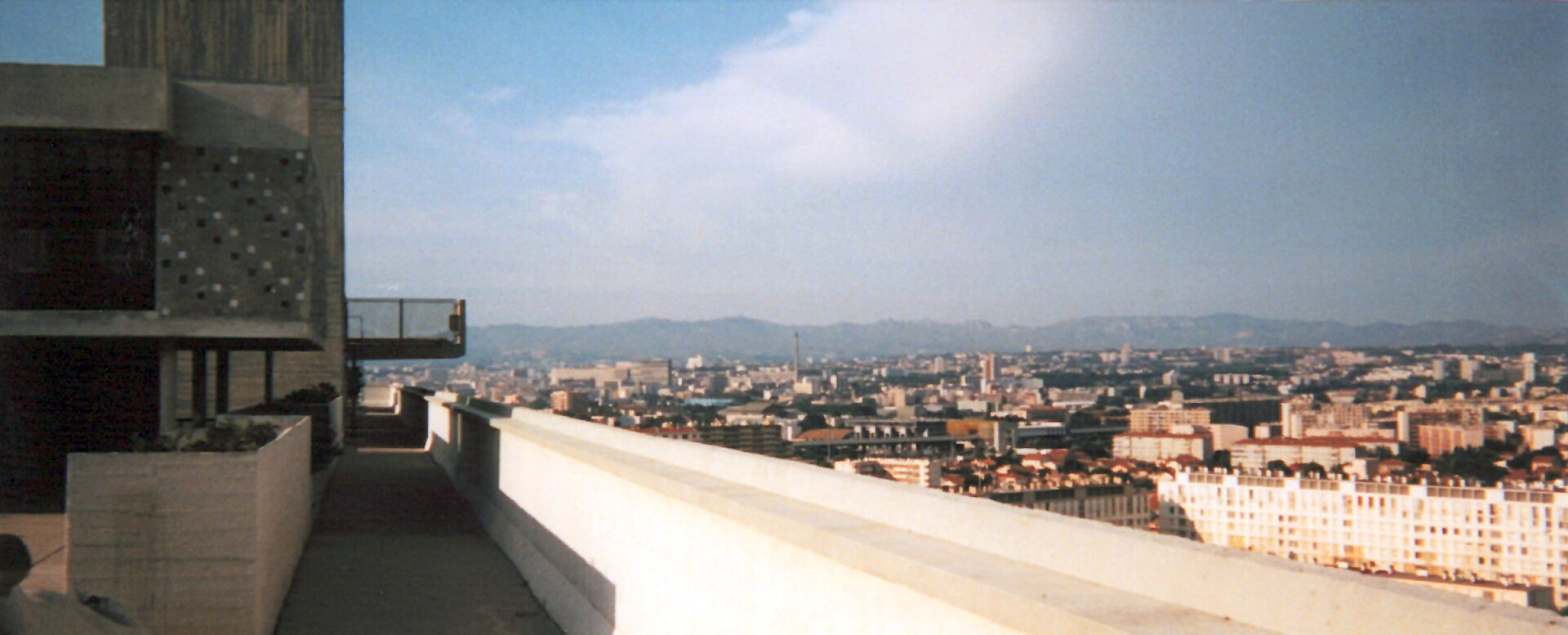
Worth knowing: The rooftop and the "interior street" are open to the public for free during the day — take the lift up and walk out onto the terrace, which since 2013 doubles as the MAMO contemporary art gallery (free when no ticketed show is on). There's a hotel and restaurant inside if you want to actually sleep in a Corbusier. It's a 15-minute ride on bus 21 or 22 from the Rond-Point du Prado métro; combine it with the Prado beaches down the road.
Palais Longchamp
This monumental colonnade and cascading fountain was built in the 1860s to celebrate something unglamorous and vital: the arrival of fresh water in Marseille via the Canal de Marseille, after cholera and drought had hammered the city. The result is a grand water-palace — a central "château d'eau" flanked by two curving wings that house the Musée des Beaux-Arts, Marseille's oldest museum (founded 1802), and the Natural History Museum.

Worth knowing: The fountain, colonnade and the park behind it are free, and it's a genuine local spot — families, joggers, students — rather than a tourist queue. The Musée des Beaux-Arts, with works by Rubens, Courbet and the Marseille caricaturist Honoré Daumier, runs about €6. It's a short walk from the Cinq Avenues–Longchamp métro (line 1) and makes an easy pairing with a wander down the Canebière.
🗓️ A Three-Day Itinerary
Three days is enough to see the city and get one proper day in nature. Everything central is walkable, with the métro filling the gaps.
Day 1 — The old city
Start at the Vieux-Port for the morning fish market at the Quai des Belges, coffee under the Ombrière, then walk up into Le Panier (10 minutes) to wander the lanes and the free courtyard of the Vieille Charité. Drop down to the waterfront for the MuCEM and Fort Saint-Jean in the afternoon — budget two to three hours, more if you buy the €11 exhibition ticket. End the day climbing (or bussing) to Notre-Dame de la Garde for sunset over the whole city. Dinner back near the Opéra or in Le Panier. Rough cost: €11 museum + €1.70 bus + dinner €25–40 = roughly €40–55 (about $43–59).
Day 2 — The Calanques
Give the national park a full day. Take bus 21 to the Luminy campus terminus (about 30 minutes from the centre, €1.70) and hike out to the Calanque de Sugiton — around 45–60 minutes each way on a well-marked but rocky path, with a swim at the end. Reserve the free Sugiton slot online first if you're travelling June–September. Alternatively, catch a half-day boat tour from the Vieux-Port (roughly €25–35 / about $27–38) to see Sormiou, Morgiou and En-Vau from the water without the climb. Pack lunch; there's nothing to buy out there. Rough cost: €3.40 round-trip bus and a picnic, or €25–35 for the boat.
Day 3 — Islands, design and the sea
Morning: ferry from the Quai des Belges to Château d'If (€7 entry plus about €11–16 for the crossing), roughly a half-day with the ride and the fortress. Afternoon: head south to La Cité Radieuse (bus 21/22 from Rond-Point du Prado) for the free rooftop, then walk or ride to the Prado beaches or along the Corniche Kennedy, the coastal road, for a final swim and a sundowner. If design isn't your thing, swap in the Palais Longchamp and the Musée des Beaux-Arts (€6) instead. Rough cost: €18–23 for If and the ferry + transport = roughly €25–30 (about $27–32).
🧠 Essential Tips
When to go
Aim for April–June or September–October. Spring brings mild days of 15–21°C, the Calanques trails fully open, hotel rates well below summer, and far thinner crowds. Autumn is just as good — September still hits around 22–24°C and the sea stays warm enough to swim into October, plus the Fiesta des Suds world-music festival lights up the docks of La Joliette each October. July and August are hot (29–31°C), expensive and crowded, with the Sugiton reservation system and periodic fire closures in the Calanques to work around — come then only if you must, and book months ahead. Winter is quiet and cheap but many sites cut hours, and the mistral — the cold, dry north wind that can blow 90 km/h for days — scours the city and can cancel the island ferries any time of year. It also leaves behind the clearest blue skies you'll ever photograph.
Getting around
The network is run by the RTM: two métro lines, three tram lines and a dense bus web. A single ticket is €1.70 on a rechargeable card or the RTM app (€2 if you buy from the driver) and is valid one hour with transfers across métro, tram and bus. A 24-hour pass is €5.20 and a 72-hour pass €10.80 — the 72-hour one pays for itself over three days. Download the RTM app to buy and validate tickets on your phone. From Marseille Provence Airport (MRS), the official shuttle bus runs to Gare Saint-Charles every 15 minutes for €10 one-way (€16 return, free for under-11s and over-65s) in about 25–30 minutes; the cheaper option is the free airport shuttle to Vitrolles-Aéroport station and a train into Saint-Charles. The centre is compact enough that you'll walk most of it.
Staying safe
Marseille's reputation outruns the reality for most visitors, but petty theft is real. Pickpockets work the métro (especially line 1 around the Vieux-Port and Saint-Charles) and crowded quays; watch for the gold-ring scam (someone "finds" a ring and offers it to you) and fake charity petitions, both classic distractions near the tourist spots. The Vieux-Port, Le Panier and the 8th-arrondissement beaches are lively and fine well into the evening. Be more alert after dark around Gare Saint-Charles, the lower Canebière, and the Noailles and Belsunce quarters, which get seedier at night. The troubled northern housing estates — the quartiers nord — are where the gang violence the headlines love actually happens, and they're nowhere near anything you'd visit. Keep your phone in a front pocket and you'll be fine.
What to eat
The dish is bouillabaisse, and doing it properly means a sit-down ritual, not a quick bowl: the saffron-and-fennel broth with rouille and croutons first, the poached fish brought out second. The Marseille restaurants that sign the official charter do it right — Chez Fonfon in the tiny fishing cove of Vallon des Auffes (around €65 a head), Le Miramar on the Vieux-Port, or Chez Michel near the Catalans beach (both around €80). Cheaper everyday Marseille: panisses (fried chickpea-flour sticks), a slab of pizza from a street cart, and navettes — hard, orange-blossom boat-shaped biscuits from the Four des Navettes at 136 rue Sainte, the city's oldest bakery, running since 1781. For market chaos and North African street food, the Marché de Noailles is the best-value feed in town. Wash it all down with a pastis cut with water, the way it's drunk here.
🏨 Accommodation Guide
Budget (around €60–100 a night): Base yourself near the Vieux-Port or around Gare Saint-Charles for transport links. The Vertigo hostels and simple hotels like the Alex Hotel & Spa near the station fall in this range; it's workable but keep the night-time caution above in mind around Belsunce.
Mid-range (around €120–200): This is the sweet spot. La Résidence du Vieux-Port puts you right on the harbor with balconies over the water and the Ombrière; Mama Shelter sits up near the bohemian Cours Julien with a rooftop and a scene; and several design hotels have opened in the restored docks at La Joliette.
Luxury (€250 and up): The InterContinental Marseille – Hôtel-Dieu occupies a converted 18th-century hospital on the hillside above the Vieux-Port, with terraces straight across to Notre-Dame de la Garde. For a splurge with a plate, Le Petit Nice Passédat is a three-Michelin-star hotel-restaurant perched over the sea in the Anse de Maldormé. Where to base yourself: the Vieux-Port for walkability, Le Panier for atmosphere, Cours Julien / Notre-Dame-du-Mont for nightlife and record shops, La Joliette for modern and quiet.
❤️ Beyond the Tourist Trail
Trade the Prado beaches for the Vallon des Auffes, a postcard-sized fishing harbor tucked under a viaduct arch on the Corniche, barely big enough for the wooden pointus boats bobbing in it — this is where Chez Fonfon hides, and where locals come for an aperitif away from the crowds. For the city's creative pulse, spend an evening around Cours Julien and the Rue d'Aubagne in the 6th: murals repainted every season, independent galleries, Comorian and West African kitchens, and the kind of bars that don't bother with signs. On the coast, walk or cycle the full Corniche Kennedy at golden hour — the sea wall is said to hold the world's longest bench — down to the fishing village of Les Goudes at the literal end of the road, where the city dissolves into the rock of the Calanques. And if you're here in October, the Fiesta des Suds turns the J4 docks into three weeks of world music, a reminder that Marseille has always faced south across the sea rather than north toward Paris.
🧳 Plan Your Marseille Trip with VoyaBear
Marseille rewards a plan — timed Calanques reservations, a ferry that the mistral might cancel, restaurants that need booking, and neighborhoods best visited at the right hour. That's exactly what VoyaBear is built for. Tell us how long you've got, what you're into — architecture, hiking, markets, long lunches — and your budget, and we'll build you a personalized Marseille itinerary that threads it all together, down to which métro line to take and when to go up to la Bonne Mère for the light. Start planning your Marseille trip with VoyaBear today, and let us handle the logistics while you handle the pastis.
Want this as an actual itinerary?
VoyaBear turns a guide like this into a day-by-day plan built around how you travel.
Plan my trip free