Mexico City 2026: The Complete Guide to Mexico's High-Altitude Capital
1 August 2026 · 8 min read
Mexico City sits at 2,240 metres, which means two things on your first day: the sunsets go pink over the volcanoes, and one michelada will hit you like three. This is a city of roughly nine million people (22 million if you count the sprawl), and it has quietly become one of the best-value big cities on the planet — a Metro ride costs 5 pesos, a taco costs less than your tip back home, and a world-class museum runs about the price of a coffee. In 2026 it's also busier than ever, so the trick is knowing exactly where to go, when to show up, and what to skip. Here's the plan.
🏙️ 8 Experiences Worth Your Time
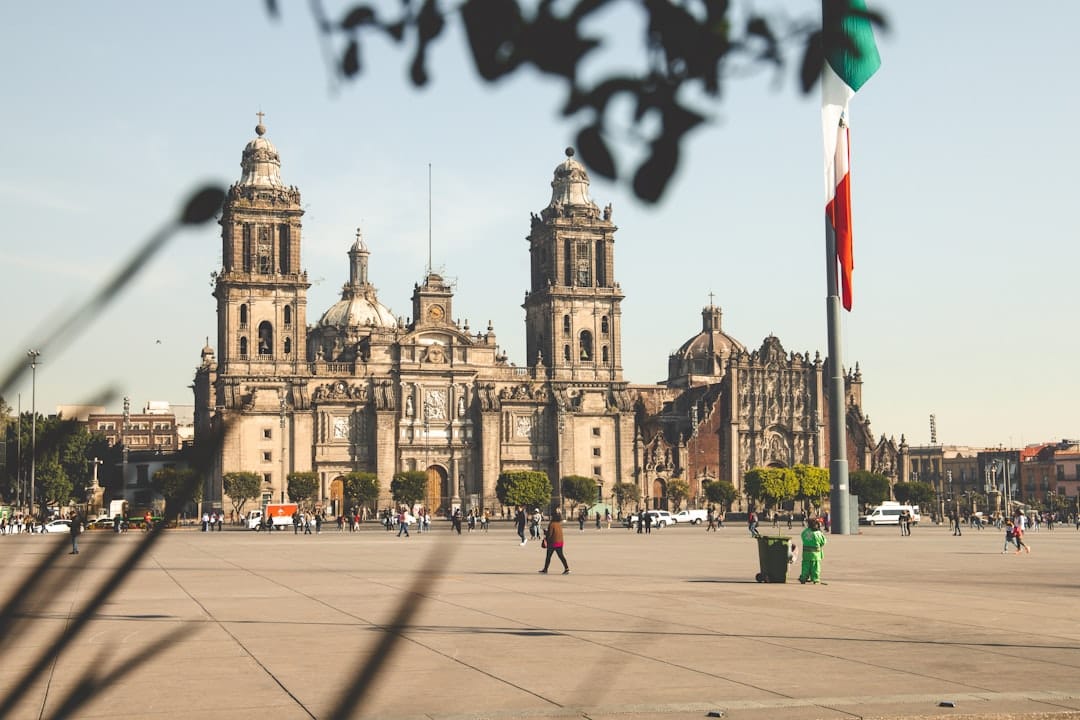
1. The Zócalo & Templo Mayor — the city's 700-year-old core
The Zócalo (officially Plaza de la Constitución) is one of the largest city squares on earth, and standing in the middle of it you're literally on top of the Aztec capital of Tenochtitlan. On its northeast corner sit the ruins of the Templo Mayor, the main Aztec temple, only rediscovered in 1978 when electricity workers hit a carved stone disc. Entry to the site and its excellent museum is about 100 pesos, and it's closed Mondays like nearly every museum here. Tip: go first thing, then duck into the Metropolitan Cathedral next door (free) and notice how the whole building tilts — it's slowly sinking into the old lakebed.
2. Teotihuacán — climb a pyramid before breakfast
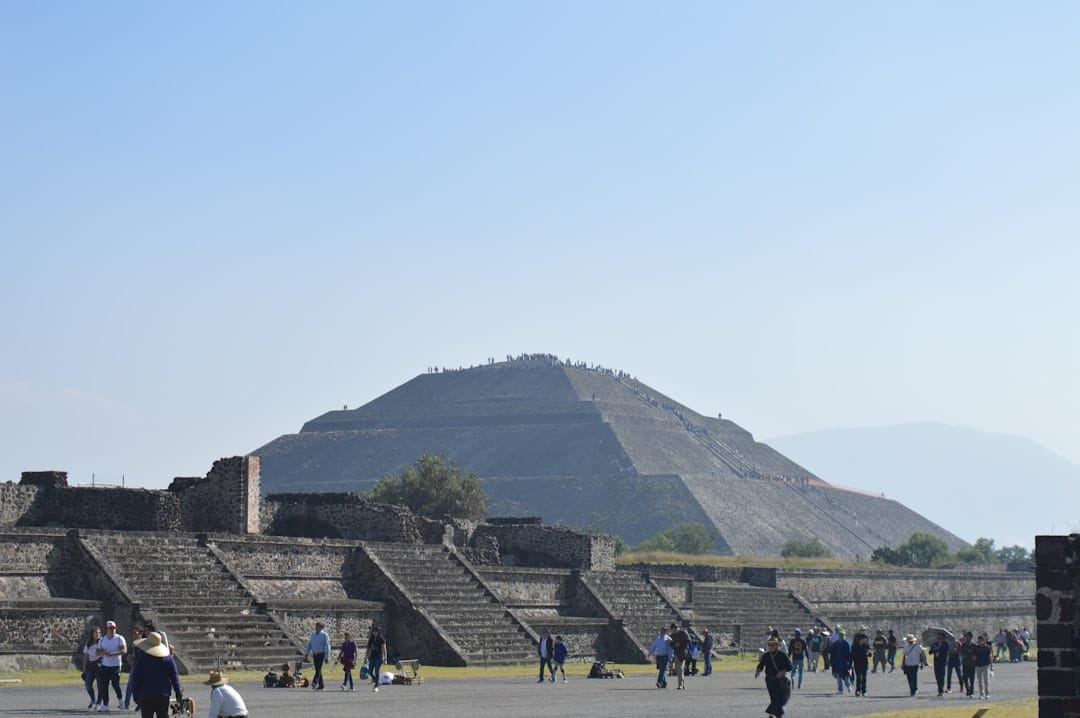
An hour northeast of the city, Teotihuacán was a metropolis of 100,000 people when Rome was still standing. The Avenue of the Dead runs a straight kilometre-and-a-half between the Pyramid of the Moon and the massive Pyramid of the Sun. Foreigner entry is 210 pesos (about $12) in 2026, and the site opens at 9am. Tip: skip the pricey hotel tours. Take the Metro to Autobuses del Norte (Line 5), then a direct "Autobuses Teotihuacán" coach from the Terminal Central del Norte for around 100 pesos each way — they leave every 15 minutes and take about an hour. Arrive at opening: by 11am the sun is brutal and there's zero shade.
3. La Casa Azul — Frida Kahlo's cobalt-blue house
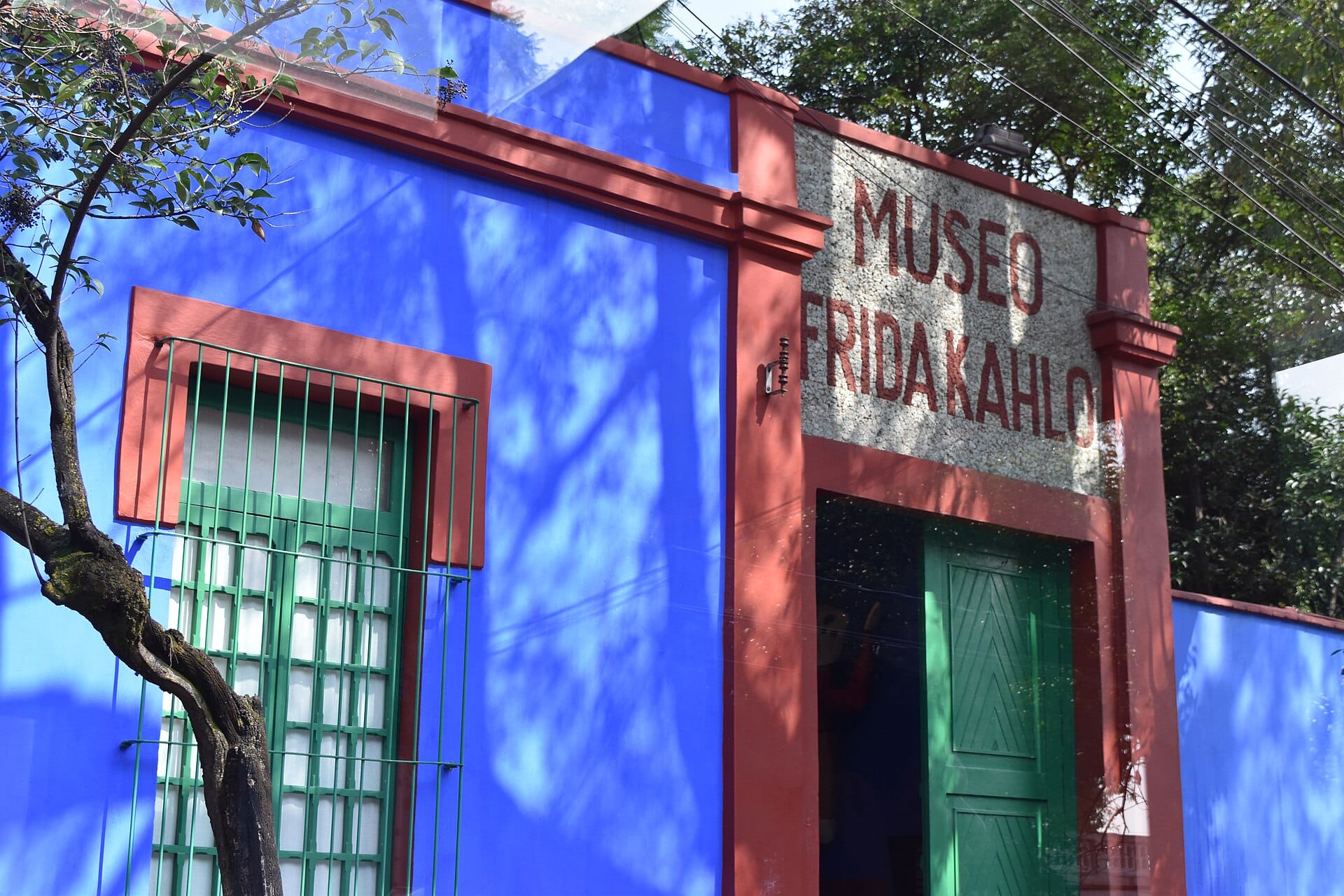
In the cobbled southern neighbourhood of Coyoacán, the house where Frida Kahlo was born, lived with Diego Rivera, and died is now the Museo Frida Kahlo. It's small, intimate, and unmissable — her wheelchair still sits at the easel. The catch: foreign adult tickets are 320 pesos and you must buy them online in advance at museofridakahlo.org.mx. There are no ticket sales at the door, and slots routinely sell out one to two weeks ahead. Book the moment you know your dates. Closed Mondays.
4. National Museum of Anthropology — the one museum you can't skip
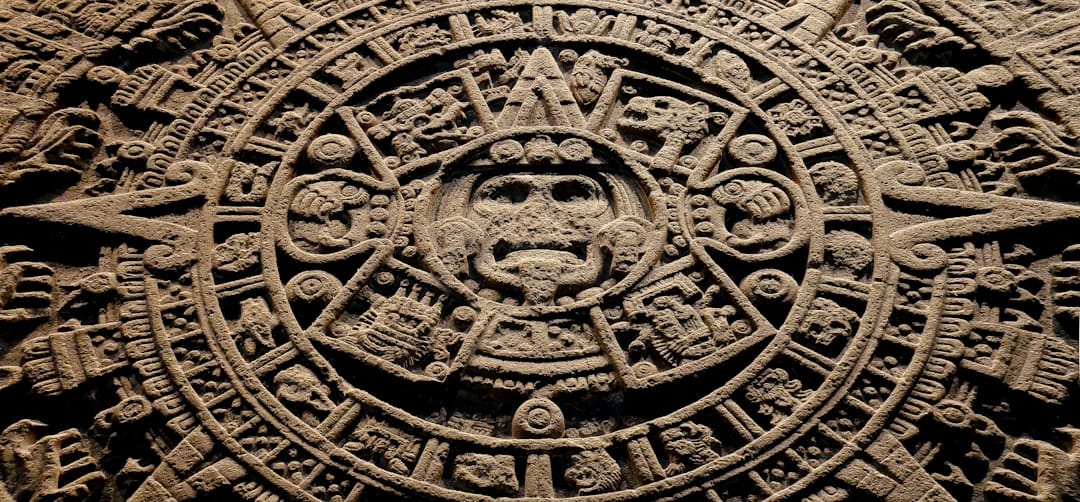
If you do a single indoor thing in Mexico City, make it this. Inside Chapultepec Park, the Museo Nacional de Antropología holds the Aztec Sun Stone, the giant Olmec heads, and a full-scale replica of Pacal's Maya tomb. Entry is 100 pesos and it's closed Mondays. It is enormous — budget three hours minimum. Tip: the halls are arranged chronologically and by region; start with the Mexica (Aztec) hall while you're fresh, because by hall twelve everyone's brain is full.
5. Xochimilco — the floating gardens (done right)
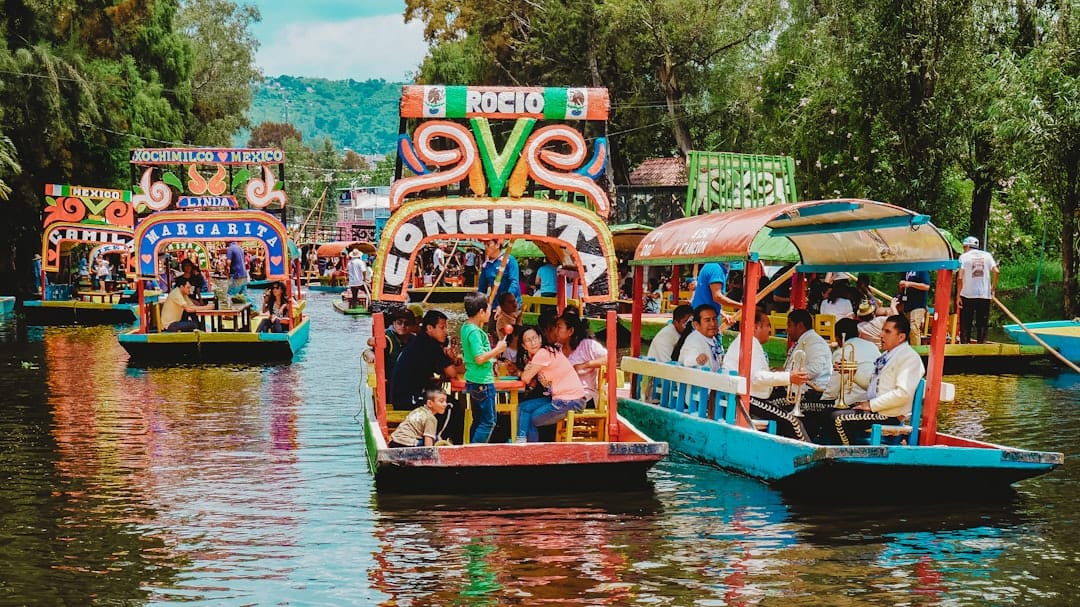
In the south, Xochimilco is the last surviving stretch of the canals the Aztecs farmed, now navigated by trajineras — flat, brightly painted party boats poled along by a boatman. The official 2026 rate is 750 pesos per hour, per boat — not per person — and a boat holds up to 18. Tip: agree the price and the number of hours out loud before you step aboard; the single most common tourist rip-off here is a "per person" quote or a surprise extra hour. Bring cash, snacks, and beer; floating vendors will sell you elotes, micheladas, and a mariachi song mid-canal.
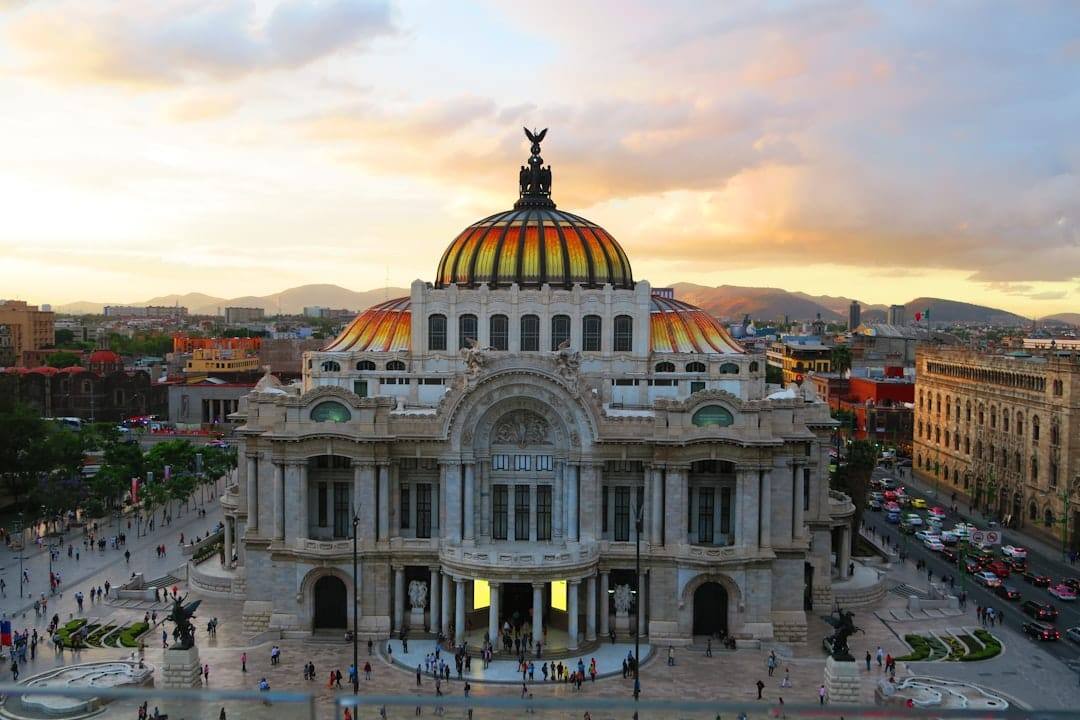
6. Palacio de Bellas Artes & the Torre Latinoamericana view
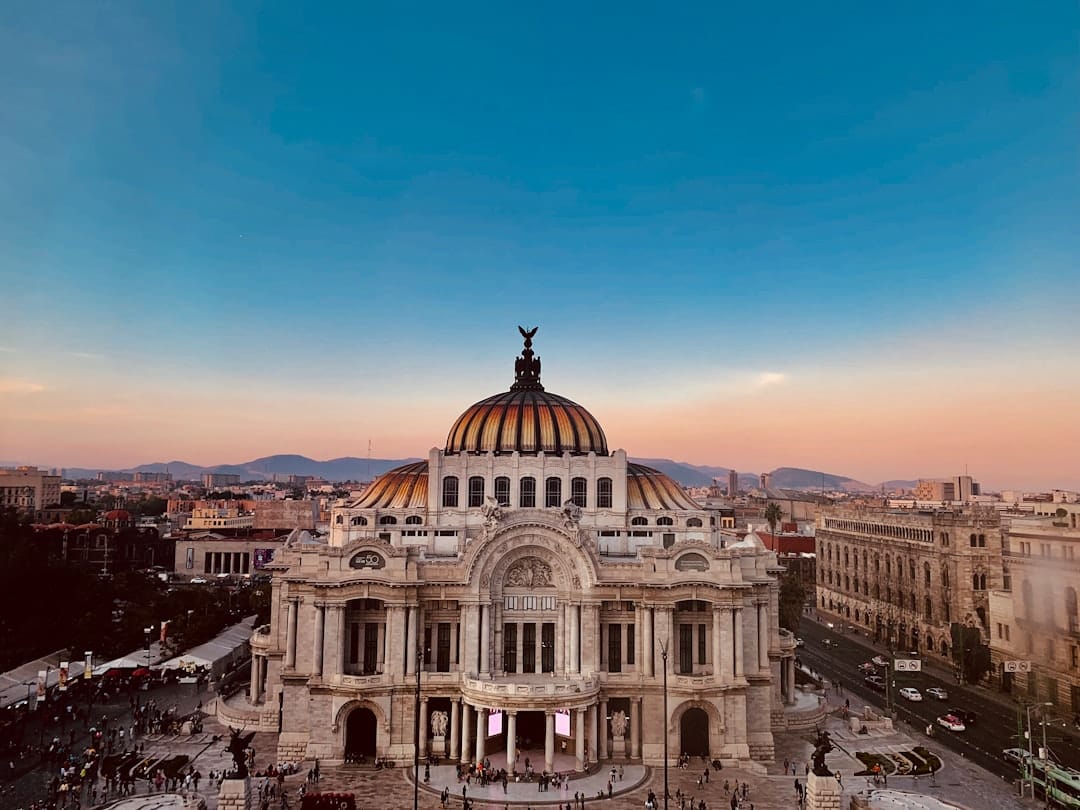
The Palacio de Bellas Artes is the white-marble concert hall on the edge of the historic centre — Art Nouveau outside, Art Deco inside, with vast murals by Rivera, Orozco and Siqueiros upstairs (museum entry about 90 pesos, closed Mondays). If the world-famous Ballet Folklórico de México is performing while you're in town, buy a ticket. Tip: for the best photo of the palace's golden dome, ride up the Torre Latinoamericana across the street (around 170 pesos) — its 1950s observation deck gives you the whole valley, ringed by mountains.
7. Roma & Condesa — where you'll actually spend your evenings
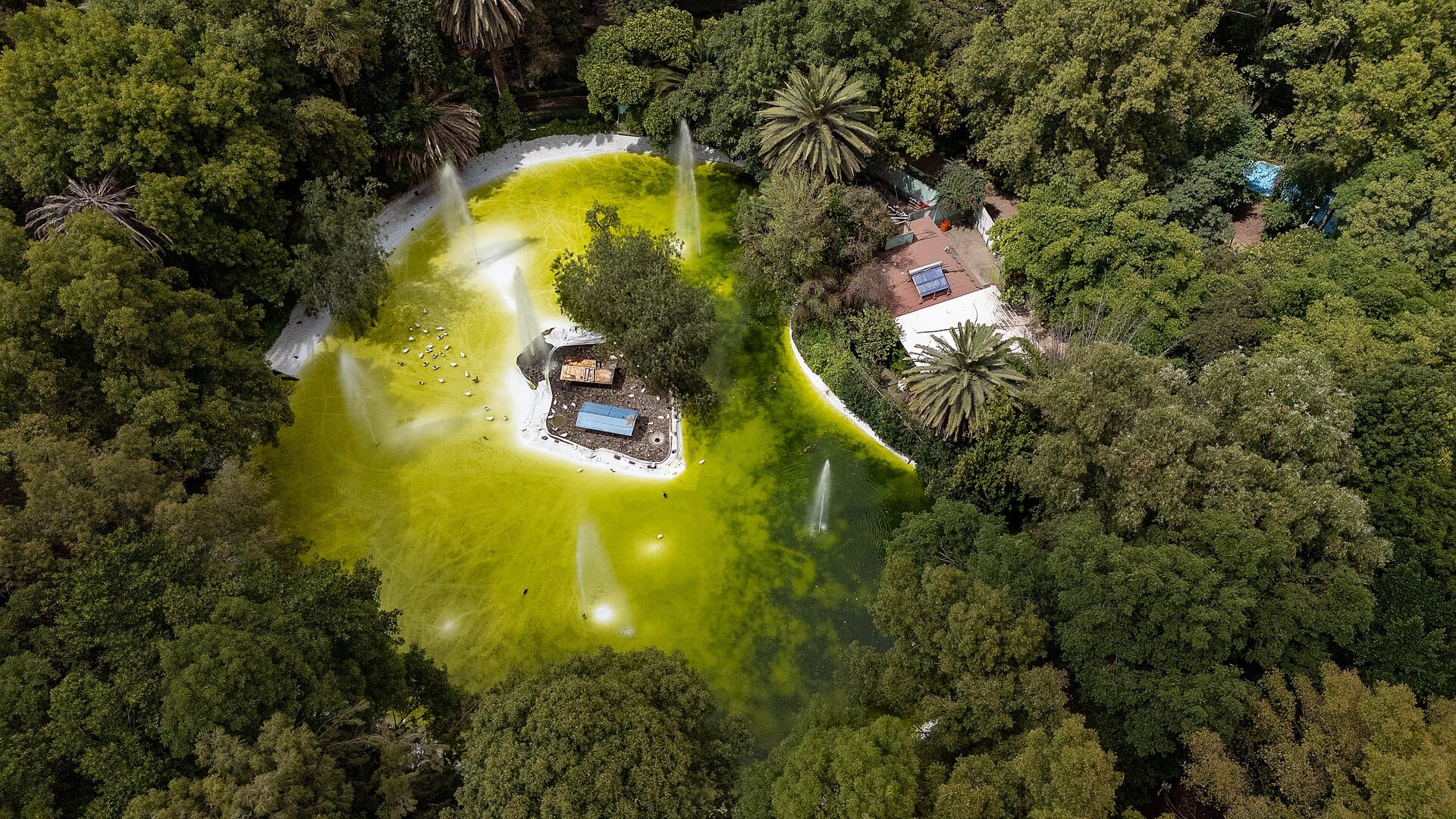
These two adjacent neighbourhoods are the reason people move here. Tree-lined streets, Art Deco apartment blocks, specialty coffee, mezcalerías, and some of the best restaurants in Latin America, all walkable. There's no ticket and no opening hour — just wander. Tip: start in Parque México in Condesa (Art Deco and off-leash dogs), walk east into Roma Norte along Avenida Álvaro Obregón, and stop wherever the queue of locals looks longest.
8. Lucha libre at Arena México — Friday night theatre
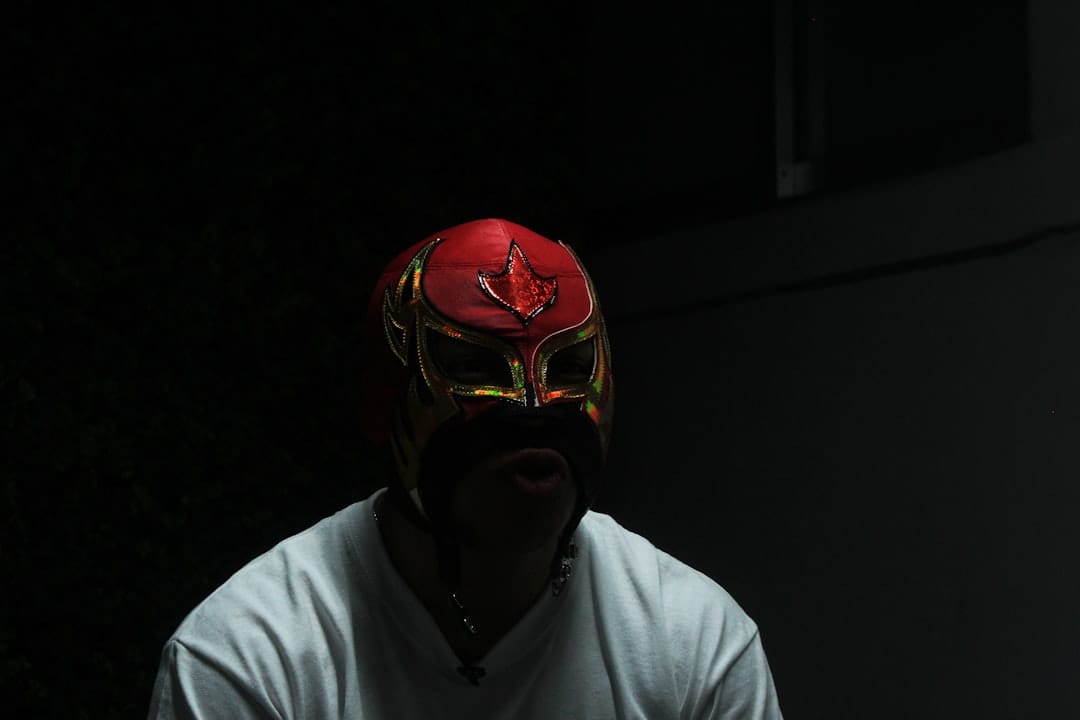
Masked wrestlers, flying bodies, and a crowd that hurls creative insults — lucha libre is part sport, part pantomime, and completely worth a night. CMLL stages its biggest cards at Arena México on Friday nights (with more on Tuesdays and Sundays). Tickets run roughly 200–500 pesos through Ticketmaster México or the box office. Tip: the arena sits in Colonia Doctores, which is rough after dark — take an Uber to the door and grab one straight back.
🗓️ A 3-Day Itinerary
Day 1 — The historic centre. Start at the Zócalo (9am, before the crowds), tour Templo Mayor (100 pesos), then the Metropolitan Cathedral. Walk west to the Palacio de Bellas Artes and up the Torre Latinoamericana for the view (170 pesos). Lunch at El Huequito nearby, then wander Alameda Central. Evening: taxi to Roma Norte for dinner and mezcal. Roughly 500 pesos in tickets and transport, plus food.
Day 2 — Teotihuacán and Coyoacán. Early bus from Terminal del Norte to the pyramids (100 pesos each way, 210 entry), back by early afternoon. Head to Coyoacán for a late lunch of tostadas at Mercado de Coyoacán, then — if you booked ahead — the Frida Kahlo Museum (320 pesos). Roughly 730 pesos plus food. Book Casa Azul before you leave home.
Day 3 — Museums and canals. Morning at the Museo Nacional de Antropología (100 pesos, three hours). Afternoon south to Xochimilco for a two-hour trajinera ride (1,500 pesos for the boat, split among your group). Back north for a final taco crawl in Condesa. Roughly 1,600 pesos for the boat plus entry, cheaper split between friends.
🧠 Essential Tips
Best time to go: The dry season runs November to April and is the safe bet. Late March to April brings the jacaranda trees into full purple bloom across the city — arguably the prettiest fortnight of the year. Day of the Dead (October 31–November 2) is spectacular but books out months ahead. The rainy season (June–September) isn't a write-off: mornings are usually clear and the downpours arrive predictably in the late afternoon, so plan outdoor stuff early.
Getting around: The Metro is 5 pesos flat per ride and fast, but avoid it at rush hour with luggage. The Metrobús (6 pesos) runs in dedicated lanes above ground. Both need a rechargeable Tarjeta de Movilidad Integrada, sold at any station for about 15 pesos. For everything else use Uber or Didi — they're cheap, tracked, and cashless. Do not hail taxis off the street.
From the airport: Mexico City International (AICM) is close to the centre. Use the official "taxi autorizado" booths inside the terminal where you pre-pay by zone, or order an Uber/Didi from the departures level (usually 150–250 pesos to Roma or Condesa). Skip anyone offering you a ride at arrivals.
Safety: The tourist neighbourhoods — Roma, Condesa, Polanco, Coyoacán, and the Centro by day — are fine with normal city sense. Keep your phone in your pocket on a packed Metro; during rush hour there are women-and-children-only cars at the front of Metro and Metrobús. Steer clear of Tepito and don't wander Doctores at night. Carry small cash for street food and markets.
Food: Eat where it's busy and cooked in front of you. Don't miss tacos al pastor (pork shaved off a spit onto a tiny tortilla with pineapple), tlacoyos from a griddle stand, and a guajolota — a tamale in a bread roll, the local carb-on-carb breakfast of champions.
🏨 Where to Stay
Budget: The Centro Histórico puts you walking distance from the big sights, with hostel dorms around $15–25 a night and simple hotels from roughly $40. It empties out after dark, so it's quieter in the evenings than Roma.
Mid-range: Roma Norte and Condesa are where most travellers should base themselves — boutique hotels and design guesthouses run about $80–180 a night, and you can walk to dinner, coffee, and bars without ever calling a car.
Luxury: Polanco is the upscale district — tree-lined Avenida Presidente Masaryk, designer shops, and the city's grande-dame hotels from around $250 and up, a short hop from Chapultepec Park and the Anthropology Museum.
🎭 Beyond the Tourist Trail
For tacos, locals argue endlessly, but a few names come up again and again: El Califa de León in San Rafael is the only taco stand on earth with a Michelin star (expect a line and a menu of basically four tacos). El Huequito, in Colonia Nápoles since 1959, claims to have introduced al pastor to the city. And El Vilsito in Narvarte is a car mechanic's garage by day that transforms into one of the city's great al pastor taquerías at night — pull up a plastic stool after 9pm. For a slower afternoon, skip the obvious and spend it in San Ángel, a colonial-era enclave of cobblestones and bougainvillea in the south, best on Saturdays when the Bazaar Sábado fills the plaza with art.
❤️ The Bottom Line
Mexico City rewards travellers who show up with a plan and an appetite. Book Casa Azul before you fly, climb Teotihuacán at 9am, ride the Metro like a local, and eat standing up at least once a day. Do that and it's hard to think of a big city that gives you more for less in 2026.
Want a version of this trip built around your exact dates, budget, and taste — with the reservations that sell out already handled? That's what VoyaBear does. Tell us where you're headed and we'll plan the whole thing.
Want this as an actual itinerary?
VoyaBear turns a guide like this into a day-by-day plan built around how you travel.
Plan my trip free