Munich 2026: The Complete Travel Guide
17 November 2026 · 20 min read

Munich is the one German city where locals surf a standing river wave on their lunch break, wear leather shorts without irony, and treat a one-litre mug of beer as a reasonable serving size. Bavaria's capital is richer than Berlin, older than it looks (most of the Altstadt was rebuilt after 1945), and far more walkable than its 1.5 million population suggests. This guide is built on 2026 prices and opening times, checked against official sources, so you can plan around what things actually cost rather than what a brochure promised three years ago.
💡 Quick Answer: Munich at a Glance
Everything a first-time visitor needs in one scan:
- How many days? Three. Two for the Altstadt and a big museum, one for Nymphenburg and BMW Welt.
- Best time to visit? Mid-May to mid-September for warmth; late September for Oktoberfest (19 Sept to 4 Oct 2026); December for the Christmas markets.
- Book ahead? Oktoberfest hotels (6 to 12 months out, prices double) and any Residenz or Nymphenburg combination ticket in peak summer.
- Airport to centre? S1 or S8 S-Bahn, 41 to 45 minutes; Airport-City-Day-Ticket 17.50 euros (about $19).
- Getting around? MVV network; single Zone M trip 4.20 euros, day ticket 10.10 euros. Buy via the MVGO app.
- Daily budget? Budget 90 to 110 euros, mid-range 200 to 300 euros, including a central bed.
- Signature food? Weisswurst with sweet mustard and a pretzel, before noon, with a wheat beer.
- Top safety note? Very safe overall; watch for pickpockets around the Hauptbahnhof and at Oktoberfest.
🏙️ The Best Things to Do in Munich
1. Marienplatz and the Glockenspiel

Marienplatz has been Munich's main square since 1158, and the neo-Gothic New Town Hall (Neues Rathaus) that dominates it is younger than it looks, finished in 1909. The draw is the Glockenspiel, a 43-bell carillon with 32 life-sized figures that re-enact a 1568 royal wedding and a coopers' dance. It chimes daily at 11am and noon, adds a 5pm show from March to October, and runs a short night scene with a watchman and angel at 9pm. The whole thing lasts about 12 minutes and moves at a stately, almost comic pace.
Insider tip: the crowd that gathers directly under the tower sees the least. Watch instead from the terrace of the Cafe Glockenspiel or the rooftop of the Rischart bakery across the square, or climb St Peter's Church tower ("Alter Peter", a few euros, 306 steps) next door for the best overhead angle on the square. Watching the Glockenspiel from the square costs nothing.
2. The Frauenkirche

The Frauenkirche's two green onion-domed towers, each close to 99 metres, are the symbol of Munich. By city law no building in the central area may rise above them, which is why Munich's skyline stays low and medieval rather than glassy. The brick Gothic interior is vast and surprisingly plain; it was gutted in the war and rebuilt with restraint.
Insider tip: look down, not up, as you enter. Set into the floor near the entrance is the Teufelstritt, the "Devil's Footstep", a dark footprint in the stone tied to a legend that the Devil checked on the windowless-looking nave. The south tower has a viewing platform with a ticketed ascent sold on site; the church itself is free to enter.
3. The Munich Residenz
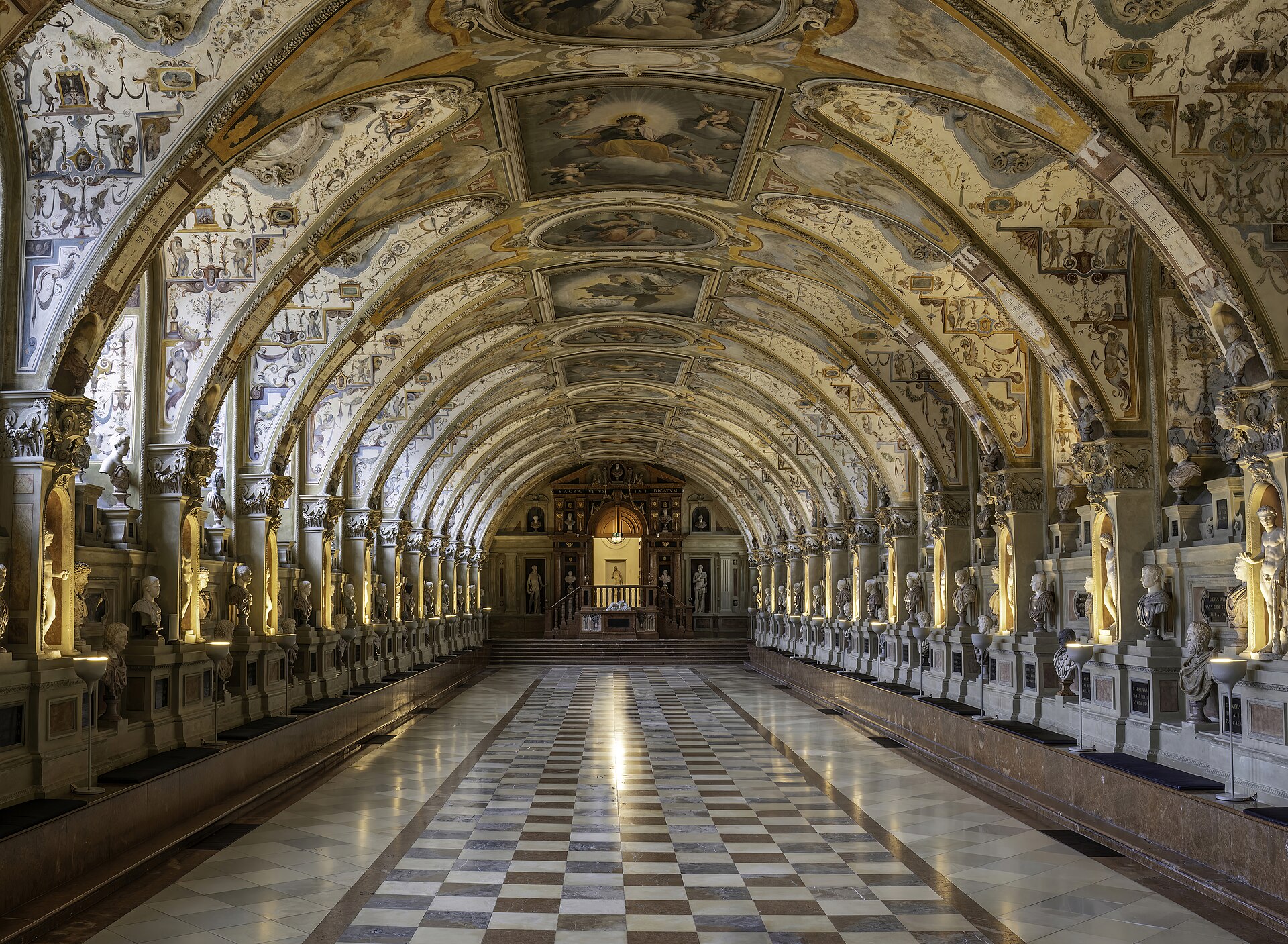
The Residenz was the seat of the Wittelsbach dynasty for four centuries, and it is the single most underrated sight in the Altstadt, probably because its plain street facade gives nothing away. Inside are 130 rooms of staggering decoration. The highlight is the Antiquarium, a 66-metre barrel-vaulted Renaissance hall from the 1570s lined with antique busts and painted end to end, and one of the finest rooms north of the Alps.
Insider tip: the Residence Museum and the Treasury (crown jewels, reliquaries, a Renaissance statuette of St George dripping with gems) are sold separately at 10 euros each, but the combination ticket is 15 euros and worth it. Add the rococo Cuvilliés Theatre for a 20-euro combined ticket. Budget two to three hours; most visitors badly underestimate the size.
4. The Viktualienmarkt
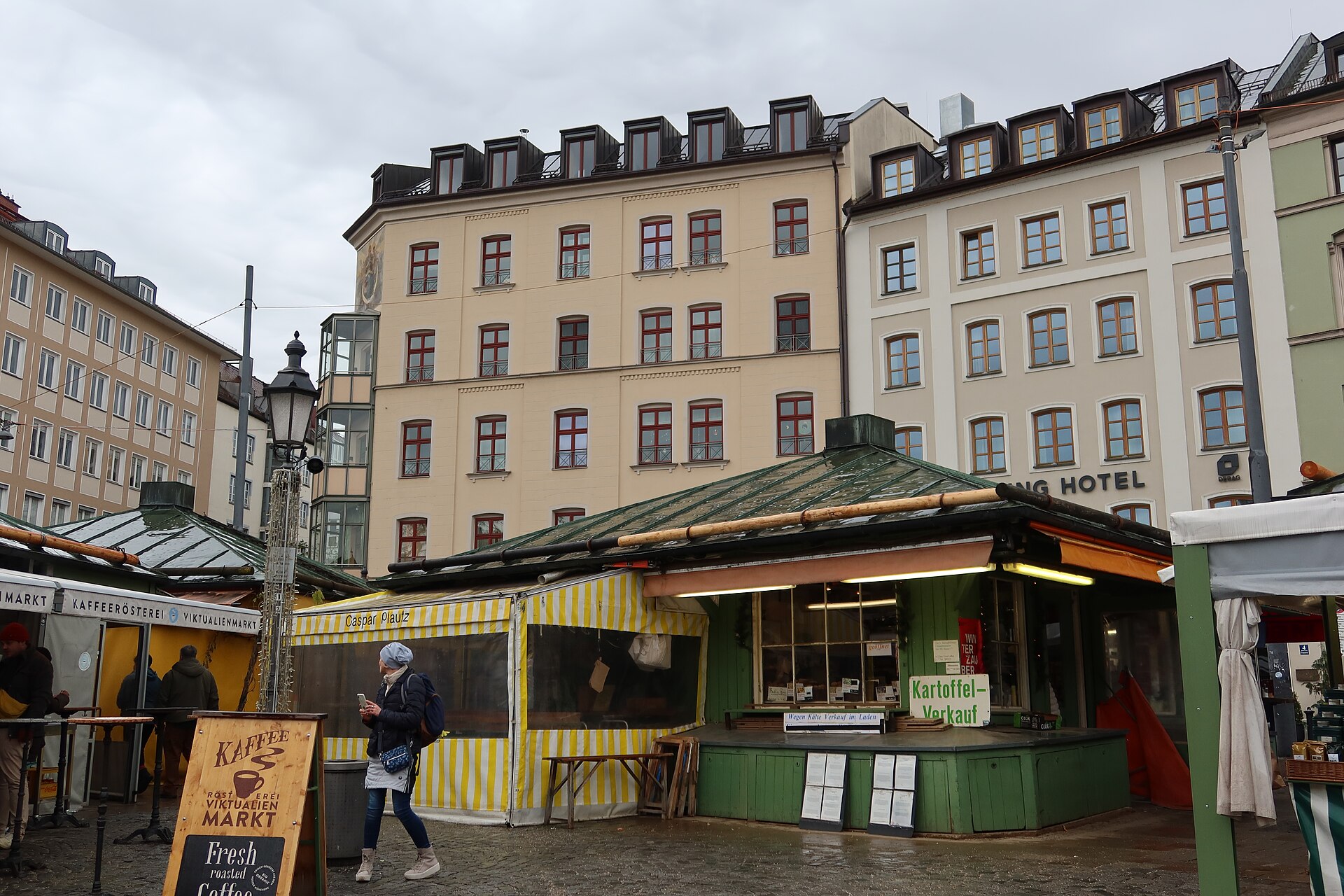
Two minutes south of Marienplatz, the Viktualienmarkt is a permanent open-air food market of roughly 100 stalls that has run daily (except Sundays) since 1807. It is where you buy a single perfect pretzel, a cone of roast chestnuts, obatzda by the tub, or cheese and charcuterie for a park picnic. At its centre is a beer garden under a maypole, and in a Munich-only touch, the brewery pouring there rotates between the city's big six so the beer changes through the year.
Insider tip: the market is a working food hall, not a tourist pit stop, so it is cheapest and liveliest mid-morning on a weekday. Grab a weisswurst at a stand, pair it with a wheat beer, and remember the local rule that weisswurst is eaten before noon. Browsing costs nothing.
5. The English Garden and the Eisbach Wave

At 375 hectares, the Englischer Garten is larger than New York's Central Park, and it is free, open and genuinely used by locals who sunbathe, cycle and drink in it. Its strangest feature sits at the southern end near the Haus der Kunst: the Eisbachwelle, a permanent standing wave on a diverted arm of the Isar where wetsuited surfers queue to ride a river in the middle of a landlocked city, year-round, even when the water drops to 2 to 6C in winter.
Insider tip: the Eisbach wave is for experienced surfers only and is not a spot to try yourself; beginners are directed to the gentler Floßlände wave in Thalkirchen. Walk ten minutes north to the Chinese Tower (Chinesischer Turm) beer garden, which seats up to 7,000 people under chestnut trees, bring your own food if you like, and buy only the beer. The nearby Kleinhesseloher See rents rowing boats in summer.
6. Nymphenburg Palace

The Wittelsbachs' baroque summer palace sits at the end of a long canal about 20 minutes by tram from the centre, and it is where King Ludwig II, the "fairy-tale king" behind Neuschwanstein, was born in 1845. The central pavilion's Great Hall is a rococo explosion of frescoes; the Marstallmuseum in the former stables holds the gilded state coaches and sleighs that are somehow even more extravagant than the rooms.
Insider tip: the palace alone is 10 euros, but the summer combination ticket at 20 euros (16 euros in winter) adds the Marstallmuseum and the park pavilions, including the Amalienburg, a tiny hunting lodge with a mirrored Hall of Mirrors that outshines rooms ten times its size. The vast gardens behind the palace are free to wander, and the canal freezes hard enough for ice skating in a cold January.
7. The Deutsches Museum

On its own island in the Isar, the Deutsches Museum is the largest science and technology museum in the world, and it is hands-on in a way most are not: real aircraft hung from the ceiling, a full-size mining tunnel in the basement, U-boat U1, and daily high-voltage demonstrations where artificial lightning cracks across a cage. A long-running renovation has modernised wing after wing, so the exhibits feel current rather than dusty.
Insider tip: adult admission is 16 euros (effective 28 January 2026) and the museum is genuinely too big for one visit, so pick two or three sections in advance rather than trying to see it all. Families should head straight for the Kinderreich children's zone. The electricity show and the glass-blowing demonstration are the two worth timing your visit around.
8. BMW Welt and the BMW Museum

North of the centre by the 1972 Olympic Park, BMW's home turf is a trio of buildings: the four-cylinder-shaped tower (the headquarters, not open to visitors), the bowl-shaped BMW Museum, and the swooping glass-and-steel BMW Welt delivery centre across the footbridge. BMW Welt is a working showroom where German buyers collect new cars with theatrical ceremony, and admission is free, which makes it one of the best no-cost hours in the city even if you have no interest in cars.
Insider tip: BMW Welt is free; the BMW Museum next door is a separate paid ticket. Combine the visit with the Olympiapark, where you can walk the sweeping tent-roof architecture of the 1972 Games and climb or lift up the Olympiaturm for a wide view back over the city to the Alps on a clear day. The U3 drops you at Olympiazentrum right outside.
📅 How to Spend Three Days in Munich
This itinerary keeps walking sensible and groups sights by area. A Single-Tageskarte day ticket (10.10 euros) covers all the transit on any given day.
Day 1: The Altstadt
Start at Marienplatz for the 11am Glockenspiel (free), then walk two minutes to the Frauenkirche (free). Cross to the Residenz and give it two hours (15-euro combination ticket). Walk five minutes to the Viktualienmarkt for a weisswurst-and-wheat-beer lunch at a stall (around 8 to 12 euros). Spend the afternoon wandering the pedestrian Kaufingerstraße and the baroque Asamkirche (free, five minutes away), then finish at the Hofbrauhaus on Platzl, three minutes from Marienplatz, for a Maß and a pork dish (expect 20 to 30 euros a head). Total walking: under 4km.
Day 2: Museums and the English Garden
Open the Deutsches Museum at 9am (16 euros) and give it two to three hours. Walk or take tram 16 north to the English Garden, watch the surfers on the Eisbach wave, and stroll up to the Chinese Tower beer garden for lunch (bring food, buy beer). Spend the afternoon in the park or walk into Schwabing, the old bohemian district, for coffee and bookshops. Have dinner at the Augustiner-Keller beer garden near the Hauptbahnhof, Munich's oldest, where the beer still comes from wooden barrels.
Day 3: Palaces and Cars
Take tram 17 to Nymphenburg Palace for opening (20-euro summer combination ticket) and give the palace and gardens the morning. Head back and transfer on the U3 to Olympiazentrum for BMW Welt (free) and the BMW Museum, then walk the Olympiapark grounds. If you would rather leave the city, Day 3 is also the natural day for a train or tour to Neuschwanstein Castle (about two hours each way) or Dachau Memorial (free entry, 30 minutes out), both reachable on regional transport.
🧠 Essential Munich Tips
When is the best time to visit Munich?
Munich's best weather runs mid-May to mid-September, with July the warmest at about 24C by day but also one of the wettest thanks to afternoon thunderstorms. May and early October give you mild days (around 14 to 19C), drier skies and lower prices. The two events that reshape the city are Oktoberfest (19 September to 4 October 2026 on the Theresienwiese) and the Christmas markets (the main Marienplatz market runs 20 November to 24 December 2026). Both are worth planning around, but both send hotel prices sharply up. January is cold, about 3C by day and below freezing at night, with the best chance of snow.
How do you get around Munich?
The MVV network of U-Bahn, S-Bahn, tram and bus is the backbone, and almost everything a visitor wants sits in the central Zone M. A single Zone M trip is 4.20 euros, and a Single-Tageskarte day ticket is 10.10 euros (about $11), which pays for itself in three rides. Buy and validate tickets on the MVGO app, the official MVG app locals use, or at machines. From the airport, the S1 and S8 reach the Hauptbahnhof in 41 to 45 minutes; the Airport-City-Day-Ticket (Zone M-5) at 17.50 euros covers the trip plus the rest of the day's travel. If you are staying several weeks, the nationwide Deutschlandticket at 63 euros a month covers all local and regional transport. Honestly, though, the Altstadt is walkable end to end in 15 minutes.
Is Munich safe for tourists?
Munich consistently ranks among the safest major cities in Europe, and violent crime against visitors is rare. The practical risks are petty: pickpockets work the crowds around the Hauptbahnhof, the Viktualienmarkt and, above all, the packed Oktoberfest tents, so keep wallets and phones zipped and in front pockets. The area immediately around the Hauptbahnhof is the one patch that feels seedy after dark, more unpleasant than dangerous; book your hotel a couple of streets back toward Theresienwiese if you can. Tap water is excellent and free, cyclists have right of way on the red-paved bike lanes (do not walk in them), and jaywalking earns you disapproving looks and occasionally a fine.
What should you eat in Munich?
Munich's food is proudly Bavarian and built for a beer hall. Start with weisswurst, a mild veal-and-pork white sausage served in a bowl of warm water with sweet mustard and a pretzel, and eaten before noon by tradition. Schweinshaxe is the showpiece: a roast pork knuckle with crackling, usually with potato dumplings and sauerkraut. Obatzda is a spiced soft-cheese spread for your pretzel, and Leberkäse is a baked meatloaf sliced into a bread roll for a quick lunch (the "Leberkässemmel"). For the setting, the Hofbrauhaus on Platzl is the famous one, the Augustiner-Keller the locals' favourite, and the Viktualienmarkt beer garden the most central. A Maß, the standard one-litre mug, runs about 10 to 12 euros in a beer hall and climbs to around 15 euros at Oktoberfest.
🏨 Where to Stay in Munich
Munich is an expensive hotel city, and it gets dramatically more so during Oktoberfest and the Christmas season, when central rates can double. Book early for either. Here is how the main areas and price bands break down for 2026.
Budget
Hostel dorm beds run about 25 to 45 euros a night and private hostel rooms about 70 to 110 euros, with the main cluster near the Hauptbahnhof, which is also the best-connected spot for the airport trains. Budget hotels in Ludwigsvorstadt can dip under 150 euros if you book several weeks ahead outside peak season; aim for the quieter Theresienwiese side rather than the streets directly behind the station.
Mid-range
Expect 120 to 200 euros near the Hauptbahnhof and 150 to 200 euros in Maxvorstadt (the museum and university quarter, excellent value for the location) or Schwabing (leafy, residential, bordering the English Garden). The Glockenbachviertel, south of the centre, is Munich's most characterful district, full of independent cafes and bars and an established LGBTQ+ scene, and typically runs 20 to 30 percent cheaper than equivalent Altstadt hotels.
Luxury
Central five-star properties in the Altstadt regularly top 400 to 500 euros a night. The grandes dames are the Hotel Vier Jahreszeiten Kempinski and the Bayerischer Hof, both Munich institutions; the Mandarin Oriental is the discreet luxury pick, and the Sofitel Munich Bayerpost, in the old Bavarian postal headquarters by the station, is the design-forward option. Note that breakfast at this level often costs 20 to 35 euros extra per person.
🎭 Beyond the Tourist Trail
Most visitors never leave the Altstadt, which means the districts where Munich actually lives stay quiet. The Glockenbachviertel and neighbouring Gärtnerplatzviertel, both south of the centre, are where to spend an evening among locals: independent coffee roasters, natural-wine bars, record shops and the circular Gärtnerplatz square itself, which fills with people on warm nights.
For a genuinely local afternoon, skip the famous beer gardens for the Hirschgarten near Nymphenburg, the largest beer garden in Europe at around 8,000 seats, set in a former royal hunting park where deer still graze in an enclosure beside the tables. It is where Munich families go on a Sunday, and it rarely appears in a weekend guide.
If your visit lands in summer, the stretch of the Isar river south of the centre, around the Flaucher, becomes an informal city beach where locals swim, barbecue on the gravel banks and drink in the sun. In winter, the standout is the Tollwood Winter Festival on the Theresienwiese through December, a market and arts festival with a different, artsier feel from the traditional Christmas markets on Marienplatz.
❓ Munich FAQ
How many days do you need in Munich?
Three days is the sweet spot. Two days covers the Altstadt core (Marienplatz, the Frauenkirche, the Residenz and the Viktualienmarkt) plus one big museum, and a third day frees you up for Nymphenburg Palace and the BMW Welt, or a day trip to Neuschwanstein or the Alps. With only 48 hours, skip the outlying sights and stay inside the ring.
What is the best time to visit Munich?
Mid-May to mid-September for warmth and beer-garden weather, with daytime highs around 19 to 24C. Late September brings Oktoberfest (19 September to 4 October 2026), which is a spectacle but doubles hotel prices. For lower costs and thinner crowds, come in May or early October. The Marienplatz Christmas market runs 20 November to 24 December 2026.
How do you get from Munich Airport to the city centre?
Take the S1 or S8 S-Bahn, which both run to the Hauptbahnhof in about 41 to 45 minutes. Buy the Airport-City-Day-Ticket (Zone M-5) for 17.50 euros, which also covers U-Bahn, tram and bus for the rest of the day. The Lufthansa Airport Express bus costs about 13 euros one way; a taxi runs 80 to 90 euros.
How do you get around Munich?
Munich's U-Bahn, S-Bahn, tram and bus network (MVV) is fast and covers everything central in Zone M. A single Zone M trip is 4.20 euros and a Single-Tageskarte (day ticket) is 10.10 euros. Buy and validate tickets through the MVGO app; the Altstadt itself is small enough to cross on foot in 15 minutes.
Is Munich safe for tourists?
Munich is one of Europe's safest big cities, with little violent crime. The main risks are pickpockets around the Hauptbahnhof, the Viktualienmarkt and Oktoberfest, and the streets immediately around the Hauptbahnhof can feel rough late at night. Keep valuables zipped away in crowds and you will have few problems.
What food should you try in Munich?
Weisswurst (white veal sausage with sweet mustard and a pretzel, traditionally eaten before noon), Schweinshaxe (roast pork knuckle), Obatzda (a spiced soft-cheese spread), and Leberkäse (a baked meatloaf served in a bread roll). Wash it down with a Maß, a one-litre mug of beer, which runs about 10 to 12 euros in a beer hall.
How much does it cost to visit Munich?
Munich is not cheap. Budget travellers can get by on about 90 to 110 euros a day with a hostel bed (25 to 45 euros), a transport day ticket (10.10 euros) and beer-hall meals. Mid-range travellers should plan 200 to 300 euros a day including a central hotel. Many highlights, including Marienplatz, the English Garden and BMW Welt, are free.
Is Nymphenburg Palace worth visiting?
Yes, especially if you have three days. The baroque summer palace where King Ludwig II was born costs 10 euros for the main building, or 20 euros in summer for a combination ticket covering the palace, the Marstallmuseum of royal coaches and the park pavilions. The free canal-side gardens alone justify the 20-minute tram ride from the centre.
❤️ Let VoyaBear Plan Your Munich Trip
Three days, eight sights, a dozen beer halls and an airport ticket with five zone options: Munich rewards a bit of planning, and that is exactly what VoyaBear is built for. Tell VoyaBear how long you have, what you are into (palaces, museums, beer gardens, a day trip to the Alps) and your budget, and it builds a personalised, day-by-day Munich itinerary around real opening times, ticket prices and walking routes, the same checked details this guide runs on. Start planning your Munich trip with VoyaBear today, and spend less time on logistics and more time on your first Maß.
Want this as an actual itinerary?
VoyaBear turns a guide like this into a day-by-day plan built around how you travel.
Plan my trip free