Muscat 2026: The Complete Guide to Oman's Capital
8 November 2026 · 21 min read

Muscat is the rare Gulf capital that never went vertical. A royal decree keeps most buildings below the height of the surrounding mountains and painted in shades of white and sand, so the city reads as low whitewashed sprawl pinned between the jagged Hajar Mountains and the Gulf of Oman. There is no forest of skyscrapers, no artificial islands — just a 16th-century Portuguese fort guarding the old harbour, a mosque that holds 20,000 worshippers, and a souq that has been trading frankincense for centuries. It is the anti-Dubai, 90 minutes down the coast, and that is exactly the point.
This guide is built for a 2026 trip: real opening hours, verified prices in US dollars and euros (the Omani rial is pegged at about $2.60), the exact bus from the airport, and a three-day plan that ends knee-deep in a turquoise canyon pool. Everything below has been checked against current sources — where a number has recently changed, such as the mosque's visitor rules, that is flagged rather than guessed.
💡 Quick Answer: Muscat at a Glance
Short on time? Here is everything a first-time visitor most needs to know, in one scan:
- How many days do you need? Three — two for the city, one for a Wadi Shab day trip.
- Best time to visit? October to March (25-30°C); avoid June-August (40°C+).
- What to book ahead? Royal Opera House tickets (from a few rial) and a rental car for day trips (~15-20 OMR/$39-52 a day).
- Airport to city? 30 km; Mwasalat Route 1 bus ~0.500 OMR ($1.30), or an airport taxi 8-15 OMR ($21-39) — agree the fare first.
- Getting around? The OTaxi app (booked via Yango) and Careem; a rental car is near-essential for day trips.
- Rough daily budget? Around $60-90 budget, $150-250 mid-range, $400+ luxury, per person including a room.
- Top safety note? Very safe for crime; the hazards are unmetered taxis, 40°C heat and flash floods in wadis after rain.
- Currency? Omani rial (OMR), pegged at ~$2.60 / €2.22; carry small notes for the souq and taxis.
🏛️ The Best Things to Do in Muscat
Muscat's highlights split neatly into two clusters — Old Muscat and Mutrah in the east, the mosque and Opera House in the modern districts to the west — plus the mountains and wadis within a two-hour drive. Here are the eight that earn a place on a first visit.
1. Sultan Qaboos Grand Mosque
Completed in 2001 and gifted to the nation by the late Sultan Qaboos, this is the one unmissable building in Oman. The main prayer hall is carpeted by a single hand-woven Persian rug that took 400 weavers from Iran's Khorasan province four years to knot and weighs around 21 tonnes — for years the largest single-piece carpet in the world. Above it hangs a 14-metre Swarovski crystal chandelier. The whole complex holds roughly 20,000 worshippers across its halls and courtyards.

Non-Muslims may visit Saturday to Thursday only, roughly 8:30 to 11:00 am (the mosque is closed to tourists on Fridays and every afternoon). The dress code is enforced: women must cover hair, arms and legs with loose clothing and bring or borrow a headscarf; men need long trousers and sleeves; everyone removes shoes before the prayer halls. Insider tip: arrive right at opening to walk the empty courtyards before the tour buses land around 9:30 — and note that in early 2025 the mosque's authority introduced appointed guides and a managed-entry system, so confirm whether a ticket now applies before you go. It sits on Sultan Qaboos Street in the Ghubrah/Bawshar area, about 15 minutes from the airport.
2. Royal Opera House Muscat
Opened in 2011 in the Shatti Al Qurum district, the Royal Opera House is the cultural heart of the city — Omani-carved teak, Italian Carrara marble, and a program that runs from opera and ballet to Arab stars and jazz across an autumn-to-spring season. If you can catch a performance, do; formal dress is required (a jacket for men, no jeans or trainers), and staff will turn away anyone under-dressed.

Can't make a show? Take the daily guided tour at 11:00 am or 3:00 pm, which runs 45-60 minutes and costs just 2 OMR (about $5.20 / €4.40) — one of the best-value hours in Muscat. Insider tip: buy performance tickets online well ahead, as the better nights sell out, and arrive early to see the chandelier-lit interior and the Mortier pipe organ before curtain.
3. Mutrah Souq
One of the oldest markets in the Arab world, Mutrah Souq is a warren of covered lanes just back from the harbour, lit by carved wooden screens and stacked with frankincense, bakhoor incense, silver khanjar daggers, pashminas, antique coffee pots and Omani halwa. It is a working market, not a museum, so the smell of sandalwood and the haggling are real. Entry is free.
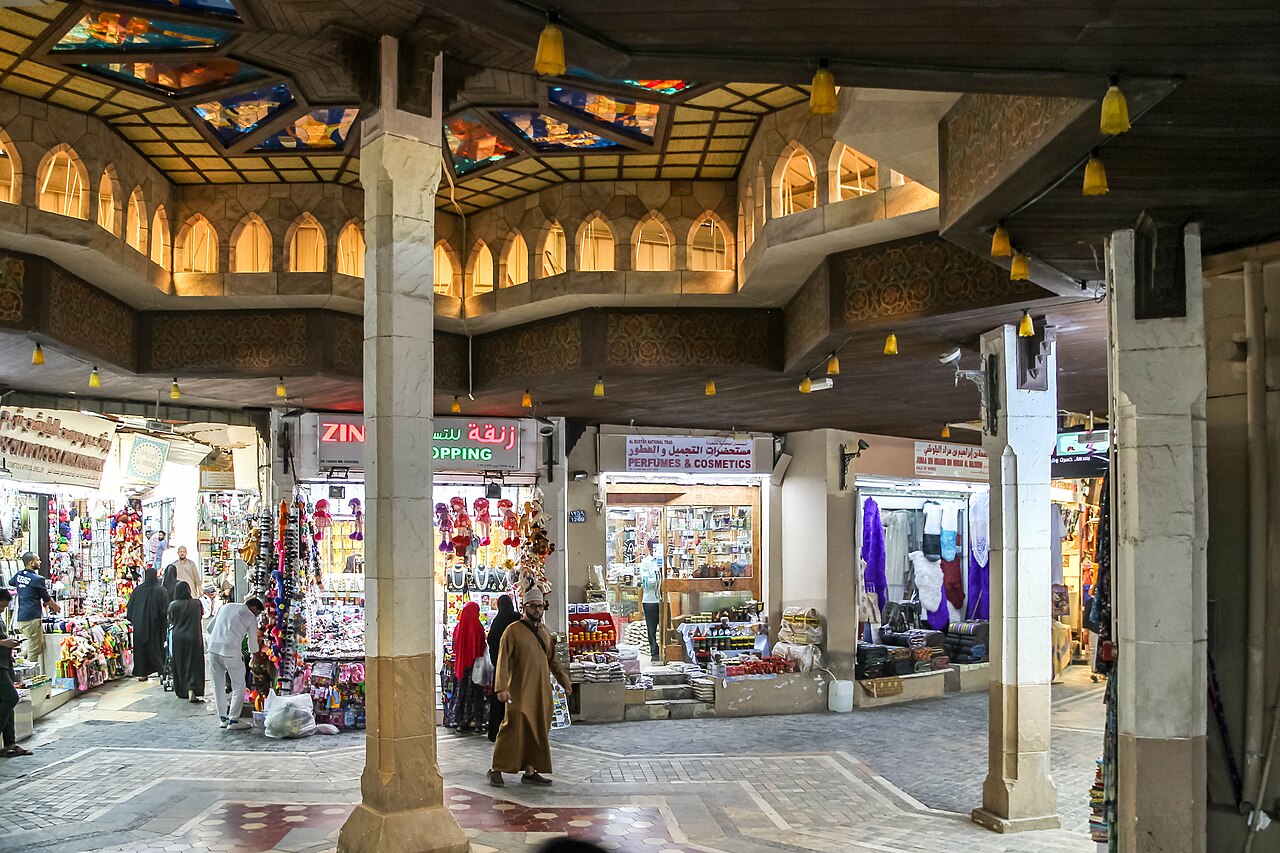
Come after about 5:00 pm, when the shops reopen for the evening and the lanes cool down. Insider tip: the first price is theatre — counter at roughly half and settle somewhere in between. For frankincense, the top grade is hojari (pale green, from the Dhofar region in the south); if you want guaranteed quality without the bargaining, the fixed-price Amouage and heritage perfume shops anchor the honest end of the market.
4. Mutrah Corniche and Fort
The Corniche is a roughly three-kilometre waterfront promenade curving around Mutrah's harbour, lined with restored merchant houses and moored dhows, and anchored by a striking modern covered fish market on the water. Above it sits Mutrah Fort, a 16th-century Portuguese watchtower reached by a short but steep stair climb; the reward is a sweeping view over the harbour and the Sultan's yacht. The fort charges a small ticket (around 5.5 OMR / $14 for non-Omani adults).

Insider tip: walk the Corniche around 5:00-6:00 pm, when the light turns gold on the water and the heat drops; start at the fish market end and finish at the souq, which is right there for the evening. The whole stretch is flat, free and the best people-watching in the city.
5. Al Jalali and Al Mirani Forts, Old Muscat
Guarding the mouth of the old harbour are the twin forts of Al Jalali and Al Mirani, built by the Portuguese in the 1580s on rocky outcrops that drop straight into the sea. They are among the most photographed structures in Oman, yet most visitors never go inside: Al Jalali is generally closed to the public (it opens only for occasional cultural events), and Al Mirani the same. You view them, for free, from the waterfront in Old Muscat.

Insider tip: the cleanest shot is from the small corniche beside Al Alam Palace, or from the water on a short harbour boat trip out of Mutrah. Go in the morning, when the sun is behind you and the stone glows; by midday the forts are back-lit and hazy.
6. Al Alam Palace
Flanked by those forts sits Al Alam Palace, the ceremonial palace of the Sultan, instantly recognisable for its flared gold-and-turquoise columns that look almost cartoonish up close — in the best way. You can't go inside, but you can walk the gated forecourt and its flower-lined approach and photograph the facade head-on. Entry to the square is free.

Insider tip: do this first thing, before 10:00 am, and pair it with the National Museum directly opposite — the two, plus the fort views, make a tidy Old Muscat morning. Light is best early; by afternoon you are shooting into the sun and the forecourt bakes.
7. National Museum of Oman
Opened in 2016 across from Al Alam Palace, the National Museum is the best single primer on the country: 14 galleries spanning Oman's maritime empire, frankincense trade, falaj irrigation and the modern renaissance, with Arabic Braille built into the design throughout. Adult entry is 5 OMR (about $13 / €11). It is open Saturday to Thursday 10:00 am to 5:00 pm (last tickets 4:30 pm) and Friday 2:00 to 6:00 pm, on Al Saidiya Street in Old Muscat.
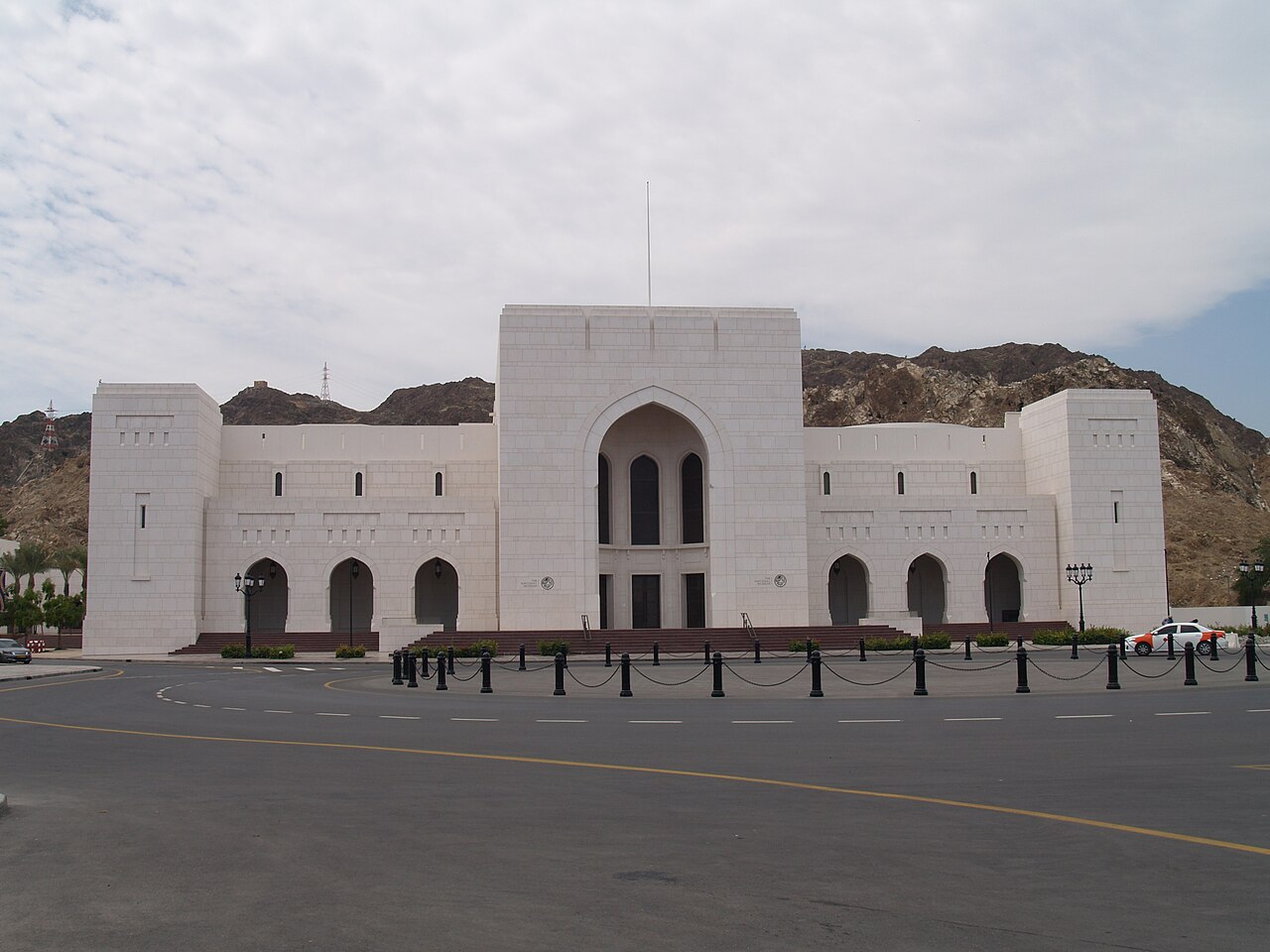
Insider tip: two hours is plenty, and the air-conditioning makes it a smart midday stop between morning fort-spotting and an afternoon on the coast. The Arabian horse and maritime galleries are the standouts — head there first if you are short on time.
8. Wadi Shab (Day Trip)
The single best day out from Muscat is Wadi Shab, a canyon about a two to two-and-a-half-hour drive east past Quriyat. From the car park you cross a lagoon by a small boat (around 1 OMR return), then hike roughly 45 minutes along the gorge past date palms and emerald pools to a hidden cave at the end — you swim the last stretch and squeeze through a narrow gap to reach a waterfall inside the rock.
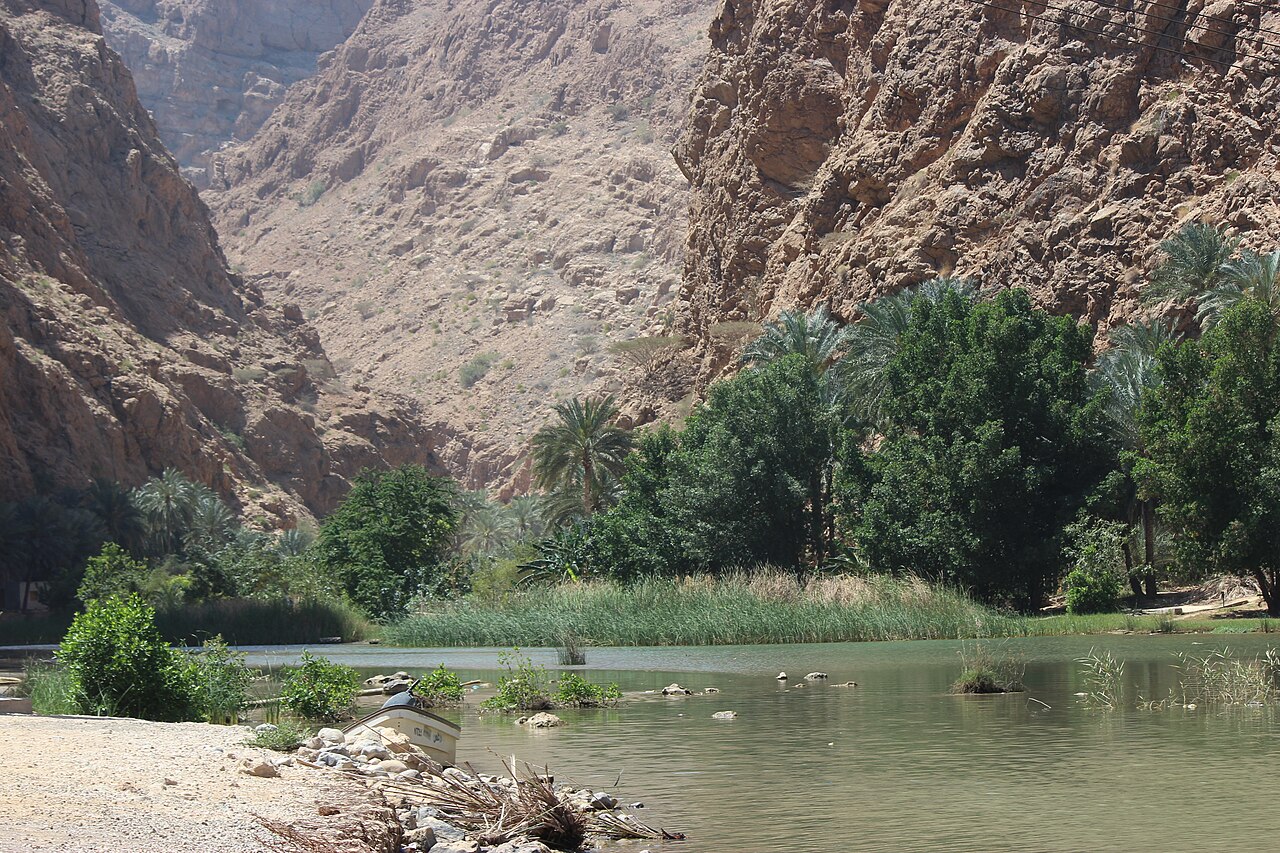
On the way, stop at Bimmah Sinkhole (free), a collapsed limestone crater of startlingly blue-green water where you can swim, about 30 minutes before Wadi Shab. Insider tip: start early, bring water shoes and a dry bag, and skip the trip entirely if rain is forecast anywhere upstream — wadis flash-flood fast. The cave swim is not for non-swimmers.
🗓️ How to Spend Three Days in Muscat
This plan assumes you are based around Mutrah or Qurum and have a car for day three. Costs below are per person and verified for 2026.
Day 1 — Old Muscat and Mutrah
Start in Old Muscat: the National Museum (5 OMR / $13) at opening, then walk across to Al Alam Palace and the fort viewpoints (free). Drive or taxi the 10 minutes to the Mutrah Corniche for lunch at Bait Al Luban, which serves Omani classics with harbour views (mains roughly 4-7 OMR / $10-18). Spend the afternoon climbing Mutrah Fort (~5.5 OMR) and strolling the Corniche, then finish in Mutrah Souq as it reopens around 5:00 pm. Day's fixed costs: about 15 OMR ($39) plus food.
Day 2 — Grand Mosque, Opera House and the Coast
Be at the Sultan Qaboos Grand Mosque for its 8:30 am opening to beat the crowds (dress code enforced; confirm any new entry ticket). Mid-morning, head to Madinat Sultan Qaboos for lunch at Kargeen Caffe, a lantern-lit garden restaurant (mains ~5-8 OMR / $13-21). In the afternoon, take the 3:00 pm Royal Opera House guided tour (2 OMR / $5.20) or unwind on Qurum Beach. In the evening, catch an Opera performance if one is on, or have dinner at Ubhar in Bareeq Al Shatti for modern Omani cooking (mains ~6-9 OMR / $16-23).
Day 3 — Wadi Shab and Bimmah Sinkhole
Pick up a rental car (~15-20 OMR / $39-52 a day; fuel is cheap at roughly 0.23 OMR a litre) or join a guided day tour (around 55-75 OMR / $140-195 per person with lunch). Leave Muscat by 8:00 am, swim at Bimmah Sinkhole first (free), then drive on to Wadi Shab for the boat crossing (~1 OMR) and the hike to the cave waterfall. You will be back in the city by early evening, salty and happy. Self-driving keeps this day to about 25 OMR ($65) all in.
❓ Essential Muscat Travel Tips
When is the best time to visit Muscat?
Target October to March, when daytime temperatures hover around 25-30°C and evenings are cool enough to walk the Corniche comfortably. December and February are the busiest and priciest months. June to August is brutal — over 40°C with sticky coastal humidity — and only worth it if you are continuing to Salalah in the far south, which turns green during the khareef monsoon. The Muscat Festival, with crafts, heritage villages and fireworks, typically runs in January and February. Note that Ramadan (around late February to late March in 2026) brings reduced hours at many venues and a daytime ban on eating or drinking in public.
How do you get around Muscat?
From the airport, the Mwasalat Route 1 'MCT Express' bus runs to Ruwi and Mutrah for about 0.500 OMR ($1.30 / €1.10) — pay the driver and carry small notes. An airport taxi runs 8-15 OMR ($21-39); they rarely use meters, so agree the price before you get in. Around town, the main ride-hailing app is OTaxi (now booked through the Yango app), with Careem also operating; both beat flagging down the unmetered orange-and-white street taxis. Muscat is spread out and public buses are limited, so most visitors lean on apps in the city and a rental car for the mountains and wadis — Oman drives on the right, roads are excellent, and fuel is cheap.
Is Muscat safe for tourists?
Very. Oman consistently ranks among the safest countries in the Middle East, and crime against tourists is rare. The genuine risks are practical: unmetered taxis that quote inflated fares (agree first or use an app); heat, which can be dangerous in summer; and flash floods, which can fill a dry wadi in minutes after rain, so never hike Wadi Shab if storms are forecast upstream. Dress modestly in public — shoulders and knees covered, swimwear only at hotel or private beaches — and remember alcohol is served only in licensed hotels and restaurants. On Fridays, many shops and the souq close around midday for prayers. Solo female travellers generally report feeling comfortable, with modest dress the main courtesy.
What and where should you eat in Muscat?
Omani food is gentle, spiced and built around rice and slow-cooked meat. The signature dish is shuwa — lamb or goat marinated, wrapped in palm leaves and cooked in an underground pit for a day or more, traditionally for Eid; try it at Ramssa in Al Khuwair. Also look for majboos (saffron-spiced rice with meat or fish), mashuai (spit-roasted whole kingfish), and mishkak, the grilled meat skewers sold at roadside stalls in the evening. Finish with Omani halwa, a glossy rosewater-saffron-cardamom sweet, served with kahwa (cardamom coffee) and dates. Reliable tables: Bait Al Luban on the Mutrah Corniche, Kargeen Caffe in Madinat Sultan Qaboos, Ubhar in Bareeq Al Shatti for a modern take, and Mumtaz Mahal in Qurum for Indian food with park views. Mains run roughly 4-9 OMR ($10-23).
🏨 Where to Stay in Muscat
Muscat is long and thin, so where you sleep shapes your trip. Mutrah is the most atmospheric and walkable; Qurum and Shatti Al Qurum put you near beaches and the Opera House; Barr Al Jissah is for resort seclusion.
Budget ($40-80 / 15-30 OMR a night)
Base yourself in Mutrah or Ruwi, where simple hotels and guesthouses start around $42 a night and put you within walking distance of the souq, the Corniche and Old Muscat. This is the best-value, most characterful corner of the city for travellers watching costs, and it is well connected by the airport bus.
Mid-range ($90-180 / 35-70 OMR a night)
Look at Qurum, Shatti Al Qurum and Al Khuwair for beach access, dining and proximity to the Royal Opera House. The Crowne Plaza Muscat sits on a low cliff above Qurum beach, the Grand Hyatt Muscat anchors the Shatti strip, and apartment-style options like Fraser Suites suit longer stays or families.
Luxury ($250-700+ / 95-270 OMR a night)
Oman's grand resorts are a genuine draw. Al Bustan Palace, a Ritz-Carlton Hotel, occupies a dramatic bay between Old Muscat and the mountains, with a soaring atrium and private beach. The Chedi Muscat in Ghubrah is the design-lover's pick, all minimalist pavilions and a 103-metre lap pool. Shangri-La Al Husn at Barr Al Jissah is the clifftop, adults-oriented wing of a three-hotel resort south of the city, built for pure switch-off.
❤️ Beyond the Tourist Trail in Muscat
Once you have the headline sights, Muscat rewards a little wandering. Al Mouj Muscat (formerly The Wave), a marina district west of the airport, has become the city's best waterfront-dining strip, with a Greg Norman-designed golf course and sunset dhow cruises leaving from the marina — a very different, contemporary slice of the city.
For nature closer in, head to Qantab and Bandar Khayran, a fishing village and a protected network of coves and mangroves just southeast of Muscat where you can kayak and snorkel; boats run from Marina Bandar Al Rowdha. Back in town, Qurum Natural Park is a free, green breathing space popular with local families at dusk, and the beaches at Azaiba and Ghubrah fill with kite-surfers and picnicking Omani families on weekend evenings — the best window into everyday Muscat life. If your dates line up, the Muscat Festival (January to February) and the Royal Opera's October-to-May season are the two events worth planning around.
❓ Muscat FAQ
How many days do you need in Muscat?
Three days is the sweet spot: two for the city (Old Muscat, Mutrah and the Grand Mosque) and one for a day trip east to Wadi Shab and Bimmah Sinkhole. Add a fourth or fifth day if you want to reach Nizwa and the Hajar Mountains inland.
What is the best time to visit Muscat?
October to March, when daytime highs sit around 25-30°C and evenings are pleasant. December and February are peak season. Avoid June to August, when temperatures top 40°C with heavy coastal humidity.
How do you get from Muscat airport to the city centre?
Muscat International Airport is about 30 km (30 minutes) from the centre. The Mwasalat Route 1 'MCT Express' bus runs to Ruwi and Mutrah for roughly 0.500 OMR (about $1.30 / €1.10). An airport taxi costs around 8-15 OMR ($21-39 / €18-33) and has no meter, so agree the fare first or book through the OTaxi or Careem app.
Is Muscat safe for tourists?
Oman is one of the safest countries in the Gulf and violent crime against visitors is rare. The real risks are road-related and heat-related rather than crime. Agree taxi fares before you ride or use an app, dress modestly (cover shoulders and knees), and never enter a wadi when rain is forecast because of flash floods.
What should you eat in Muscat?
Try shuwa (lamb or goat spiced and slow-cooked underground for a day or more), majboos (spiced saffron rice with meat or fish), mashuai (spit-roasted kingfish), mishkak (grilled skewers from street stalls) and Omani halwa with cardamom kahwa. Bait Al Luban on the Mutrah Corniche and Kargeen Caffe in Madinat Sultan Qaboos are reliable places to start.
Do you need to book anything in advance in Muscat?
Book Royal Opera House performance tickets online before you arrive, since popular nights sell out. Reserve a rental car ahead if you plan to drive to Wadi Shab or Nizwa. The Sultan Qaboos Grand Mosque needs no booking, but non-Muslim visitors can only enter during a strict morning window (roughly 8:30-11:00 am, Saturday to Thursday).
Do I need a visa for Oman?
It depends on your passport. More than 100 nationalities can now enter Oman visa-free for short stays, while others apply for a tourist e-visa (10-day or 30-day) through the Royal Oman Police eVisa portal at evisa.rop.gov.om. Confirm the current rule for your nationality before you travel.
Where should you stay in Muscat?
Stay in Mutrah for atmosphere, budget rooms and walkable access to the souq and Old Muscat; in Shatti Al Qurum or Qurum for beaches, dining and the Opera House; or at Barr Al Jissah for secluded clifftop resorts. Prices range from about $42 a night for simple Mutrah hotels to $250-700+ for the big beach resorts.
🧭 Plan Your Muscat Trip with VoyaBear
Muscat rewards a plan that threads its morning-only mosque window, its afternoon heat and its two-hour wadi drives into days that actually flow — and that is exactly what VoyaBear does. Tell us your dates, your budget and whether you are here for the forts, the food or the canyons, and we will build you a personalised Muscat itinerary with the timings, bookings and local spots already sorted. Start planning your Oman trip with VoyaBear today and spend your time swimming in Wadi Shab instead of second-guessing the schedule.
Want this as an actual itinerary?
VoyaBear turns a guide like this into a day-by-day plan built around how you travel.
Plan my trip free