Phnom Penh 2026: The Complete Guide to Cambodia's Capital
1 November 2026 · 22 min read

🏙️ Phnom Penh in 2026: Why Go Now
Phnom Penh is the Southeast Asian capital people skip, usually on their way between Siem Reap's temples and the islands down south, and they are wrong to. This is a low-rise city of about two million people at the confluence of the Mekong and the Tonle Sap, where saffron-robed monks share the sidewalk with Lexus SUVs, a plate of noodles costs a dollar, and the two defining sites, the Royal Palace and the former S-21 torture prison, sit barely two kilometers apart. It is a city you come to in order to understand Cambodia, not to tick off a skyline.
There is also a practical reason 2026 is a good year to come. In September 2025 the city opened the brand-new Techo International Airport south of town, replacing the cramped old Pochentong terminal, so arrivals are smoother than they have been in years. The riverfront promenade along Sisowath Quay has been cleaned up, the café-and-gallery scene in BKK1 and around the Russian Market keeps expanding, and prices remain some of the lowest of any Asian capital. What follows is a grounded, checked guide to doing it well: what to see, what to skip, what it costs, and where to sleep and eat.
💡 Quick Answer: Phnom Penh at a Glance
The essentials, if you only read one section before you go:
- How many days? 2-3 days covers the palace, the museums, the two genocide memorials, the markets and a river cruise.
- Best time to visit: November-February (dry, around 30-31°C, lower humidity). Water Festival falls 23-25 November 2026.
- Book ahead: Not much needs booking. Reserve a well-rated hotel ($40-80) in peak season; buy palace ($10) and museum tickets at the gate.
- Airport to center: Techo International Airport (opened Sept 2025), ~20-30 km south. Grab/PassApp car ~$16; taxi from $35.
- Getting around: The PassApp and Grab apps for tuk-tuks and cars; short hops are $1.50-3.
- Daily budget: ~$30-45/day backpacking, ~$80-150 mid-range including a nice hotel, meals and sites.
- Currency: US dollars for everything; riel (~4,000 = $1) only for change under a dollar.
- Top safety note: Watch for motorbike bag-snatchers on the riverside; keep bags away from the road.
🎭 The Best Things to Do in Phnom Penh
Eight sites earn their place on a first visit. Two of them, Tuol Sleng and Choeung Ek, are difficult, and you should plan your day so you are not doing anything frivolous straight afterward.
1. The Royal Palace and Silver Pagoda
The official residence of King Norodom Sihamoni is a compound of gilded, steep-roofed pavilions built from 1866, and the Throne Hall, with its 59-meter spire, is the postcard shot. Inside the same walls is the Silver Pagoda, named for the 5,000 silver floor tiles (most now covered to protect them) and home to a life-size gold Buddha set with more than 2,000 diamonds. You can't enter the royal living quarters, but the Throne Hall, the Napoleon III Pavilion and the pagoda are all open.

Insider tip: The palace opens at 08:00 and closes for lunch (11:00-14:00), so arrive at opening to walk the grounds before the tour buses and the heat land together. Dress code is strictly checked after the ticket desk: cover shoulders and knees, or buy a $3 sarong or t-shirt at the gate. Cost: $10, open 08:00-11:00 and 14:00-17:00.
2. Tuol Sleng Genocide Museum (S-21)
This was Chao Ponhea Yat High School until 1975, when the Khmer Rouge turned its classrooms into Security Prison 21, where around 15,000 people were interrogated, tortured and sent to their deaths. The buildings are left much as they were found: iron bed frames, the regime's own mug shots of prisoners filling entire rooms, and the crude brick cells built into former classrooms. A handful of survivors are still alive, and some sign books on site.

Insider tip: Pay the extra $5 for the audio guide; it is narrated with survivor testimony and is one of the best museum audio guides anywhere, and it keeps you from needing a loud live tour group nearby. Go in the morning when it is cooler and quieter, and leave time to sit afterward. Cost: $5 entry plus $5 audio guide, open 08:00-17:00.
3. Choeung Ek, the Killing Fields
About 15 km south of the center is the orchard where prisoners from S-21 were brought to be killed and buried in mass graves. The memorial stupa at its heart is filled with more than 8,000 skulls, arranged behind glass by age and by the manner of death. The audio guide walks you between the excavated grave pits and the chankiri tree, and it does so with restraint rather than sensationalism. It is quiet, green, and devastating.
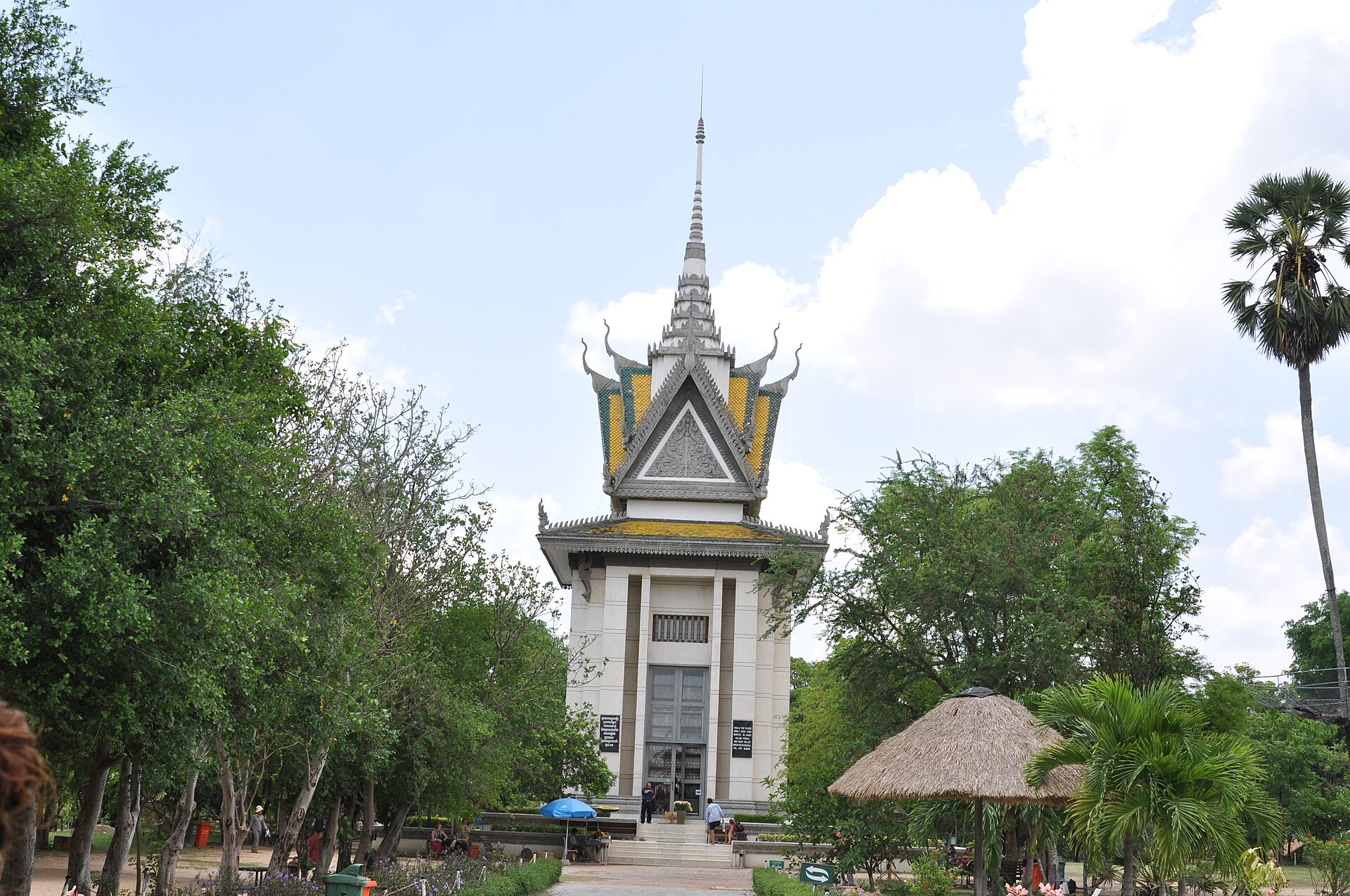
Insider tip: Pair it with S-21 on the same day, S-21 first, Choeung Ek second, so the story runs in order. A tuk-tuk out and back with waiting time costs roughly $20-25; the ride takes about 45 minutes each way. Cost: $6 including the audio guide, open 07:30-17:30.
4. The National Museum of Cambodia
The terracotta-red, Khmer-roofed building just north of the Royal Palace holds the world's best collection of Khmer sculpture, spanning the pre-Angkorian, Angkorian and post-Angkorian periods. The standout is an eight-armed Vishnu from the 6th century and a serene, much-photographed statue of a reclining bronze Vishnu recovered from the Western Mebon at Angkor. The galleries open onto a planted central courtyard with lotus ponds that is a cool place to pause.

Insider tip: It is a 10-minute walk from the Royal Palace, so do both in one morning. Photography is not allowed inside the galleries but is fine in the courtyard. Allow about an hour. Cost: $10, open 08:00-17:00.
5. Wat Phnom
The temple that gave the city its name sits on the only hill in town, a 27-meter artificial mound topped by a whitewashed stupa. Legend says a woman named Penh found four Buddha statues in the river in 1372 and built a shrine on the hill to house them, hence Phnom Penh, ‘Penh's hill.’ You climb a naga-flanked staircase guarded by stone lions to reach the vihara, which is still an active place of worship where locals come to pray for luck before exams and business deals.
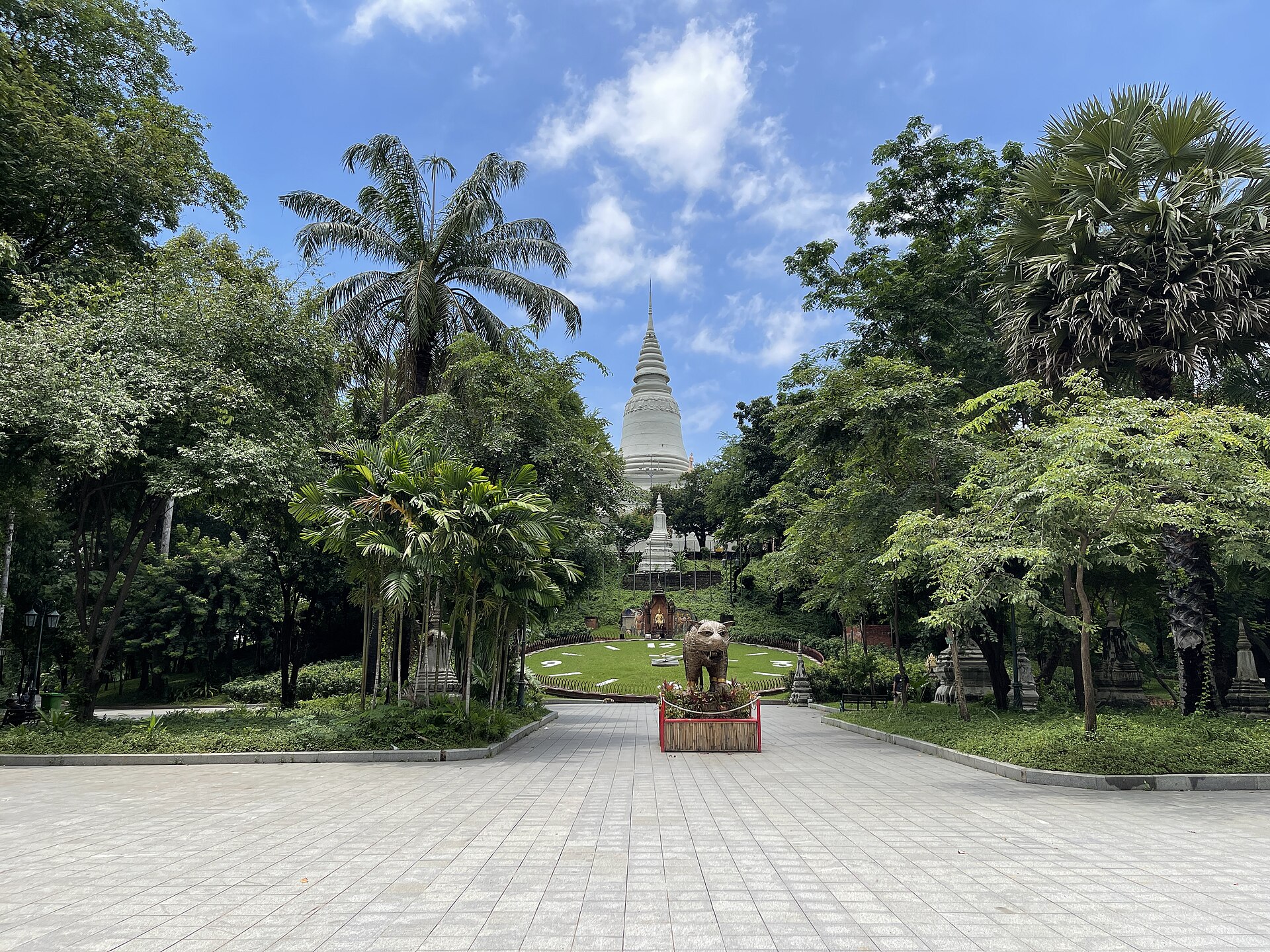
Insider tip: It is a quick 20-30 minute stop, best in the late afternoon when the light softens. Ignore anyone offering caged birds to ‘release for merit’; the birds are recaught, and it funds the trade. Cost: $1, open roughly 07:00-18:00.
6. Central Market (Phsar Thmei)
Forget the goods for a second and look up: the 1937 Art Deco market is one of the finest buildings in the city, a vast ochre-yellow dome with four vaulted arms radiating out, and it was briefly one of the largest markets in Asia. Under the dome you'll find watches, electronics, jewelry and souvenirs; the wings sell flowers, fabric and fresh food. It is more polished and less pungent than the Russian Market, which makes it an easy first market.
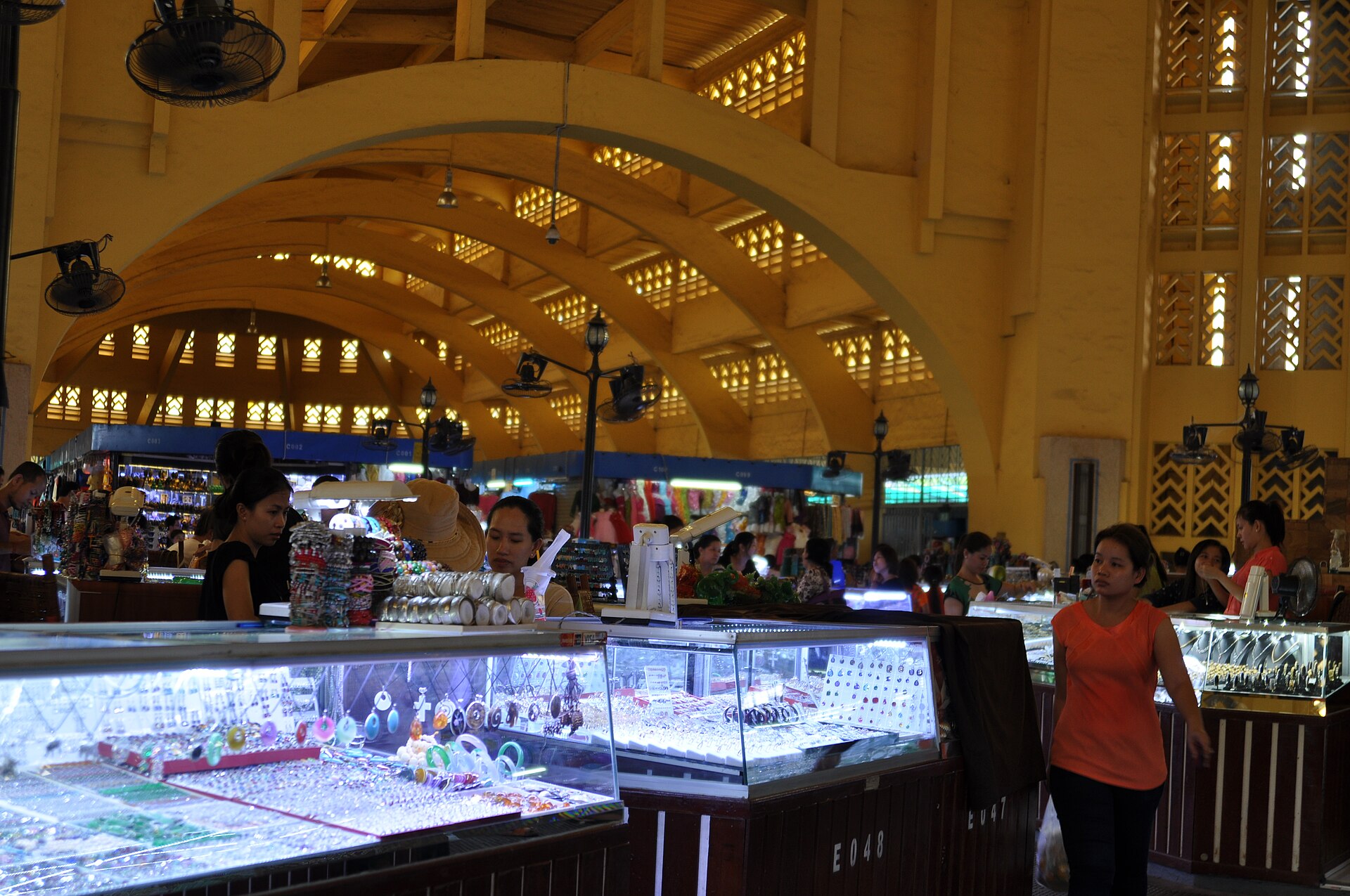
Insider tip: Prices start high for foreigners, so haggle to about half the opening number and be ready to walk. Come before 10:00 for the food wings at their freshest and the heat under the dome at its most bearable. Cost: Free to enter, open roughly 08:00-17:00.
7. The Russian Market (Phsar Toul Tom Poung)
Named for the Soviet expats who shopped here in the 1980s, this is the market locals and long-stay expats actually use. It is a hot, tight warren of stalls selling knock-off clothing straight from the nearby garment factories, silk scarves, silver, carvings and hardware, with a food court wedged in the middle. The surrounding Toul Tom Poung neighborhood has turned into the city's design-and-café district, so you can shop and then recover over coffee next door.

Insider tip: Find the coffee stall that has run from the center of the market since 1980 and order an iced Khmer coffee for about $1. The market is cramped and poorly ventilated, so go in the morning before it turns into a sauna. Cost: Free to enter, open roughly 07:00-17:00.
8. Sisowath Quay and a sunset river cruise
The riverfront promenade runs for about three kilometers along the Tonle Sap, lined with bars, restaurants and the ornate Wat Ounalom, the headquarters of Cambodian Buddhism. In the late afternoon the whole city seems to come out to walk, exercise and eat. The best way to see it is from the water: small tourist boats leave from the quay for a one- to two-hour sunset cruise up to the point where the Tonle Sap meets the Mekong.

Insider tip: Group sunset cruises run about $15-20 per person and usually leave around 16:30; simpler no-frills boats can be haggled for less if you walk the quay and ask directly. A four-course dinner cruise runs around $26. Bring a light layer, as it gets breezy on the water. Cost: From about $15 per person.
🗓️ How to Spend Three Days in Phnom Penh
This itinerary front-loads the heavy history on day one while you are fresh, then lightens up. Everything is walkable or a $1.50-3 tuk-tuk ride apart.
Day 1: The history (Royal Palace, S-21, Killing Fields)
Start at the Royal Palace at 08:00 opening ($10), then walk 10 minutes to the National Museum ($10) and give it an hour. Grab lunch on the riverside, then take a tuk-tuk to Tuol Sleng (S-21) ($5 + $5 audio) in the early afternoon. From there, ride 45 minutes south to Choeung Ek ($6) and arrive mid-afternoon; have the driver wait. A tuk-tuk for the S-21-to-Choeung-Ek round trip is about $20-25. Keep the evening quiet; a simple dinner near your hotel is the right call after a day like this.
Day 2: Markets, temples and the river
Begin at the Central Market ($0) under its Art Deco dome before the heat builds, then tuk-tuk to the Russian Market ($0) for souvenirs and a $1 iced coffee. In the afternoon, climb Wat Phnom ($1) and wander the colonial streets of Daun Penh around the old Post Office. At 16:30, join a sunset cruise (from $15) on the Tonle Sap. Round the night off with dinner at Romdeng or Friends the Restaurant, two training restaurants that put former street youth through hospitality programs; mains run roughly $6-9.
Day 3: Neighborhoods, art and a slower pace
Spend the morning in BKK1, the leafy embassy district, over brunch and in its independent boutiques, or ride out to Factory Phnom Penh ($0 to enter), a former Levi's garment factory on National Road 2 now full of art galleries, a skate park, a craft brewery and cafés. In the late afternoon, have a drink on tiny Bassac Lane in Tonle Bassac, then go up to the Sora Sky Bar on the 37th floor of Rosewood Phnom Penh for the best view in the city. If you have a half-day to spare, the silk-weaving island of Koh Dach is a short ferry ride north.
🧠 Essential Phnom Penh Travel Tips
When is the best time to visit Phnom Penh?
Aim for the cool dry season, November to February, when daytime highs sit around 30-31°C and humidity drops. The hot season, March to May, pushes past 35°C and is genuinely draining if you are walking between sites. The wet season runs May to October, with short, heavy afternoon downpours that rarely ruin a whole day but will flood a few streets. The big date for 2026 is the Water Festival (Bon Om Touk) on 23-25 November, three days of long-boat racing on the Tonle Sap and illuminated boats at night; it is a spectacle, but the city is packed and hotel prices jump, so book weeks ahead.
How do you get around Phnom Penh?
Download PassApp and Grab before you arrive. Both summon metered tuk-tuks (the little rickshaw-style ones and the newer enclosed ‘remorque’ type) and air-conditioned cars, which spares you haggling every single time. A short cross-town tuk-tuk hop is $1.50-3; a car is a few dollars more. From Techo International Airport, around 20-30 km south, a Grab or PassApp car into town is about $16, a licensed taxi starts at $35, and the public shuttle bus is around $0.40 but slow. Traffic is chaotic and lane discipline is theoretical, so don't rent a scooter unless you are a confident rider.
Is Phnom Penh safe for tourists?
Yes, broadly. Violent crime against tourists is uncommon, and the city is easy to walk in daylight. The real and persistent problem is bag- and phone-snatching by thieves on motorbikes, concentrated along the riverside, near the markets and in slow traffic. Wear your bag across your body on the side away from the road, don't stand at the curb scrolling your phone, and don't drape a camera over one shoulder. Be wary of late-night tuk-tuks hailed on the street; use the app instead. Scam-wise, agree tuk-tuk fares before you set off if you are not using an app, and ignore anyone steering you toward a ‘special’ gem or tailor shop.
What should you eat in Phnom Penh?
Cambodian food is milder and more herbal than Thai, and Phnom Penh is the best place to learn it. The national dish is fish amok, a coconut-and-fish curry steamed to a mousse in banana leaf. For breakfast, locals eat kuy teav, a clear pork-and-rice-noodle soup you dress yourself, or bai sach chrouk, grilled marinated pork over broken rice, best at the long-running stall on the corner of Streets 13 and 100 opposite the Post Office. Chase down num banh chok (rice noodles under a green fish-curry gravy) at the Orussey Market food court. For a sit-down meal with a conscience, Romdeng and Friends the Restaurant train former street youth and serve excellent Khmer food for roughly $6-9 a main; Malis is the city's benchmark upscale Khmer kitchen. And yes, the riverside fried tarantulas and crickets are real, but they are priced for tourists.
🏨 Where to Stay in Phnom Penh
Three areas make sense. Riverside / Daun Penh puts you in walking distance of the Royal Palace and National Museum but is the busiest and most touristy. BKK1 (Boeng Keng Kang 1) and neighboring Tonle Bassac are where the cafés, bars and better-value boutique hotels cluster. Toul Tom Poung, around the Russian Market, is the value-and-design pick, about a 20-minute tuk-tuk from the river.
Budget ($6-20 a night)
Hostels are excellent value. Onederz, near the Night Market, has a rooftop pool and clean dorms; Mad Monkey is the social, party-leaning option with its own pool. Expect dorm beds around $6-12 and basic private rooms from about $15-20.
Mid-range ($40-120 a night)
This is the sweet spot in Phnom Penh, where $60-80 buys a genuinely stylish room with a pool. Look at the Patio Hotel & Urban Resort in BKK1 (rooftop pool, on Langka Lane), Penh House Hotel near the river, or the colonial-style Plantation Urban Resort & Spa with its large garden pool.
Luxury ($150-500 a night)
At the top end, the 1929 Raffles Hotel Le Royal is the historic grande dame, all colonial elegance and a famous bar. Rosewood Phnom Penh occupies the top floors of the city's tallest tower and runs the Sora Sky Bar on the 37th floor; the Hyatt Regency is a polished, central modern option.
❤️ Beyond the Tourist Trail
Once you have done the headline sights, Phnom Penh rewards a slower look. Factory Phnom Penh is the clearest sign of the city's creative turn: a 3.4-hectare former Levi's garment factory on National Road 2, about 2 km south of the center, converted in 2018 into a hub of art galleries (several run by Kbach Arts), a skate park, a trampoline park, a craft brewery, a cinema and co-working space. It is free to wander and best on an evening or weekend when events are on.
For a drink, skip the raucous riverside bars and find Bassac Lane in Tonle Bassac, a narrow alley of tiny, individually themed cocktail bars run by one local hospitality group. For shopping with actual design behind it, the streets around the Russian Market in Toul Tom Poung are full of independent boutiques selling Cambodian-made homeware, jewelry and clothing, a world away from the market's knock-offs. And if your trip lands on 23-25 November 2026, the Water Festival (Bon Om Touk) turns the riverfront into the biggest party of the Cambodian year, with hundreds of long boats racing on the Tonle Sap; just plan your transfers around the crowds, because central streets close and traffic seizes up after dark.
❓ Phnom Penh FAQ
How many days do you need in Phnom Penh?
Two to three days is right for Phnom Penh. Two days covers the essentials: the Royal Palace, the National Museum, and the paired history of Tuol Sleng (S-21) and the Choeung Ek Killing Fields. A third day buys you the markets, a sunset river cruise, and time in the cafés and galleries of BKK1 and Toul Tom Poung. Most travelers treat the city as a one- or two-night stop between Siem Reap and the coast, and that works.
What is the best time to visit Phnom Penh?
November to February is the best window: the dry season brings daytime highs around 30-31°C, lower humidity, and cooler evenings. March to May is the hot season, when temperatures climb past 35°C. The rains run roughly May to October. For 2026, the Water Festival (Bon Om Touk) falls on 23-25 November, when boat races and illuminated floats take over the riverfront and the city fills up, so book accommodation early if you want to be there.
How do you get from Techo International Airport to central Phnom Penh?
Phnom Penh's airport is now Techo International Airport (KTI), which opened to passengers on 9 September 2025 and replaced the old Pochentong airport. It sits roughly 20-30 km south of the center. A Grab or PassApp car runs about $16 and takes 45 minutes to an hour; a licensed airport taxi starts around $35; an app-booked tuk-tuk is about $7-8; and the public shuttle bus costs around $0.40 (1,500 riel) but takes 1.5-2 hours. Grab or PassApp is the sensible default.
Is Phnom Penh safe for tourists?
Phnom Penh is generally safe for visitors, with violent crime against tourists rare. The real risk is opportunistic bag-snatching by thieves on motorbikes, especially along the riverside and in traffic. Keep your bag on the far side from the road, don't hold your phone out near the curb, and use the in-app PassApp or Grab rather than flagging unmetered rides. Petty theft, not danger, is the thing to plan around.
How much does it cost to visit the Royal Palace in Phnom Penh?
Entry to the Royal Palace and the Silver Pagoda is $10, and the grounds are open 08:00-11:00 and 14:00-17:00. The dress code is enforced: shoulders and knees must be covered. If you turn up in shorts or a vest, you can buy a sarong or a t-shirt for about $3 at the entrance. Go for the 08:00 opening to beat both the tour groups and the midday heat.
What food should you try in Phnom Penh?
Start with fish amok, a mild coconut-and-fish curry steamed in banana leaf, and kuy teav, the pork-and-rice-noodle soup locals eat for breakfast. Then try num banh chok (rice noodles under a green fish-based curry gravy), sold at the Orussey Market food stalls, and bai sach chrouk (grilled pork over broken rice), found at the stall on the corner of Streets 13 and 100 opposite the main Post Office. A glass of iced Khmer coffee at the Russian Market stall running since 1980 costs about $1.
Do you need to book Tuol Sleng and the Killing Fields in advance?
No. You buy tickets at the gate. Tuol Sleng (S-21) charges $5 for entry plus $5 for the audio guide, which is worth taking, and is open 08:00-17:00. Choeung Ek, the Killing Fields, charges $6 including its excellent audio guide and is open 07:30-17:30. The two sites tell one connected story, so see S-21 first and Choeung Ek second; a tuk-tuk will do the round trip and wait for roughly $20-25.
What currency is used in Phnom Penh?
The US dollar is the everyday currency in Phnom Penh: ATMs dispense dollars, prices are quoted in dollars, and you pay for almost everything in them. Cambodian riel is used for change under a dollar, at roughly 4,000 riel to $1, so you'll get small riel notes back from a $1 purchase. Carry clean, untorn dollar bills, since worn or ripped notes are often refused.
🐻 Plan Your Phnom Penh Trip with VoyaBear
Phnom Penh is small enough to see in a few days but easy to get wrong if you misjudge the rhythm, the heat, or the order you tackle the heavy history in. That is where we come in. VoyaBear builds personalized, day-by-day trip plans around how you actually like to travel, matching the right neighborhoods, the right pace, and real places with real prices, whether Phnom Penh is a two-night stop or the start of a month across Cambodia. Tell us your dates and your style, and let VoyaBear turn this guide into an itinerary made for you.
Want this as an actual itinerary?
VoyaBear turns a guide like this into a day-by-day plan built around how you travel.
Plan my trip free