Pokhara 2026: The Complete Guide to Nepal's Lake and Mountain City
3 October 2026 · 11 min read
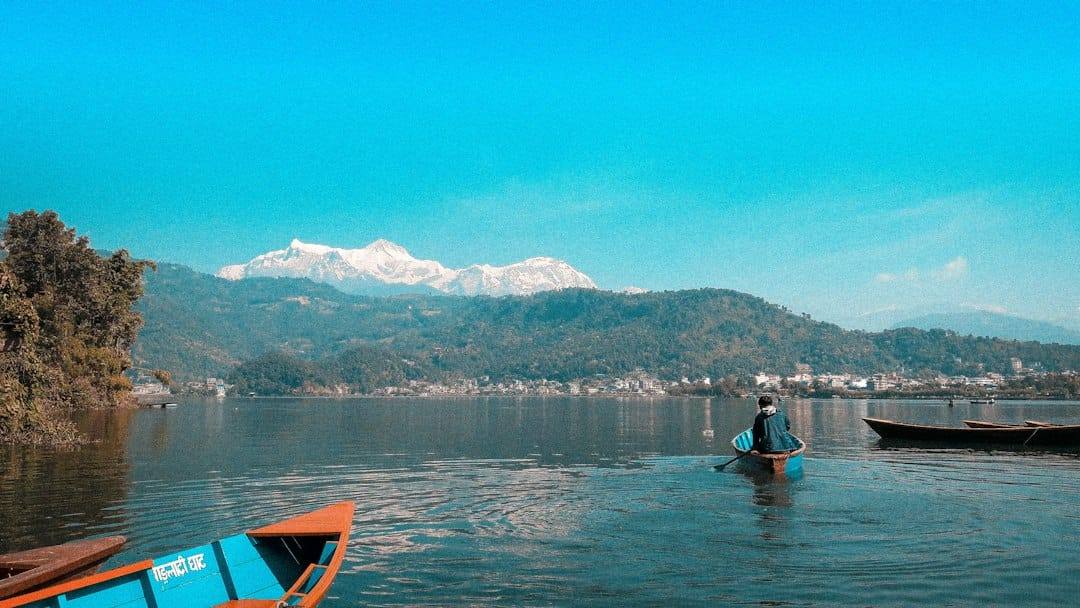
Pokhara earns its reputation in the ninety minutes after sunrise. On a clear October morning, Phewa Lake goes mirror-flat and throws back a full reflection of the Annapurna massif and Machhapuchhre, the 6,993-metre "Fishtail" peak that has never been climbed and, by government decree, never will be. Nepal's second-largest city sits at about 820 metres, which means you get an eight-thousander skyline without the altitude headache. It is the staging post for the Annapurna Circuit and the Annapurna Base Camp trek, but it has quietly become a destination in its own right: lakeside cafés, a brand-new airport, and more tandem paragliders overhead than you will see almost anywhere on earth.
Here is the thing most guides won't tell you plainly: Pokhara is a two-speed town. Lakeside (locally "Baidam") is the tourist strip, and it is unapologetically that. But the peaks, the water, and the old bazaar on the north end are the real reasons to come. This guide keeps you pointed at those, with the fares, fees, and timings checked for 2026 so you are not guessing at the boat dock.
🏔️ Essential Experiences
Phewa Lake and the Tal Barahi Temple
Phewa is the center of gravity in Pokhara, a 4.4-square-kilometre lake with the Annapurnas as a backdrop and a two-tiered pagoda temple marooned on a small island in its southeast corner. The temple, Tal Barahi, is dedicated to the goddess Barahi, a protective form of Durga, and locals row out to make offerings, especially on Saturdays. You reach it by boat from the Lakeside docks. A shared barge runs about NPR 100 return; a private paddle or rowboat is roughly NPR 600 for the temple crossing or NPR 1,500 per hour if you want to drift. Life jackets are mandatory and rent for NPR 20–30.
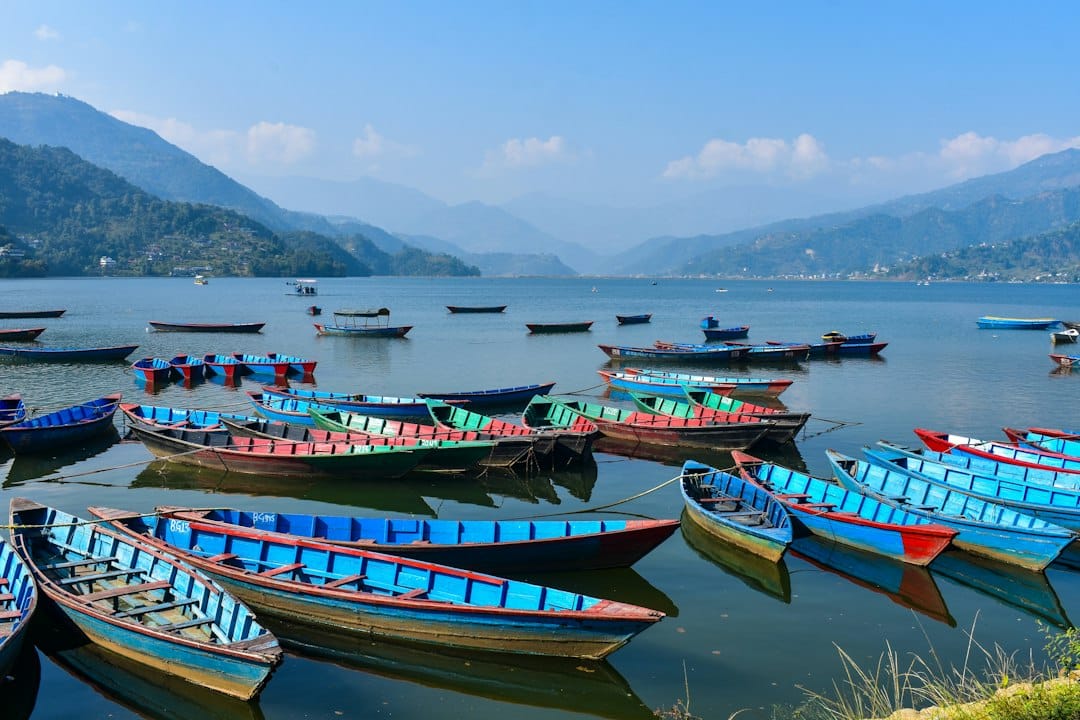
Insider tip: Go on a weekday. Saturday is the Nepali day of rest and the island fills with domestic pilgrims and a genuine queue for the boats. Boatmen will also tell you the cheap shared barge "isn't running" to steer you onto a private boat — ask at a second dock before you accept that. For the best Annapurna reflection, be on the water by 6:30–7:00 AM before the wind picks up and corrugates the surface.
Sarangkot Sunrise Viewpoint
Sarangkot is the ridge at 1,592 metres directly northwest of the lake, and it delivers the postcard: the sun climbing behind Annapurna II, Annapurna South, Machhapuchhre, and on the clearest mornings Dhaulagiri, 40 kilometres to the west. The viewing platform charges a token NPR 60 entry; you can also watch for free from the ground near the Ganesh temple just below.
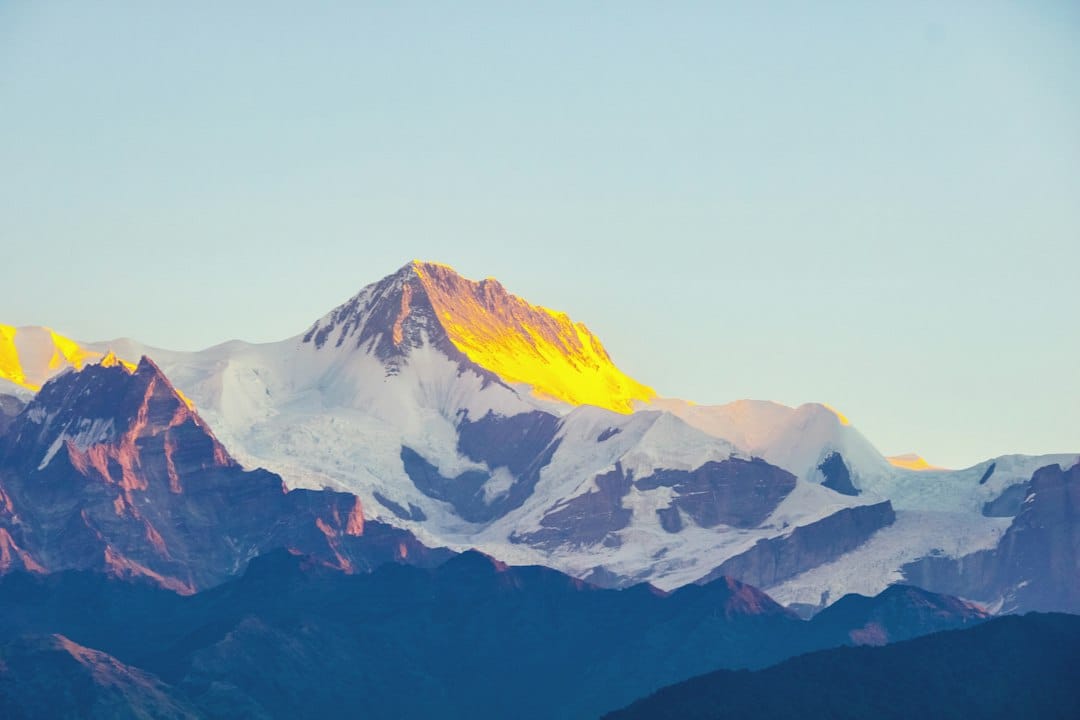
Insider tip: Book a taxi the night before for a 4:30 AM pickup — expect NPR 1,000–1,500 round trip for the 30–40 minute drive. The driver drops you a 15–20 minute walk below the top, so wear something other than flip-flops. Sunrise lands between roughly 5 and 6 AM depending on season; arrive by 5:15 to claim a spot on the platform before the tour vans disgorge. Skip the overpriced summit-café coffee and bring a thermos.
The World Peace Pagoda (Shanti Stupa)
The brilliant-white stupa on the Ananda hill across the lake was built by the Nipponzan-Myohoji, a Japanese Buddhist order founded by Nichidatsu Fujii that has raised peace pagodas worldwide; the Pokhara one was completed in 1999. It has four gilded Buddha statues facing the cardinal directions and, more to the point, a 360-degree terrace that takes in the lake, the city, and the Annapurna wall in one sweep. Entry is free.
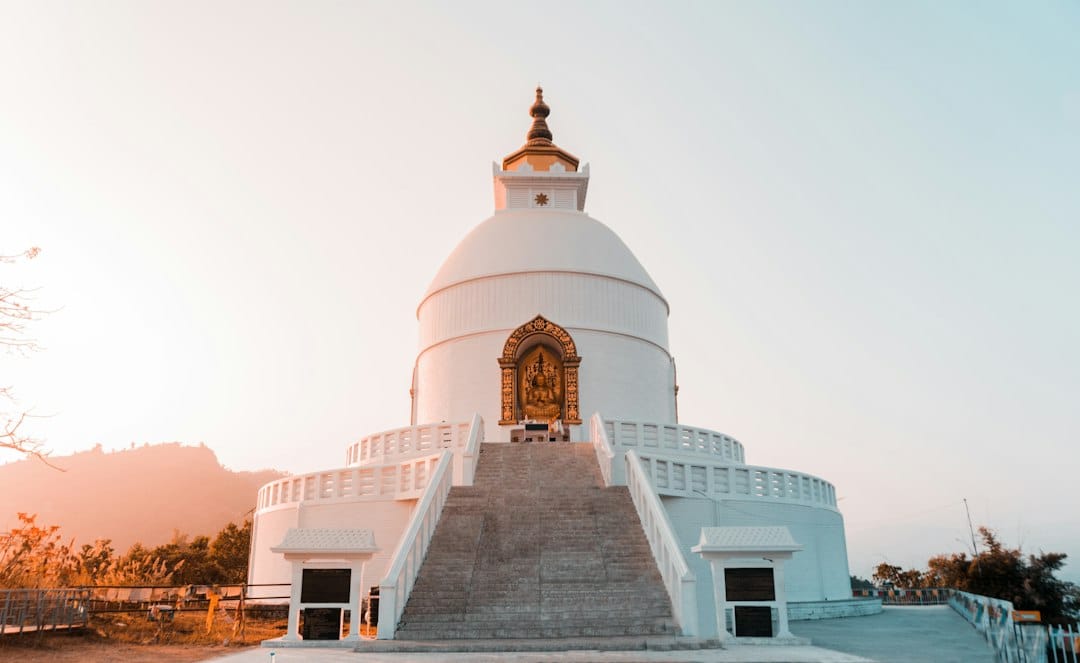
Insider tip: The scenic way is to row across Phewa (about NPR 800 one-way per person, NPR 1,200 return, plus the life jacket) and hike 45 minutes up through the forest — steep but shaded. If your knees object, a taxi runs the back road for about NPR 1,000, or NPR 1,500 if you want it to wait an hour and bring you back. Come for late afternoon, then walk down the Lakeside-facing trail to catch the sun dropping behind the ridge.
Paragliding off Sarangkot
Pokhara is one of the top five tandem paragliding sites on the planet, and the reason is geography: you launch from Sarangkot at 1,592 metres, ride reliable thermals with eight-thousanders on the horizon, and spiral down to a landing field beside Phewa Lake. No experience, no training — you are strapped to a licensed pilot.
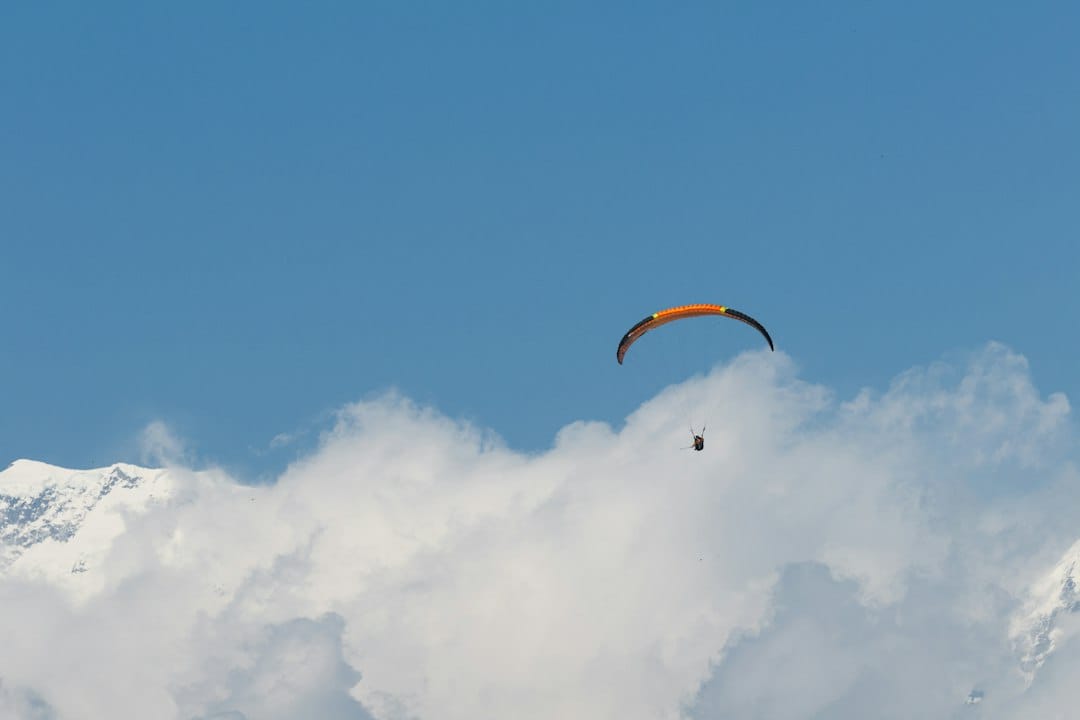
Insider tip: A standard 25–30 minute tandem flight runs about USD 80–100; a 45–60 minute flight is USD 100–120, and a cross-country flight of 60–90 minutes climbs to USD 150–200. October and November give the cleanest air and best visibility — book one or two days ahead in peak season. Fly in the morning when thermals are smoother; afternoon air gets bumpy. If you are prone to motion sickness, say so before takeoff and ask the pilot to skip the aerobatic spirals, and pay the extra for in-flight photos rather than fumbling with your own phone at 1,000 metres.
Davis Falls and Gupteshwor Mahadev Cave
These two sit directly across the Siddhartha Highway from each other near Damside, and you do them as a pair. Davis Falls (Devi's Falls, locally Patale Chhango) is where the Pardi Khola stream vanishes abruptly into a sinkhole and roars underground; entry is NPR 100 for foreigners. Across the road, the Gupteshwor Mahadev Cave — also NPR 100 — descends to a revered Shiva lingam, and a metal staircase in the second chamber brings you face-to-face with the underground cascade of the same falls.
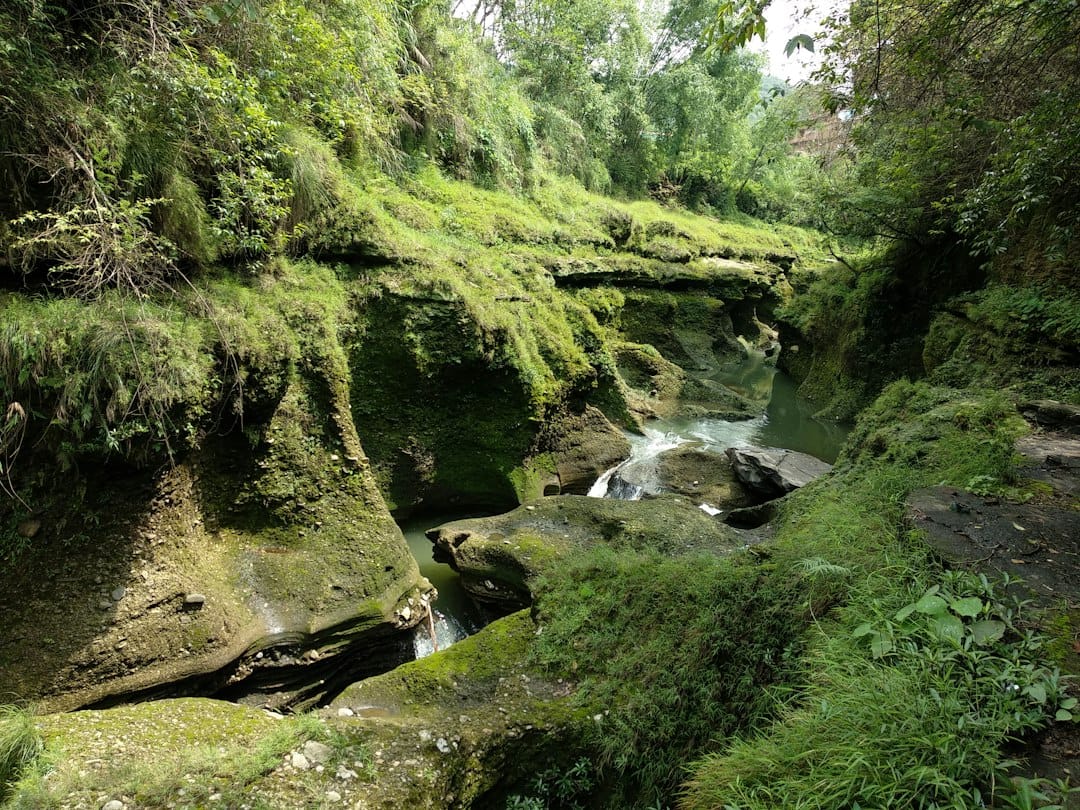
Insider tip: Timing is a genuine trade-off here. Davis Falls is dramatic only in and just after the monsoon (June to September), when the water is at full volume; in the dry spring it is a trickle and frankly underwhelming. The cave's lower chamber, by contrast, is often closed during peak monsoon because of that same floodwater. The sweet spot is late September into October, when the falls still run hard and the cave reopens. Photography is forbidden at the main shrine inside the cave — the guards enforce it.
The International Mountain Museum
On the south side of town, this is the serious counterweight to all the paragliding and lake-lounging: a genuinely good museum on the geology, peoples, and climbing history of the Himalaya. Expect expedition kit from first ascents, exhibits on the Sherpa, Gurung, and Thakali communities, and a 31-foot indoor replica of Mount Manaslu you can clamber on. Foreigner entry is around NPR 750 (NPR 350 for SAARC nationals).
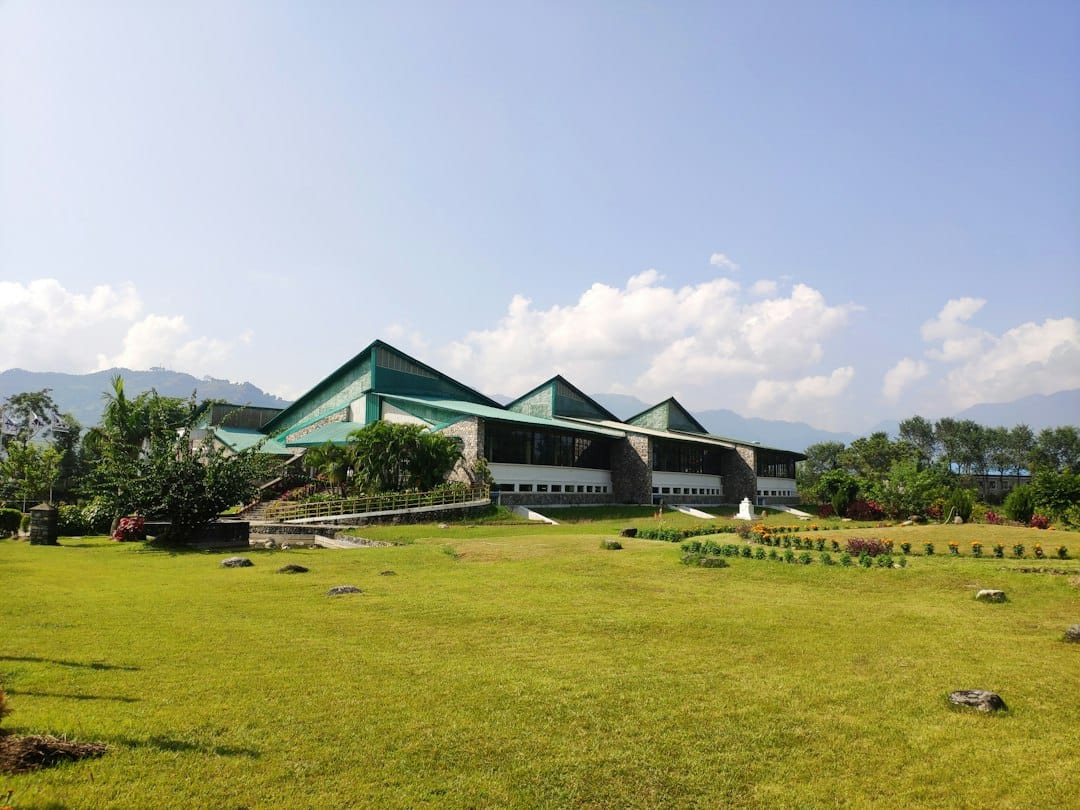
Insider tip: This is your rainy-afternoon or hazy-morning plan — bank it for a day the peaks are hidden rather than burning a blue-sky morning indoors. Give it a full two hours; the three halls (Great Himalayas, Hall of Fame, and World Mountains) reward a slow walk. It is a 10-minute taxi from Lakeside and nowhere near walkable, so arrange a return ride or an inDrive pickup.
Bindhyabasini Temple and the Old Bazaar
Skip the Lakeside strip for a morning and head to the north end, to Pokhara's historic core. The Bindhyabasini Temple is the oldest in the city, a white hilltop shrine to the goddess Bhagwati (a form of Durga) set on a small wooded hilltop that the locals treat as a park. Below it runs the Old Bazaar, the Newar trading street of carved wooden windows and brass shops that existed long before a single trekker showed up. Entry is free.
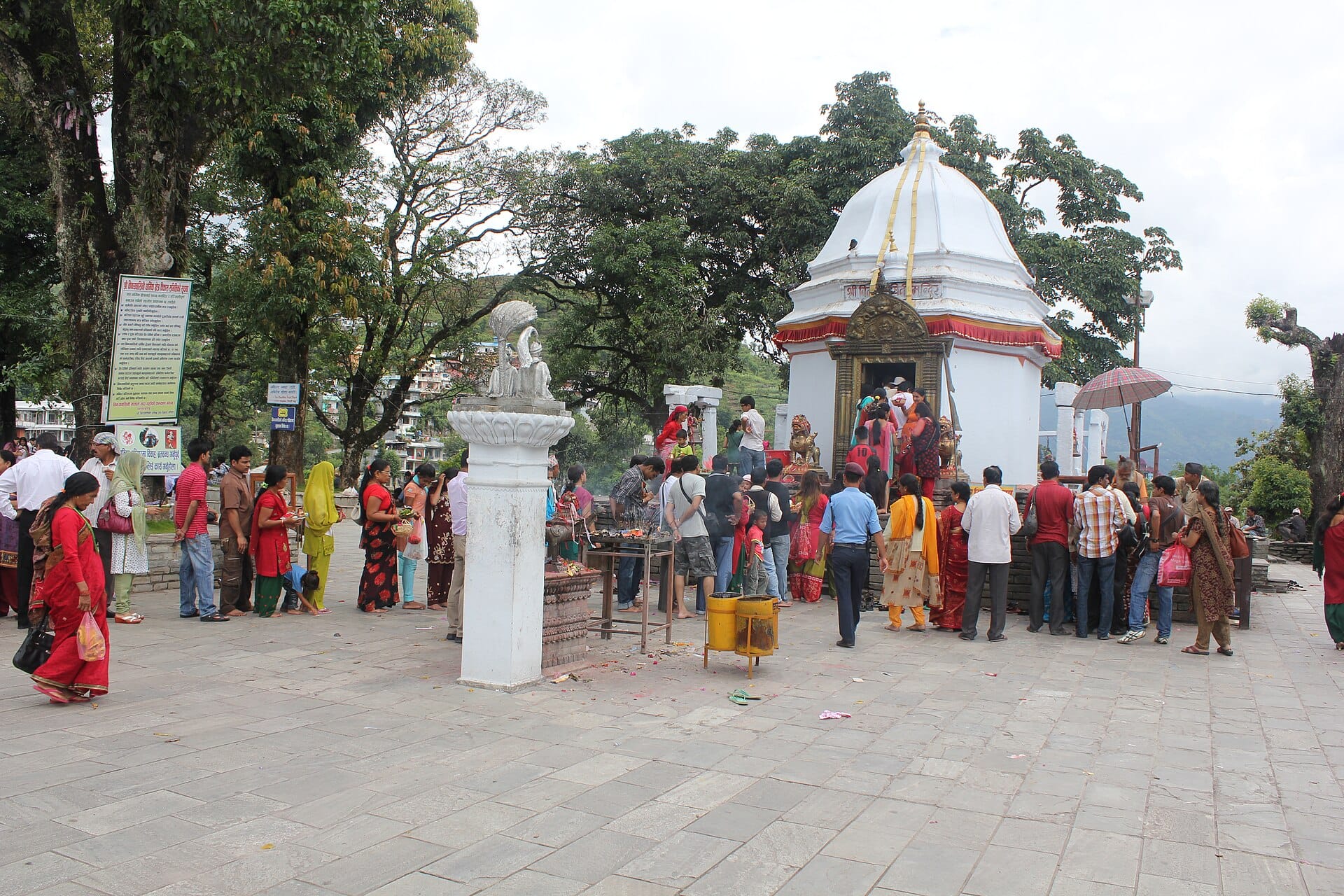
Insider tip: Come early, around 7–8 AM, to catch the morning puja, when families arrive with marigolds and the bell-ringing is near-constant — Saturdays and festival days are busiest. Remove your shoes at the inner shrine and don't photograph worshippers mid-ritual. Pair it with a slow wander south down the Old Bazaar; it is one of the few corners of Pokhara that still feels like a working Nepali town rather than a holiday set.
🗓️ A 3-Day Itinerary
Day 1 — The Lake and the South
Start slow with the water. Rent a rowboat at the Lakeside docks (NPR 300–500 per hour) and paddle out to Tal Barahi Temple mid-morning. Back on shore, grab lunch on the Lakeside strip — a plate of momos runs about NPR 250–400. In the afternoon, taxi south (around NPR 400–500 one-way) to do Davis Falls and the Gupteshwor Cave as a pair (NPR 100 each), then continue to the International Mountain Museum (NPR 750) if the sky is hazy. Dinner back at Lakeside; a sit-down meal with a drink is roughly NPR 1,200–2,000 (USD 9–15 / EUR 8–14).
Day 2 — Sunrise High, Afternoon Across the Lake
Pre-arrange a 4:30 AM taxi to Sarangkot (NPR 1,000–1,500 round trip) for the sunrise over the Annapurnas (NPR 60 entry). If you have the nerve and the budget, this is also the morning to paraglide down instead of driving — book it the day before (USD 80–100 for the standard flight). Rest and eat through the midday heat. In the late afternoon, row or taxi to the World Peace Pagoda (free entry; boat about NPR 800 one-way plus the 45-minute climb) for sunset over the lake, then descend before dark.
Day 3 — Old Pokhara and a Quieter Lake
Head north early to the Bindhyabasini Temple (free) for the 7 AM puja and a walk through the Old Bazaar. From there, make the half-day trip out to Begnas Lake, 15 kilometres east — a local bus from Prithvi Chowk is NPR 50–100 and takes about an hour, or a taxi is NPR 800–1,500. Begnas is the Phewa of twenty years ago: fish-farm terraces, almost no touts, and a lakeside lunch of fresh grilled fish. Back in town for a final Lakeside dinner. Budget roughly USD 35–55 (EUR 32–50) per person for the day including transport, entries, and meals.
🧠 Essential Tips
When to go
October and November are the clear winners. The monsoon has washed the haze out of the air, so the Annapurna reflection off Phewa is at its sharpest, and daytime highs sit at a comfortable 24–27°C with lows of 12–17°C. This window also catches Nepal's two biggest festivals, Dashain and Tihar, so expect the town to be lively and hotels to fill — book ahead. March and April are the second-best bet, with rhododendrons blooming on the hills and highs of 27–30°C, though pre-monsoon haze can soften the peaks. June to September is monsoon — July alone can drop over 900 mm of rain and the mountains hide behind cloud for days, but room rates crater and Davis Falls is at full roar. December to February is cold and clear, with highs of 19–22°C and chilly single-digit nights, plus the Pokhara Street Festival along Lakeside from December 28 to January 1.
Getting there and around
Pokhara's airport, the Pokhara Regional International Airport, opened in 2023 and handles the 25-minute hops from Kathmandu on Buddha Air, Yeti Airlines, and Shree Airlines for roughly USD 90–140 one-way. A taxi from the airport to a Lakeside hotel is about NPR 800–1,000. Overland, the tourist bus from Kathmandu's Thamel leaves around 7–8 AM, takes about seven hours to cover the 200 kilometres, and costs around USD 15 (NPR 2,000) — cheaper and, with the mountain scenery, not a bad ride. Within town, inDrive is the ride app that actually works in Pokhara and has the biggest driver pool; Pathao operates too, but Uber does not. Street taxis are "metered in theory, negotiated in practice," so agree the fare before you get in. Wooden boats on Phewa rent for NPR 300–500 an hour.
Safety and scams
Pokhara is a low-crime, easygoing town, and violent crime against tourists is rare. The hustles are petty and predictable: boatmen claiming the cheap shared barge to Tal Barahi "isn't running," taxi drivers quoting double for anyone who didn't settle the fare first, and paragliding touts on the strip undercutting on price with uninsured operators — book through a company that flies licensed pilots and shows you the insurance, not the cheapest clipboard on the pavement. If you are heading beyond the city into the Annapurna Conservation Area — even for the short Dhampus or Australian Camp hikes — you legally need an ACAP permit (NPR 3,000 for foreigners) and a TIMS card (NPR 1,000), both arranged in Pokhara before you set off; checkpoints do ask.
Food worth seeking out
Eat the local staples before the banana pancakes. Dal bhat — rice, lentil soup, curried vegetables, pickle, and usually free refills — is the fuel of Nepal and costs NPR 300–600 at a bhojanalaya off the strip. Momos (steamed or fried dumplings, NPR 250–400) are everywhere and worth comparing. For Newari flavors, hunt down choila (spiced grilled buffalo) and bara (lentil patties). Out at Begnas, the draw is grilled fresh fish from the lake's fish farms. On the strip, Lakeside institutions like Caffe Concerto for wood-fired pizza and Godfather's Pizzeria have fed trekkers for years, and the Pokhara Thakali Kitchen does a proper Thakali dal bhat set if you want the regional version done well.
🏨 Accommodation Guide
Budget (USD 8–25 / EUR 7–23 per night): Lakeside and the quieter northern end of the strip are thick with clean guesthouses in this range. You get a private room, hot shower, and often a rooftop with a mountain view for the price of a city-center coffee back home. The farther north along Lakeside you walk, away from the bar cluster, the quieter and cheaper it gets.
Mid-range (USD 30–80 / EUR 27–73 per night): This is the sweet spot in Pokhara, where the money goes a long way. Hotel Barahi sits in the heart of Lakeside with a pool and garden, and Temple Tree Resort & Spa offers a resort feel — spa, pool, stone cottages — a short walk back from the water. Both put you in easy strolling distance of the docks and restaurants.
Luxury (USD 180+ / EUR 165+ per night): The landmark address is Fish Tail Lodge, set on its own peninsula in Phewa Lake and reached by a hand-pulled raft, with the Annapurnas framed across the water. For something rural and exclusive, Tiger Mountain Pokhara Lodge sits on a ridge about 1,000 metres up, well outside town, with stone bungalows and uninterrupted mountain views — book direct and well ahead.
🎭 Beyond the Tourist Trail
Begnas Lake is the easiest escape — 15 kilometres east and a world away from Lakeside's crowds. It is the second-largest lake in the Pokhara valley, ringed by rice terraces and fish farms rather than bars, and you can rent a boat, swim, or just eat grilled fish on a quiet shore. The local bus from Prithvi Chowk (NPR 50–100) makes it a genuine half-day on a budget.
For a quieter base on Phewa itself, skirt the lake's northwestern shore to Pame and Khapaudi, where small guesthouses and farm-to-table cafés look back at the water with a fraction of the Lakeside noise — ten minutes by scooter, another planet in feel. And if you can time your trip to the last days of December, the Pokhara Street Festival (December 28 to January 1) turns the Lakeside road into a car-free run of food stalls, live music, and street performers to ring in the New Year — the one time the strip's energy is aimed at locals as much as visitors.
❤️ Plan Your Pokhara Trip with VoyaBear
Pokhara rewards the traveler who gets the timing right — the 6:30 AM boat before the wind, the late-September window when both Davis Falls and its cave are open, the morning flight before the thermals turn rough. That is exactly the kind of detail VoyaBear builds into a personalized itinerary. Tell us how long you have, what you're into — peaks, temples, or just a slow week by the lake — and we'll map your days, book the pieces that need booking ahead, and hand you a plan that works on the ground, not just on paper. Start planning your Nepal trip with VoyaBear today.
Want this as an actual itinerary?
VoyaBear turns a guide like this into a day-by-day plan built around how you travel.
Plan my trip free