Samarkand 2026: The Complete Silk Road Guide
28 November 2026 · 17 min read

Samarkand is a city where you can stand on one patch of paving — the Registan — and have three madrasas from three different centuries close in on you from three sides, each facade a separate experiment in turquoise, gold and brick. This was Amir Timur's capital, the city he stocked with the plunder and the captured craftsmen of an empire that stretched from Delhi to Anatolia. In 2026 it is easier to reach than it has ever been: the high-speed Afrosiyob train covers the roughly 300 km from Tashkent in about two hours fifteen, and since 1 January 2026 US citizens join UK and EU travellers in entering Uzbekistan visa-free for 30 days. What you get in return for a short trip is the densest run of Timurid architecture anywhere on earth, most of it inside a 30-minute walk.
This guide sticks to specifics: what each monument costs in 2026, when to turn up to dodge the tour groups, which train to book, and where to eat the plov that Samarkandis argue about. No filler, just the plan.
💡 Quick Answer: Samarkand at a Glance
The essentials for planning a Samarkand trip, before the detail below.
- How many days do you need? Two full days cover the headline monuments; three lets you add a day trip to Shahrisabz or a slower pace.
- Best time to visit? April–May or September–October, when days sit in the mid-to-high 20s°C. Avoid July–August, when it hits 35–40°C.
- What to book ahead? The Afrosiyob train from Tashkent (about 311,000 som / ~$26 economy) sells out days in advance in high season — buy early.
- Airport to centre? Samarkand International is about 6 km north; a Yandex Go taxi or airport bus 52, 31 or M1 takes roughly 15 minutes.
- Getting around? Use the Yandex Go app for taxis; city buses are a flat 3,000 som (~$0.25). Carry cash in som — many desks don't take cards.
- Top ticket? The Registan costs 100,000 som (~$8 / €7.60) and stays open until midnight from late February to November, with a free evening light show visible from the steps.
- Daily budget? Roughly $40–55 a day on a budget, $90–140 mid-range, excluding big-ticket day trips.
- Is it safe? Yes — very. The main irritations are overcharging at the bazaar and unmetered taxis; agree a fare first or use the app.
🏙️ The Best Things to Do in Samarkand
1. Registan Square

The Registan — "sandy place" in Persian — is the reason most people come, and it earns it. Three madrasas face a single plaza: the Ulugh Beg Madrasa (1417–1420), built by Timur's astronomer-grandson; the Sher-Dor Madrasa (1619–1636), whose portal shows two tigers chasing deer beneath a human-faced sun, a deliberate flouting of the ban on living images; and the gold-drenched Tilya-Kori Madrasa (1646–1660), whose mosque interior is sheathed in gilded muqarnas that looks domed but is actually flat. Entry is 100,000 som (about $8 / €7.60), valid for a single visit, so do it in one go. Open 7:00–24:00 from late February to November, 8:00–20:00 in winter.
Insider tip: come in the late afternoon for warm light on the tilework, then stay as the floodlights come up. A short sound-and-light show runs most evenings around 20:00 from spring to autumn — you can watch it free from the steps outside the square rather than paying to sit inside. The minaret climbs that touts offer are unofficial; skip them unless you're comfortable with a bribe and a dark staircase.
2. Shah-i-Zinda

Shah-i-Zinda — "the Living King" — is a narrow lane of eleven mausoleums climbing a hillside, built over six centuries and crammed with the finest majolica and carved terracotta in the city. It is a working pilgrimage site, named for a cousin of the Prophet said to be buried here, so dress modestly and keep your voice down. Entry is about 50,000 som (~$4), open 7:00–19:00, and once you've paid you can come and go all day.
Insider tip: this is the single most crowded spot in Samarkand by mid-morning, when the tile corridors become a selfie jam. Arrive at 7:00 opening or come back an hour before closing, when the groups have gone and the low sun turns the blue facades almost violet. Walk through to the back and you reach Samarkand's living cemetery, which almost no tour includes.
3. Gur-e-Amir Mausoleum

Gur-e-Amir is Timur's tomb, and its fluted azure dome — ribbed like a melon and set on a tall drum — became the template that later architects copied as far as Mughal India. Inside, a plain slab of dark-green jade marks Timur's cenotaph (the actual crypt is sealed below), surrounded by the graves of his sons and of Ulugh Beg. The chamber's gilded and painted ceiling is worth the 75,000 som (~$6 / €5.70) on its own. It stays open late into the evening.
Insider tip: go at dusk. The exterior is lit after dark and nearly empty once the day-trippers leave, and it's a five-minute walk from the Registan, so you can pair the two in one evening.
4. Bibi-Khanym Mosque
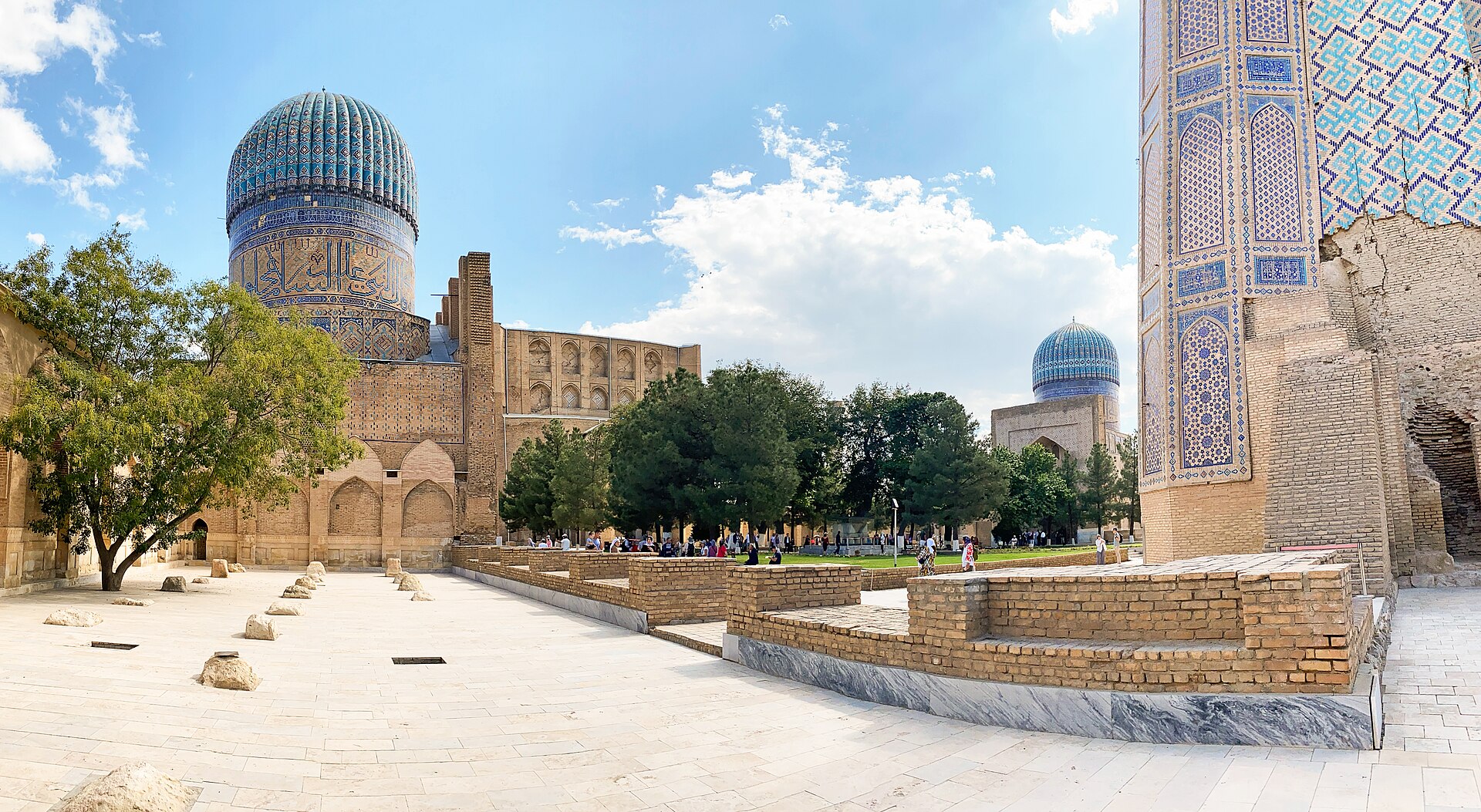
Built between about 1399 and 1404 with the spoils and the elephants of Timur's campaign against Delhi, Bibi-Khanym was meant to be the largest mosque in the Islamic world — and it overreached. The vaults began cracking almost immediately, and much of what stands today is a 20th-century Soviet reconstruction, which is part of its appeal: you can see both the ambition and the failure. The courtyard holds a huge marble Quran stand said to bring fertility to women who crawl under it. It sits directly across from the Siab Bazaar, so the two pair naturally.
Insider tip: the scale reads best from the courtyard looking up at the main portal, not from the street. Combine it with the bazaar next door and you've covered the northern cluster in a single stop.
5. Ulugh Beg Observatory
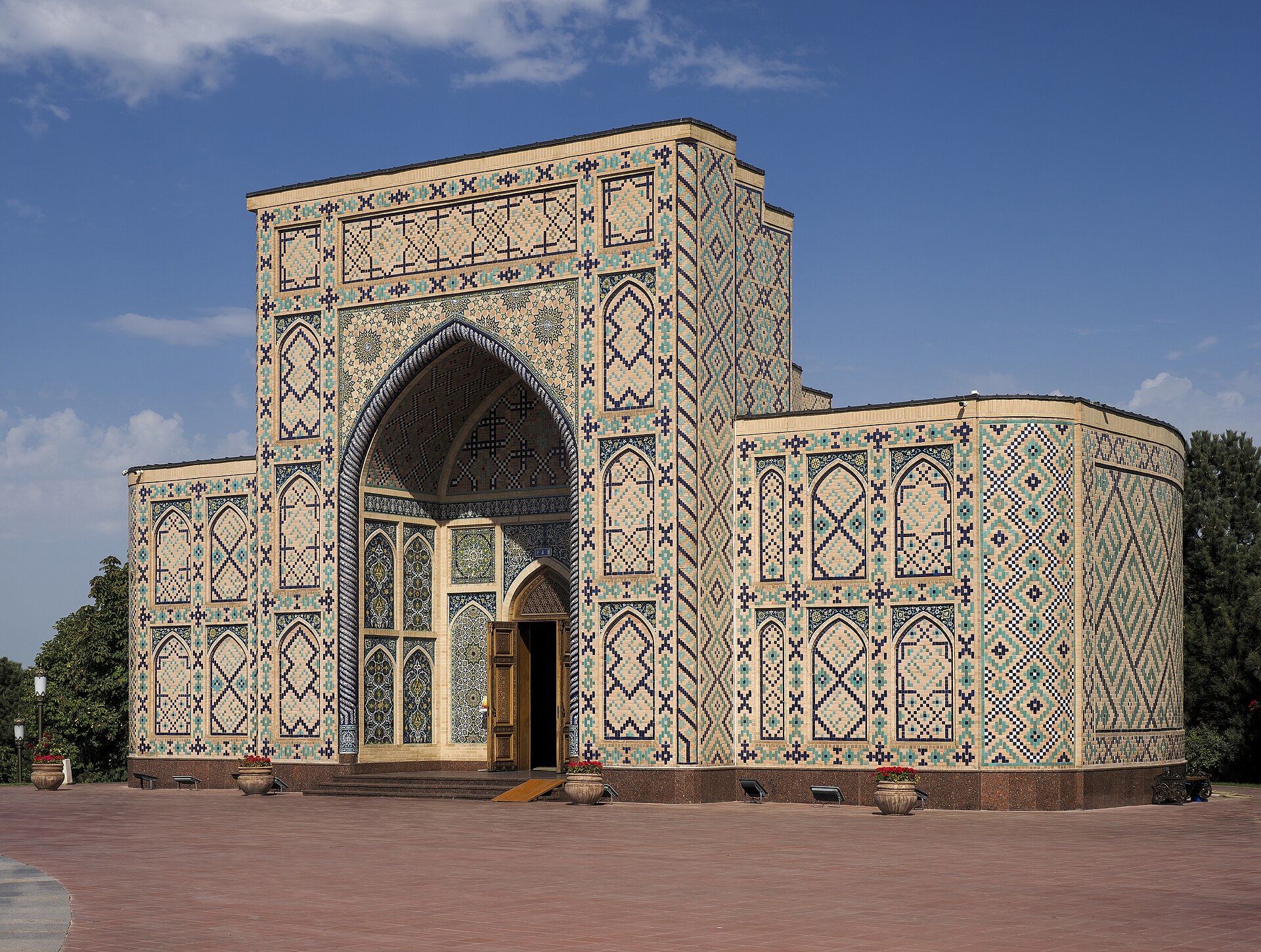
Ulugh Beg was a ruler who cared more about stars than conquest, and in the 1420s he built a three-storey observatory here whose centrepiece was a giant curved sextant, originally around 40 metres in radius, sunk into the bedrock. The building was destroyed after his murder in 1449; what survives is the underground arc of that instrument, which you can walk alongside, plus a small museum. His star catalogue fixed the positions of more than 1,000 stars with an accuracy not beaten for 200 years. Entry is 50,000 som (~$4), open 9:00–19:00.
Insider tip: it's about 3 km northeast of the centre on the way in from the airport. Take city bus 45, 99 or 17 for 3,000 som (~$0.25) rather than paying taxi rates, and combine it with the Afrasiab Museum, which is next door.
6. Afrasiab Museum
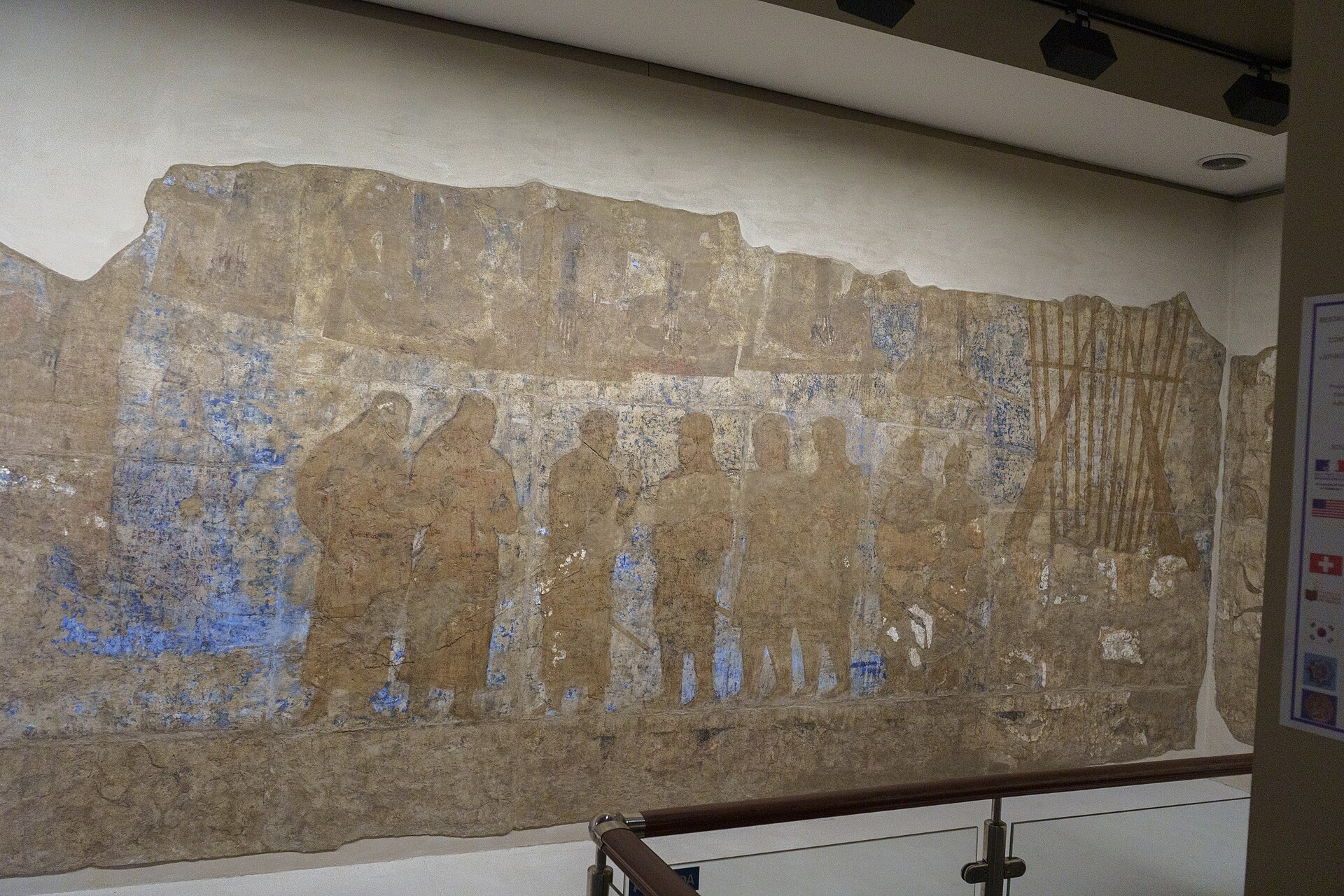
Most of Samarkand's monuments are Timurid, from the 14th and 15th centuries. The Afrasiab Museum reaches back 700 years further, to the Sogdian city that stood on the Afrasiab hill before Genghis Khan levelled it. Its treasure is the Ambassadors' Painting, a set of 7th-century wall murals unearthed in 1965 that show King Varkhuman receiving foreign envoys — Chinese, Korean, Turkic — along with processions of elephants and camels. Faded as they are, they're the best surviving record of what Silk Road diplomacy actually looked like. Open Monday to Saturday, 9:00–18:00, closed Sunday.
Insider tip: the murals are upstairs and easy to rush past; the painted details reward ten slow minutes and the English labelling is decent. Pair it with the observatory, a short walk away, to justify the trip out from the centre.
7. Siab Bazaar
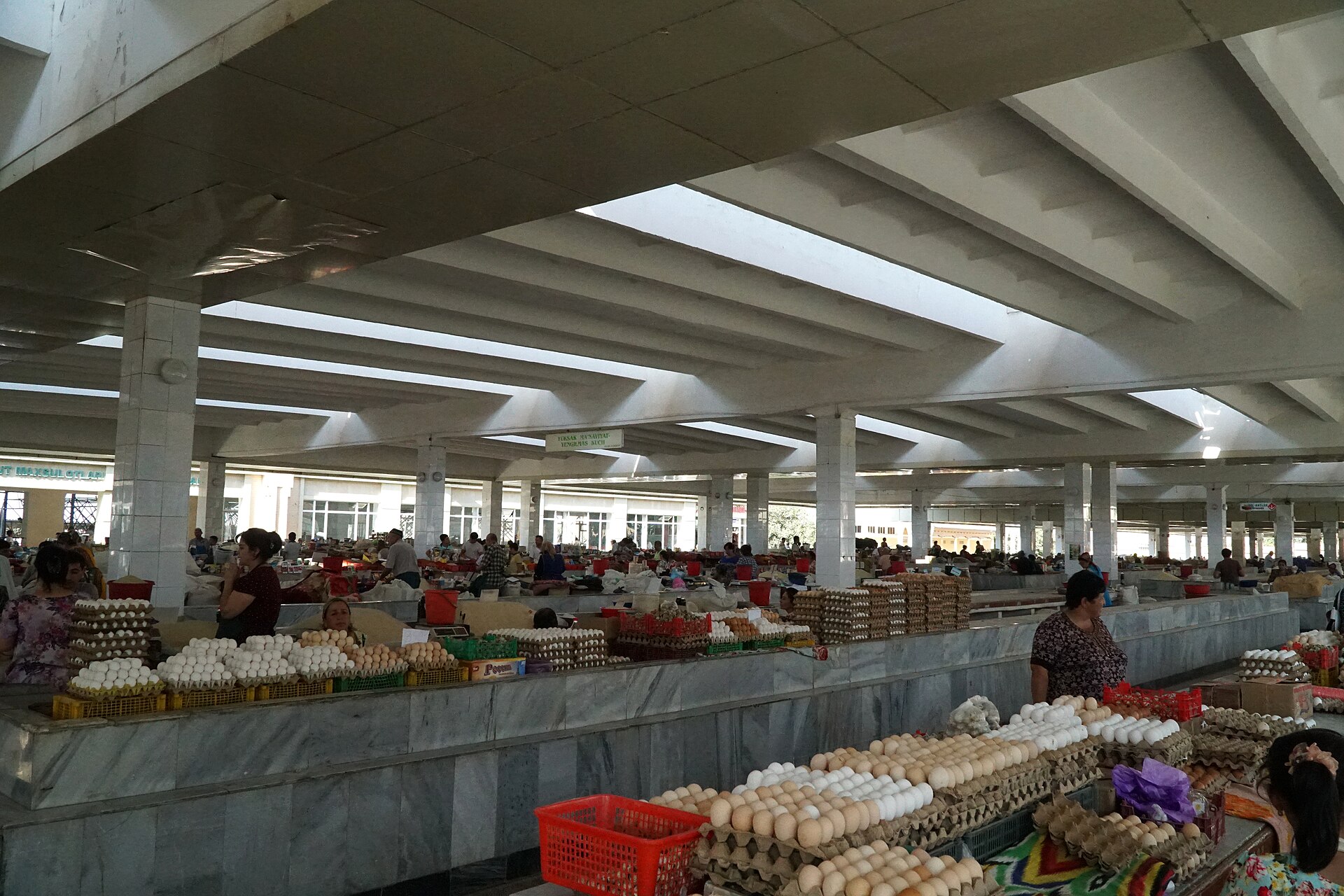
Siab (Siyob) is Samarkand's main bazaar, a covered market beside Bibi-Khanym where the city actually shops: pyramids of dried apricots and raisins, walnuts and pistachios, mountains of spices, slabs of halva, and the round stamped Samarkand non that locals treat as near-sacred and never place upside down. It's free, liveliest from mid-morning, and vendors hand out samples freely.
Insider tip: foreigners get quoted inflated prices here, so bargain and expect to pay perhaps half the opening number. Buy a fresh non straight off the stack — it's the one souvenir that costs a few thousand som and tastes of the place.
🗓️ How to Spend Three Days in Samarkand
A tight but unhurried plan that keeps the walking short and saves the two most atmospheric sights for evening light.
Day 1 — The core. Start at the Registan at opening, before the coaches, then walk ten minutes north to Bibi-Khanym Mosque and straight into Siab Bazaar for a non-and-samsa lunch (under $5). Spend the afternoon at Shah-i-Zinda, timed for the hour before closing. Double back to the Registan after dark for the light show from the steps. Total walking: about 3 km.
Day 2 — Science and the suburbs. Take bus 99 or a short Yandex Go ride (roughly 15,000–25,000 som / ~$1.50–2) out to the Ulugh Beg Observatory and the neighbouring Afrasiab Museum in the morning. Back in the centre, visit Gur-e-Amir in the late afternoon and stay for its floodlit dome. Dinner on or near University Boulevard, the tree-lined 19th-century quarter where locals eat.
Day 3 — Shahrisabz or slow down. Either take a day trip to Shahrisabz, Timur's birthplace about 88 km south over the Tahtakaracha Pass (a private driver runs about $50 return for the day), or keep it gentle: climb the hill by Hazrat Khizr Mosque for the best rooftop view over the domes, then browse the craft workshops and cafes without a schedule.
🧠 Essential Tips for Visiting Samarkand
When is the best time to visit Samarkand?
April–May and September–October are the sweet spots, with daytime highs in the mid-to-high 20s°C and clear skies. Summer (late June to August) runs 35–40°C and makes midday sightseeing a grind. Winter is cold but quiet, and both November and March are underrated — fewer tourists, lower hotel rates, and in autumn the bazaars pile high with the fresh fruit harvest.
How do you get to and around Samarkand?
Most visitors arrive overland from Tashkent on the Afrosiyob high-speed train, which takes about 2 hours 15 minutes; an economy seat cost around 311,000 som (~$26 / €24) in early 2026, and it books out in high season, so reserve several days ahead. The slower Sharq train takes about 3.5 hours for less. Samarkand International Airport is roughly 6 km north of the centre; most international flights route via Tashkent. From the airport, buses 52, 31 and M1 run from 6:00 to 21:00 and take about 15 minutes, or take a taxi. In town, use the Yandex Go app to avoid haggling — city buses are a flat 3,000 som (~$0.25), and the central monuments are walkable from each other. Carry cash: many ticket desks and small shops don't take cards.
Is Samarkand safe for tourists?
Very. Violent crime against visitors is rare and the streets feel calm at night. The real risks are to your wallet: at Siab Bazaar foreigners are routinely quoted two to three times the local price, so bargain; and street taxis are unmetered, so agree a figure before you get in or just use Yandex Go. Dress modestly at Shah-i-Zinda and other active religious sites — shoulders and knees covered — and ask before photographing people at prayer.
What should you eat in Samarkand?
The city's signature dish is plov (osh) — rice cooked with lamb, carrot, chickpeas and whole heads of garlic, the Samarkand version served drier and often earlier in the day. Samarqand Osh Markazi N1 is the standard local pick for it; order a half portion each, as the full one is enormous. Beyond plov, try tandoor-baked somsa (meat or pumpkin), hand-pulled lagman noodles, charcoal shashlik, and manti dumplings — Karimbek is a reliable sit-down spot for kebabs and salads. And eat the non: Samarkand's round, dense, patterned bread is the best in Uzbekistan.
🏨 Where to Stay in Samarkand
For a first visit, base yourself in the Registan-to-Bibi-Khanym corridor: it puts the main monuments, Siab Bazaar and Shah-i-Zinda within walking distance. The quieter Gur-e-Amir lanes have family-run guesthouses, while University Boulevard in the 19th-century quarter trades proximity for restaurants and wide streets.
Budget ($20–70/night): Bahodir B&B (~$45–70) sits in the Old City near Siab Bazaar and is a long-running travellers' favourite; Colibri Traditional Hotel (~$20–30) and Muzaffar Hotel (~$37–40) are dependable cheaper options.
Mid-range ($80–200/night): Hotel Malika Prime (~$105–155) is walkable to the Registan; Bibi-Khanym Hotel (~$150–200) sits near Shah-i-Zinda with a courtyard garden; the Hilton Garden Inn Samarkand (~$87–100) is the reliable international option.
Luxury ($135–500/night): Hotel Registan Plaza (~$135–190) is a dependable upper-tier choice; Samarkand Darvoza (~$260–360) sits near the centre; and The Samarkand, a Luxury Collection resort (~$320–500) anchors the modern Silk Road Samarkand complex, a taxi ride from the old city.
🎭 Beyond the Tourist Trail
Climb the Hazrat Khizr hill. The Hazrat Khizr Mosque (entry ~50,000 som / ~$4, open 8:00–18:00) sits on a rise above Siab Bazaar, and the terrace beside it — which you can reach without paying — gives the best free panorama over Bibi-Khanym's dome and the old city's minarets. Uzbekistan's first president, Islam Karimov, is buried next to it.
Day-trip to Shahrisabz. Timur's birthplace, about 88 km and a 1.5-hour drive south over the Tahtakaracha Pass, is where you escape the crowds. The ruined Ak-Saray Palace survives only as two colossal tiled gateway stumps, but they're taller than anything Timur left in Samarkand. Town entry is 30,000 som (~$2.50); a private driver for the round trip runs about $50.
Time it with Sharq Taronalari. Every two years in late summer, the Registan hosts the Sharq Taronalari international music festival, filling the square with folk ensembles from across Asia after dark. If your trip lands in a festival year, it's the one time the monument becomes a stage rather than a museum.
❓ Samarkand FAQ
How many days do you need in Samarkand?
Two full days are enough for the main monuments — the Registan, Shah-i-Zinda, Gur-e-Amir, Bibi-Khanym, the observatory and the bazaar. Add a third day if you want a slower pace or a day trip to Shahrisabz.
When is the best time to visit Samarkand?
April–May and September–October, when daytime temperatures sit in the mid-to-high 20s°C. July and August reach 35–40°C, and November and March are quieter and cheaper.
How do you get from Tashkent to Samarkand?
The Afrosiyob high-speed train takes about 2 hours 15 minutes and cost roughly 311,000 som (~$26) in economy in early 2026. Book several days ahead in peak season, as it sells out.
How much does it cost to enter the Registan?
Entry to the Registan is 100,000 som, about $8 or €7.60, for a single visit. It is open 7:00–24:00 from late February to November and 8:00–20:00 in winter.
Is Samarkand safe for tourists?
Yes. Samarkand is a very safe city for visitors, with little crime against tourists. The main annoyances are overcharging at Siab Bazaar and unmetered street taxis — bargain at the market and use the Yandex Go app for rides.
Do you need a visa for Uzbekistan?
Citizens of the UK, the EU and — since 1 January 2026 — the United States can enter Uzbekistan visa-free for 30 days. Travellers from other countries should check the current rules, as many are eligible for a quick e-visa.
What is the signature food in Samarkand?
Plov (osh) — rice with lamb, carrot, chickpeas and garlic — is the signature dish, often eaten earlier in the day. Also try somsa, lagman, shashlik, manti and the city's round stamped non bread.
Where should you stay in Samarkand?
For a first visit, stay in the Registan-to-Bibi-Khanym area, which keeps the main monuments within walking distance. Budget rooms start around $20–45, mid-range runs $80–200, and luxury resorts reach $320–500.
❤️ Plan Your Samarkand Trip with VoyaBear
Samarkand rewards a plan that respects the light and the heat — early starts, evening monuments, a midday break out of the sun. VoyaBear builds that plan for you: tell it your dates, your pace and what you care about, and it turns this guide into a personalised day-by-day itinerary with timed visits, booked-ahead trains and restaurants that match your taste. Start planning your Silk Road trip at voyabear.com.
Want this as an actual itinerary?
VoyaBear turns a guide like this into a day-by-day plan built around how you travel.
Plan my trip free