Santorini 2026: The Complete Guide to Greece's Volcano Island
14 October 2026 · 15 min read

Santorini is a drowned volcano, and almost everything worth doing here follows from that single fact. The island is the rim of a caldera that blew its center out around 1600 BC in one of the largest eruptions in human history, which is why the villages sit 300 metres up on a cliff edge, why the beaches are black and red instead of gold, why the wine tastes of smoke and sea salt, and why you can take a boat into the middle of the bay and walk on a volcano that is still technically active. Strip away the Instagram shorthand and you get an island that earns its reputation on geology, a 3,600-year-old buried city, and some of the most distinctive white wine in the Mediterranean.
It is also, in 2026, extremely busy. Cruise ships dump thousands of day-trippers onto the Fira cable car between roughly 9am and 4pm, and the Oia sunset has become a scrum. None of that ruins Santorini; it just means timing is everything. Get up early, eat where locals eat, and see the big sights before the ships arrive, and the island is still worth every euro. Here is how to do it properly.
🏙️ Essential Experiences
Oia and the sunset (without the worst of the crowd)
Oia (say "ee-ah") is the cliff-top village at the island's northern tip, all whitewashed cave houses, blue-domed churches, and bougainvillea stacked down the caldera wall. It is the postcard, and in high season it is also the single most crowded place in the Cyclades at 7pm, when hundreds of people pack the steps below the ruined Byzantine Castle to watch the sun drop behind the volcano. The view is genuinely good; the crush is genuinely unpleasant.

Insider tip: skip the Castle. Walk the length of Oia's marble main street an hour before sunset, pick any west-facing terrace or the open ground near the windmill at the far point, and commit to it. The light after the sun is actually down — that ten minutes of pink and orange on the white walls — is better than the sunset itself and most of the crowd leaves the second the sun touches the horizon. Then walk down to Ammoudi Bay for dinner (see below). Entry to the village is free; the real cost is dinner afterward.
Fira, the caldera edge, and the Akrotiri frescoes
Fira is the capital, a tighter and more workaday version of Oia strung along the caldera rim about 10km south. Most visitors treat it as a transit hub, which is a mistake. The clifftop path from Fira through Firostefani to Imerovigli is the best free walk on the island, and the Museum of Prehistoric Thera here (€10, or covered by the €15 combined ticket) holds the astonishing wall frescoes and painted pottery lifted from the buried city at Akrotiri — the famous blue monkeys and antelopes. See the frescoes in Fira, then go see where they came from the next day.

Insider tip: Fira's cliff edge is where the cable car drops to the Old Port for the volcano boats, so it's also where cruise crowds concentrate. Walk the caldera path at 8am or after 6pm and it's nearly empty. The far end at Imerovigli, "the balcony of the caldera," has the same view with a fraction of the foot traffic.
The Fira-to-Oia caldera hike
This is the one activity that converts caldera scenery into a real day out: a roughly 10km (6-mile) trail along the rim from Fira to Oia, passing through Firostefani, Imerovigli, and the base of Skaros Rock, the crag that held Santorini's medieval fortress. Reckon on 3 to 5 hours depending on stops. It's billed as "easy" but it's genuinely hilly with almost no shade, and the stretch past the churches of Profitis Ilias and Panagia is a steady uphill grind on loose rock.

Insider tip: walk Fira-to-Oia, not the reverse — you'll finish in Oia in time for sunset, and the net direction is slightly downhill. Start by 8am or after 4pm to dodge the midday heat, carry at least a litre of water (there are only a couple of cafés en route, in Imerovigli), and detour out to Skaros Rock, which adds 30–60 minutes but gives you the best caldera panorama on the island. The wind on Skaros can be ferocious, so hold onto hats and phones. The trail is free; a bus back from Oia to Fira is €2.20 (about $2.40) if your legs are done.
Akrotiri, the Bronze Age city under the ash
If you do one "sight" on Santorini, make it Akrotiri. This is a Minoan-era town of three-storey buildings, paved streets, and a working drainage system that was buried intact under volcanic ash around 1600 BC and dug back out — the Aegean's answer to Pompeii, except nobody has found human remains, suggesting the residents read the warning tremors and fled. The whole excavation sits under a modern bioclimatic roof, which means it's one of the few archaeological sites in Greece you can tour in comfort at the height of August.
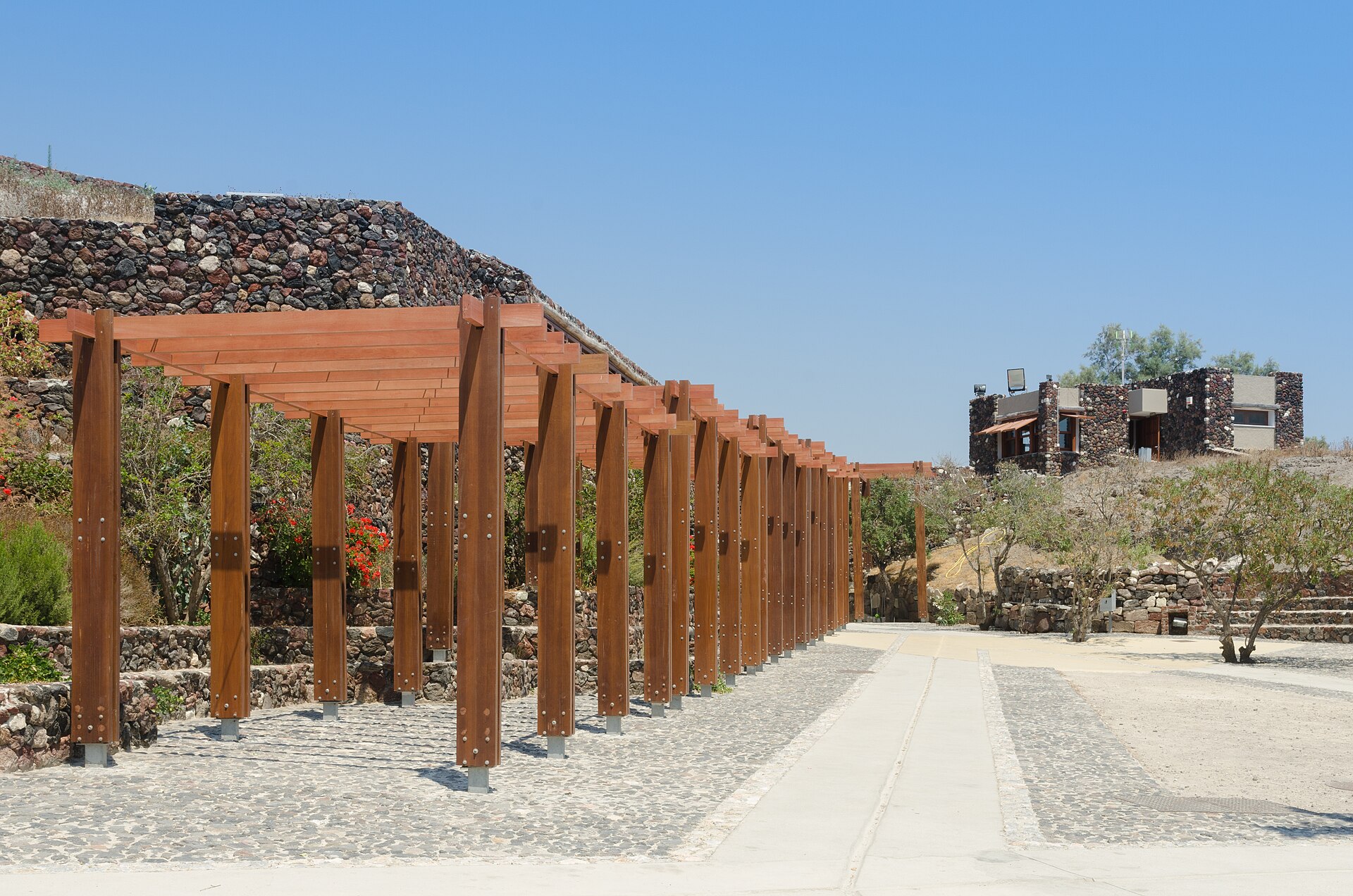
Insider tip: entry is €12 (about $13) full, €6 reduced, but the smarter buy is the €15 (about $16) combined ticket, valid three days across Akrotiri, Ancient Thera, and the Museum of Prehistoric Thera. Arrive for opening at 8am — the site runs 8am–8pm on Tuesday, Wednesday, Friday, Saturday and Sunday in summer, with shorter 8:30am–3:30pm hours on Monday and Thursday — because the first cruise groups roll in around 10am. You'll want 1.5 to 2 hours. The Fira–Akrotiri bus is €2.30 (about $2.50).
Assyrtiko: the strangest vineyards in Europe
Santorini's vines grow in pure volcanic pumice with almost no rain, so over centuries growers trained them into low basket shapes called kouloura — the vine is coiled into a nest on the ground, and the grapes grow inside, sheltered from the wind and watered by sea mist that condenses overnight. The signature grape is Assyrtiko, a bone-dry, high-acid white that tastes of citrus and wet stone, and the island also makes Vinsanto, a sweet dessert wine from sun-dried grapes. Some of these vines are over a century old because the volcanic soil never hosted the phylloxera louse that wiped out most of Europe's.
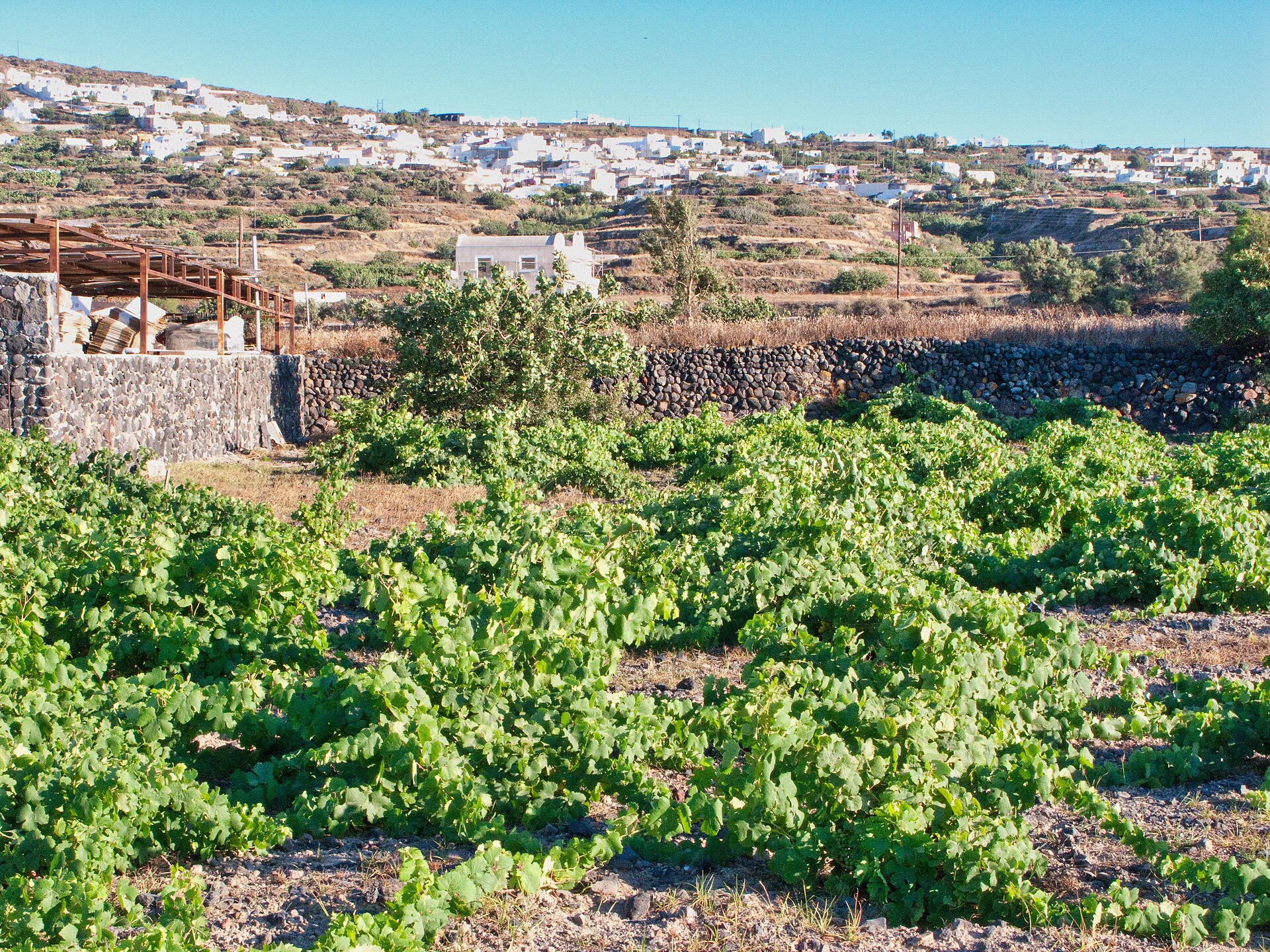
Insider tip: Santo Wines, on the caldera road above Pyrgos about 4km south of Fira, is the big, polished option — tasting flights run €18 to €55 (around $20–60), a typical four-wine flight with snacks is about €45, and a short production tour with two tastings is just €12. Its terrace has the best sunset view of any winery, so book a caldera-edge table for July through September. For something smaller and less packaged, Venetsanos next door or Estate Argyros near Episkopi (flight about €20–25) are both serious. The Fira–Perissa and Fira–Akrotiri buses stop near Santo Wines.
The volcano and the hot springs
From Fira you can take the cable car down to the Old Port and board a boat to Nea Kameni, the black volcanic island in the middle of the caldera that is the active heart of the whole system. You land, pay a small site fee, and hike about 90 minutes round trip up to the steaming craters, past yellow sulphur vents and the King George crater left by the island's 19th- and 20th-century eruptions. Most trips then anchor off neighbouring Palea Kameni so you can swim into the warm, rust-coloured sulphur springs.
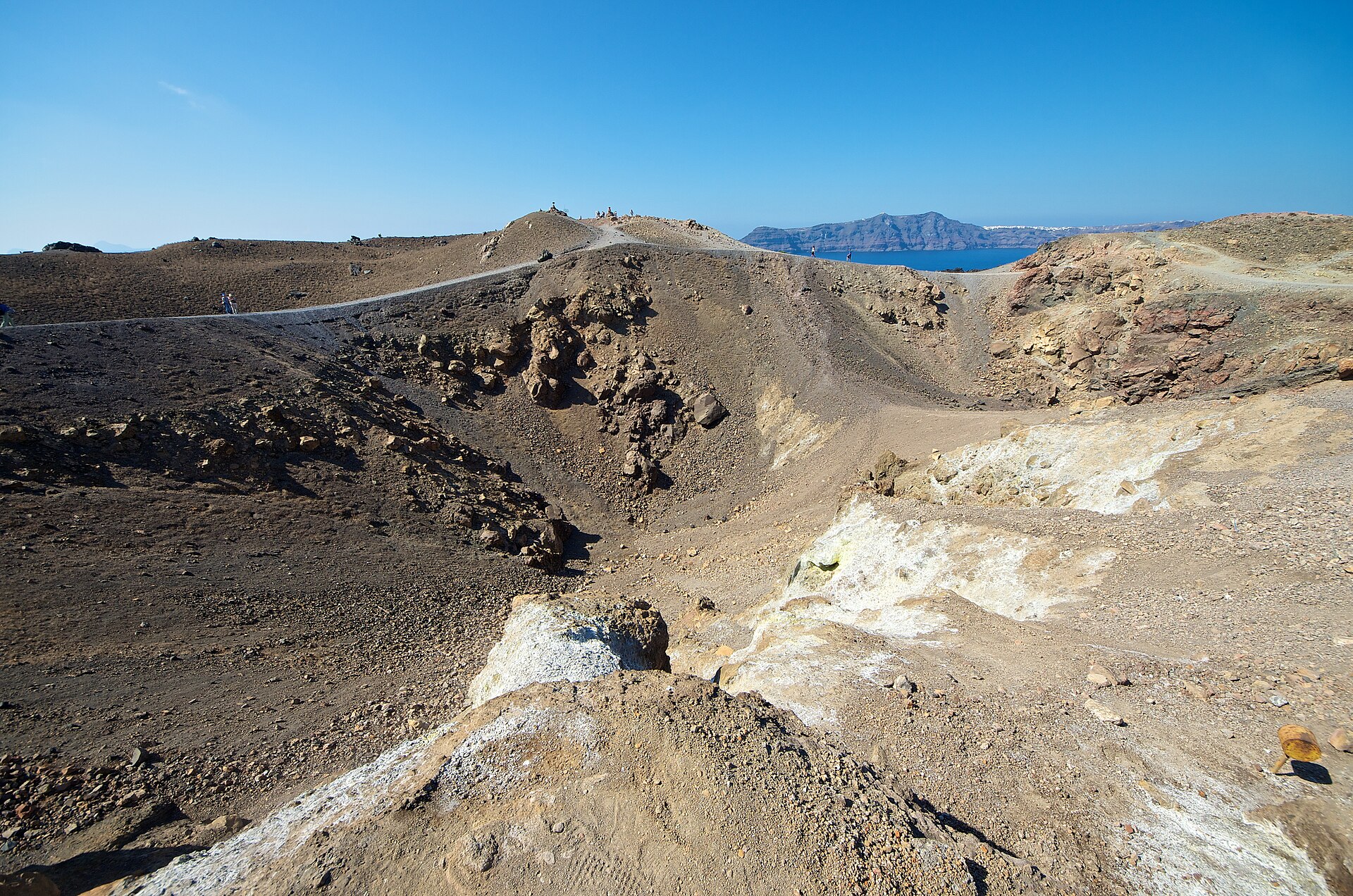
Insider tip: a standard 3-hour volcano-and-hot-springs boat trip runs roughly €30–35 (about $33–39) per person, and the 5–6 hour version that adds the small island of Thirassia is around €40 (about $44); the Nea Kameni landing ticket is about €5 on top. Wear shoes you can hike and then swim in, and don't wear a white or pale swimsuit — the iron-rich springs stain fabric orange, permanently. Boats run late May to early October.
Ammoudi Bay, for the dinner Oia doesn't do well
Directly below Oia, reached by 278 steps down the cliff from near the Castle (or a fixed €10 taxi), is Ammoudi Bay — a tiny fishing harbour hemmed in by rust-red volcanic rock, where a handful of tavernas serve the fish that came in that morning. This is where you eat after the Oia sunset. It's touristy but the seafood is real, and sitting at the waterline watching the cliff glow is a better experience than any caldera-edge table up top.
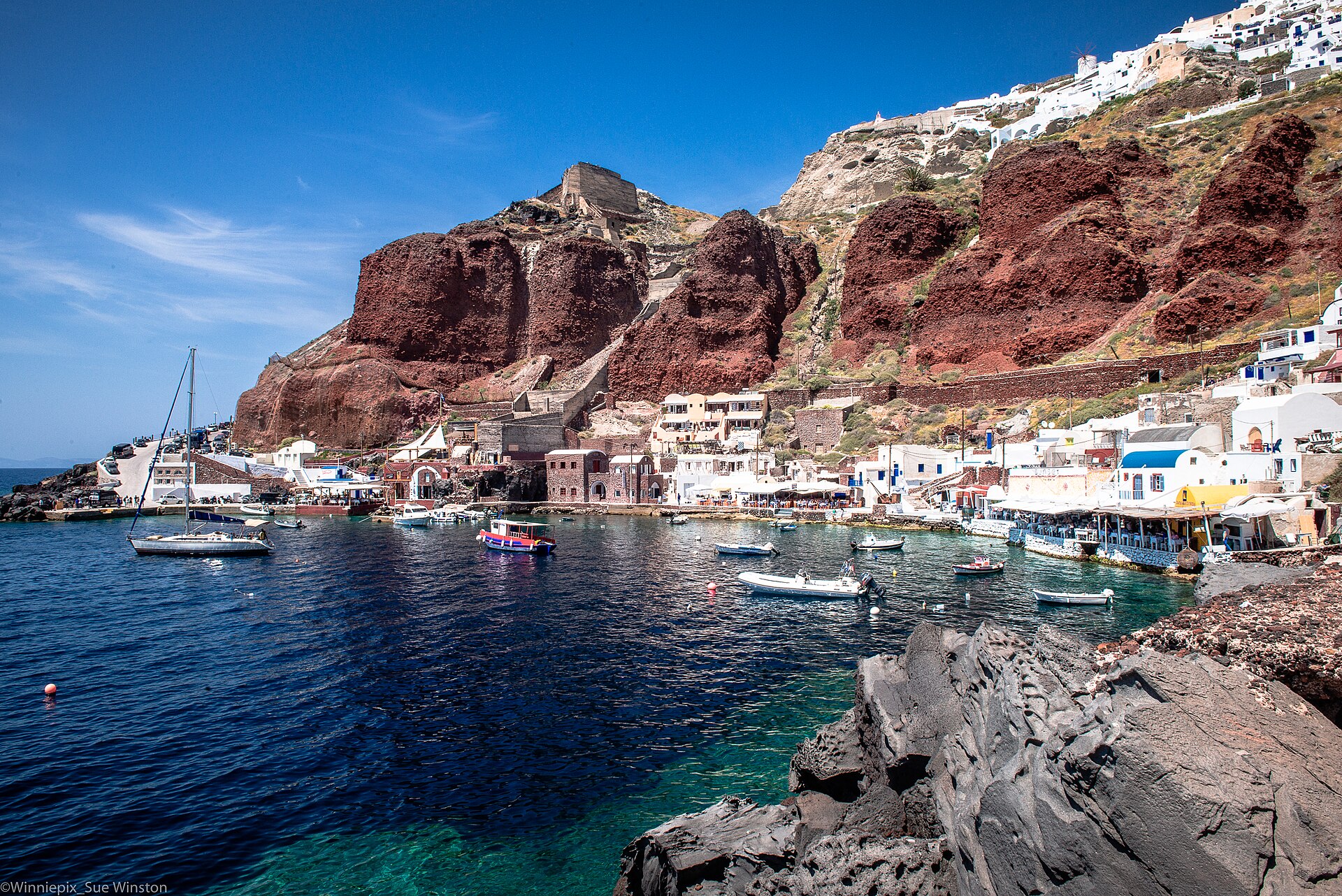
Insider tip: Dimitris Ammoudi Taverna, open since 1989, is the local favourite and its lobster spaghetti is the dish to order; Sunset by Paraskevas, with sun-dried octopus hanging at the door, and the upscale Basalt are the other safe bets. Book ahead in summer. If you want a swim first, follow the dirt path past the last taverna for five minutes to the rocks facing the little islet of Agios Nikolaos, where locals jump from the ledge into deep, clear water.
🗓️ A 3-Day Itinerary
Day 1 — Fira, the caldera walk, and Oia at dusk
Start in Fira with a morning coffee on the rim and the Museum of Prehistoric Thera (€10 / about $11) to meet the Akrotiri frescoes. Mid-morning, set off on the Fira-to-Oia caldera hike (10km, 3–5 hours) through Firostefani and Imerovigli, with a detour to Skaros Rock. Break for lunch at a taverna in Imerovigli. Reach Oia by late afternoon, claim a west-facing spot away from the Castle for the sunset and its afterglow, then walk the 278 steps down to Ammoudi Bay for a seafood dinner (budget €25–35 / about $27–39 a head with wine). Bus back to Fira for €2.20, or a taxi.
Day 2 — Akrotiri, wine country, and a quiet dinner inland
Catch the 8am-ish bus to Akrotiri (€2.30) and tour the buried city before the cruise crowds (€12 single or €15 combo). From there it's a short hop to the Red Beach viewpoint on the clifftop — look, photograph, but do not climb down to the sand (see the safety note below). Lunch on grilled octopus at To Psaraki in the fishing village of Vlychada (around €20–30 / about $22–33 per person). Spend the afternoon at Santo Wines or Venetsanos near Pyrgos for an Assyrtiko flight (€18–45) and a caldera-terrace sunset. Finish with dinner at Metaxi Mas in Exo Gonia, the island's best-loved local taverna (about €18–25 / $20–27 a head) — reserve days ahead in July and August.
Day 3 — The volcano, a black beach, and a last sunset
Ride the cable car down from Fira to the Old Port (€10 / about $11) and take a volcano-and-hot-springs boat tour (€30–40). Hike the Nea Kameni crater (€5 landing fee), then swim in the warm sulphur springs off Palea Kameni. Back on the island, bus out to the black sand at Kamari or Perissa (€1.80–2.40) for an afternoon swim, or climb to Ancient Thera, the ruined hilltop city on the ridge above Kamari (€10, or on your combo ticket). For your final evening, watch the sunset from Imerovigli instead of Oia — the same view, a quarter of the people — and have a last dinner in Fira.
🧠 Essential Tips
When to go
The sweet spot is late May, June, September, and early October. September is the connoisseur's pick: the sea is at its warmest (around 24°C / 75°F), the light is gold, and the crowds thin as the month goes on. July and August are the trade-off months — highs of 30–35°C (86–95°F), the fullest nightlife, but also peak prices, peak crowds, and the Meltemi, the strong summer north wind that can turn ferry crossings rough and cancel boat tours at short notice. Hiking is far more pleasant in April, May, and October. In winter much of the island shutters — Oia in particular empties out after mid-December — though Fira stays open year-round.
Getting around
From the airport (JTR), a taxi to Fira runs €25–35 (about $27–39) and to Oia €40–55; the KTEL bus to Fira is just €1.80 but infrequent. Santorini's public buses (KTEL) all radiate from Fira's main station, just east of the cathedral, so most village-to-village trips mean changing in Fira. Sample one-way fares: Fira–Oia €2.20, Fira–Kamari €1.80, Fira–Perissa €2.40, Fira–Akrotiri €2.30, Fira–Athinios (the ferry port) €2.30. There is no Uber or Lyft, and Beat/FreeNow coverage is thin — the local move is to have your hotel call a taxi or book a private driver in advance, because taxis are few and vanish at sunset. The Fira cable car to the Old Port is €10 one-way (€5 children, €5 per bag), takes three minutes, and runs about 6:30am to 11pm in season; the alternative is 588 steps you share with donkeys.
Safety, scams, and things that'll cost you
Santorini is very safe for personal crime, but it has a few specific hazards. Red Beach, near Akrotiri, has been officially declared dangerous after repeated rockfalls — authorities restrict access to the sand and post warning signs, so enjoy it from the clifftop path and don't become the person who ignored them. ATV and quad rentals cause a steady stream of serious injuries every summer on narrow, gravelly roads; if you rent one, confirm your licence is valid for it and that insurance actually covers you. The donkey rides up the Fira cliff are best avoided on animal-welfare grounds — the animals work long hours in extreme heat on steep stone. And watch the caldera-edge "view tax": a Greek salad that costs €7 at an inland taverna like Metaxi Mas can run €18 at a cliff-front table in Oia for the identical plate. The view is free from the street next door.
What to eat
Santorini's volcanic soil grows intensely flavoured produce, so eat local before you eat fancy. Fava (a silky yellow split-pea purée, about €6–8) and tomatokeftedes (fritters of the island's tiny sweet cherry tomatoes) are the two dishes to try everywhere; add the pale, mild local white eggplant in high summer and chlorotyri, a fresh, slightly sour goat cheese sold by the wheel in Fira's market. For a cheap, excellent lunch, Lucky's Souvlakis near Fira's main square does a pork souvlaki wrap for about €3.50 (under $4) — the best-value meal on a famously pricey island.
🏨 Accommodation Guide
Budget (roughly €80–130 / $90–145 a night): base yourself in the beach towns of Perissa or Kamari on the island's flat eastern side, or in Karterados just outside Fira. You trade the caldera view for black-sand beaches, far lower prices, and easy bus access — then take the bus up to Fira when you want the cliff.
Mid-range (roughly €150–300 / $165–330): Fira and Firostefani are the smart middle ground — you get the caldera-rim location and the sunset walk without Oia's premium, and you're at the hub of the bus network. Firostefani in particular is quieter at night than central Fira.
Luxury (roughly €400–1,000+ / $440–1,100+): this is what Santorini is famous for — cave suites carved into the cliff with private plunge pools and a direct caldera view, in Oia and Imerovigli. Oia is the headline address and prices accordingly; Imerovigli offers the same cliff-edge views and infinity pools with a calmer, less-photographed atmosphere. Book these six months to a year ahead for peak summer.
🎭 Beyond the Tourist Trail
The caldera rim is only half of Santorini. The inland villages — where most islanders actually live — see a fraction of the foot traffic. Pyrgos, the former capital, climbs a hill to a Venetian kasteli (castle quarter) with island-wide views that, from the courtyard of its monastery on Profitis Ilias, the highest point on Santorini, take in the whole caldera at once — a quieter, free alternative to the Oia sunset. Megalochori is a tangle of bell towers, wine cellars, and cave houses with almost no crowds, and Emporio has a genuine medieval labyrinth of a core, the Kasteli, built as a maze specifically to confuse pirates.
On the south coast, Vlychada pairs a strange, wind-sculpted white-cliff beach with the excellent Tomato Industrial Museum, set in a 1940s cannery that tells the real economic history of the island before tourism — tomatoes and wine, not honeymoons. And if you're on the island in late August or early September, ask about the grape harvest: several wineries, including Santo Wines, run harvest events, and it's the one time of year you can watch the whole volcanic-wine story happen in front of you.
❤️ Let VoyaBear Plan Your Santorini Trip
Santorini rewards good timing more than almost anywhere — the difference between a magical trip and a frustrating one often comes down to which hour you visit Akrotiri, which sunset spot you choose, and whether you booked the caldera cave suite before it sold out. That's exactly the kind of detail VoyaBear is built to handle. Tell us your dates, your budget, and whether you're here for the wine, the hiking, the history, or the honeymoon, and we'll build you a day-by-day Santorini itinerary with the bookings, timings, and local spots sorted — so all you have to do is show up and watch the light change on the caldera. Start planning your Santorini trip with VoyaBear today.
Want this as an actual itinerary?
VoyaBear turns a guide like this into a day-by-day plan built around how you travel.
Plan my trip free