Singapore 2026: The Complete Travel Guide to the Lion City
7 August 2026 · 11 min read
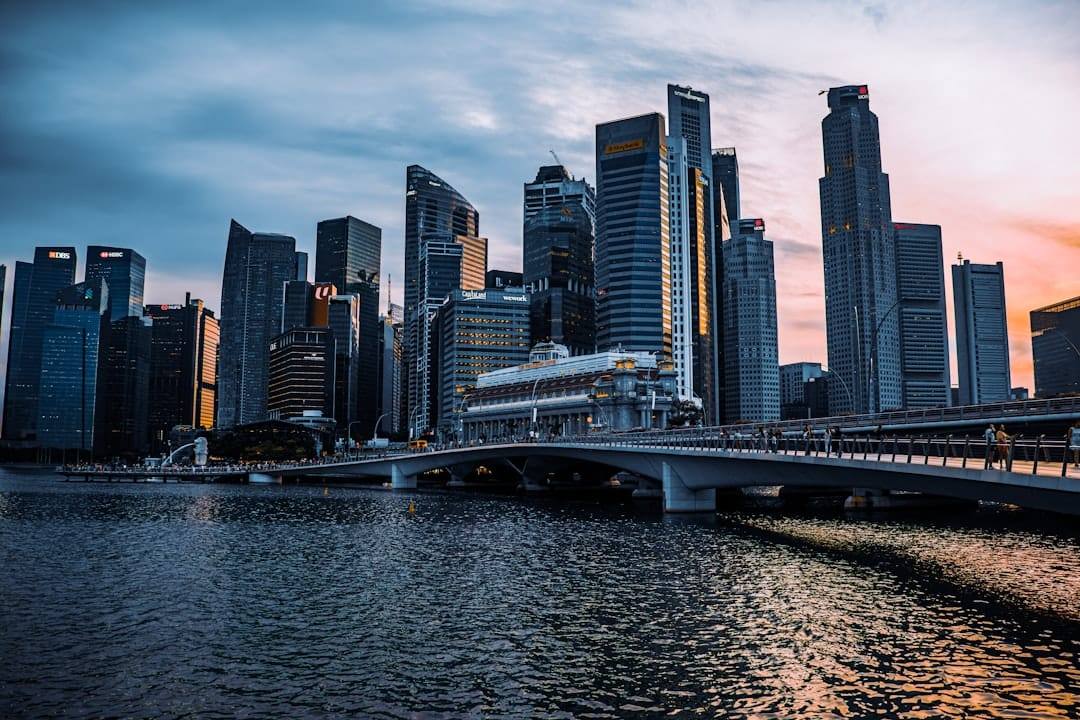
Singapore packs six million people, four official languages, and one of the best-fed populations on earth onto an island smaller than New York City. You can eat a Michelin-recommended plate of chicken rice for under SGD 6 at lunch, ride an air-conditioned train that actually arrives on time, and watch a free light show fire off a grove of 50-metre metal "Supertrees" after dark — all in the same afternoon. It is expensive to sleep here and cheap to eat here, absurdly clean, and far stranger and more layered than its reputation as a sterile stopover suggests. This guide is built on 2026 prices and opening hours, real stall names, and the specific trains and fares locals actually use, so you can spend your time eating instead of second-guessing.
🏙️ Essential Experiences
Singapore is compact enough that you can cover its highlights in three or four days without ever renting a car. Here are the eight places worth your hours, what to do at each, and how to dodge the crowds.
1. Gardens by the Bay
The 101-hectare park on reclaimed land beside Marina Bay is the one attraction nearly every visitor gets right. The two glass conservatories are the paid draw: the Flower Dome (the world's largest glass greenhouse) and the Cloud Forest, built around a 35-metre indoor waterfall wrapped in mist and mountain plants. The two-conservatory adult ticket runs roughly SGD 46–53 depending on where you buy and your residency, and both are open 9am–9pm. The real trick, though, is that the outdoor gardens and the Supertree Grove are completely free. Time your visit for the Garden Rhapsody light-and-sound show at the Supertrees, which plays free every night at 7:45pm and 8:45pm for about 15 minutes. If you want to walk among the treetops, the OCBC Skyway aerial walkway costs about SGD 14.
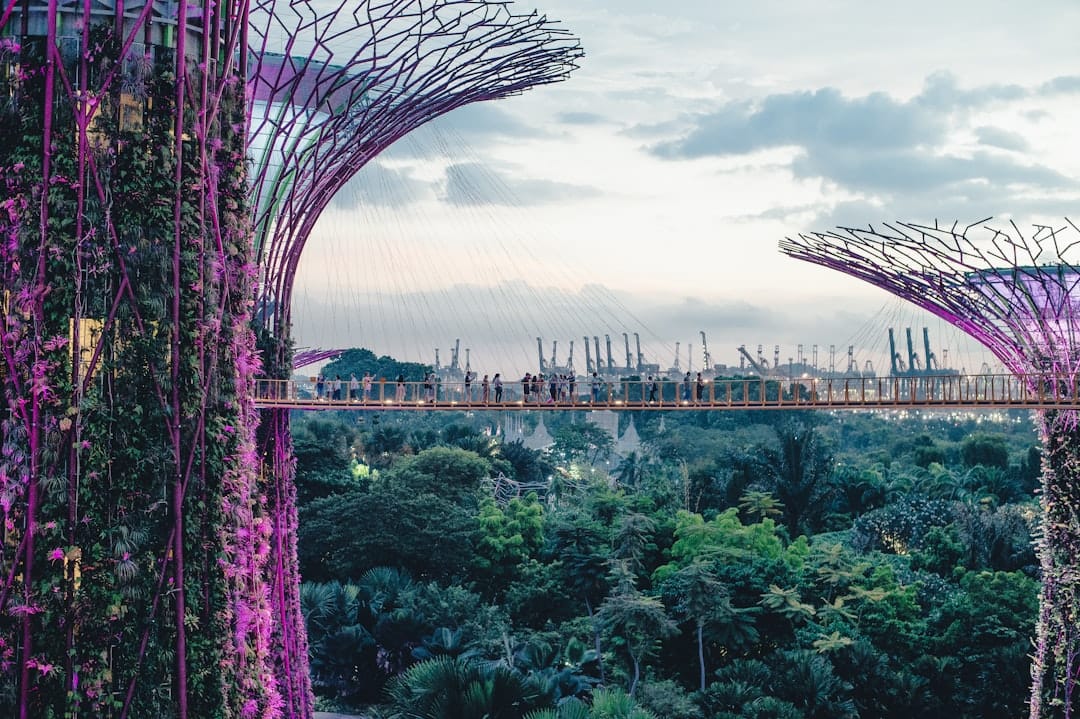
Insider tip: Do the Cloud Forest first thing at 9am before the tour buses arrive and the glass fogs with body heat, then come back after dark for the free Supertree show — you get the same site twice, at its two best hours, and only pay once.
2. Marina Bay Sands SkyPark Observation Deck
The three-towered hotel topped by a boat-shaped sky deck is the postcard shot of modern Singapore, and the SkyPark Observation Deck on the 57th floor is where you look down on all of it — the Gardens, the CBD, the container ships stacked to the horizon. Adult tickets are about SGD 32, and it's open 11am–9pm with last entry at 8:30pm.
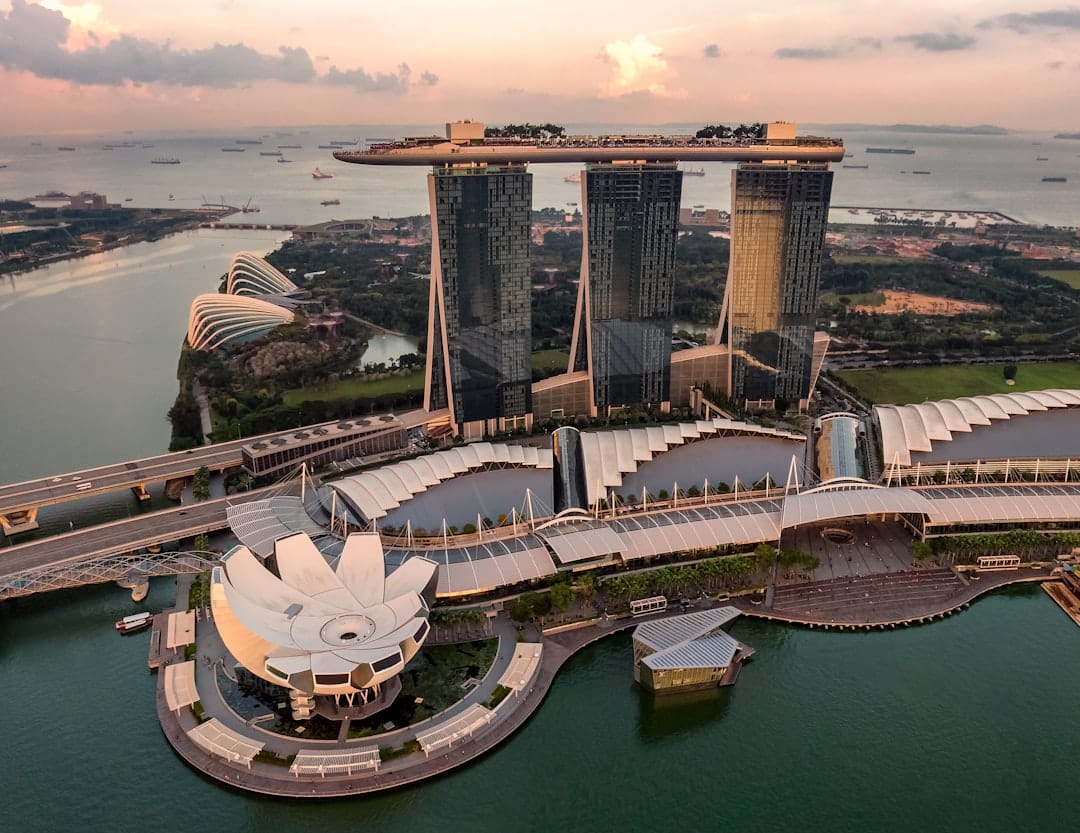
Insider tip: The infinity pool is for hotel guests only — no day passes, no exceptions, so ignore the Instagram fantasy. If you'd rather not pay for the deck at all, book a drink at Cé La Vi on the same rooftop; the minimum spend gets you the identical view with a cocktail in hand. Arrive around 6:45pm to catch sunset and then the free Spectra water-and-light show on the promenade below at 8pm and 9pm.
3. Chinatown and the Buddha Tooth Relic Temple
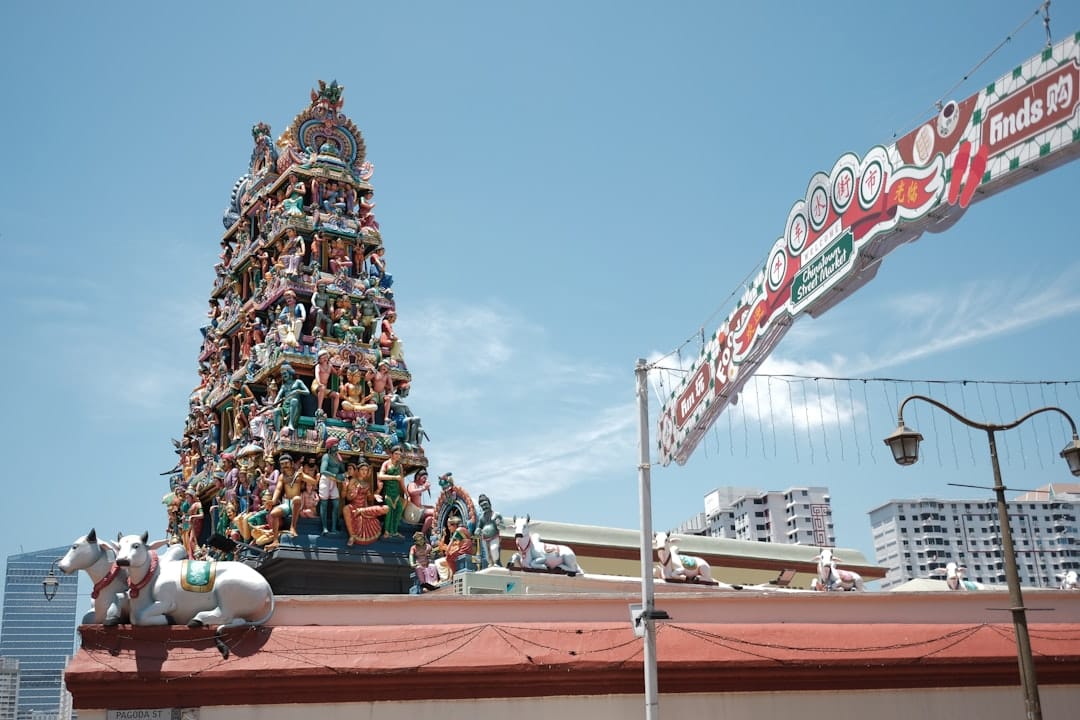
Singapore's Chinatown is a working neighbourhood, not a theme park, and its anchor is the five-storey Buddha Tooth Relic Temple on South Bridge Road — a Tang-dynasty-style hall completed in 2007 that is free to enter (cover shoulders and knees). Upstairs sits a gold stupa said to hold a relic of the Buddha; the rooftop orchid garden is a quiet escape from the street. A few doors down is Sri Mariamman Temple, the city's oldest Hindu temple, its gopuram tower stacked with painted deities — also free.
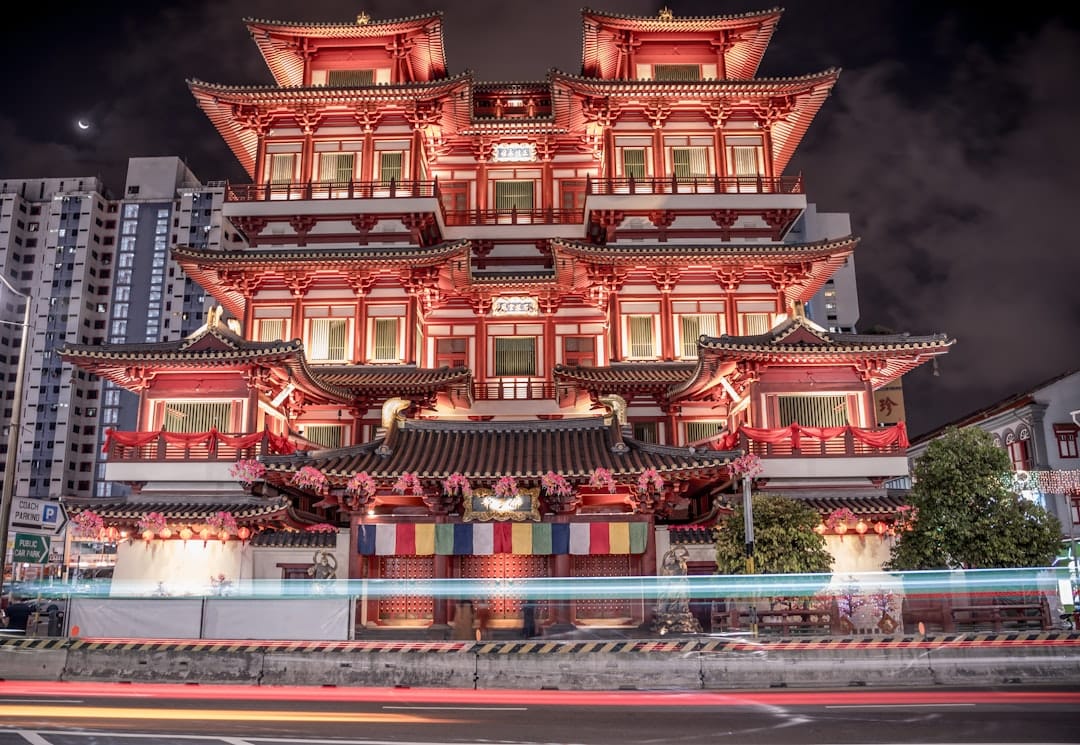
Insider tip: Skip the tourist-tat souvenir stalls on Pagoda Street and walk two minutes to Maxwell Food Centre instead, where Tian Tian Hainanese Chicken Rice (a plate is about SGD 5–7) has a queue for a reason. Go before noon or after 2pm to avoid the office lunch crush.
4. Kampong Glam and Sultan Mosque
The historic Malay-Arab quarter is the most photogenic corner of the city. The gold-domed Sultan Mosque, first built in 1824 and rebuilt in 1932, is free to visit outside prayer times (robes are lent to anyone in shorts). Radiating out from it are Arab Street, lined with textile and rug merchants, and Haji Lane, a single narrow alley of independent boutiques, murals, and bars that is the closest thing Singapore has to a bohemian strip.
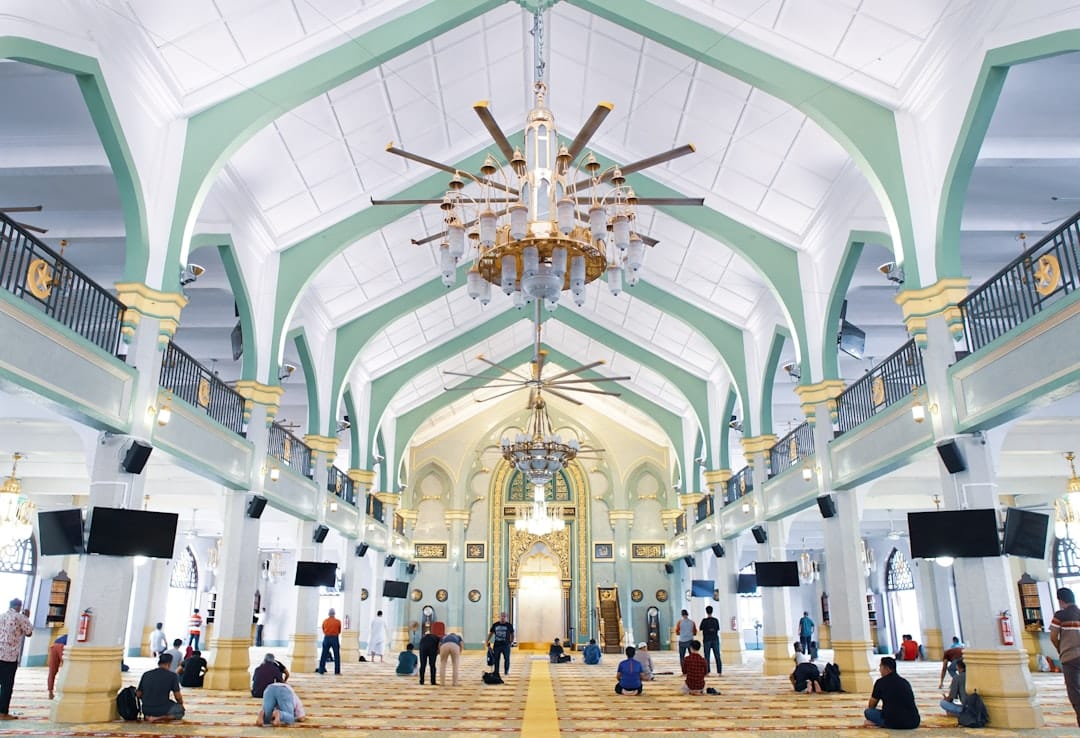
Insider tip: Come in the late afternoon. Haji Lane's shops don't really open until 11am–noon, the light on the mosque's dome is best around 5pm, and the bars along the lane fill up after 6pm — so one visit covers shopping, photos, and a drink without backtracking.
5. Little India
Loud, fragrant, and gloriously un-sanitised by Singapore standards, Little India is the antidote to the polished downtown. The 1881 Sri Veeramakaliamman Temple on Serangoon Road, dedicated to the goddess Kali, is free and open to respectful visitors. Nearby, the Tekka Centre combines a wet market, a hawker hall of South Indian and Muslim food, and a sari bazaar under one roof, while Mustafa Centre is a sprawling 24-hour department store selling everything from gold jewellery to electronics at 3am.
Insider tip: Order a masala dosa or a banana-leaf thali at the Tekka Centre food stalls for around SGD 5–8, and go on a Sunday evening when the neighbourhood is at its busiest and most alive — though bring patience, as the crowds are real.
6. Singapore Botanic Gardens and the National Orchid Garden
The 160-year-old Botanic Gardens is Singapore's only UNESCO World Heritage Site and is free to enter from 5am to midnight — a genuine tropical rainforest fragment, a swan lake, and open lawns where locals picnic. Tucked inside is the paid National Orchid Garden, home to more than 1,000 orchid species and 2,000 hybrids, including blooms named for visiting dignitaries; adult admission is SGD 10.
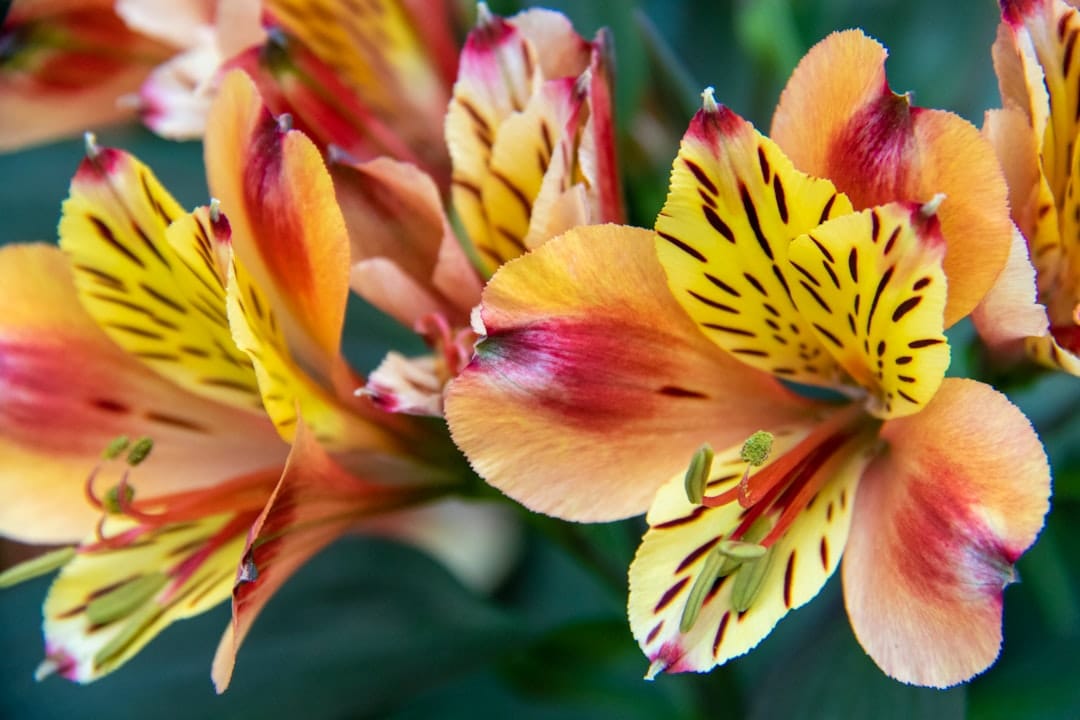
Insider tip: Enter at the Tanglin Gate (the oldest, quietest end) early in the morning when the heat is bearable and the orchid garden opens at 8:30am. It's a five-minute walk from the Botanic Gardens MRT station on the Circle and Downtown lines.
7. Eat Your Way Through a Hawker Centre
Singapore's hawker culture is on UNESCO's list of intangible heritage, and eating at one is the single most essential thing you'll do here. These open-air food halls are where a full, superb meal costs SGD 5–10. Beyond Maxwell, the giant Chinatown Complex has 260-odd stalls, including the famous Hawker Chan soya-sauce chicken rice and noodle (from about SGD 3.80). Lau Pa Sat, a cast-iron Victorian market from 1894 in the CBD, turns its adjacent street into Satay Street each evening, where skewers grill over charcoal for roughly SGD 0.60–1.20 a stick.
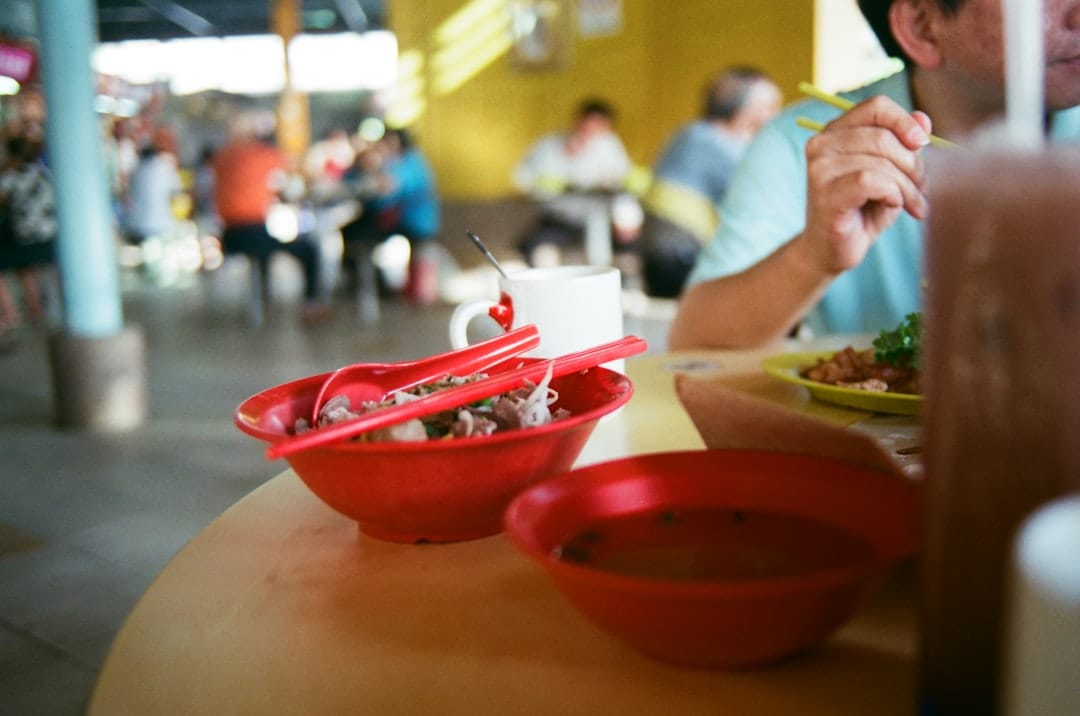
Insider tip: "Chope" your seat the local way — leave a packet of tissues on the table to reserve it before you queue for food. And for the deepest, most local spread, take the train out to Old Airport Road Food Centre, widely rated the city's best, for Hokkien prawn mee and rojak.
8. Sentosa and Universal Studios Singapore
The resort island of Sentosa, reached by a short cable car, monorail, or a walk across the boardwalk, is where families and thrill-seekers go. Universal Studios Singapore is the headline act, with adult one-day tickets from about SGD 83 and rides spanning Sci-Fi City, Ancient Egypt, and a Minion Land. The island also holds beaches, the S.E.A. Aquarium, and luxury pool clubs.
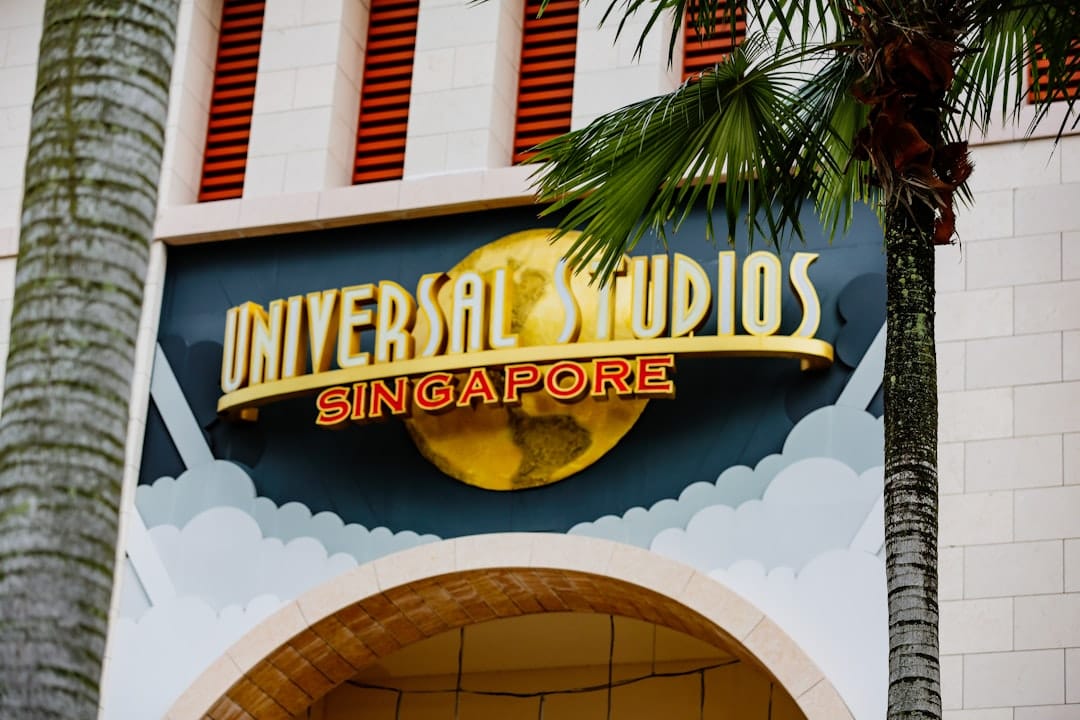
Insider tip: Universal Studios is genuinely small — you can ride everything in a single day if you arrive at opening and hit the far end of the park first, working backwards against the crowd flow. Skip Sentosa's artificial "beaches" if you've seen a real one; the theme park is the only part worth the trip.
🗓️ A 3-Day Itinerary
Three days is enough to see the city properly without rushing. Distances are short — most of what follows is 10–25 minutes apart by MRT, and single fares run about SGD 1–2.30.
Day 1 — Marina Bay and the Icons
Start at the Merlion Park (free) for the classic harbour photo of the half-lion, half-fish statue spouting into the bay, then walk 15 minutes across the Helix Bridge to Marina Bay Sands. Spend the late morning at Gardens by the Bay — Cloud Forest at opening, then the Flower Dome (combined ticket ~SGD 46–53). Break for a cheap, excellent lunch at the food court inside the Shoppes at Marina Bay Sands or nearby. In the afternoon, head to the ArtScience Museum (lotus-shaped, with rotating digital-art shows) or nap through the midday heat. Return for sunset at the SkyPark deck (~SGD 32) or a rooftop drink, then catch the free Garden Rhapsody Supertree show at 7:45pm and the Spectra water show on the promenade at 8pm. Dinner at Lau Pa Sat's Satay Street, a 10-minute train ride away.
Day 2 — The Cultural Quarters
Devote the day to the three heritage districts. Begin in Chinatown: the Buddha Tooth Relic Temple and Sri Mariamman Temple (both free), then an early lunch at Maxwell Food Centre (chicken rice, ~SGD 6). Take the MRT to Little India for the Sri Veeramakaliamman Temple and a wander through Tekka Centre and the Mustafa Centre. In the late afternoon, move to Kampong Glam for Sultan Mosque, shopping on Haji Lane, and dinner at a Malay or Middle Eastern spot on Arab Street — try nasi padang or a mezze plate. Each district is one or two MRT stops from the next, so the whole day costs only a few dollars in fares.
Day 3 — Gardens, Islands, or Museums
Choose your own ending. Nature lovers should spend the morning at the Botanic Gardens and National Orchid Garden (SGD 10), then the afternoon at the Singapore Zoo or the excellent Night Safari (adult SGD 58, opens at dusk) up in Mandai. Families should give the full day to Sentosa and Universal Studios (from SGD 83). History buffs can instead do the National Gallery Singapore — the largest collection of Southeast Asian art, housed in the old Supreme Court and City Hall — and the National Museum. Wherever you land, end at a rooftop bar or a riverside table along the Singapore River at Clarke Quay or Boat Quay.
🧠 Essential Tips
When to go
Singapore sits one degree off the equator, so it is hot (30–32°C) and humid (around 83%) every single day of the year — the weather is a condition to accept, not a season to plan around. That said, February to April tends to be the driest and most comfortable stretch. The wettest months are the northeast monsoon of November to January, when December alone averages around 269mm of rain, though the storms are usually short, warm afternoon downpours. Be aware that haze from Indonesian land-clearing fires can occasionally reduce air quality between August and October. Time a visit with an event if you can: National Day on 9 August fills Marina Bay with fireworks and a military parade; the Formula 1 Singapore Grand Prix, a floodlit night race through the Marina Bay street circuit, takes over the city each September; and Deepavali lights up Little India's Serangoon Road with an arch of lamps in the weeks before the festival.
Getting around
The MRT is fast, cheap, and spotless, running from around 5:30am to midnight. Don't buy paper tickets — just tap a contactless Visa, Mastercard, or Amex card (or Apple/Google Pay) at the gantry; the system, called SimplyGo, charges the same distance-based fare of roughly SGD 1–2.30 per trip. If you'd rather have a single card, the Singapore Tourist Pass offers unlimited rides for SGD 10 (1 day), SGD 16 (2 days), or SGD 20 (3 days), each with a SGD 10 refundable deposit. From Changi Airport, the MRT (East-West line) reaches the city in about 30–35 minutes for under SGD 2.10 — you'll change trains at Tanah Merah. A Grab (the ride-hailing app locals actually use, not Uber, which left the region) or a taxi to downtown costs about SGD 25–45 and takes 20–40 minutes.
Safety and money
Singapore is one of the safest cities in the world — violent crime against tourists is genuinely rare, and you can walk anywhere at night. The real risks are to your wallet and your record. Alcohol is heavily taxed, so a beer in a bar can run SGD 15–18; buy at a hawker centre or convenience store instead. The laws are strict and enforced: jaywalking, littering, eating or drinking on the MRT, and vaping all carry real fines, and chewing gum is famously restricted (you can't buy it, though carrying a personal amount is fine). Drug offences carry severe penalties, up to the death penalty for trafficking — this is not a place to take chances. Tipping is not expected; a 10% service charge and 9% GST (marked "++" on menus) are added automatically at restaurants.
🏨 Accommodation Guide
Singapore is one of Asia's most expensive cities to sleep in, and space is at a premium — which is why the capsule-hotel format is so common and genuinely good here. Where you stay matters less for safety (everywhere is safe) than for atmosphere.
Budget (US$50–90 / night): Modern capsule "pod" hotels are the smart choice, offering a clean private berth, good air-con, and central locations for the price of a dorm bed elsewhere. Look at Cube Boutique Capsule Hotel in Chinatown or The Pod in Kampong Glam. Little India and Lavender have the cheapest conventional rooms if you want a door.
Mid-range (US$130–220 / night): This is where boutique heritage shophouse hotels shine. Hotel Mono and The Scarlet in Chinatown, or The Sultan and Heritage Collection on Arab in Kampong Glam, put you inside restored 1920s buildings walking distance from the best food. Bugis is a well-connected, slightly cheaper base.
Luxury (US$350–700+ / night): For the full spectacle, Marina Bay Sands gets you the infinity pool and the address, while the colonial-era Raffles Hotel (birthplace of the Singapore Sling) and the eco-draped Parkroyal Collection Pickering in Chinatown are quieter, more characterful splurges. Orchard Road is the district for classic five-star towers near the shopping.
🗺️ Beyond the Tourist Trail
Two neighbourhoods reward anyone who has an extra half-day. Joo Chiat and Katong, in the east, is the heart of Peranakan (Straits Chinese) culture — Time Out named Joo Chiat Road one of the world's coolest streets in 2025, and the pastel two-storey shophouses of Koon Seng Road, with their carved eaves and ceramic tiles, are the most beautiful residential architecture in the city. This is also the birthplace of katong laksa, a coconut-curry noodle soup cut into spoon-sized pieces; 328 Katong Laksa is the standard-bearer, around SGD 6–8 a bowl. Take bus 12 or 14, or the Marine Parade MRT on the new Thomson-East Coast line.
Closer in, Tiong Bahru is a 1930s Art Deco public-housing estate turned quietly hip: low curved walls, independent cafés, and the beloved Tiong Bahru Bakery for a croissant, all a short walk from the pre-war Tiong Bahru Market, where Jian Bo Shui Kueh has sold steamed rice cakes with preserved radish (about SGD 3.50) since the 1950s. It's the rare Singapore neighbourhood where you can see how the city lived before the skyscrapers.
❤️ Let VoyaBear Plan Your Singapore Trip
Singapore rewards a well-planned trip — the right hawker stall, the free light show timed to sunset, the temple visited before the tour buses — and that's exactly what VoyaBear does. Instead of stitching together a dozen blog posts, tell us how many days you have, what you like to eat, and your budget, and we'll build a personalised, day-by-day Singapore itinerary with the bookings, timings, and neighbourhoods that fit you. Start planning your Singapore trip with VoyaBear today — and spend your holiday eating chicken rice, not refreshing tab after tab.
Want this as an actual itinerary?
VoyaBear turns a guide like this into a day-by-day plan built around how you travel.
Plan my trip free