Sucre 2026: The Complete Guide to Bolivia's White City
30 September 2026 · 12 min read
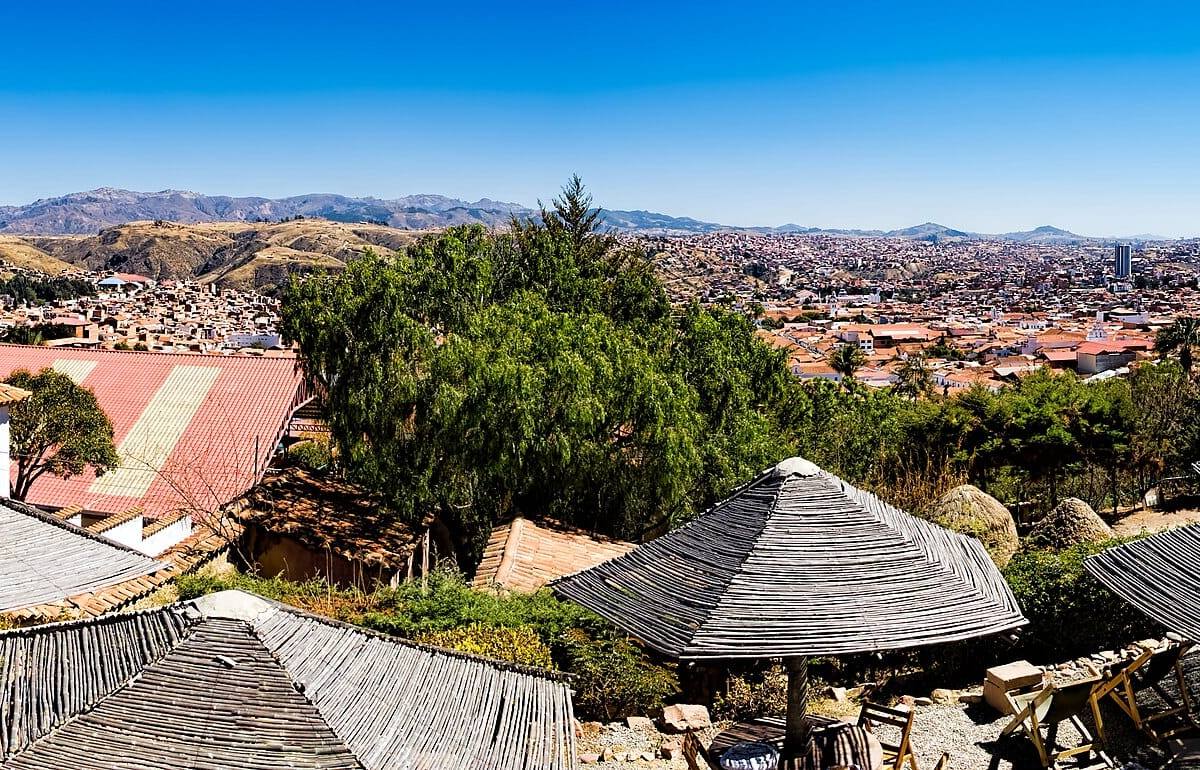
Sucre is where Bolivia was born. On 6 August 1825, in a modest hall two blocks off the main square, a congress signed the act that turned Spanish Charcas into a republic and named it after Simón Bolívar. Two centuries on, the city keeps its founding-document composure: a compact grid of whitewashed colonial mansions at 2,810 metres in the Andes, cool and dry, with a municipal ordinance that still requires facades in the historic center to be painted white each year. That is why locals call it La Ciudad Blanca — the White City — and why UNESCO put the whole center on its World Heritage list in 1991.
It is also, whatever the map says about La Paz, the constitutional capital of Bolivia; the Supreme Court still sits here. For a traveler that combination — a walkable UNESCO core, a 68-million-year-old dinosaur wall on the edge of town, Sunday weaving markets in the surrounding hills, and some of the cheapest good coffee in South America — makes Sucre the country's most rewarding city to spend three or four unhurried days. It sits low enough (2,810 m) that altitude sickness is milder than in La Paz or Potosí, and warm enough by day that you can plan around sunshine most of the dry season. Here is exactly what to do, what it costs, and how to get around.
🏙️ Essential Experiences
Casa de la Libertad — where the republic was signed
Start where the country did. The Casa de la Libertad, on the north side of Plaza 25 de Mayo, is built around the Salón de la Independencia, the former Jesuit university hall where Bolivia's declaration of independence was signed on 6 August 1825. The original parchment sits under glass. On the wall hangs the portrait of Bolívar by José Gil de Castro that the Liberator himself reportedly considered the best likeness of him, and a side room honors Juana Azurduy, the mestiza guerrilla commander who fought the Spanish while pregnant and is now on the 100-boliviano note.
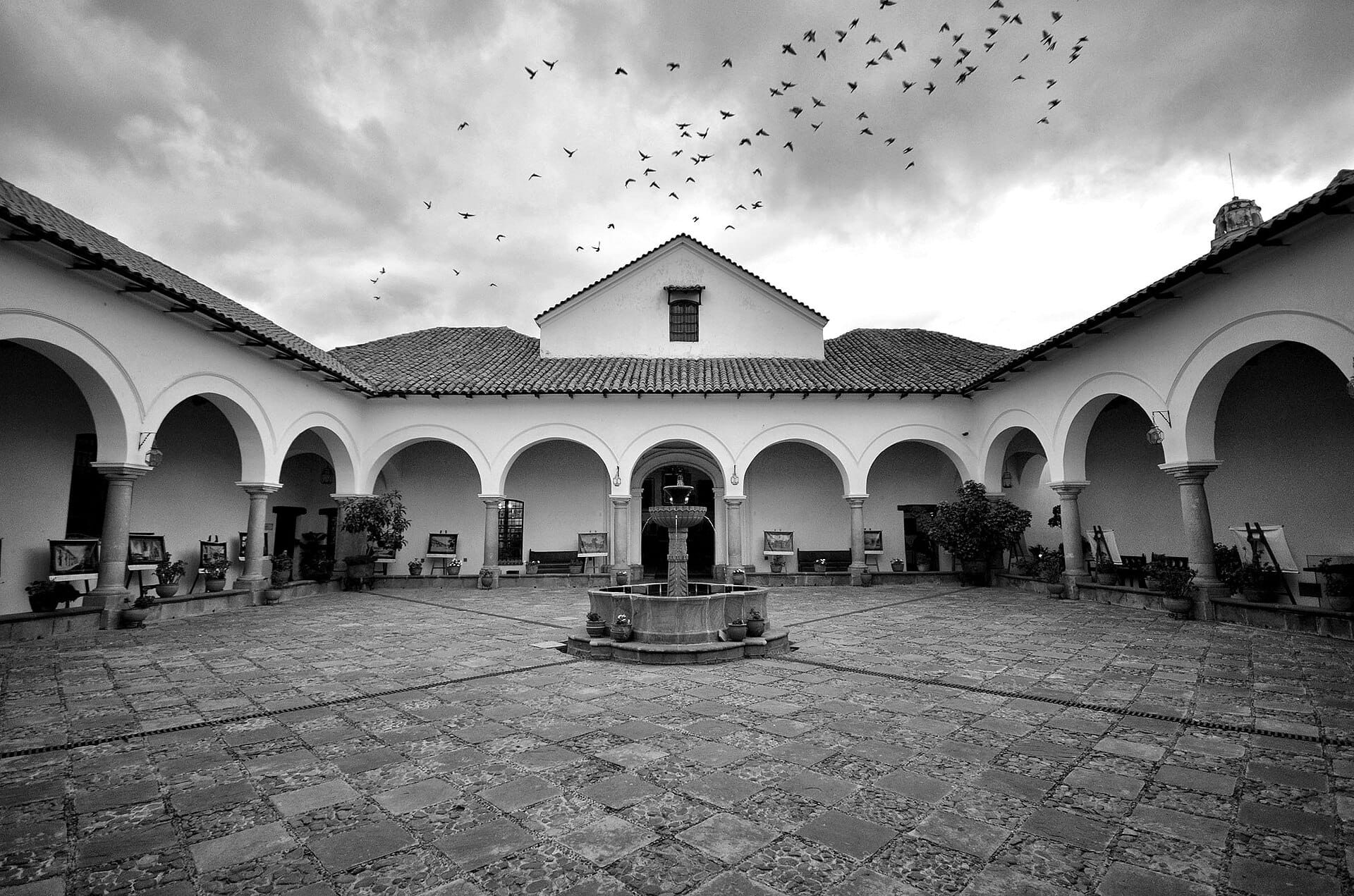
What to do: take the included Spanish-language tour (English tours cost extra) — the building is small and the guides carry the story that the objects alone don't tell. Insider tip: come on a weekday between 9 and 10:30 a.m., before the school groups arrive, and skip 6 August itself, when it closes for the independence ceremonies. Cost: around Bs 15 (about $2 / €2) plus roughly Bs 10 for a photo permit. Open Tue–Fri 9:00–12:00 and 14:30–18:30, Sat–Sun 9:00–12:00, closed Monday.
Cal Orck'o — 5,000 dinosaur footprints on a vertical wall
On the edge of town, a cement company quarrying limestone in 1994 exposed the largest set of dinosaur tracks on Earth: a near-vertical slab, once a lakeshore mudflat, carrying more than 5,000 footprints from around 15 species — titanosaurs, theropods, the lot — laid down roughly 68 million years ago and tilted upright by the Andes. You view it from the Parque Cretácico, which pairs a viewing platform and small museum with some frankly goofy life-sized dinosaur models.
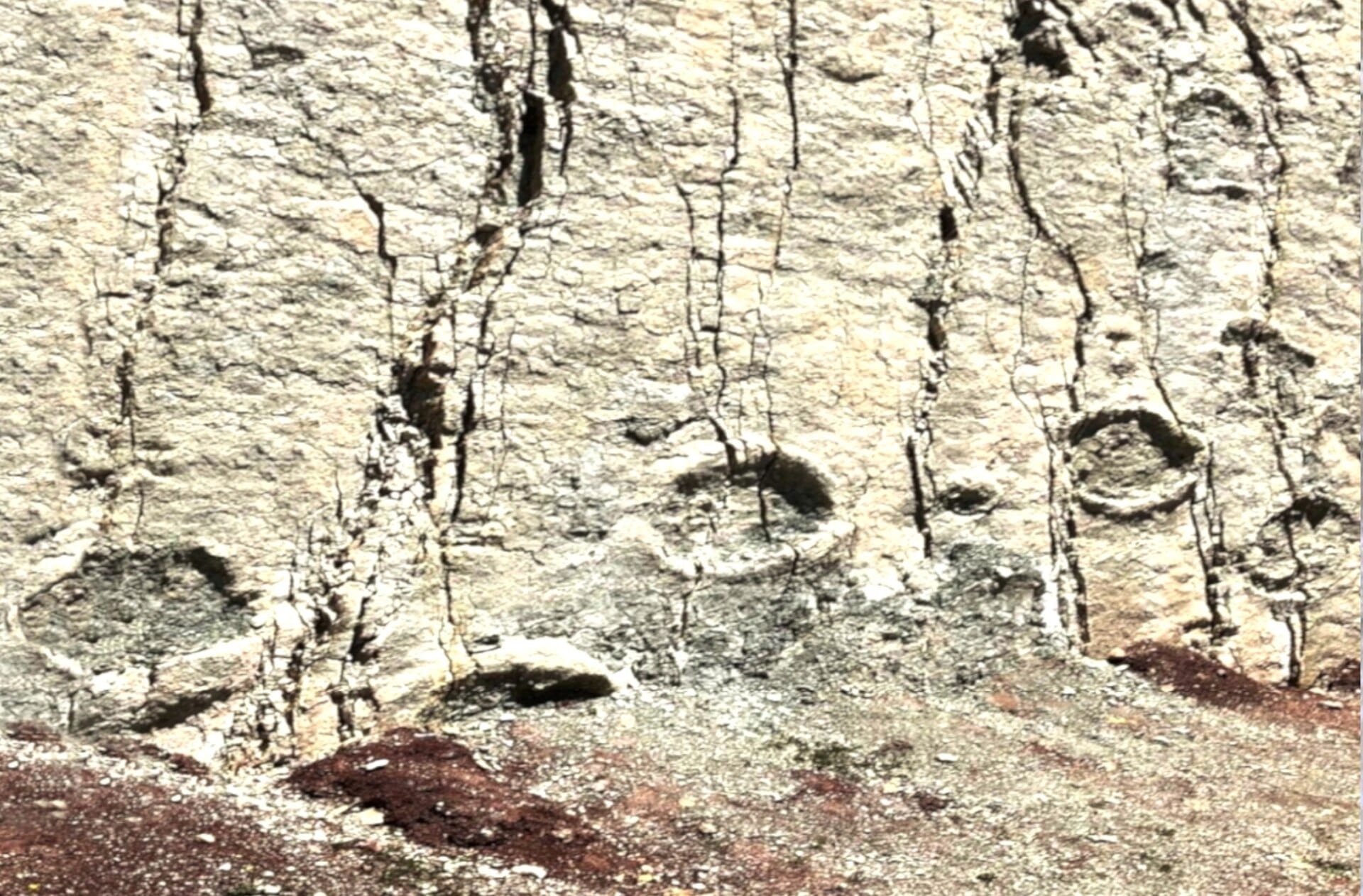
What to do: the guided quarry walk that takes you closer to the wall runs at set times (typically 12:00 and 13:00) — aim for those, because between roughly noon and 2 p.m. the sun is overhead and the prints lose their shadows and read clearly. Insider tip: ride the Dinobus, which leaves from the cathedral corner of Plaza 25 de Mayo (9:30, 11:00, 12:00, 14:00, 15:00) for Bs 15 return; the local micro #4 does the same trip for Bs 2 if you'd rather. Cost: Bs 30 (about $5 / €4.50) entry for foreigners, plus Bs 5 to take photos. Open Tue–Sun 9:00–17:00, closed Monday.
La Recoleta — the monastery terrace above the roofs
Climb (or take a triciclo taxi up) to La Recoleta, the 1601 Franciscan monastery on the hill at Plaza Pedro de Anzúrez. The stone arches of its mirador frame the whole white grid of the city against the hills — the single best view in Sucre. Inside the Museo de la Recoleta is a cloister holding a cedar tree said to be around a thousand years old.
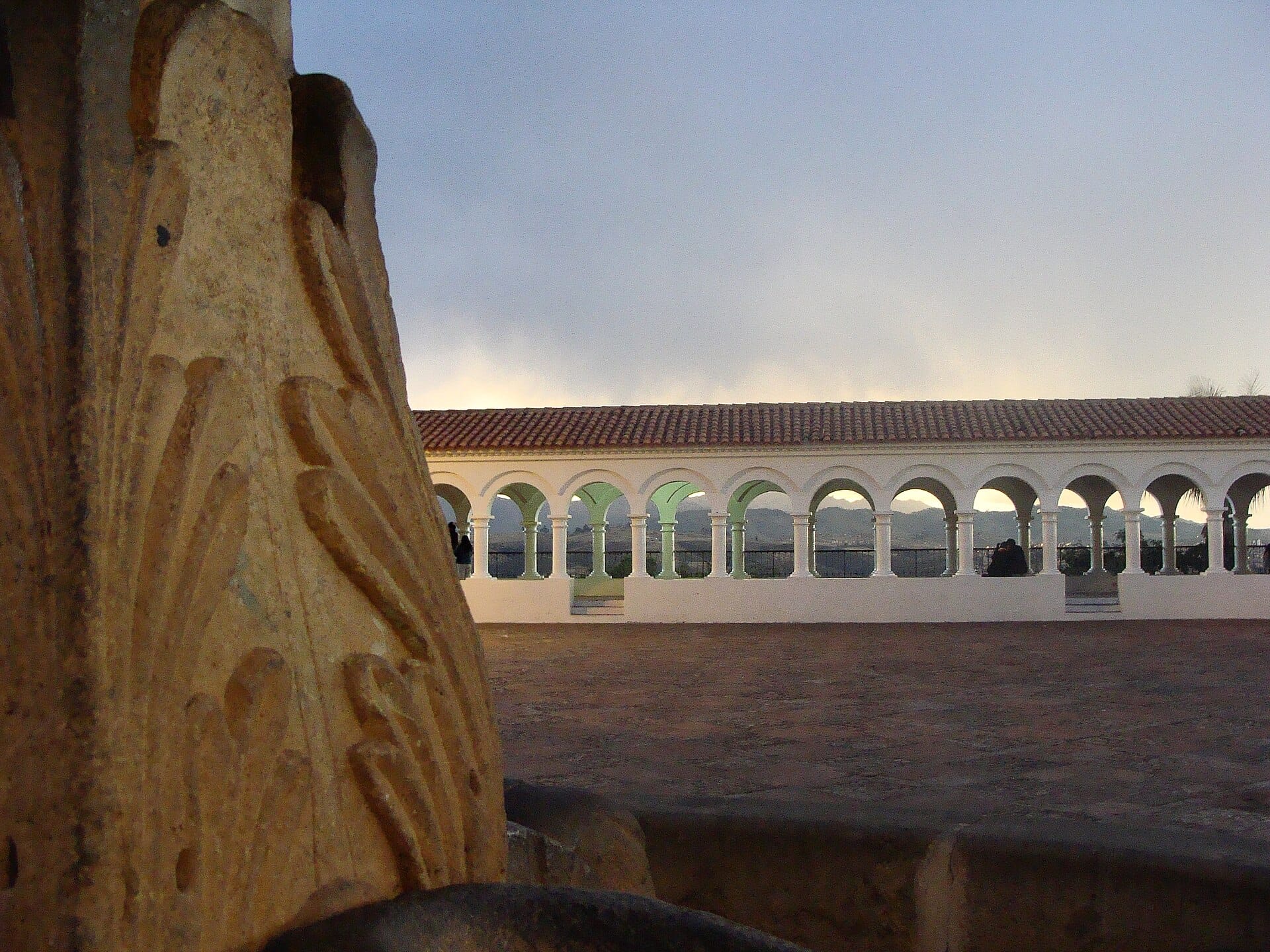
What to do: time it for late afternoon, when the low sun turns the whitewash gold, then take a table at the Café Mirador just below the arches — the terrace café that shares the view without the museum ticket. Insider tip: the walk up from the center is about 15 minutes and steep at this altitude; a triciclo or taxi costs only a few bolivianos and saves your legs for the market days. Cost: the mirador and plaza are free; the monastery museum charges a small entry (around Bs 15).
Museo de Arte Indígena ASUR — the weaving that tells stories
Two blocks from Recoleta on Calle Iturricha, ASUR is the one museum that explains why the textiles you'll see everywhere actually matter. It shows two distinct traditions side by side: the ordered, geometric red-and-black weavings of the Tarabuco (Yampara) people, and the dark, dreamlike Jalq'a cloths crowded with khurus — imaginary creatures woven with no fixed plan, straight from the weaver's head.
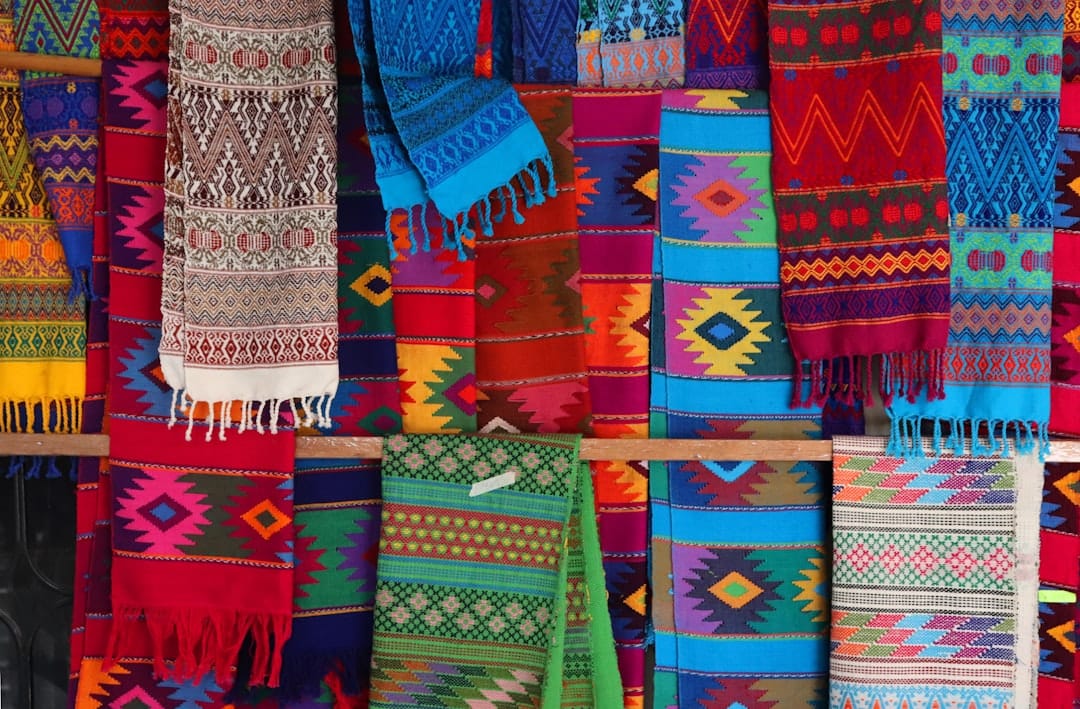
What to do: watch the resident weavers working on backstrap looms — a single complex piece can take months — then buy directly from the shop, where the money goes back to the weaving communities ASUR was set up to support. Insider tip: go here before the Tarabuco market so you can tell a genuine hand-spun weaving from a machine-made souvenir. Cost: Bs 40 (about $6 / €5.50) for foreigners. Open Mon–Fri 9:00–12:15 and 14:30–18:00, Sat 9:00–12:00 and 14:30–18:00, closed Sunday.
San Felipe Neri — the white rooftop
The Oratorio de San Felipe Neri, a neoclassical convent that doubles as a girls' school, has the rooftop that puts you on the White City rather than looking at it. Its flat, whitewashed terrace runs between the bell towers, and you can walk out across it among the tiled roofs and domes of the old town.
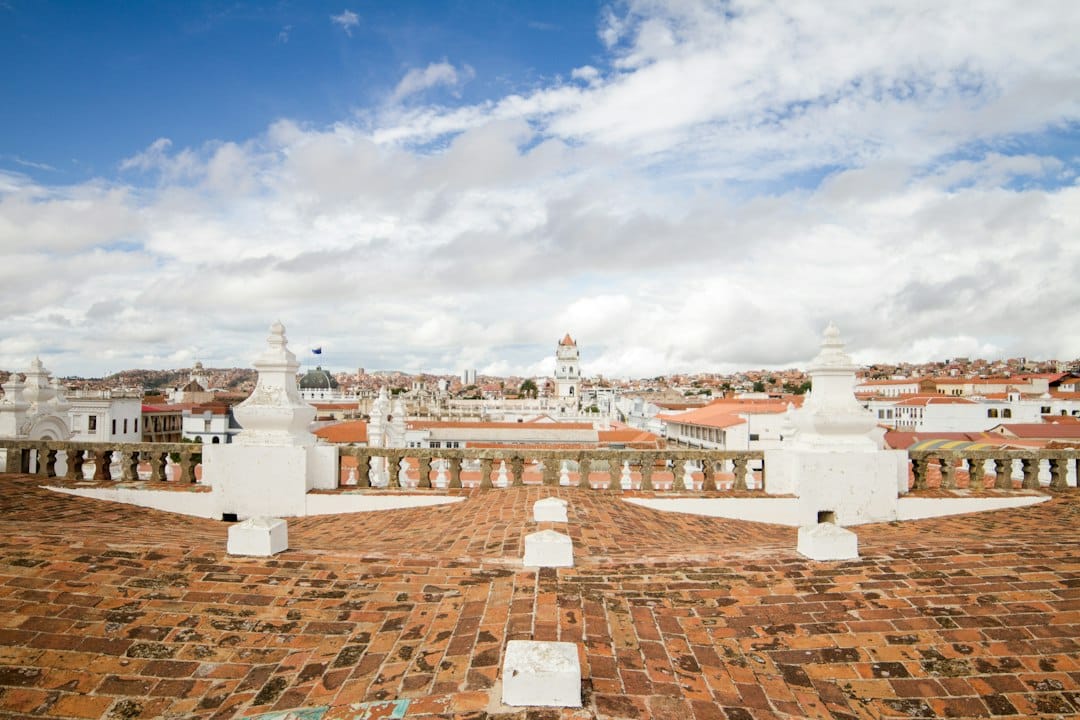
What to do: climb up for the terrace, then go a little higher inside the bell tower for the view down the length of the roofline. Insider tip: because it's a working school, visits run afternoons only, roughly 14:30–17:30, Monday to Saturday — don't turn up in the morning expecting to get in. Cost: around Bs 15 (about $2 / €2).
Plaza 25 de Mayo and the Cathedral — the living center
Everything in Sucre orbits Plaza 25 de Mayo, named for the 1809 uprising that Bolivians count as the first cry of independence in South America. It's a genuinely used square — students, shoe-shiners, retirees on the benches under the palms — ringed by cafés and the Catedral Metropolitana, begun in 1559.
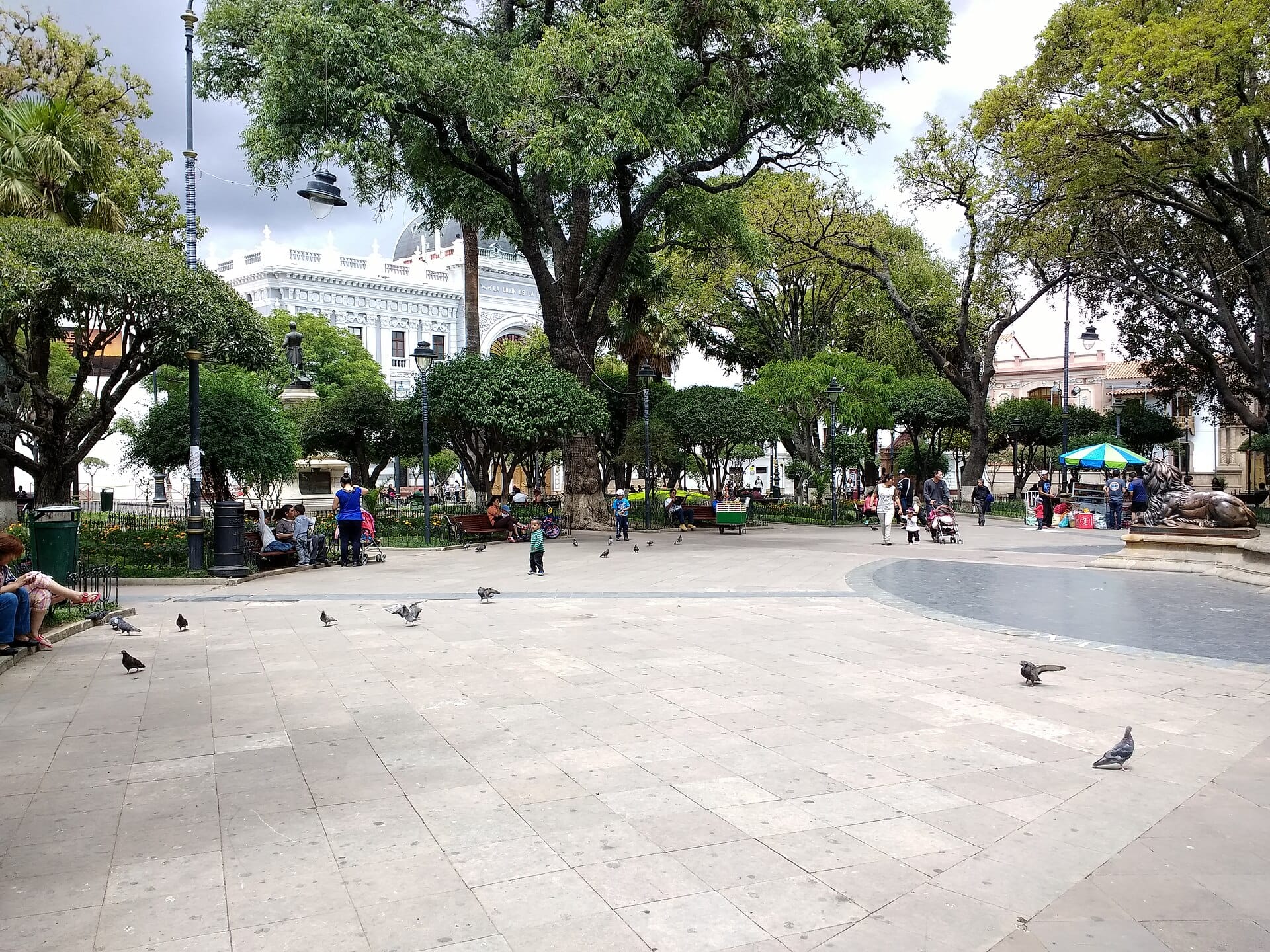
What to do: visit the cathedral's side chapel-museum for the Virgen de Guadalupe, an image encrusted with donated gold, emeralds and pearls, then just sit on the plaza for an hour with an ice cream and watch the city use its own front room. Insider tip: the surrounding café balconies (Cosmo Café on the plaza itself) are the best perch for people-watching, but the salteñas are better a block away — see the food section below. Cost: the plaza is free; the cathedral museum charges a small entry.
Tarabuco Sunday market — weaving country in the hills
If your trip covers a Sunday, spend it in Tarabuco, a Yampara town 65 km southeast in the hills at 3,290 m. Its Sunday market is the real weaving market of the region — locals in monteras (leather helmets modeled on conquistador armor) trading textiles, coca, produce and silver. It's a working market, not a show put on for tourists.
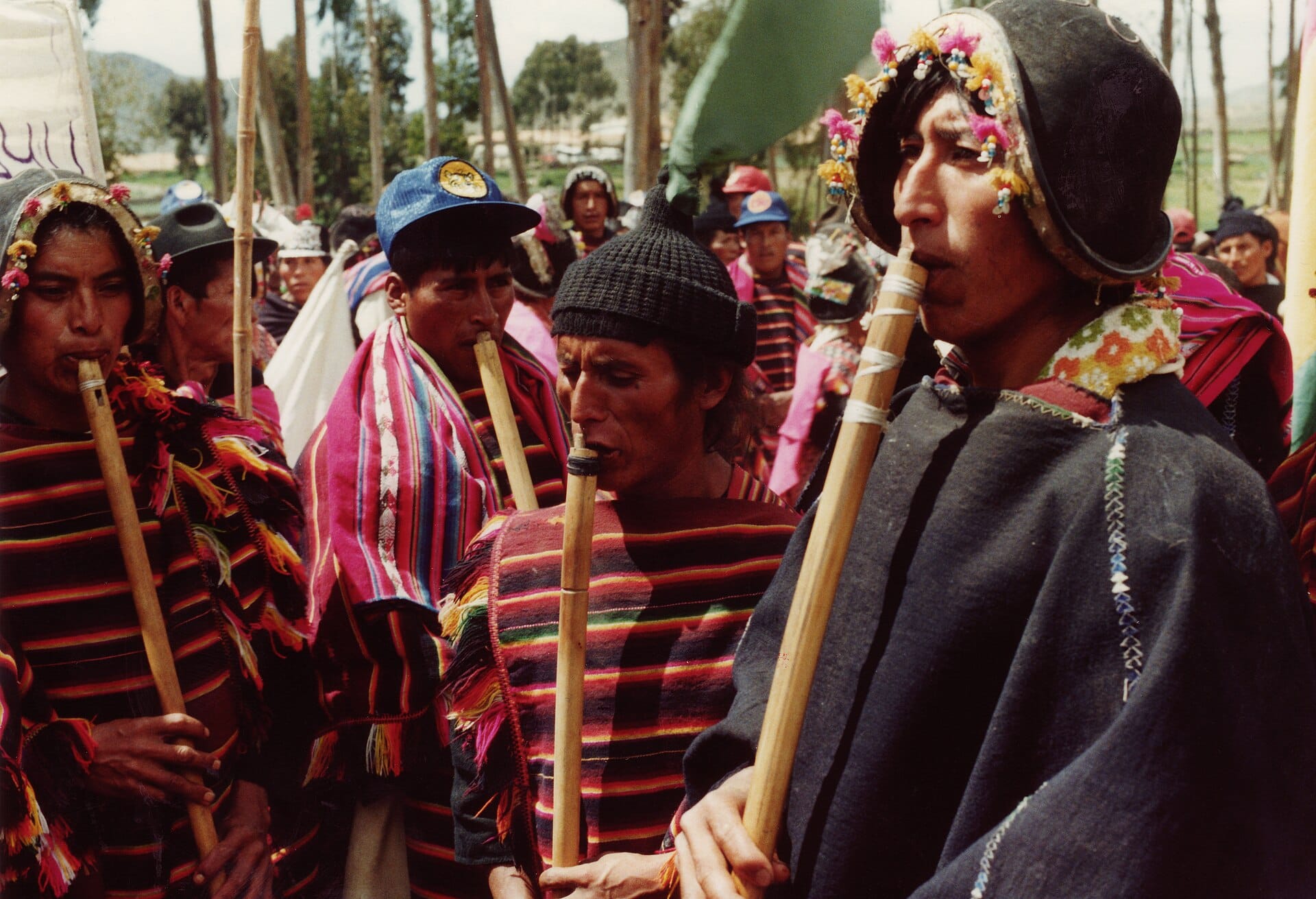
What to do: arrive by about 9:30 a.m., because stalls start packing up around 2 p.m.; buy weavings after your ASUR visit so you know what you're paying for, and always ask before photographing people. Insider tip: skip the tour buses and take a shared trufi from Parada de Tarabuco on Calle Tupaj Yupanqui — Bs 10 (about $1.40 / €1.30) each way, leaving when full, 1.5–2 hours each way. If you can plan around it, the Pujllay festival on the third weekend of March fills the town with thousands of dancers marking an 1816 battle victory. Cost: the market is free; bring cash, there are no ATMs.
🗓️ A 3-Day Itinerary
Day 1 — The colonial core, on foot
Sucre's center is small enough to cross in 20 minutes, so day one needs no transport. Start with breakfast salteñas at El Patio (Calle San Alberto), then walk two minutes to Casa de la Libertad on Plaza 25 de Mayo for opening at 9:00 (Bs 15). Cross the plaza to the Cathedral and its Virgen de Guadalupe. Lunch on the plaza at Cosmo Café or a set almuerzo nearby for Bs 25–40 ($3.50–6 / €3.30–5.50). In the afternoon, when it opens at 14:30, climb San Felipe Neri's rooftop (Bs 15), then wander the whitewashed side streets. Finish with the 15-minute uphill walk (or a Bs 5 triciclo) to La Recoleta for sunset and a drink at the Café Mirador. Total spend beyond meals: about Bs 45 ($6.50 / €6).
Day 2 — Dinosaurs and weaving
Catch the 9:30 Dinobus from the cathedral corner (Bs 15 return) out to Cal Orck'o; entry is Bs 30 plus Bs 5 for photos, and the midday quarry walk gives the clearest view of the tracks. Back in town by early afternoon, eat at Condor Café, the traveler café run by Condor Trekkers whose profits fund community projects (mains around Bs 35 / $5 / €4.50). Spend the later afternoon at Museo ASUR near Recoleta (Bs 40) to watch the weavers, and buy textiles from its fair-trade shop rather than a street stall. In the evening, try a proper Chuquisaca dinner — chorizos chuquisaqueños or mondongo, pork in red ají — with local wine or a singani sour. Day's transport and entries: about Bs 90 ($13 / €12).
Day 3 — Tarabuco (Sunday) or the castle and cemetery
If day three is a Sunday, commit it to Tarabuco: a 9:30 trufi from Parada de Tarabuco (Bs 10 each way), the market until early afternoon, and lunch from the food stalls for a few bolivianos. If it isn't Sunday, do a half-day loop instead — take a micro or taxi to the pink Castillo de la Glorieta (Bs 20 entry) on the southern edge of town, then walk the cypress avenues of the Cementerio General (free) back in the center, where Bolivian presidents and Sucre's old families lie in tiered marble mausoleums. Close the trip with chocolate from Para Ti or Taboada, both made in Sucre, to take home. Day's cost: Bs 20–40 ($3–6 / €2.70–5.50) depending on the option.
🧠 Essential Tips
When to go
Sucre's dry season runs May to October, and that's the window: sunny days around 20–23°C, almost no rain (June and July average just 2 mm), and clear light for the views. The trade-off is cold nights — July can drop to near freezing after dark, and few budget places have heating, so pack a warm layer. The wet season (November–March) is greener and warmer by day but brings afternoon downpours, with January the wettest month at about 155 mm. April and September–October are the sweet spot: dry, but with slightly milder nights. If you want the Pujllay festival in Tarabuco, aim for the third weekend of March and book beds well ahead.
Getting in and around
Flights land at Alcantarí International Airport (SRE), about 32 km southeast of the city — the old in-town airport closed in 2016, so budget the transfer time. A shared minibus meets every flight for Bs 15 (about $2), dropping you on Avenida Gregorio Donoso Daza, a 20-minute walk or a Bs 5–10 taxi from the center; the ride takes about 40 minutes. A private taxi from the airport runs considerably more (roughly Bs 100 / $14). In town you barely need transport — the center is walkable — but micros (minibuses with the route number in the windshield) cost about Bs 2, and taxis around the center are only a few bolivianos; agree the fare first or ask for the meter. The EasyTaxi app has some coverage; there's no reliable Uber-style option. Long-distance buses use the Terminal de Buses north of the center.
Money — the one thing that trips people up in 2026
Bolivia has been short of US dollars, and the practical effect for travelers is real: cash US dollars often stretch much further on the informal ("blue") market than the official rate suggests, while card payments and ATM withdrawals convert at the weaker official rate. Bring some clean, undamaged US-dollar cash, carry plenty of small bolivianos (markets, trufis and micros are cash-only and rarely have change for big notes), and don't count on cards outside mid-range hotels and the nicer cafés. The prices above are anchored in bolivianos for that reason.
Safety and scams
Sucre is one of Bolivia's calmer cities, but two specific scams are worth knowing. The "fake police" setup: a friendly stranger strikes up a conversation — often claiming to stay at your hostel — and shortly an "undercover officer" appears asking to check your passport and money for "counterfeits." Real Bolivian police never do this on the street; walk away and never hand your passport or wallet to anyone who approaches you. The second is simpler — agree taxi fares before you get in, use radio taxis after dark rather than flagging cars, and keep bags in front of you in the crowded Mercado Central and on market-day trufis, where pickpocketing is the main risk.
Food to seek out
Sucre claims to have invented the salteña — the juicy baked pasty of beef or chicken in a slightly sweet dough — and eats them mid-morning, not for lunch; El Patio is the local benchmark and sells out before noon. Beyond that, look for chorizos chuquisaqueños (garlicky pork sausages, a Sucre specialty), mondongo chuquisaqueño (pork in a red-ají and corn stew), and api con pastel (hot purple-corn drink with a fried cheese pastry) at breakfast. The upstairs comedor of the Mercado Central does fresh-fruit juices to order and cheap set lunches; Café Mirador at Recoleta has the view; and Sucre's two chocolate houses, Para Ti and Taboada, are the edible souvenir.
🏨 Accommodation Guide
Stay in the Centro Histórico, within about five blocks of Plaza 25 de Mayo — everything on this list is walking distance and you'll rarely need a taxi. The quieter Recoleta slope, a little uphill, trades convenience for views and calm.
Budget ($8–25 / €7–23 a night): Sucre's hostels cluster in the center. Well-run backpacker spots like KulturBerlin (with its own café and cinema) and Beehive Hostel put dorms in the $8–12 range and simple privates around $20–25. Many hostels also run cheap Spanish classes — Sucre is one of the best-value cities in South America to learn, at roughly $5–7 an hour.
Mid-range ($40–75 / €37–69 a night): restored colonial houses around courtyards are the sweet spot here. Hotel de Su Merced and Mi Pueblo Samary are both converted colonial buildings with patios, a block or two off the plaza, in the $50–70 band with breakfast.
Luxury ($90–150 / €83–138 a night): "luxury" in Sucre means the best of the historic mansions rather than international chains. Parador Santa María La Real, an 18th-century colonial house a block from the plaza, is the standout, with a rooftop terrace over the white roofs. It's a fraction of what a comparable heritage hotel costs elsewhere in the region.
🎭 Beyond the Tourist Trail
For a strange half-day, take a local micro or taxi south to the Castillo de la Glorieta (Bs 20), the pink fantasy castle built in the 1890s by Francisco Argandoña and his wife Clotilde Urioste after Pope Leo XIII granted them the title "Prince and Princess of La Glorieta." It mixes Gothic, Moorish, Byzantine and rococo with no restraint whatsoever — a Big Ben-style clock tower next to a Chinese pagoda — and stands, faded and half-restored, as the oddest building in the department.
Back in town, the streets below Recoleta are quietly the most atmospheric corner: the tiny cobbled lanes known as the Callejones de los Gatos ("cats' alleys"), where whitewashed walls, wooden balconies and near-total silence make the White City feel like 1850. And on any weekday morning, the Mercado Central is the real local theatre — the juice ladies who remember your order, the salteña counters, the herbalists — far more alive than any monument, and it costs nothing to walk through.
❤️ Let VoyaBear plan your Sucre trip
Sucre rewards a plan: a Sunday timed for Tarabuco, a midday slot at Cal Orck'o when the tracks read clearest, the right dry-season week, and a hotel in the historic core so you can walk it all. That's exactly what VoyaBear does — we build personalized, day-by-day itineraries around real opening hours, real costs, and the way you like to travel, whether that's weaving markets and salteña counters or colonial mansions and quiet terraces. Tell us your dates and what you're after, and we'll turn this guide into a trip that's yours. Start planning your Bolivia journey with VoyaBear today.
Want this as an actual itinerary?
VoyaBear turns a guide like this into a day-by-day plan built around how you travel.
Plan my trip free