Xi'an 2026: The Complete Terracotta Army City Guide
4 November 2026 · 24 min read

Most travelers come to Xi'an for one reason: to stand at the edge of Pit 1 and watch 6,000 clay soldiers stare back. That's a good enough reason. But as of 2025, China's 240-hour visa-free transit policy lists Xi'an Xianyang International Airport (XIY) as an eligible entry port, which means citizens of 55 countries — the US, UK, most of Europe, Australia, Japan, South Korea and more — can fly in, stay up to 10 days, and never touch a visa application, as long as they hold an onward ticket to a third country. Xi'an went from "add-on after Beijing" to a city you can land in cold.
And it rewards the detour. This was Chang'an, capital of 13 dynasties and the eastern anchor of the Silk Road, which is a polite way of saying the history here is older and denser than almost anywhere else you can comfortably visit. You can cycle a complete 14th-century city wall, eat lamb-and-flatbread soup that predates most European capitals, and ride a bullet train to a granite mountain with a cliffside plank walk — all inside three days. This guide is built on 2026 prices and opening hours, checked against current sources, so you can plan the real trip rather than the brochure version.
💡 Quick Answer: Xi'an at a Glance
If you only read one section before booking, read this one.
- How many days do you need? Three full days covers the Terracotta Army, the city wall, the Muslim Quarter and the pagodas. Add a fourth for a Mount Hua day trip.
- Best time to visit? April–May and September–October for mild, dry weather. Skip the May 1 and early-October national holidays, when crowds and prices spike.
- What to book ahead? Terracotta Army tickets (¥120 / ~$17, real-name with your passport, up to 7 days out) and the free Shaanxi History Museum slot (released 5 days ahead at 17:00 and gone in minutes).
- Airport to center? Metro Line 14 from inside the terminal: ¥8 (~$1.10), about 38 minutes, then one transfer to the Bell Tower — roughly 50 minutes door to downtown.
- Getting around? The metro. Generate the "Xi'an Electronic Transit Card" inside Alipay with a foreign Visa or Mastercard and scan the QR at the turnstile. Fares run ¥2–10 by distance.
- Rough daily budget? Around $30–45 a day backpacking, $80–130 mid-range, before big-ticket show tickets.
- Top safety note? Xi'an is very safe for violent crime; the real risk is scams — "black" taxis at the train station, fake "free" Terracotta tours, and overpriced snacks sold by weight in the Muslim Quarter.
- Signature dish? Yangrou paomo — hand-torn flatbread in lamb broth, ¥35–50, best at a sit-down hall like Lao Sun Jia.
🏛️ The Best Things to Do in Xi'an
Eight sights carry almost any Xi'an trip. Here's why each earns its place, what to actually do once you're there, and the one tip that saves you an hour or a headache.
🪖 The Terracotta Army
This is the one you came for, and it does not disappoint. The Museum of the Terracotta Warriors and Horses of Qin Shihuang sits 40 km east of the city, guarding the tomb of China's first emperor, who died in 210 BC. Pit 1 is the showstopper — a hangar-sized trench holding more than 6,000 infantry in battle formation, no two faces alike. Pit 2 has cavalry, chariots and the famous Kneeling Archer and is still largely unexcavated; Pit 3 is the small U-shaped command post. Don't skip the separate hall with the two half-size bronze chariots unearthed in 1980 — the metalwork is finer than anything in the pits.

Cost: ¥120 (~$17 / €15.50) March–November, ¥100 off-peak, covering all three pits, the bronze chariots and Lishan Garden. Tickets are digital and real-name only — book online up to 7 days ahead and bring the passport you booked with; it's scanned at the turnstile. Insider tip: Be in the queue by 8:10 for the 8:30 opening, or arrive around 3:30 PM — the tour-bus crush lands mid-morning to early afternoon. From the city, take Metro Line 9 to Huaqing Pool station (exit C) then bus 602 or a Didi for the last stretch, about ¥10 and 75 minutes total; a direct Didi is ¥120–160 and roughly 50 minutes.
🧱 Cycling the Ming City Wall
Xi'an has the most complete ancient city wall in China — a 13.74 km rectangle of grey brick built in 1370 under the Ming, wide enough on top to drive a car. The best way to see it is to rent a bike at the South Gate (Yongning Gate) and ride the full circuit, watching the old city on one side and the glass towers of the modern one on the other. It's flat, the surface is smooth, and the loop gives you the clearest mental map of Xi'an you'll get anywhere.

Cost: ¥54 (~$7.60 / €7) to walk the wall; a single bike is ¥45 for the rental with a ¥100 refundable deposit. The wall is open 8:00–22:00, and you return bikes at the South Gate. Insider tip: Cycling the full loop takes 1.5–2.5 hours (walking it is 3–4 hours — don't), so give yourself the time and go in the last two hours of daylight, when the heat drops and the gate towers start to light up. Avoid midday in July and August.
🍜 The Muslim Quarter & Great Mosque
The Muslim Quarter is Xi'an's 1,000-year-old Hui neighborhood and its best eating. The main lane, Beiyuanmen, runs north from the Drum Tower, but the quieter side streets — Damaishi, Dapiyuan, Sajinqiao — are where locals actually eat. Tucked inside the maze is the Great Mosque, one of China's oldest, built in the style of a Chinese courtyard temple rather than with domes and minarets; it's a genuinely calm counterpoint to the food-stall chaos outside.
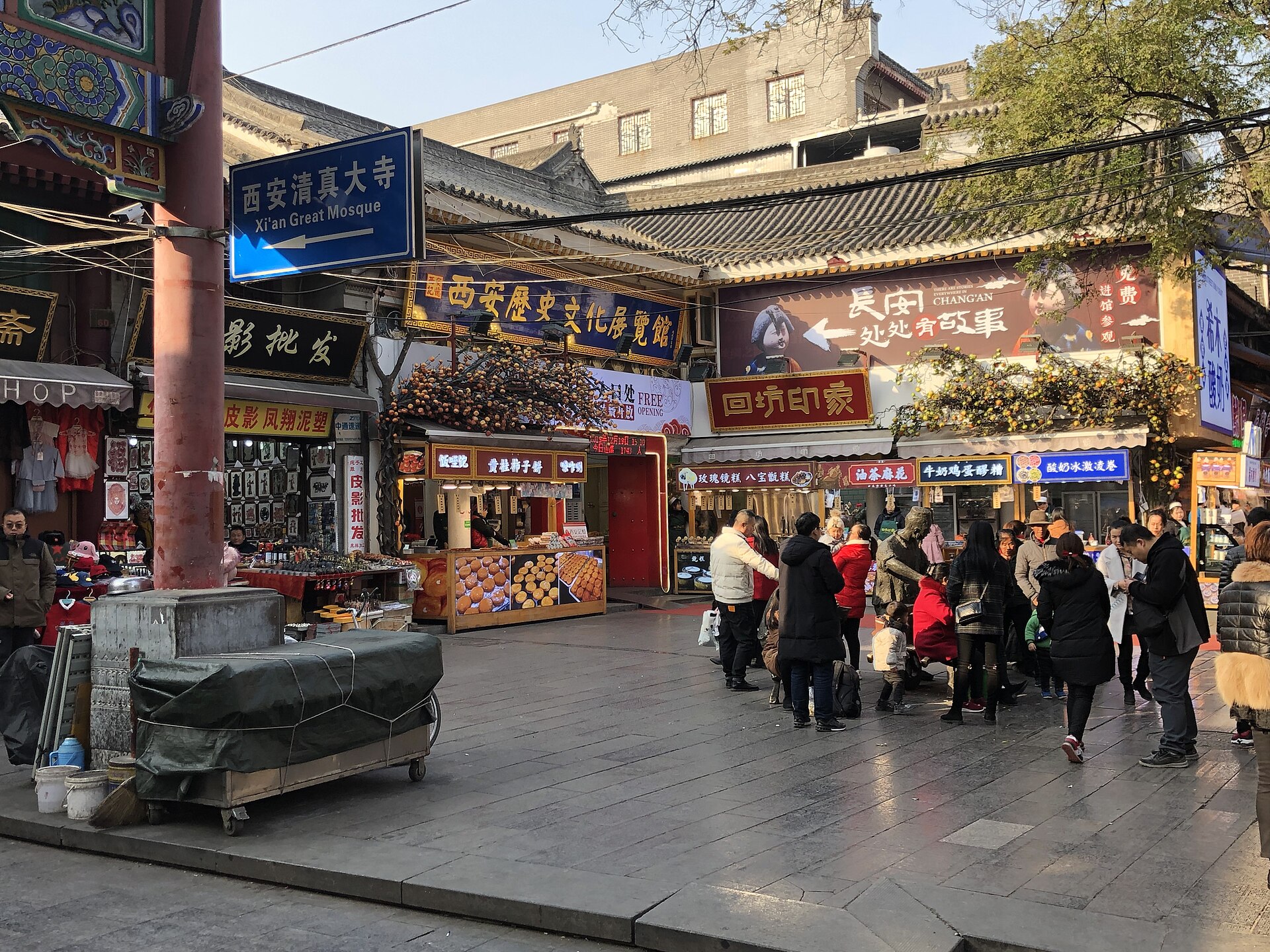
Cost: Free to wander; the Great Mosque charges ¥25 (~$3.50). Eat your way through for ¥50–80 a person. Insider tip: Go on a weekday between 11 AM and 1 PM, or after 8 PM — avoid 6–7:30 PM, when the domestic dinner crowd peaks and you can't move. Confirm the price before anything is weighed: nuts, dried fruit and candy are sold by the jin (500g) and the classic overcharge is quoting per 50g. For the signature yangrou paomo (lamb-broth soup you assemble by tearing flatbread into a bowl), sit down at Lao Sun Jia or Tongshengxiang on Damaishi rather than grabbing it standing up.
🔔 The Bell Tower & Drum Tower
These two Ming towers mark the center of the walled city. The Bell Tower sits on its own roundabout where the four main streets meet — floodlit at night, it's the image most people keep of Xi'an. The Drum Tower, 335 meters northwest, is the gateway into the Muslim Quarter and runs short traditional drum performances through the day, each about 15 minutes and included in admission. You can climb either for the rooftop view over the old grid.

Cost: ¥30 each, or ¥50 (~$7) for a combined ticket to both. Hours are 08:30–21:30 from April 1 to October 10, and 08:30–18:00 the rest of the year. Insider tip: You don't need to climb both — the views are similar. Pick the Drum Tower, time it for a drum performance, then walk straight under its arch into the Muslim Quarter for dinner. The Zhonglou metro station (Lines 1 and 2) sits directly beneath the Bell Tower, so this is your natural transit hub.
🕌 The Big Wild Goose Pagoda & Datang Everbright City
The Giant Wild Goose Pagoda is a 7th-century brick tower that the Tang monk Xuanzang built around 652 AD to house the Buddhist scriptures he'd hauled back from India — the real journey behind the legend of Journey to the West. It stands inside the Da Ci'en Temple grounds and leans very slightly, which only adds to the appeal. Immediately south is Datang Everbright City, a free Tang-themed pedestrian boulevard that is frankly better after dark, when the whole strip is lantern-lit and street performers work the crowd.
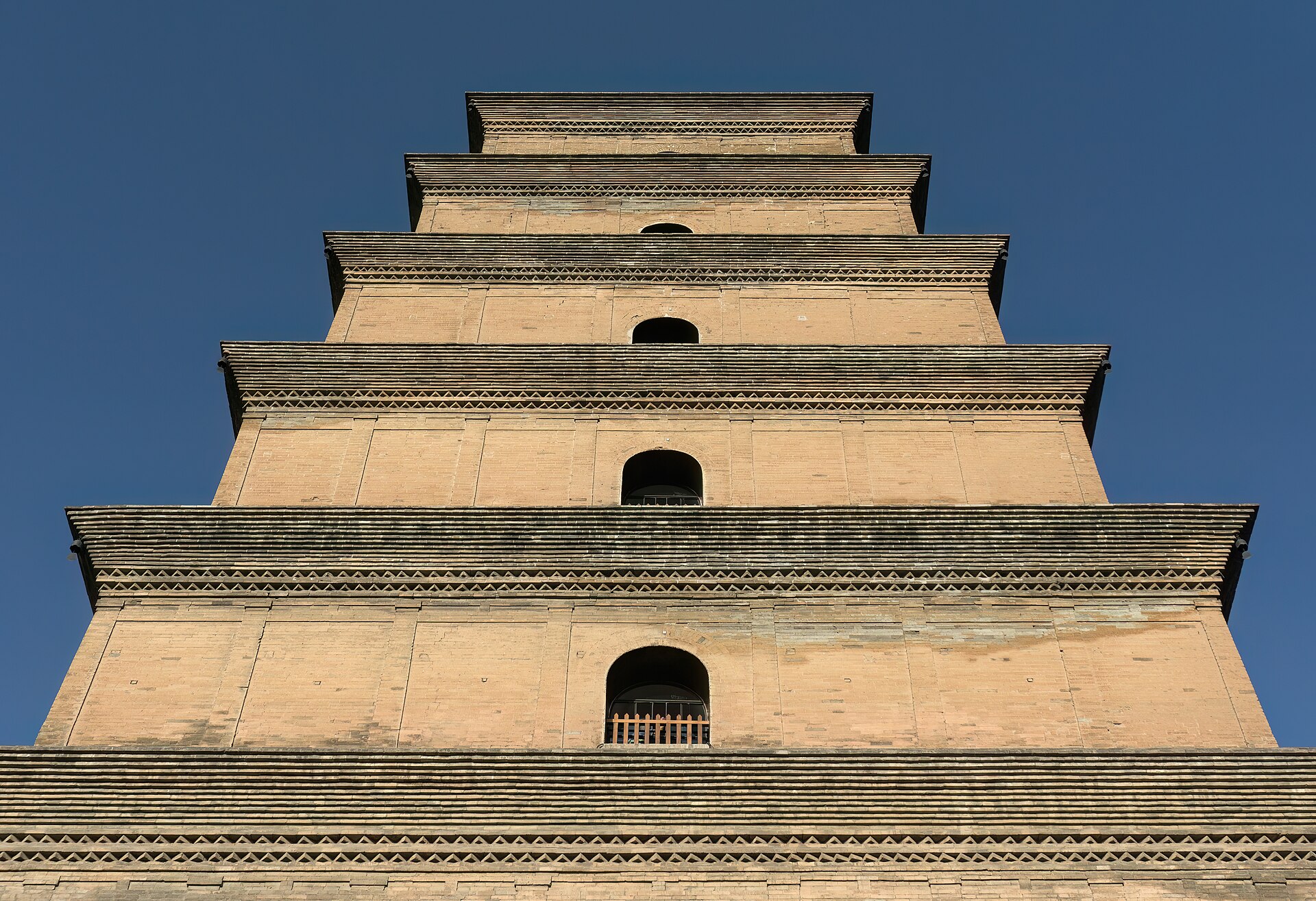
Cost: ¥50 (~$7) to enter the temple, plus ¥30 to climb the pagoda itself. The musical fountain show on the North Square is free — on weekdays between March and November it runs at 12:00, 16:00, 19:00 and 21:00 (suspended in winter). Insider tip: Do the temple and pagoda in late afternoon, then stay for the evening fountain and walk south into Datang Everbright City — both are free and both peak after sunset. It's on Metro Line 3 (Dayanta station).
🏺 The Shaanxi History Museum
If the Terracotta Army shows you one emperor's obsession, this museum shows you the 3,000 years around it. Its Tang-dynasty galleries — gold and silver vessels, the agate rhyton and other treasures from the Hejiacun hoard dug up in a Xi'an suburb in 1970 — are the best in China, and general admission is free. The catch is that "free" is the hardest ticket in the city.
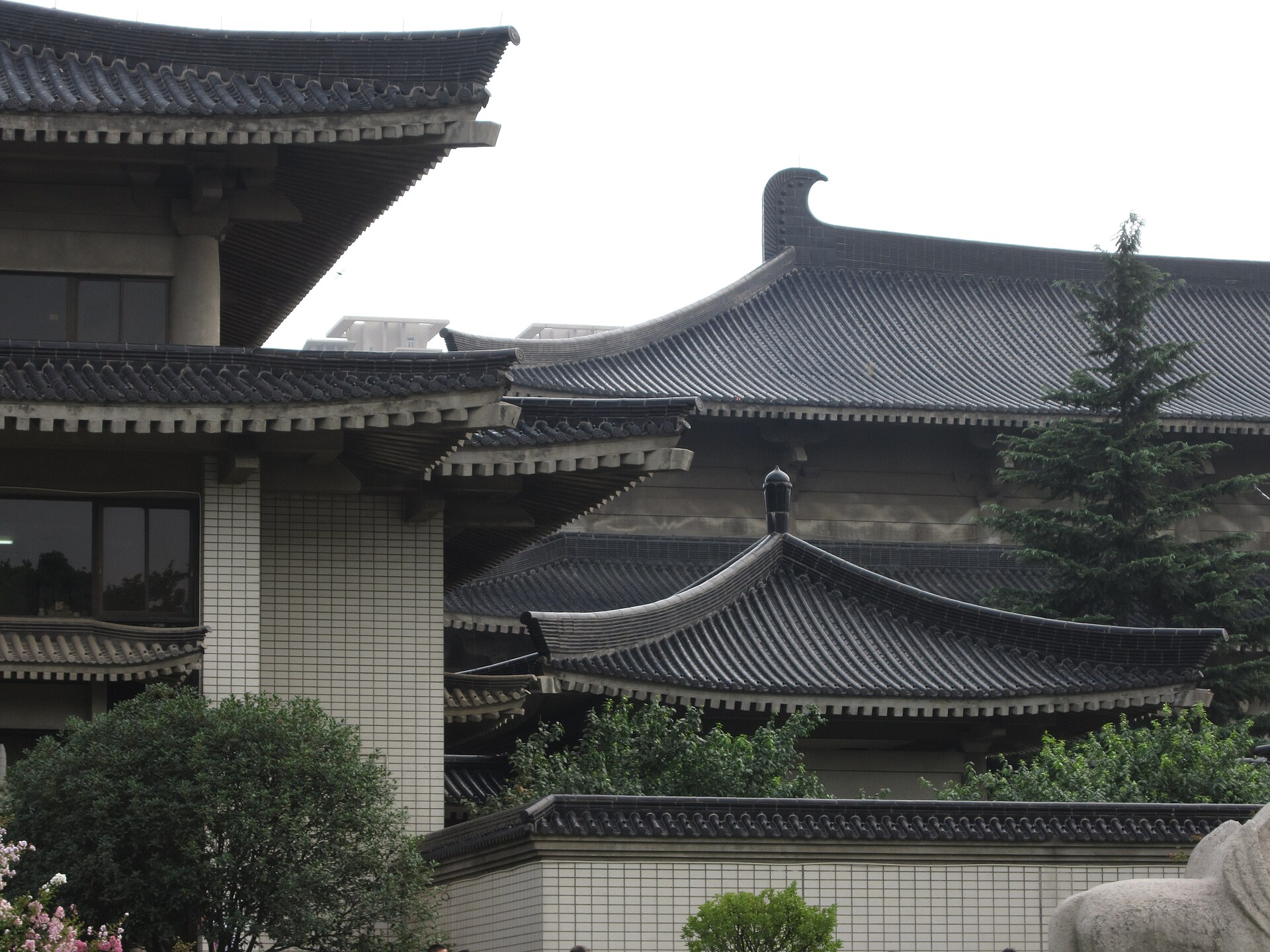
Cost: Free for the main galleries; the paid Tang hoard gallery (大唐遗宝) is ¥30. It's closed Mondays, open 08:30–19:00 in summer and 09:00–17:30 in winter. Insider tip: Free slots release 5 days ahead at 17:00 and sell out within minutes — be logged in and refreshing at 17:00 sharp (a passport works for booking). Can't get one? The museum's newer Qin-Han branch, near Qingong station on Line 14, admits foreign-passport holders without advance booking and is far less mobbed. Nearest station for the main building is Xiaozhai (Lines 2 and 3).
♨️ Huaqing Palace
Twenty minutes short of the Terracotta Army, in the same Lintong district, Huaqing Palace is an imperial hot-spring retreat where the Tang emperor Xuanzong wintered with his consort Yang Guifei — you can still see the stone bathing pools fed by the springs. It has a second, 20th-century layer too: this is where Chiang Kai-shek was seized during the Xi'an Incident of December 1936, and the bullet-pocked rooms are preserved. Pairing it with the warriors on the same eastbound trip is the efficient move.
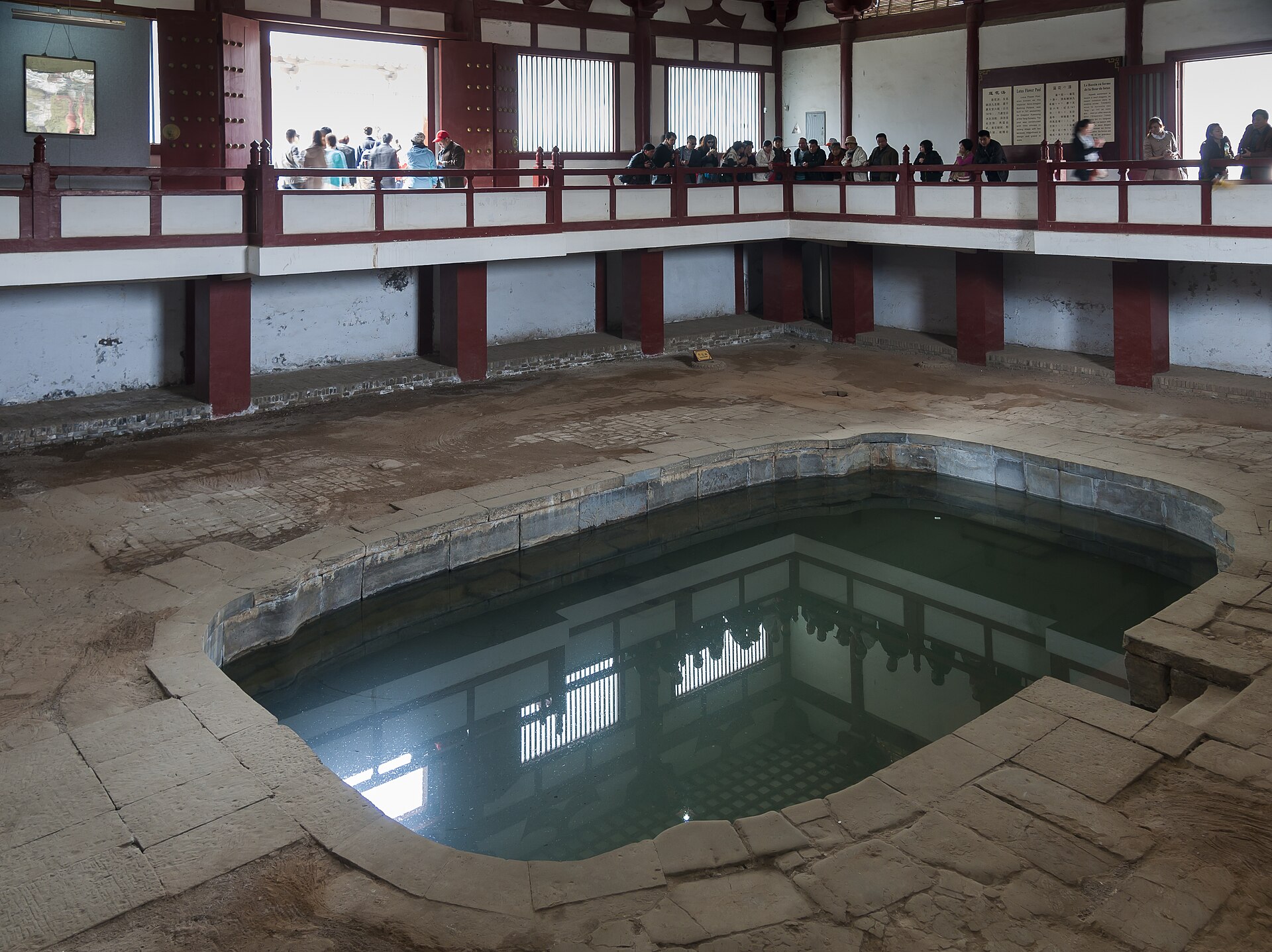
Cost: ¥120 (~$17) for the scenic area, open 07:00–19:00 from March to November. The outdoor evening spectacle The Song of Everlasting Sorrow (《长恨歌》), staged on Nine Dragon Lake with the mountain as a backdrop, is a separate ticket running ¥238–988 by seat, with sessions around 18:50, 20:15 and 21:40. Insider tip: Do Huaqing first in the morning and the Terracotta Army after lunch, since the warriors stay open later. If you want the show, note the ticket gets you into the lakeside performance only, not the daytime palace, which closes beforehand.
⛰️ Mount Hua (Huashan) — the Day Trip
If you have a fourth day, spend it on the most heart-stopping of China's five sacred mountains. Mount Hua is 120 km east, a cluster of five granite peaks connected by stone staircases cut into near-vertical rock. The South Peak is the highest at 2,154 m, and just below it is the Changkong Zhandao — the plank walk, a line of wooden boards bolted to a sheer cliff that you shuffle across clipped to a cable. It's optional, it's a dead end you walk back along, and it is exactly as terrifying as the photos.
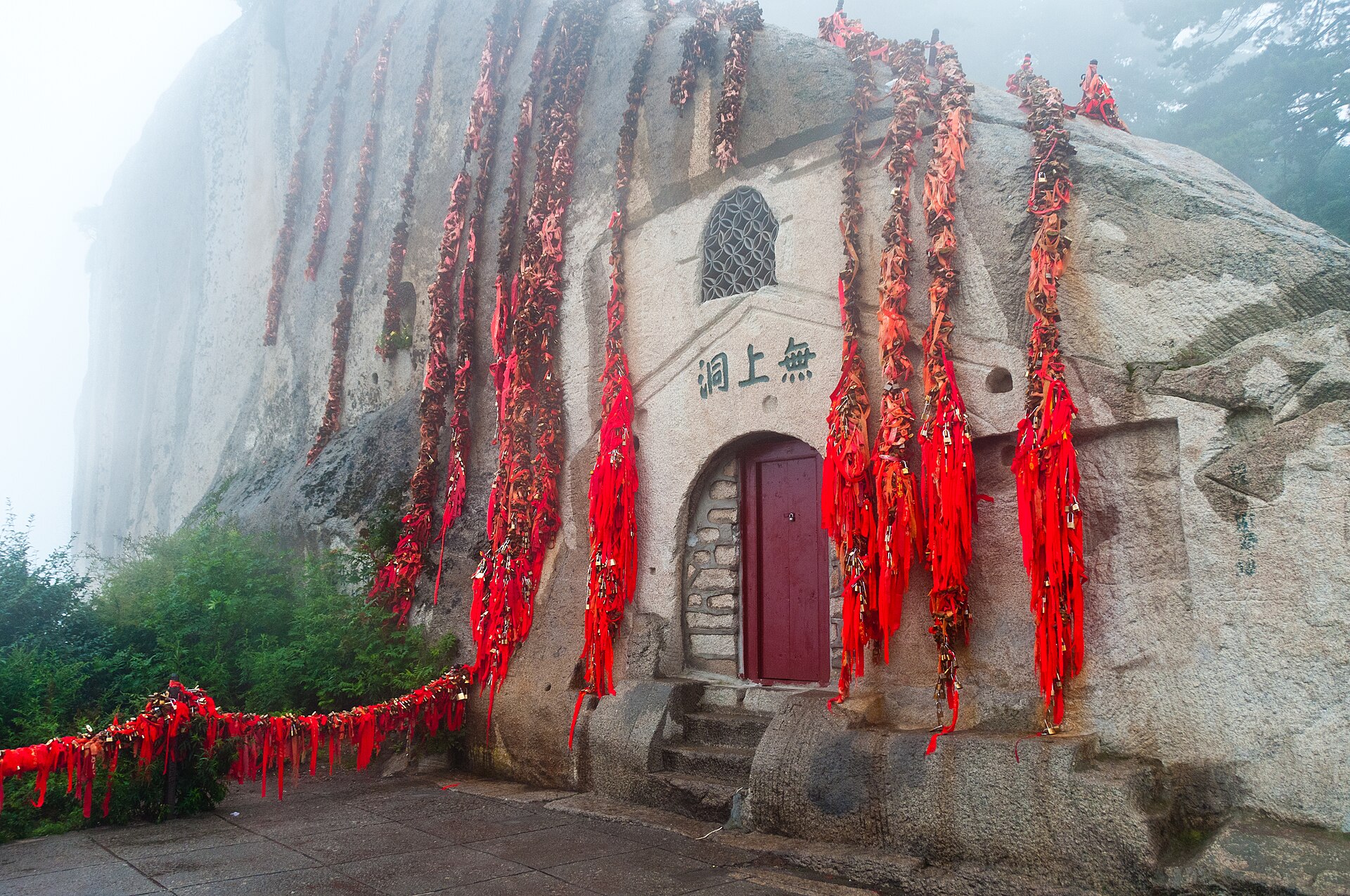
Cost: A high-speed train from Xi'an North to Huashan North takes 30–45 minutes and costs about ¥55 (~$7.70); the first trains leave around 6:30 AM. The entrance ticket is ¥160 (valid two days), and a standard cable-car route with shuttles (West Peak up at ¥140, North Peak down at ¥80, plus ¥40 and ¥20 shuttle buses) brings the day to roughly ¥440 (~$62). The plank walk harness is about ¥30. Insider tip: Foreign visitors need a physical passport to enter, and the official mini-program often rejects international cards — book the entrance-and-cable-car bundle through Trip.com or Klook in advance. Go September–October for clear skies, start by 7–8 AM to beat the cable-car queues, and check the forecast, as the mountain closes in high wind or snow.
🗓️ How to Spend Three Days in Xi'an
This itinerary assumes you're based inside or near the city wall and using the metro. It front-loads the must-books and keeps the walking sane.
Day 1 — The walled city, on foot and by bike
Start at the Bell Tower (Zhonglou station) when it opens at 08:30, then cross to the Drum Tower and catch a morning drum performance (¥50 combined). Walk under the Drum Tower arch into the Muslim Quarter for an early lunch — yangrou paomo and a roujiamo, around ¥50. Walk off lunch at the Great Mosque (¥25). Mid-afternoon, taxi or walk to the South Gate and rent a bike to ride the full city wall loop (¥54 + ¥45), timing it for sunset. Finish with dinner back in the Muslim Quarter after the 7:30 crowd thins. Day cost: roughly ¥180–230 (~$25–32) plus food.
Day 2 — The Terracotta Army and the east
This is a full day east in Lintong, so book your warriors ticket days ahead. Take Metro Line 9 toward Huaqing Pool; do Huaqing Palace first (¥120) in the morning while it's cool, then bus 602 or a short Didi to the Terracotta Army (¥120) after lunch, when you can stay until closing at 18:00. Budget a direct Didi back if you're tired (¥120–160). Back in town, head to the Big Wild Goose Pagoda area for the free evening musical fountain and a wander down lantern-lit Datang Everbright City. Day cost: roughly ¥280–420 (~$40–59) plus transport and food.
Day 3 — Treasures, then your pick
Spend the morning at the Shaanxi History Museum (free, or the Qin-Han branch if you missed the slot), which deserves a solid two to three hours. In the afternoon, choose your own ending: climb the Big Wild Goose Pagoda properly (¥50 + ¥30), browse the calligraphy stalls on Shuyuanmen street near the South Gate, or graze the smash-bowl-wine food street at Yongxingfang. If you have a fourth day, this is where Mount Hua slots in instead. Day cost: roughly ¥0–110 (~$0–16) plus food.
🧠 Essential Xi'an Travel Tips
When is the best time to visit Xi'an?
Target April–May or September–October. Spring and autumn are mild and dry, with daytime highs around 20–22°C and low rainfall — the sweet spot for cycling the wall and climbing Mount Hua. July and August are hot (33°C, pushing 35–40°C in heat waves) and double as Chinese school holidays, so sights are both sweaty and packed; visit outdoor sites early or at dusk if you come then. Winter is cold and dry, often below freezing at night, but crowds thin out. Whenever you come, dodge the two big domestic travel waves: the May 1 Labor Day week and the early-October National Day "Golden Week," when prices jump and the Terracotta Army becomes a human traffic jam. June and November are quiet compromises if weather matters less to you than crowds.
How do you get around Xi'an?
The metro is clean, cheap and the easiest way to move, with fares of ¥2–10 by distance. Foreigners don't need a physical card: open Alipay, bind a Visa or Mastercard, generate the "Xi'an Electronic Transit Card," and scan its QR code at the gate — the fare comes off your card when you tap out. From the airport, Metro Line 14 (opened 2025) runs from inside the terminal to the city in about 38 minutes for ¥8, with one transfer to reach the Bell Tower in roughly 50 minutes total; the airport bus is ¥25–35 and 50–80 minutes, and a Didi is ¥120–180. For street-level taxis and maps, locals use Didi (ride-hailing) and Amap/Gaode or Alipay's built-in maps; download a VPN before you arrive if you rely on Google services.
Is Xi'an safe for tourists?
Very — violent crime against visitors is rare, and solo and night walking in the tourist core are fine. The real threats are scams and pickpockets. At the train station and airport, ignore the drivers who approach you offering a "taxi"; these unlicensed "black" cabs overcharge, so use the official taxi rank or a Didi. Near the Terracotta Army, decline the "free" tours from unlicensed guides that end at a jade or "museum" shop, and walk past the fake "Emperor's Underground Palace" mock-up charging ¥20 — the real tomb mound isn't open. In the Muslim Quarter, agree on prices before anything is weighed, and keep your bag zipped and in front of you in the Bell Tower underpass and the dinner crowds. Buy attraction tickets only from official counters or apps, never from the touts outside the gate.
What should you eat in Xi'an?
Xi'an food is wheat, lamb and chili — Silk Road food, not the Cantonese or Sichuan you may expect. The headliners: yangrou paomo (¥35–50), lamb broth poured over flatbread you tear yourself; roujiamo (¥10–15), the "Chinese hamburger" of stewed meat in a griddled bun; biangbiang noodles (¥25–35), belt-wide hand-pulled noodles under chili oil, written with one of the most complex characters in Chinese; and liangpi (¥10–15), cold wheat noodles in a vinegar-chili sauce. Save room for persimmon cakes (¥5–10, best October–March) and zenggao, steamed glutinous rice with dates. Eat the sit-down dishes in the Muslim Quarter's side lanes or at a hall like Lao Sun Jia, and graze the street snacks as you walk.
🏨 Where to Stay in Xi'an
Stay inside or beside the city wall if you can — you'll walk to the Bell Tower, the Muslim Quarter and the metro, and the old city is the most atmospheric base. Prices below are typical 2026 nightly rates; they climb sharply during the May and October holidays.
Budget
Hostels cluster almost entirely inside the wall, near the Bell and Drum Towers and the South Gate. Hantang House sits a short walk from the Muslim Quarter, and Yuecheng Washe has a rooftop terrace by the South Gate. Expect roughly $12–25 for a dorm bed and $30–50 for a private budget room. One caution: confirm a property is licensed to take foreign guests before you book, as not all budget places are.
Mid-range
For 3–4 star comfort, look at three areas: around the Big Wild Goose Pagoda in Yanta District (the Atour Hotel is reliable value), by the South Gate / Yongningmen (the boutique Eastern House), or near the Bell Tower for maximum walkability. Figure on roughly $55–120 a night. The Yanta area trades some walled-city charm for newer buildings, more space and easy Line 3 access.
Luxury
At the top end, the Sofitel Legend People's Grand near the Bell Tower occupies a 1953 state guesthouse; the Grand Park Xi'an at the South Gate puts many rooms facing the floodlit wall; and W Xi'an sits out by Qujiang Lake in Yanta. The international five-stars — Ritz-Carlton, Rosewood, Four Seasons — are concentrated in the Gaoxin high-tech zone, a taxi ride from the sights but very polished. For hot springs, Angsana Xi'an Lintong is near the Terracotta Army. Rates generally run $150–400+ depending on property and season.
🎭 Beyond the Tourist Trail
Once you've done the headliners, Xi'an has quieter corners that locals actually use. Yongxingfang, a reconstructed folk-food street tucked near the eastern wall, is where you'll find the viral "smash-bowl wine" (摔碗酒) — you down a bowl of rice liquor and hurl the bowl on the ground for luck — plus Shaanxi snacks at calmer prices than the Muslim Quarter. Shuyuanmen, the calligraphy and antique street running east from the South Gate, is a genuinely pleasant hour of ink stones, brushes and seal carving with almost no hustle.
For history without the Terracotta crowds, the Hanyangling (Yangling) Mausoleum north of the city is the tomb of a Han emperor, displayed under glass floors you walk directly over the excavation on — eerie, quiet, and a fraction of the visitors. And if your trip lands around Chinese New Year (late January or February), the city wall hosts an enormous lantern festival after dark, turning the whole 13.74 km rampart into a glowing circuit — one of the best seasonal spectacles in the country, and reason enough to brave the winter cold.
❓ Xi'an FAQ
How many days do you need in Xi'an?
Three full days is the sweet spot: one for the walled city and Muslim Quarter, one for the Terracotta Army and Huaqing Palace, and one for the Shaanxi History Museum and the pagodas. Add a fourth day if you want to do the Mount Hua day trip.
What is the best time of year to visit Xi'an?
April–May and September–October have the best weather — mild, dry, and good for cycling the wall. Avoid the May 1 Labor Day week and the early-October National Day holiday, when domestic crowds and prices surge. Summer is hot (up to 35–40°C) and winter dips below freezing but is quieter.
How much are Terracotta Army tickets and do I need to book ahead?
Entry is ¥120 (~$17) in peak season, ¥100 in winter, covering all three pits and the bronze chariots. Tickets are digital, real-name and can't be bought at the gate — book online up to 7 days in advance and bring the passport you booked with, which is scanned on entry.
How do I get from Xi'an airport to the city center?
Metro Line 14 runs from inside the terminal to the city in about 38 minutes for ¥8 (~$1.10), with one transfer to reach the Bell Tower in roughly 50 minutes. The airport bus is ¥25–35 and 50–80 minutes; a Didi or taxi is ¥120–180 and 40–70 minutes depending on traffic.
Is Xi'an safe for tourists?
Yes. Violent crime against visitors is rare and the tourist areas are safe to walk at night. The main risks are scams — unlicensed "black" taxis at transport hubs, fake "free" Terracotta tours, and overpriced snacks sold by weight in the Muslim Quarter — plus pickpockets in crowds. Use official taxi ranks or Didi and buy tickets only from official sources.
What food is Xi'an famous for?
Xi'an is known for wheat-and-lamb Silk Road cooking: yangrou paomo (lamb broth with torn flatbread, ¥35–50), roujiamo (stewed-meat bun, ¥10–15), biangbiang noodles (wide hand-pulled noodles, ¥25–35) and liangpi (cold noodles, ¥10–15). The Muslim Quarter is the best single place to try them all.
Can I visit Xi'an without a Chinese visa?
Many travelers can. Xi'an Xianyang Airport is an eligible port under China's 240-hour (10-day) visa-free transit policy for citizens of 55 countries, provided you hold a confirmed onward ticket to a third country and stay within Shaanxi province. Check the current official list for your nationality before booking.
Where should I stay in Xi'an?
Inside or beside the city wall — near the Bell Tower, the South Gate or the Muslim Quarter — for the best walkability and atmosphere. Budget rooms run about $30–50, mid-range hotels $55–120, and luxury properties $150–400+ a night, with the Yanta (Big Wild Goose Pagoda) district a quieter, newer alternative.
❤️ Let VoyaBear Plan Your Xi'an Trip
Xi'an rewards a plan — the must-book Terracotta tickets, the museum slot that vanishes in minutes, the day-trip trains that sell out, the holiday weeks worth dodging. That's exactly the kind of sequencing VoyaBear is built for. Tell us when you're coming, how long you've got and what you care about, and we'll turn this guide into a day-by-day itinerary with the bookings timed right, the metro routes mapped, and the Mount Hua detour slotted in if you want it. Start planning your Xi'an trip with VoyaBear today — and spend your time standing in front of the warriors, not refreshing a ticket page.
Want this as an actual itinerary?
VoyaBear turns a guide like this into a day-by-day plan built around how you travel.
Plan my trip free