Yogyakarta 2026: The Complete Guide to Java's Cultural Capital
16 September 2026 · 13 min read
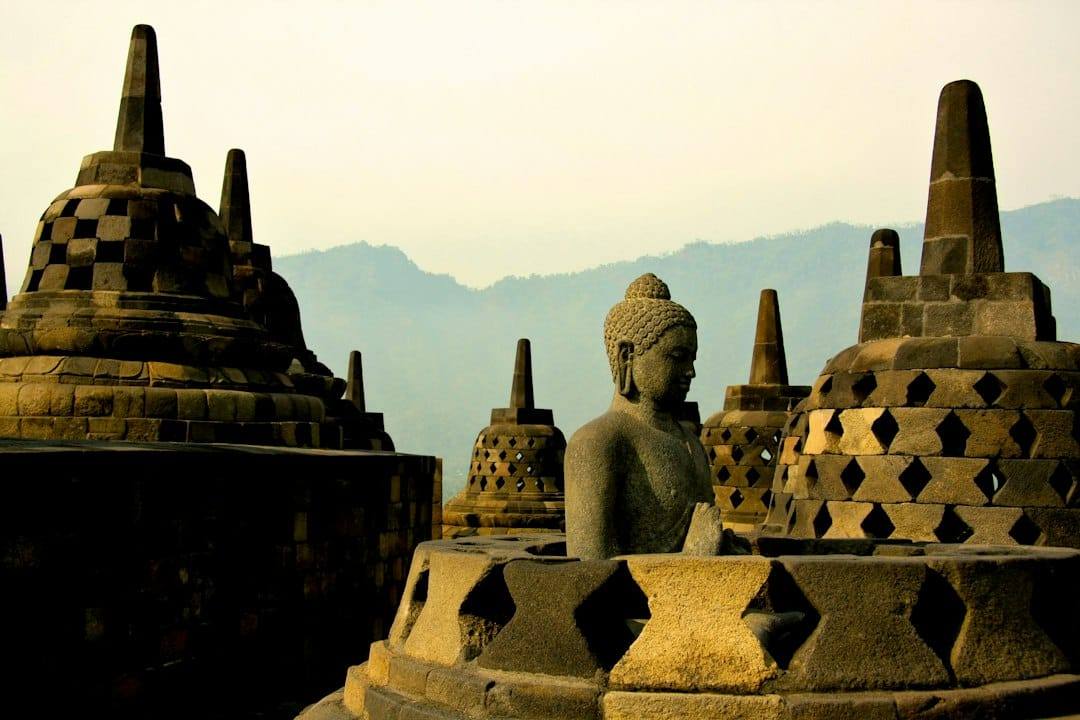
Most people come to Yogyakarta for one reason: to stand on top of Borobudur, the largest Buddhist monument on earth, as the sun comes up over the Kedu Plain. That is still worth doing. But if you leave after the temples, you've missed the point of the city. Yogyakarta — Jogja, if you want to sound like you've been here before — is the only place in Indonesia still run by a sultan, a working monarchy with a palace, a court gamelan, and a batik tradition the rest of Java measures itself against. It is also a student town of half a million undergraduates, which means the food is cheap, the coffee is served over burning charcoal, and a plate of the local specialty costs less than your airport coffee did.
Here's the practical case for 2026. Borobudur now caps daily climbers at 1,200 people and makes you book a timed slot, so the crush is gone but the planning matters. Malioboro, the city's spine, is being turned into a full pedestrian street by the end of November 2026 — for now it's half car, half promenade, and worth walking before the change. And the rupiah sits around 17,600 to the US dollar, which makes a temple-and-volcano week here one of the best-value trips in Southeast Asia. This guide is built on prices and hours checked in 2026, not vibes. Let's get into it.
🏛️ Essential Experiences
Borobudur — climb it, don't just look at it
Borobudur is a ninth-century Mahayana Buddhist temple built as a stone diagram of the Buddhist cosmos: six square terraces of narrative relief panels rising to three circular platforms studded with 72 bell-shaped stupas, each holding a seated Buddha. You walk it clockwise from the bottom, and the 2,672 relief panels tell the story as you climb. Since the post-pandemic conservation rules, there are two separate tickets, and the difference matters. Grounds-only access (the park and the base) runs about IDR 412,500 (roughly $23 / €20) for foreign adults. To actually climb onto the temple structure you need the structure ticket at about IDR 455,000 ($26 / €22), which includes a mandatory certified guide for the 1.5-hour session and a pair of Upanat woven sandals you must wear to protect the stone.
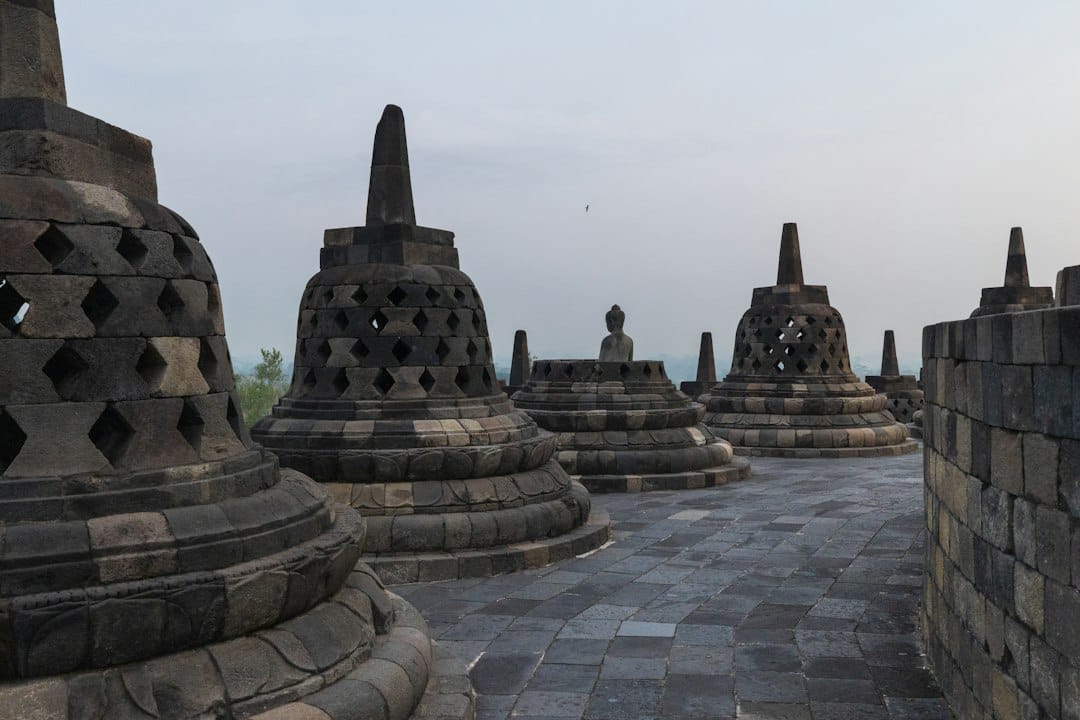
Insider tip: the structure climb is capped at 1,200 people a day in hourly slots, and it sells out one to two weeks ahead in dry season — book at borobudurpark.com before you fly, not when you arrive. The temple grounds open at 06:30, but the structure itself is closed on Mondays for preservation, so don't plan your climb for a Monday. If you only want the classic photo from the grounds with the volcanoes behind, the cheaper grounds ticket is enough. Skip the overpriced "sunrise from the Manohara hotel" packages unless you specifically want to be up top at dawn.
Prambanan — the Hindu answer, 40 minutes east
Where Borobudur is horizontal and meditative, Prambanan is vertical and dramatic: a ninth-century Hindu complex whose central trio of temples spikes 47 metres into the air, dedicated to Shiva, Vishnu, and Brahma. The Shiva temple in the middle is the tall one, and its inner chambers hold statues you can still walk up to. Foreign adult entry is about IDR 375,000 ($21 / €18), and if you're doing both this and Borobudur, the combined 48-hour ticket at IDR 675,000 ($38 / €33) saves you real money.
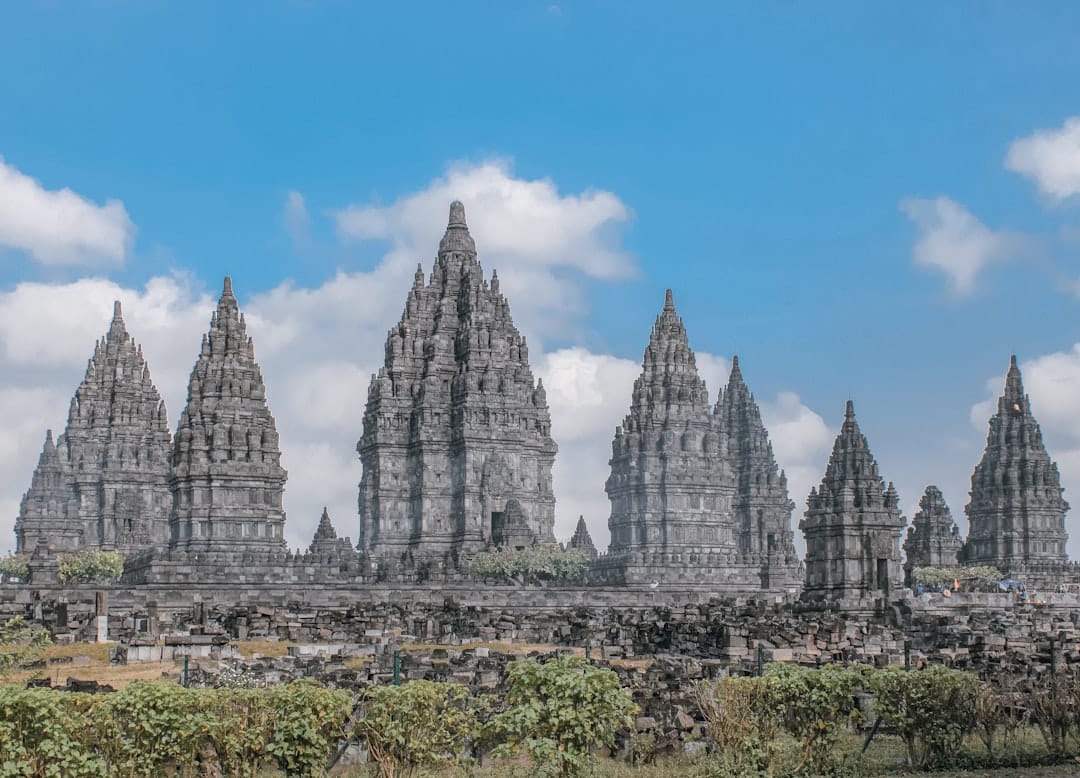
Insider tip: come for the late afternoon light and stay for the Ramayana Ballet, performed on the open-air stage with the lit temples as a backdrop on Tuesday, Thursday, and Saturday evenings roughly 19:30–21:30 (outdoor stage May–October, moved indoors in the wet season). A Class I seat is about IDR 200,000 ($11 / €10) — you don't need the VVIP tier to see the stage well. The complex opens at 06:00 with last entry at 16:00.
The Kraton — a palace that's still someone's house
The Kraton is the walled palace of the Sultan of Yogyakarta, built in 1755 and still the residence of the current sultan, Hamengkubuwono X. This isn't a museum pretending to be a palace; it's a functioning royal court, staffed by elderly abdi dalem retainers in traditional dress who work here out of devotion. Entry is a token IDR 25,000 (about $1.50 / €1.30), with an optional guide for around IDR 150,000 per group that's genuinely worth it for the symbolism you'd otherwise walk straight past.
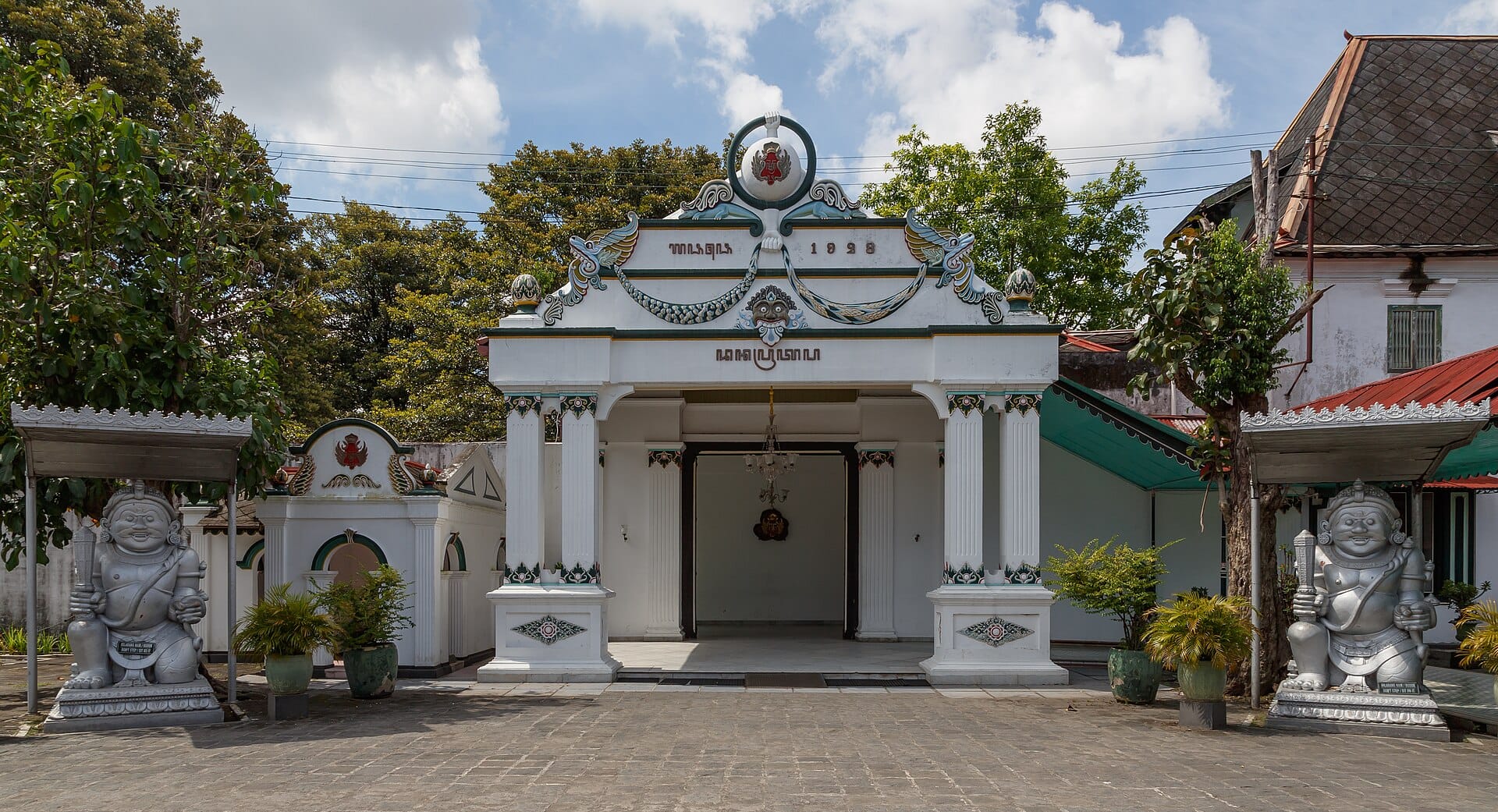
Insider tip: go in the morning for the free cultural performances held between roughly 09:00 and 11:00 — the schedule rotates by day between gamelan orchestra, Javanese classical dance, and wayang puppet theatre, so you'll catch something live. The palace runs Tuesday to Sunday, 08:30–15:00 with last tickets around 14:00, and closes Mondays. Dress modestly (shoulders and knees covered); this is an active court, not a beach.
Taman Sari — the sultan's water castle
A five-minute walk southwest of the Kraton, Taman Sari was the royal pleasure garden of the 18th-century court — bathing pools, a watchtower where the sultan reportedly chose companions, and a network of underground passages. The restored section centres on Umbul Binangun, three blue bathing pools framed by ochre walls that are the single most photographed spot in the old city. Entry is IDR 25,000 ($1.50 / €1.30), plus a IDR 3,000 camera fee.
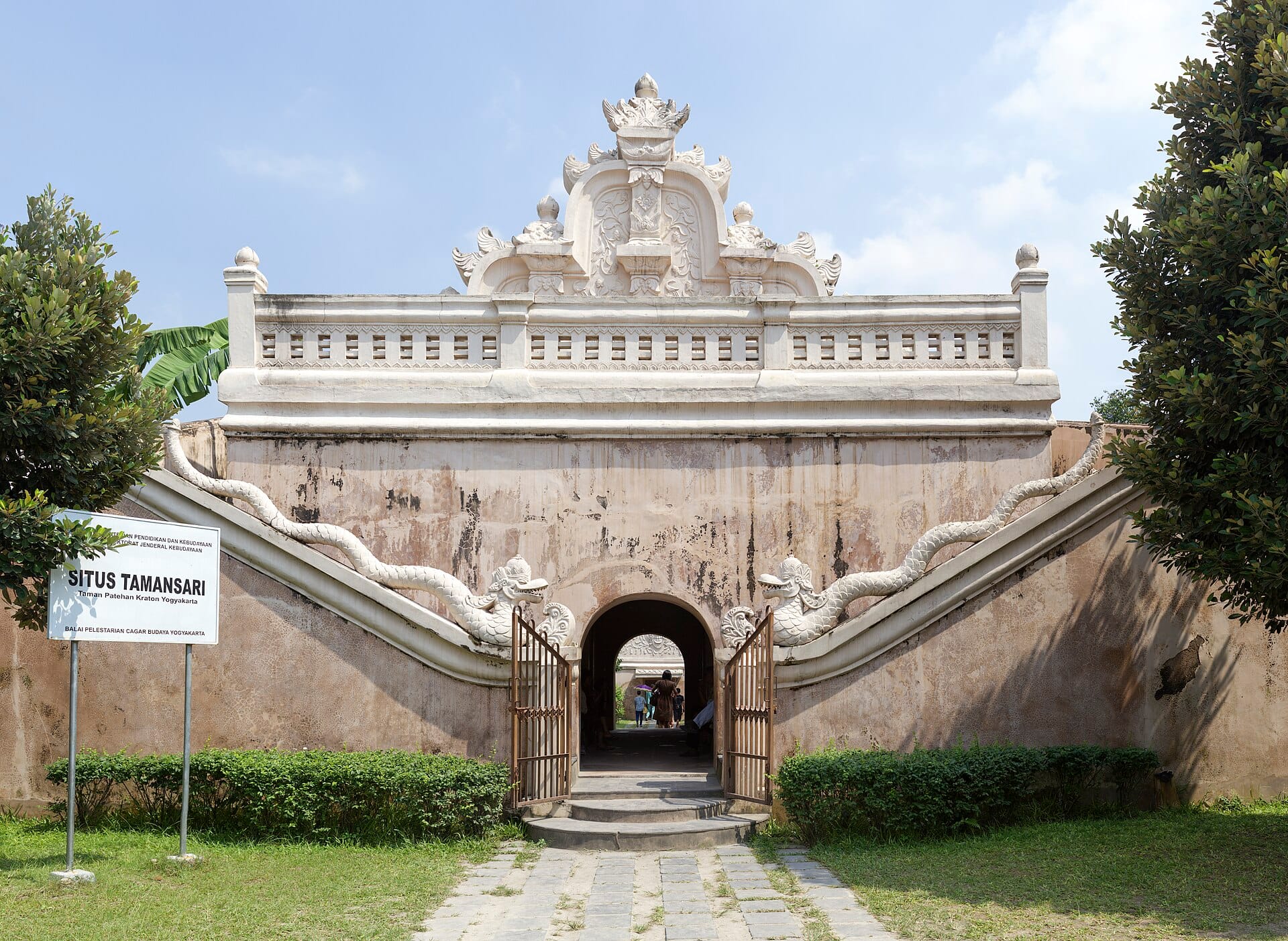
Insider tip: the reason to come isn't the pools, it's Sumur Gumuling, the circular underground mosque hidden in the surrounding kampung. Its central chamber has five staircases meeting at a platform and acoustics that turn a whisper into something that carries — it's the best photograph and the coolest spot in the complex, literally, on a hot afternoon. You'll need to walk through the residential lanes to reach it; a local kid will offer to guide you for a small tip, which is the normal way it works. Open daily 09:00–15:00.
Malioboro & Beringharjo Market — the city's spine
Malioboro is the mile-long street running north from the train station toward the Kraton, and it's where Jogja does its living: batik stalls, angkringan food carts, street musicians, and the historic Titik Nol Kilometer (Zero Kilometre) junction where the Dutch-era post office, bank, and fort face each other. Halfway down sits Pasar Beringharjo, the city's main traditional market since 1758 — the ground floor is batik and textiles by the metre, the upper floors are herbs, spices, and secondhand goods, and the back is a warren of warungs. It's all free to walk.
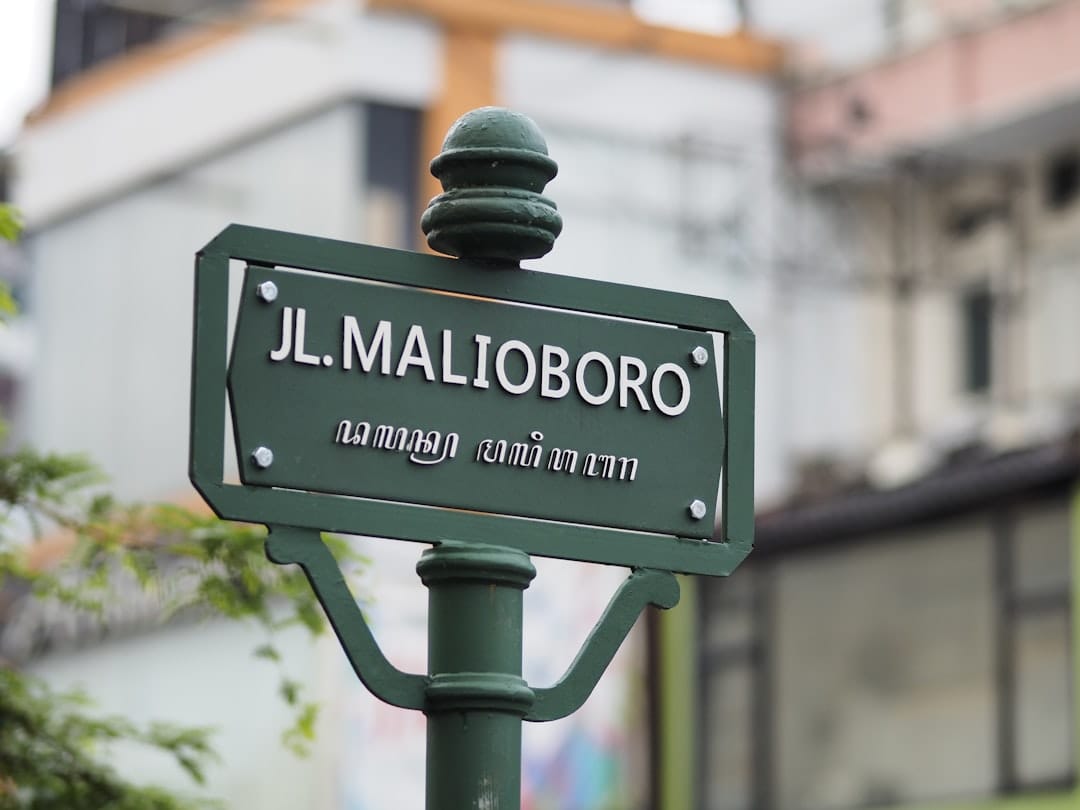
Insider tip: Malioboro is mid-transformation — the government is making it fully pedestrian by the end of November 2026, so parts are already car-free promenade and parts still have traffic. Come in the evening when the street musicians set up and the angkringan carts light their charcoal. In Beringharjo, the batik prices are negotiable; start at roughly half the quoted number and settle around 60–70%. Watch your bag in the crowded textile aisles, and ignore anyone who approaches you claiming a "special batik exhibition closing today" — it's a commission scam that's run for decades.
Mount Merapi jeep tour — the volcano that reshaped the north
Merapi, 25 km north of the city, is one of the most active volcanoes on earth; its 2010 eruption killed over 350 people and buried villages on the southern slopes. The jeep "lava tour" runs you across that terrain in a vintage Willys jeep, stopping at a bunker where two people died sheltering, the Sisa Hartaku museum (a house left exactly as the ash left it, with a clock stopped at the eruption's hour), the "Alien Stone," and Kali Kuning riverbed. Packages run from the basecamp near Kaliurang (about 40 minutes from downtown): roughly IDR 400,000 for the two-hour short route up to IDR 600,000 for three hours ($23–34 / €20–29), per jeep, and a jeep holds up to four people — so split among a group it's cheap.
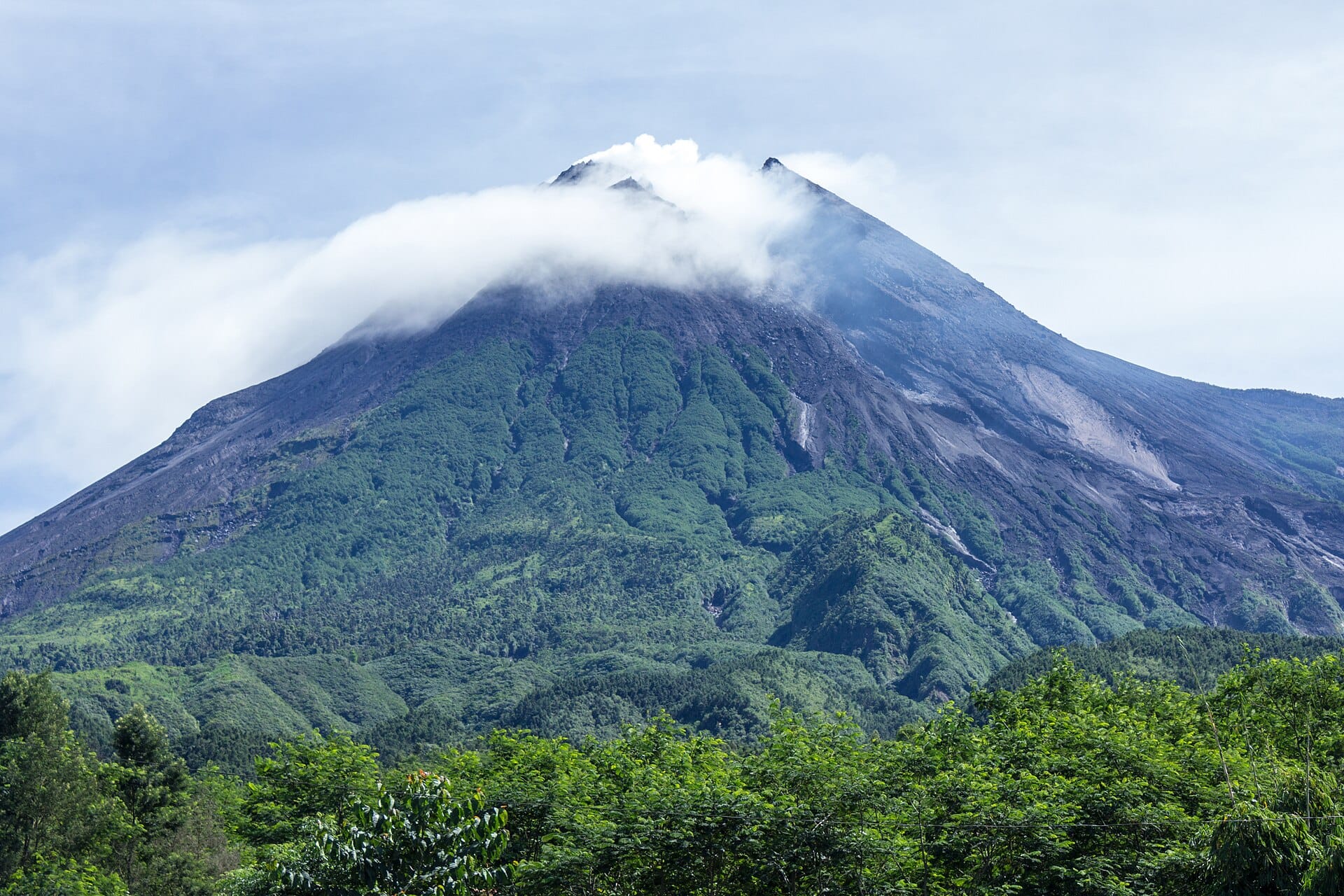
Insider tip: the sunrise slot is the one to book — you leave in the dark, and on a clear dry-season morning you get the cone lit pink before the dust and heat set in. The price is per vehicle, not per person, so the tout quoting you a "per person" rate is padding it. Bring a buff or mask; the volcanic dust on the short route is real, which is why the operators hand them out.
Jomblang Cave — abseil into a beam of light
Two hours southeast in the Gunung Kidul karst, Jomblang is a collapsed sinkhole cave you enter by rappelling 60 metres straight down on a rope, harnessed and guided, into an ancient forest growing on the cave floor. From there you walk to a second chamber where, if your timing is right, a single shaft of sunlight punches through the ceiling and hits the mist — the "light from heaven." Entry is IDR 500,000 (about $28 / €25), cash only, and it includes the gear and guides.
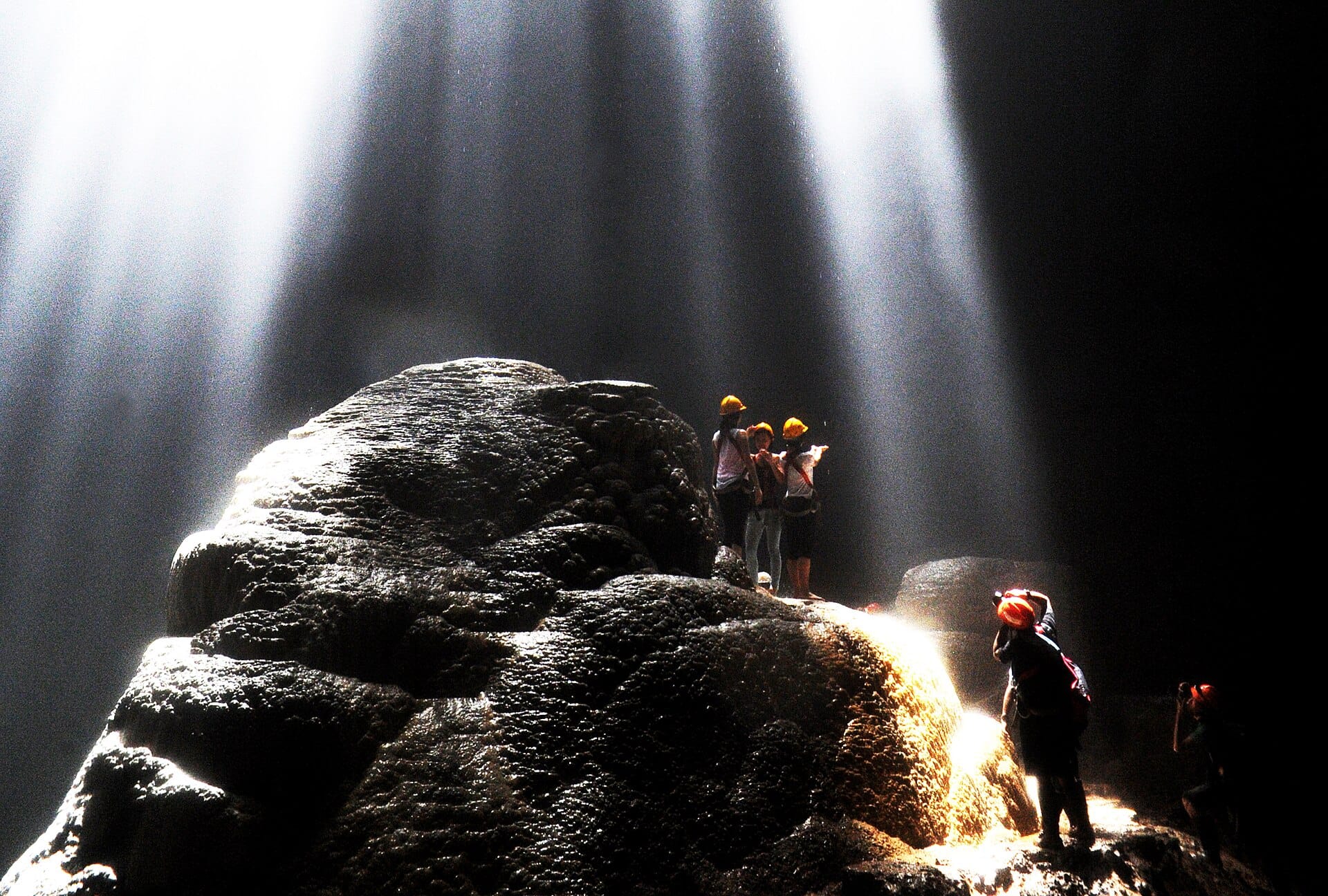
Insider tip: the light beam only appears mid-morning on a sunny day, strongest around 11:00, and the cave takes only 80–100 visitors a day first-come-first-served with descents starting by 09:30 — so you must leave the city by around 06:00 and you must go in dry season for the beam to show. In the wet months you'll still get the descent and the cave, but the famous shaft of light may not materialise. Wear shoes you don't mind ruining in the mud.
🗓️ A 3-Day Itinerary
Day 1 — The old city on foot
Start at the Kraton at opening (08:30) to catch the morning gamelan or dance performance (IDR 25,000). Walk five minutes to Taman Sari (IDR 25,000) and find your way through the kampung to Sumur Gumuling. Break for lunch in the Wijilan gudeg street just east of the palace — a plate of gudeg with rice, chicken, and egg runs about IDR 25,000–40,000 ($1.50–2.30 / €1.20–2). Spend the afternoon walking north up Malioboro to Beringharjo Market for batik, then the Zero Kilometre junction. As the light drops, plant yourself at an angkringan cart for a glass of kopi joss — coffee with a lump of glowing charcoal dropped in it — for around IDR 5,000. Total spend beyond food and hotel: about IDR 50,000 ($3).
Day 2 — Borobudur and Prambanan
This is your temple day and it's a long one. Do Borobudur first thing — with a pre-booked structure slot (IDR 455,000) you'll want to be at the park not long after the 06:30 opening. It's about a 90-minute drive northwest; hire a car and driver for the day for roughly IDR 500,000–700,000 ($28–40 / €25–35), which is the sane way to link the two temples. After the climb, drive east across the city to Prambanan (about 90 minutes) for the afternoon, using the combined ticket you bought (IDR 675,000 covers both). Stay for the Ramayana Ballet at Prambanan if it's a Tuesday, Thursday, or Saturday (Class I seat IDR 200,000, roughly 19:30–21:30). You'll be back in the city late and happy.
Day 3 — Volcano or cave
Pick your adventure. For the Merapi jeep sunrise tour, you'll leave around 04:30 for the Kaliurang basecamp; the two-to-three-hour circuit (IDR 400,000–600,000 per jeep) has you back by late morning. For Jomblang Cave, leave by 06:00 for the two-hour drive to catch the light beam around 11:00 (IDR 500,000 per person). Either way, spend the afternoon in Kotagede — the old silver quarter (see below) — or back on Prawirotaman for a slow lunch. If you've got an evening flight, the airport train from Tugu station gets you to Yogyakarta International Airport in about 40 minutes for IDR 20,000.
🧠 Essential Tips
When to go
The dry season runs May to October, and July–August are the driest and clearest months — the ones that guarantee a clean Borobudur sunrise and a Merapi cone with no cloud. They're also the busiest and priciest. The sweet spot is the shoulder: May–June or September–October, still reliably dry mornings but noticeably fewer crowds. The wet season (November–April) brings heavy afternoon thunderstorms, but mornings usually stay dry until noon, and hotels drop their rates significantly. Daytime temperatures sit at 30–32°C year-round. If you can time it, the Waisak (Vesak) full moon falls on 31 May 2026, when thousands of Buddhist monks process from Mendut to Borobudur and release lanterns — extraordinary, but book months ahead.
Getting around
From Yogyakarta International Airport (YIA), which sits an inconvenient 45 km west in Kulon Progo, the smart move is the KA Bandara airport train to Tugu station in the city centre — about 40 minutes for IDR 20,000 on the standard service (IDR 50,000 on the express). Book it on the KA Bandara app; seats sell out. Inside the city, download Gojek or Grab — the app locals actually use — and order motorbike taxis (ojek) or cars for a few thousand rupiah a ride; a cross-town Gojek car is rarely more than IDR 30,000 ($2). The Trans Jogja bus network covers the main sights at a flat IDR 3,500 cash per ride but is slow. For the temples and volcano, a hired car with driver for the day (IDR 500,000–700,000) is the standard and stress-free option.
Money and safety
Yogyakarta is one of the safer cities in Indonesia, and violent crime against tourists is rare. The real risks are commission scams, not muggings: the "batik gallery closing today, special government exhibition" pitch on Malioboro funnels you to a shop where the guide takes a cut, and it's persistent. Just say no and keep walking. Agree ojek and becak (pedicab) fares before you get on — a becak ride around the old city should be IDR 20,000–30,000, not the IDR 100,000 a driver might open with. Carry cash; many warungs and market stalls don't take cards, though QRIS digital payment is now everywhere and worth setting up if your bank supports it.
Food you should actually order
Gudeg is the dish Jogja is built on: young jackfruit slow-stewed for hours in coconut milk and palm sugar until it's sweet, brown, and rich, served with rice, chicken, egg, and a fiery krecek (beef-skin) sambal. The Wijilan street near the Kraton is lined with gudeg specialists; Gudeg Yu Djum is the famous name. For the opposite end of the spectrum, sate klathak is mutton satay skewered on iron bicycle spokes (the metal conducts heat to cook the meat evenly) and served in a light curry — Sate Klathak Pak Pong and Pak Bari in Wonokromo, Bantul, south of the city, are the legendary spots, and worth the drive. Grab bakpia — small baked mung-bean or chocolate pastries from the Pathok neighbourhood — as a snack, and end any night at an angkringan cart with nasi kucing ("cat rice," tiny banana-leaf rice parcels) and a kopi joss.
🏨 Accommodation Guide
Budget — Sosrowijayan & Prawirotaman
The old backpacker lanes of Sosrowijayan (just off Malioboro) and the more bohemian Prawirotaman district to the south are where the cheap beds cluster. Dorm beds and simple homestays run roughly IDR 130,000–330,000 a night ($8–20 / €7–18); Adhisthana Hotel in Prawirotaman is a reliable budget-to-midrange pick with dorms from around IDR 135,000. Prawirotaman ("Praw" to regulars) is the better base if you want cafés, craft coffee, and a quieter street; Sosrowijayan puts you 30 seconds from Malioboro's chaos.
Mid-range — Prawirotaman & central Jogja
Expect IDR 500,000–1,200,000 a night ($30–70 / €26–60) for a well-run boutique hotel with a pool. Greenhost Boutique Hotel in Prawirotaman is the design-led favourite, built around an indoor hydroponic garden and rotating art. Around Malioboro, the Neo Malioboro offers a rooftop pool and sky lounge at a fair price. This tier is the sweet spot in Jogja — your money goes a long way.
Luxury — heritage and the northern hills
For a splurge, expect IDR 2,000,000–5,000,000+ a night ($120–300 / €105–260). The Phoenix Hotel Yogyakarta – MGallery is the atmospheric choice: a 1918 colonial building near the Tugu monument with a courtyard pool. For full resort polish, Hotel Tentrem and the Hyatt Regency (with its own golf course) sit in the greener north of the city. All three are a fraction of what equivalent properties cost in Bali.
🎭 Beyond the Tourist Trail
Skip the second temple day and give an afternoon to Kotagede instead, in the city's southeast. This was the capital of the Mataram Sultanate in the 16th century, before Yogyakarta existed, and it's now a living heritage quarter of narrow lanes, Javanese-Dutch-Islamic hybrid houses, the old royal cemetery where the founders of Mataram are buried, and the silver workshops the neighbourhood has been known for since the court commissioned them. You can watch smiths hand-hammer filigree in the small ateliers along Jalan Kemasan and buy straight from the maker at a fraction of Malioboro prices. It's free to wander, and a walking tour of the old kampung is the most human afternoon in Jogja.
For a dated fixture worth planning around: the Sekaten fair fills the northern palace square (Alun-Alun Utara) for several weeks around the Prophet's birthday — a night market of food, rides, and gamelan that culminates in the Grebeg Maulud procession, when the court carries mountains of rice and produce (gunungan) out of the Kraton to be scrambled for by the crowd. In 2026 the Grebeg Maulud falls on 25–26 August. ARTJOG, the country's biggest contemporary art fair, runs across July–August, and Prambanan Jazz brings international acts to the temple grounds in October.
❤️ Let VoyaBear plan your Jogja trip
Yogyakarta rewards planning — timed Borobudur slots, a driver who knows which gudeg warung is worth the stop, a jeep booked before the sunrise sells out. That's exactly what VoyaBear does. Tell us how many days you have, whether you're chasing temples, volcanoes, or slow mornings with good coffee, and your budget, and we'll build you a day-by-day itinerary with the bookings, routes, and costs already sorted — personalised to how you actually like to travel. Start planning your Yogyakarta trip with VoyaBear today, and spend your mornings on top of Borobudur instead of in a queue.
Want this as an actual itinerary?
VoyaBear turns a guide like this into a day-by-day plan built around how you travel.
Plan my trip free