Palermo 2026: The Complete Guide to Sicily's Arab-Norman Capital
24 September 2026 · 12 min read
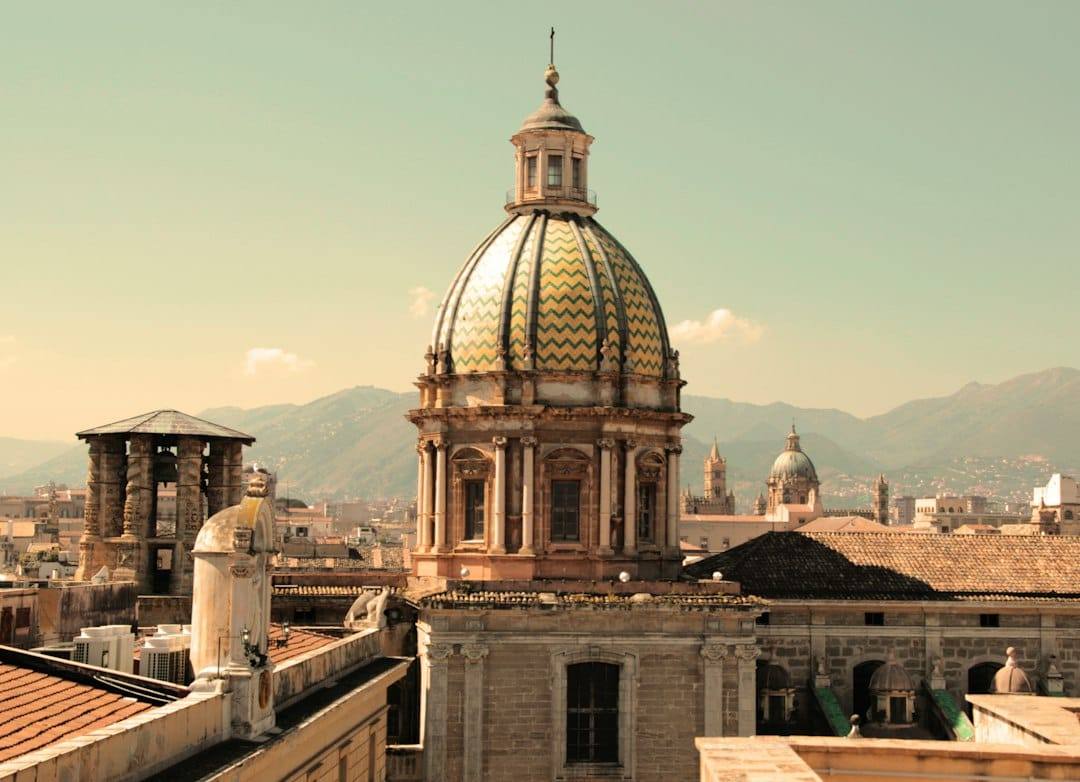
Palermo is the rare European capital where you can stand in one spot and read a thousand years of conquest off the walls. At the Cappella Palatina, Byzantine gold mosaics of Christ sit under an Arabic muqarnas ceiling of carved wooden honeycombs, commissioned by a Norman king who kept a court of Muslim, Greek and Latin scholars. That layering — Arab, Norman, Byzantine, Spanish Baroque — is why UNESCO put nine of the city's monuments on its World Heritage list in 2015, and it is the actual reason to come, not a marketing line.
The other reason is that Palermo is loud, unpolished and cheap by Western European standards. A chickpea fritter sandwich costs about €2. A 90-minute bus ticket is €1.40. The markets still shout their prices in Sicilian dialect. If you have done Rome and Florence and want somewhere that hasn't been sanded smooth for tourists, this is it. Here's how to spend three days, what everything costs in 2026, and where to eat the things worth flying for.
🏛️ Essential Experiences
Cappella Palatina & the Palazzo dei Normanni
This is the single best thing in Palermo and the one you should book first. The Palatine Chapel, built by Roger II starting in 1132, is a small royal chapel where three cultures collide on every surface: gold Byzantine mosaics, a painted Islamic wooden ceiling, and Norman stonework. The Palazzo dei Normanni above it is still the seat of the Sicilian regional parliament, which is why the ticket price and access change with the political calendar.
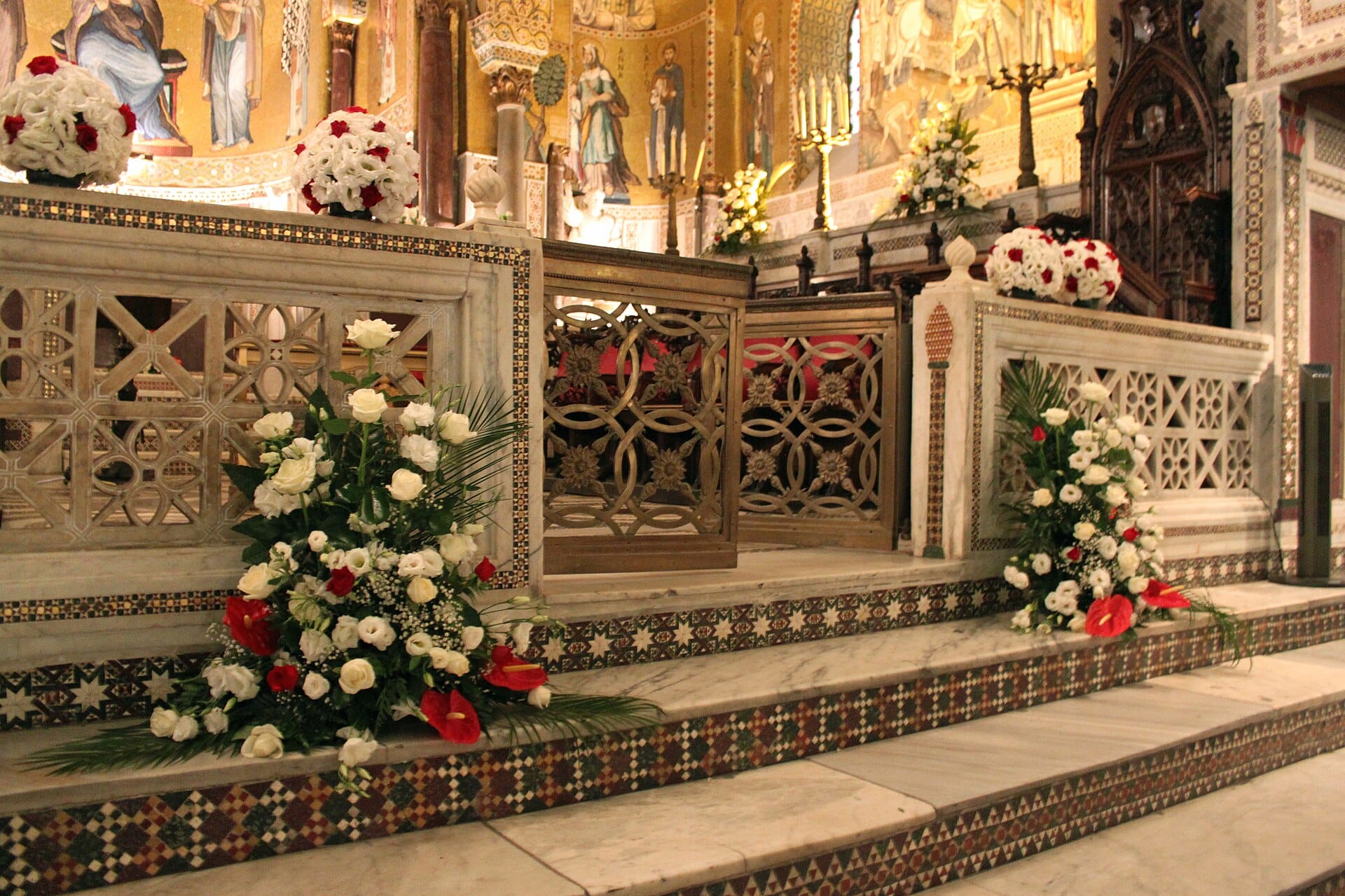
Cost & hours: A full ticket including the Royal Apartments is €19 on weekdays; on Sundays and whenever parliament is sitting those upper rooms close and the price drops to about €15.50. Open Monday to Saturday 8:30 a.m.–4:30 p.m. (last entry 3:45), Sunday 8:30 a.m.–12:30 p.m. Under-14s go free. Insider tip: Book a timed slot online and take the very first entry at 8:30 a.m. The chapel is tiny, the mosaics need raking morning light to glow, and by 10 a.m. tour groups make the space feel like a rush-hour metro car. Budget 1.5–2 hours for the whole complex.
Palermo Cathedral (Cattedrale di Palermo)
A cathedral that reads like an argument between empires: founded 1185 on the site of a mosque that was itself a former basilica, then rebuilt so many times it wears Norman, Gothic, Catalan and 18th-century neoclassical dress all at once. Look for the Arabic verse from the Qur'an still carved into a column on the south porch — a leftover from its mosque days that nobody removed.
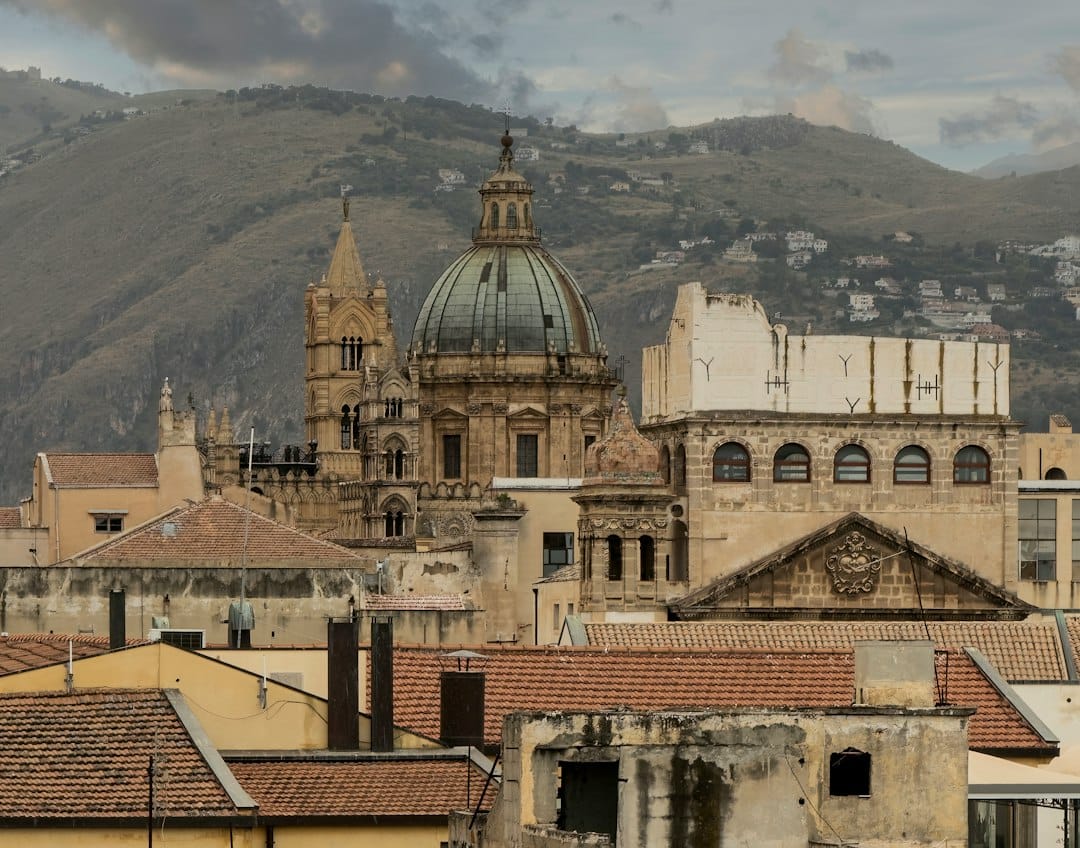
Cost & hours: The main church is free. The "Monumental Area" combined ticket — rooftop terraces, royal tombs, crypt and treasury — is €13; the roof alone is €7. The monumental area runs weekdays 9:30 a.m.–2:30 p.m., Saturdays until 6 p.m., Sundays 9 a.m.–1 p.m. Insider tip: Do the roof terraces first thing in the morning — there's no shade up there and the climb is a steep spiral staircase, so midday in summer is brutal. Shoulders and knees must be covered to enter the church itself. Skip the treasury if you're short on time; the roof and the royal tombs (including Frederick II and Roger II) are the payoff.
La Martorana
If you only see one more church, make it this one. Santa Maria dell'Ammiraglio, known as La Martorana, holds some of the oldest and finest Byzantine mosaics in Sicily, from the 1140s — including a famous panel of Christ crowning King Roger II, one of the earliest surviving portraits of a Norman ruler. It sits on Piazza Bellini right beside the Baroque church of Santa Caterina.
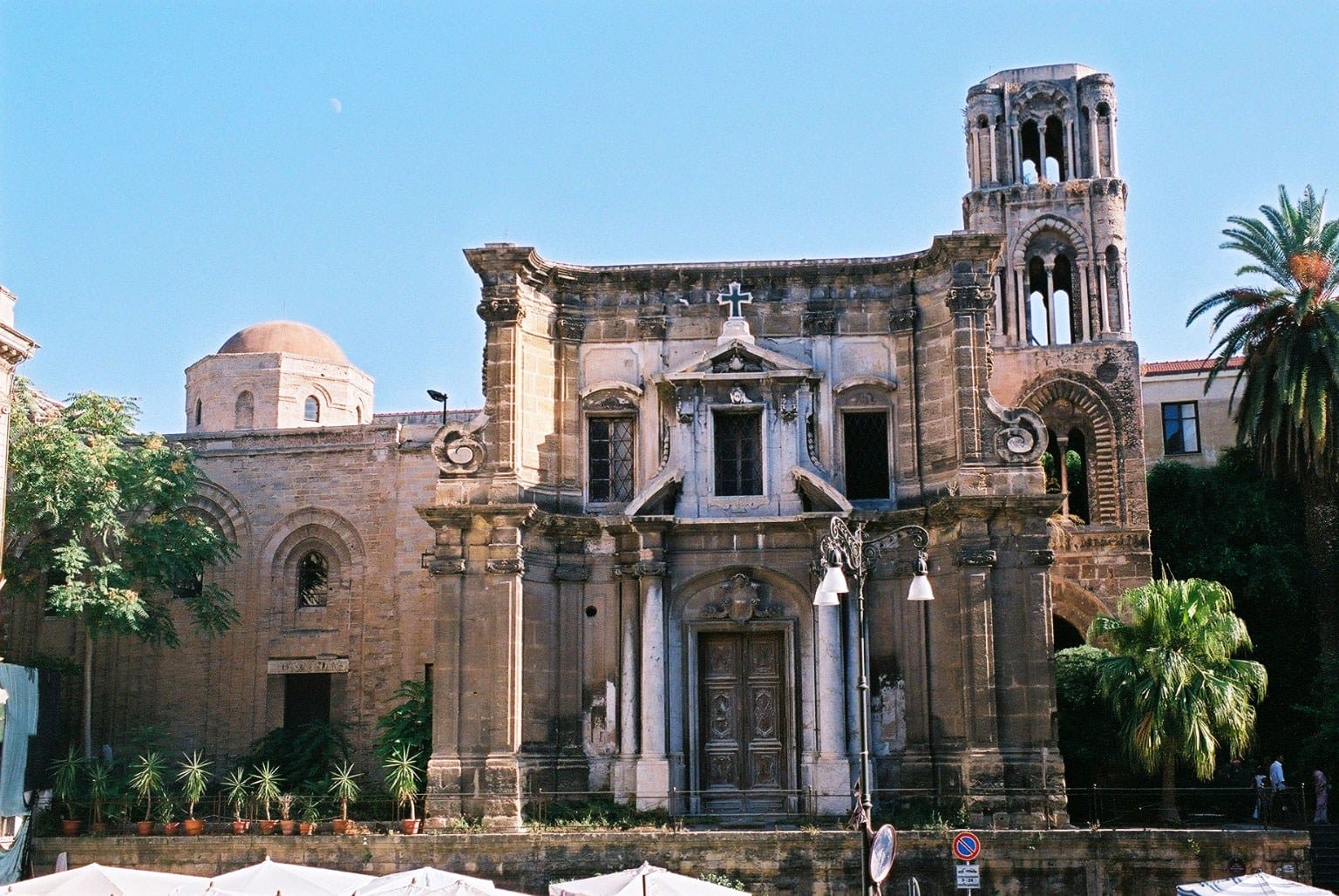
Cost & hours: Just €2 to enter. Open Monday–Saturday 9:45 a.m.–1 p.m. and 3:30–5:30 p.m., Sunday mornings 9–10:30 only. Insider tip: Go in the late afternoon slot when the light hits the gold tesserae, and it doubles as an active Greek-rite parish, so avoid barging in during a service. It's a five-minute walk from Quattro Canti, so pair it with the fountain below.
Quattro Canti & Fontana Pretoria
The Quattro Canti is the Baroque crossroads where Via Maqueda meets the Cassaro (Corso Vittorio Emanuele), four curved 17th-century façades marking the old quarters of the historic centre. One block away is the Fontana Pretoria, a 16th-century marble fountain crowded with nude figures so scandalous to locals that they nicknamed the square the "Fountain of Shame."
Cost: Free — both are open-air. Insider tip: The Quattro Canti is a working intersection, so photograph it early Sunday morning when traffic thins, or after dark when the façades are lit. It's the natural pivot point of the old town: nearly everything on Day 1 radiates out from here on foot.
Teatro Massimo
The largest opera house in Italy and the third largest in Europe, opened in 1897. Even if you skip a performance, the 40-minute guided tour walks you through the horseshoe auditorium, the royal box and the echo room. Film buffs will recognise the sweeping front steps — the climactic opera-house murder in The Godfather Part III was shot here.
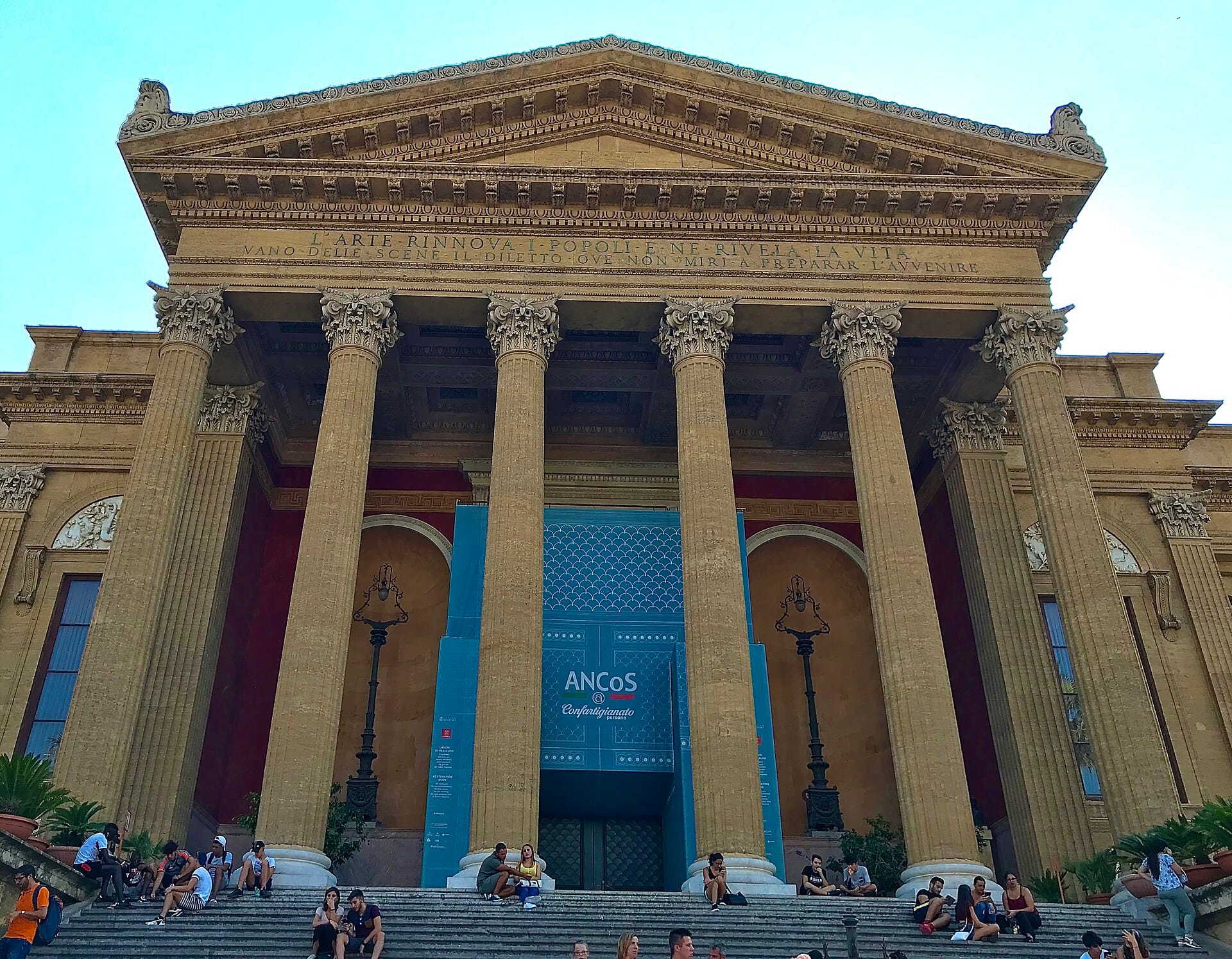
Cost & hours: Guided tours run daily 9:30 a.m.–7 p.m. (last tour 6:20), in English, Italian, French, Spanish and German. The tour is €14 for adults from July 2026 (€7 under-26). Insider tip: If there's an evening performance during your stay, upper-tier opera tickets are far better value than the tour and often start well under €30 — check the box office online before you commit to just the daytime visit.
Ballarò Market
Palermo's oldest and most frenetic street market, running through the Albergheria district. This is where you eat, not shop for souvenirs: vendors grill stigghiola over open coals, fry panelle to order, and stack Sicilian blood oranges and swordfish steaks under hand-painted signs. The shouting sales patter — the abbanniata — is genuinely part of the experience.
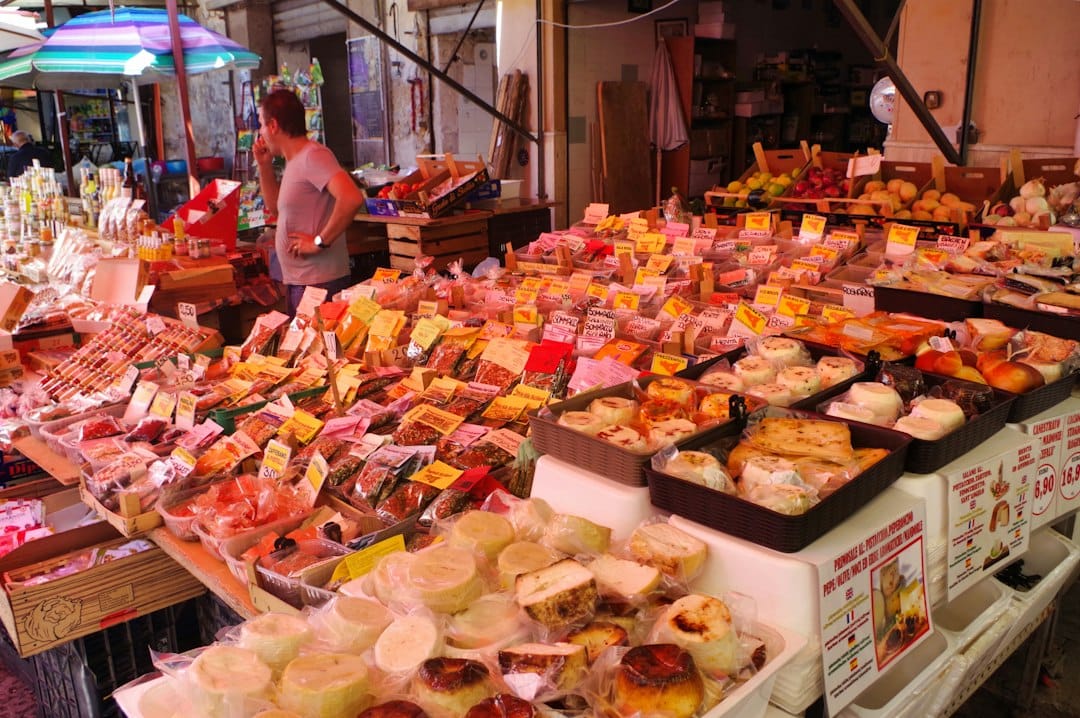
Cost: Free to wander; street food runs €2–5 a portion. Busiest and best 8 a.m.–1 p.m. Insider tip: Come hungry mid-morning and graze rather than sit down — a €2 pane con panelle here beats a €15 restaurant plate. Keep your phone and wallet in a front pocket; the crush is exactly where pickpockets work. The nearby Capo and Vucciria markets are worth a look too, Vucciria coming alive again after dark as an open-air drinking spot.
Capuchin Catacombs (Catacombe dei Cappuccini)
Not for everyone, and that's the point. From the late 1500s the Capuchin friars mummified and displayed the dead in these underground corridors, and roughly 8,000 bodies still hang and lie here, sorted by profession, sex and age — monks, professionals, virgins, children. The most famous resident is Rosalia Lombardo, a two-year-old embalmed in 1920 so skilfully she's called "Sleeping Beauty" and still looks asleep.
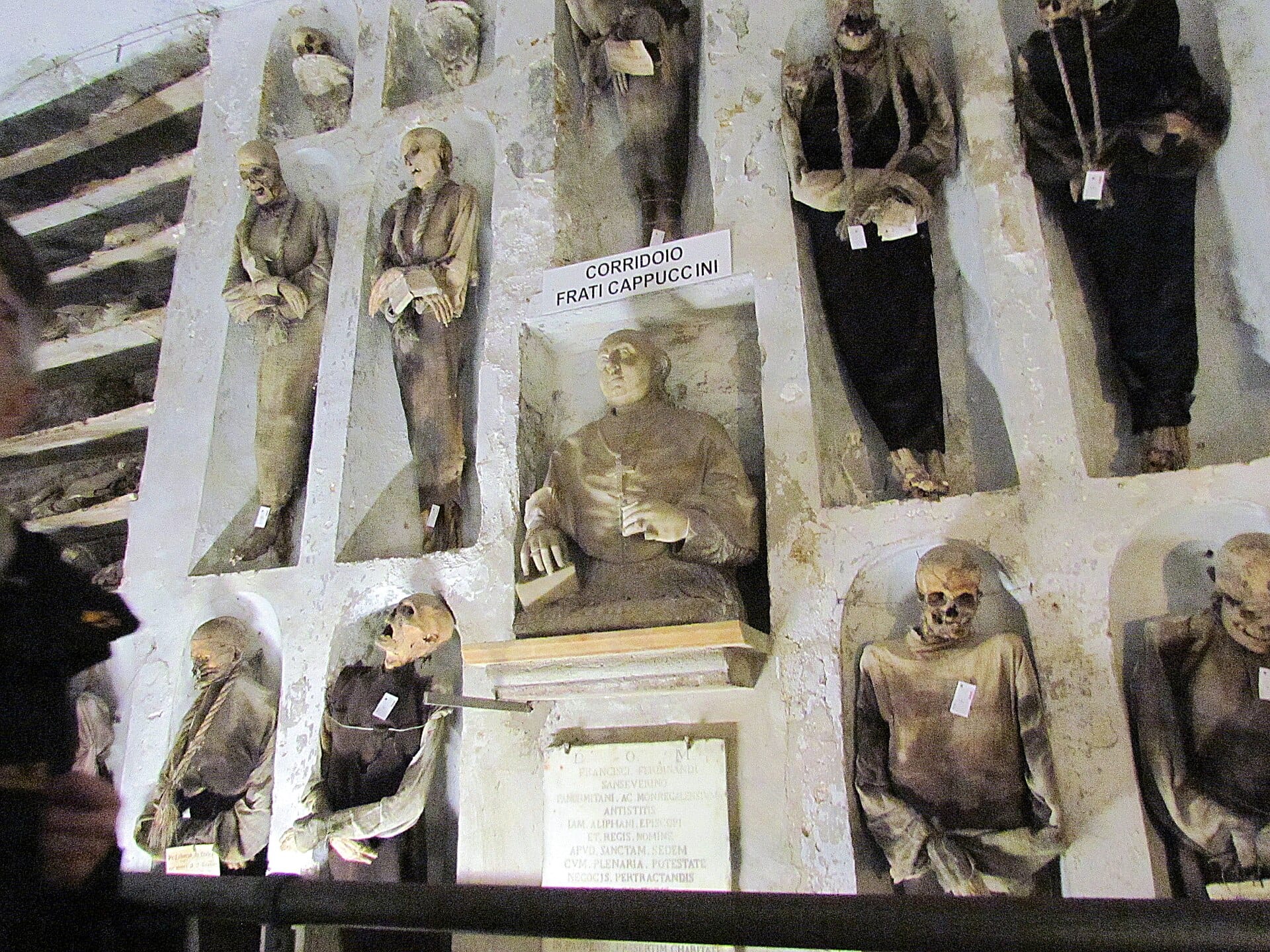
Cost & hours: Entry is about €5 (reduced ~€3). Generally open daily 9 a.m.–1 p.m. and 3–5 p.m., though hours contract off-season, so check before you trek out. Insider tip: Photography is strictly banned inside — leave the phone in your bag rather than get told off. It's a 20-minute walk or short bus ride west of the centre and pairs logically with a Monreale trip since both are on the western edge of town.
Monreale Cathedral (day trip)
Eight kilometres up the hill above Palermo, Monreale's cathedral holds roughly 6,340 square metres of golden mosaics — one of the largest surviving mosaic cycles in the world, topped by an enormous Christ Pantocrator in the apse whose outstretched hands span metres. The adjoining cloister, with 228 twin columns each carved differently, is worth the separate ticket.
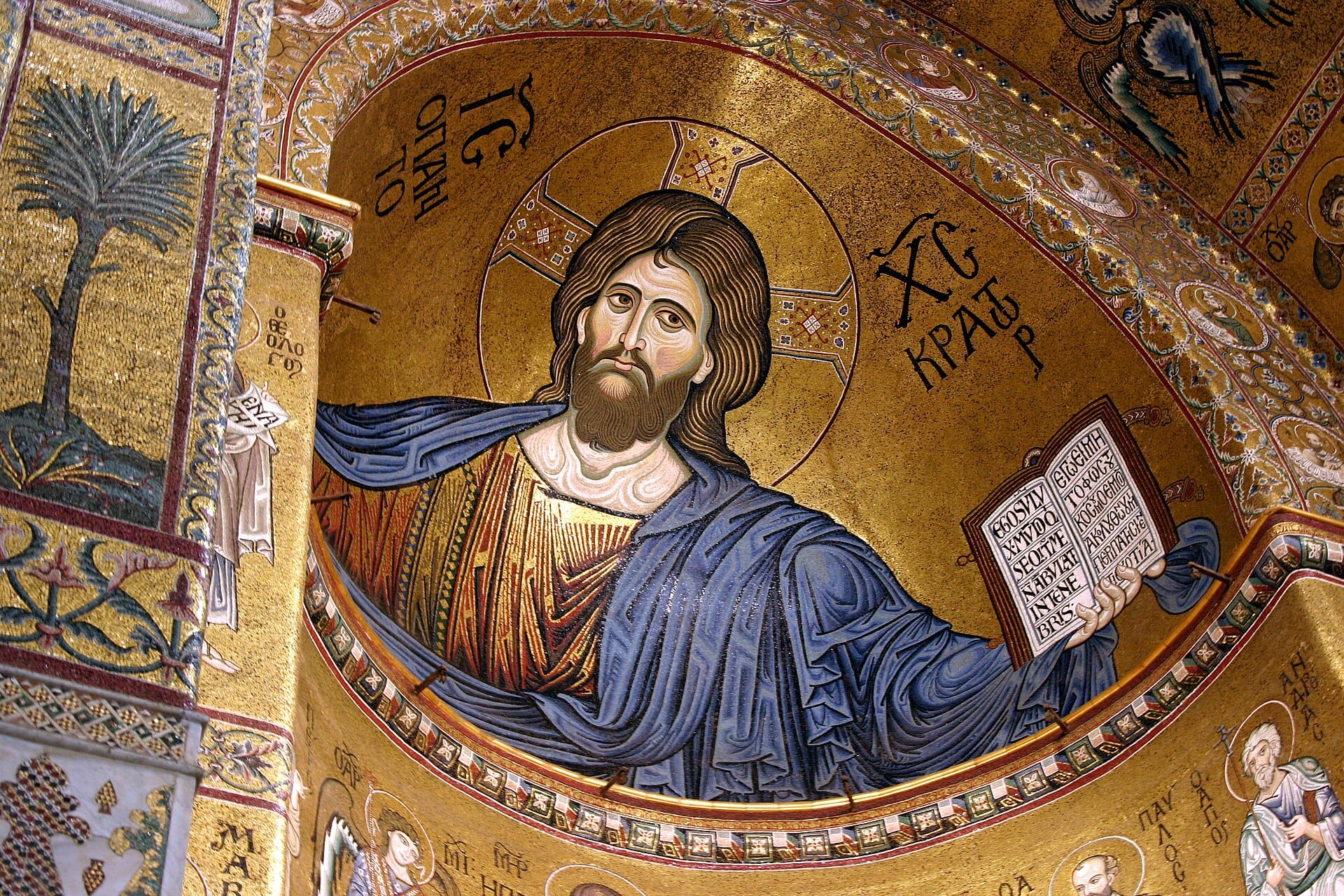
Cost & getting there: The cathedral is roughly €4–6 (often including terrace access) and the cloister about €8. Take AMAT bus 389 from Piazza Indipendenza, near the Norman Palace — it runs roughly hourly and takes about 40 minutes. Insider tip: Never go on a Sunday morning, when Mass closes the church to visitors, and check the day's hours before leaving because they shift without notice. Climb the cathedral terraces for a view straight down the Conca d'Oro valley to the sea.
Mondello Beach
When the heat becomes unreasonable, this is the escape valve: a crescent of soft white sand between two headlands, about 11 km north of the centre, framed by Art Nouveau villas and an early-1900s bathing pavilion on stilts. The water is shallow and turquoise, closer to a Caribbean postcard than you'd expect from a working port city.
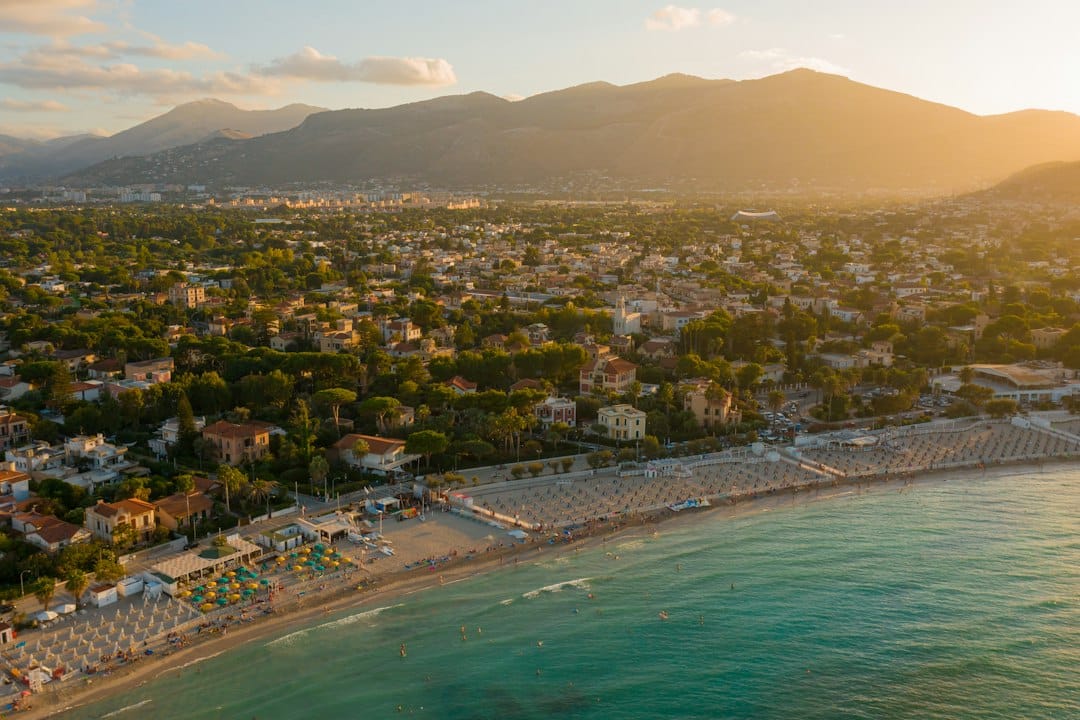
Cost & getting there: AMAT bus 806 leaves from near the Politeama theatre (Piazza Sturzo) and takes 25–45 minutes for a standard €1.40 fare. Free public sand exists, but much of the prime beach is lidi where you pay for a sunbed and umbrella. Insider tip: Go on a weekday and arrive before 11 a.m.; between 11 and 2 in July and August the bus and the sand are both packed. A plate of fried seafood at a beachfront kiosk is the correct lunch.
🗓️ A 3-Day Itinerary
Day 1 — The Arab-Norman core, on foot
Start at 8:30 a.m. at the Palazzo dei Normanni for your pre-booked Cappella Palatina slot (€19, ~2 hours) while it's quiet. Walk 10 minutes north to Palermo Cathedral and do the roof terraces before the sun climbs (€13 monumental ticket). Grab a €2 pane con panelle from a stall on Via Vittorio Emanuele for lunch on the move. Walk the Cassaro east to Quattro Canti and the Fontana Pretoria (free), then duck into La Martorana on Piazza Bellini for the late-afternoon mosaics (€2). Total walking is under 4 km and mostly flat. Dinner in the Vucciria as it turns into an open-air bar scene after dark.
Day 2 — Markets, opera and the macabre
Spend the morning eating your way through Ballarò market (8 a.m.–1 p.m.) — arancina, sfincione, grilled stigghiola, all for a handful of euros. Mid-morning, take a guided tour of Teatro Massimo (€14, 40 min). After lunch, head west to the Capuchin Catacombs (€5) — sobering, unforgettable, about 20 minutes on foot or a quick bus from the centre. Recover with a cannolo filled to order at Pasticceria Cappello or a granita and coffee at Antico Caffè Spinnato near the Politeama. If there's an opera on, book the cheap seats for the evening.
Day 3 — Monreale, then the beach
Catch AMAT bus 389 from Piazza Indipendenza (~40 min, hourly) up to Monreale for the golden mosaics and the cloister (~€12–14 combined), arriving at opening to beat the coach tours. Back in the city by early afternoon, switch to bus 806 from Piazza Sturzo out to Mondello (25–45 min, €1.40) for a swim and fried seafood by the water. Head back into town for a final dinner of pasta con le sarde (pasta with sardines, wild fennel and pine nuts) or the Palermitan classic pasta alla Norma. Reserve if it's a weekend.
🧠 Essential Tips
Best months to visit
April to early June and September to October are the sweet spots: daytime highs around 18°C in April and 23–25°C in October, warm enough sea in late spring and September, and none of the July–August furnace (27–30°C and heaving with domestic tourists). Winter is mild — 14–19°C by day — and cheap, but rainier and some Mondello businesses shut. If you want the city at its most electric, come for the Festino di Santa Rosalia on the night of 14 July into 15 July: a decorated chariot bearing the patron saint's statue processes from the Cathedral down the Cassaro to the sea, ending in fireworks. 2026 marks the 402nd edition. It commemorates the 1624 plague that Rosalia's relics were credited with lifting. Book accommodation months ahead if you target those dates.
Getting in from the airport
Falcone–Borsellino airport is about 35 km west of the city. The Prestia e Comandè shuttle bus is the simplest option: €6 one way, roughly every 30 minutes, about 50 minutes to the centre. The Trinacria Express train runs to Palermo Centrale for €6.80 in 45–65 minutes. A taxi should be a fixed €45–60 into town — agree the fare before you get in, as metering disputes are common. Pre-booked private transfers run €60–80.
Getting around the city
The historic centre is small and best walked; the pavements are chaotic but distances short. For anything further, AMAT buses use a single €1.40 ticket valid 90 minutes, bought at any tabacchi (tobacconist) or newsstand — it's €1.80 if you buy from the driver, and you must validate it on boarding. Skip renting a car for the city itself: the historic core is a restricted-traffic ZTL zone with cameras that will post fines to your rental company months later. Use Moovit or Google Maps for live bus times, since printed schedules are fiction here.
Safety and scams
Palermo is safe for a mid-sized city, and violent crime against tourists is rare, but petty theft is real. Pickpockets work the crush at Ballarò, Capo and Vucciria markets and on packed buses like the 806 to Mondello — keep valuables in a front pocket or zipped bag. At restaurants near the main sights, check whether a cover charge (coperto) and service are itemised before ordering, and confirm the price of anything sold "by weight" like fish. For taxis, insist on the fixed airport fare or use the AppTaxi / FreeNow apps rather than flagging one blind. Cross streets decisively — Palermo traffic negotiates rather than stops.
What to eat
Palermo is one of Europe's great street-food cities. The essentials: arancina (a fried rice ball — spherical here, not conical like eastern Sicily's arancino; try Ke Palle on Via Maqueda); panelle (chickpea fritters in a sesame roll, best from Franco U Vastiddaru on Via Vittorio Emanuele); sfincione (a thick, spongy pizza with tomato, onion and anchovy); and for the brave, pane con la milza (a spleen sandwich, ordered schietta plain or maritata with cheese). Sit-down institution Antica Focacceria San Francesco serves the classics if markets aren't your scene. Finish with a cannolo filled to order — soggy shells are a crime — at Pasticceria Cappello, or a brioche-and-granita breakfast in summer.
🏨 Accommodation Guide
Budget (€70–110 / night)
Stay in the Centro Storico to be within walking distance of everything. B&Bs like La Terrazza sul Centro run €80–90 a night; over in the calmer Politeama–Libertà district, apartment-style stays sit around €90–100. Just don't book a room directly inside a market square (Ballarò, Capo, Vucciria) unless you enjoy 5 a.m. delivery trucks.
Mid-range (€130–200 / night)
This is the sweet spot in Palermo, where boutique hotels inside restored palazzi are genuinely affordable. Palazzo Natoli Boutique Hotel in the historic centre runs roughly €150–190; Hotel Politeama, on the tree-lined boulevards near the theatre, sits around €150–200 and suits families or anyone with a rental car, since it's outside the ZTL.
Luxury (€250 / night and well up)
In the old town, suites like Palazzo Santamarina start around €250. For grande-dame glamour, the historic Grand Hotel et des Palmes near the Politeama runs about €600. The showpiece is the Rocco Forte Villa Igiea, an Art Nouveau villa on its own bay between the centre and Mondello, where rooms climb toward €2,000 in high season — a splurge, but a legendary one.
🎭 Beyond the Tourist Trail
Skip the obvious for a day and go to the Cala, the old harbour, where the city has slowly reclaimed a once-derelict waterfront into an evening passeggiata strip. From there, the Kalsa — the old Arab quarter, long the roughest part of the centre — has become Palermo's most interesting district: independent galleries, the contemporary-art space at Palazzo Butera (restored by the collectors Massimo and Francesca Valsecchi and open to the public), and aperitivo bars around Piazza Marina under the enormous Ficus macrophylla banyan tree in the Giardino Garibaldi.
For a wilder half-day, hike or drive up Monte Pellegrino — Goethe called it the most beautiful promontory in the world — to the cave Sanctuary of Santa Rosalia, where the saint's relics were found in 1624. The number 812 bus climbs partway up. And if you're in town on the night of 14 July, drop every other plan: the Festino turns the whole Cassaro into a river of people, food carts and fireworks, and it is the single best window into how Palermo sees itself.
❤️ Let VoyaBear Plan Your Palermo Trip
Palermo rewards a plan — timed chapel tickets, market mornings, a Monreale bus that only runs hourly, festival dates that fill hotels months out. That's exactly the kind of puzzle VoyaBear solves. Tell us how many days you have, your budget, and whether you're here for mosaics, markets or the beach, and we'll build you a personalised, hour-by-hour Palermo itinerary with the bookings, walking routes and restaurant reservations sorted. Start planning your trip with VoyaBear today — and spend your time in Sicily eating arancine, not refreshing opening-hours pages.
Want this as an actual itinerary?
VoyaBear turns a guide like this into a day-by-day plan built around how you travel.
Plan my trip free