Rio de Janeiro 2026: The Complete Guide to Brazil's Beach City
4 August 2026 · 12 min read
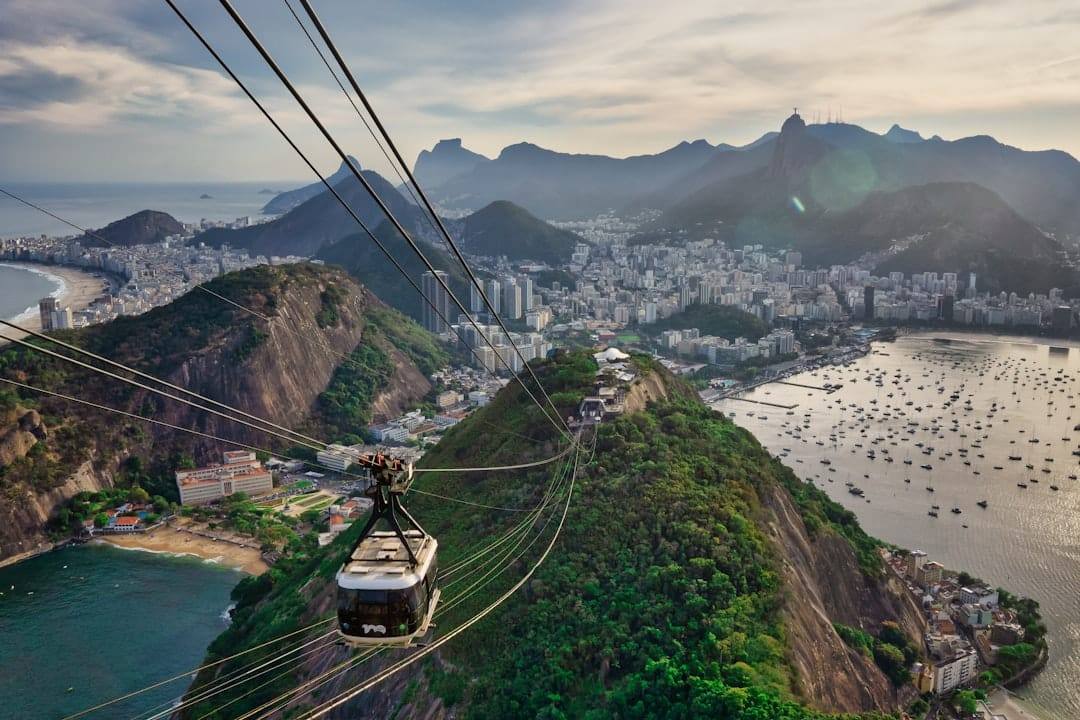
Rio de Janeiro is the rare postcard city that actually delivers in person. Granite peaks drop straight into the Atlantic, a 38-metre concrete Christ watches over the whole thing from 710 metres up, and the beach genuinely functions as the city's living room — Cariocas hold business meetings, birthday parties and Sunday hangovers on the same stretch of sand. It is also a city where a US dollar buys about 5.1 reais in 2026, which means world-class views, a cog-train up a mountain and an ice-cold beer on the seawall cost a fraction of what they would in Lisbon or Sydney. This guide is built on 2026 prices and real place names, so you can plan a trip that works instead of one that photographs well and falls apart on the ground.
A quick orientation before you go: the tourist action splits between the Zona Sul (South Zone — Copacabana, Ipanema, Leblon, Botafogo, where you'll sleep and swim) and the Centro and Santa Teresa/Lapa districts inland (history, samba, the mosaic staircase). Everything below is grouped so you can move between them without doubling back across the city.
🏙️ Essential Experiences
1. Christ the Redeemer & Corcovado
Yes, it's the obvious one, and yes, it's worth it. The statue stands on the 710-metre Corcovado peak inside Tijuca National Park, and the reason to go isn't the statue up close — it's the 360-degree view of the entire city folding around Guanabara Bay. The official way up is the Trem do Corcovado, a red cog train that has been climbing through Atlantic rainforest since 1884; a round-trip adult ticket including summit access runs about R$134 (roughly $26 / €23) and you must book a timed slot in advance, especially December through March.

Insider tip: book the earliest train of the day and go on a clear morning — Corcovado makes its own cloud, and by midday the statue is regularly swallowed in mist while the line of visitors keeps arriving anyway. Check the webcam or a local's Instagram before you commit. If the cog train is sold out, licensed authorised vans depart from Largo do Machado and Copacabana for a similar price; skip the unofficial hiking trail up from Parque Lage unless you're with a guided group, as it has a real history of robberies.
2. Sugarloaf Mountain (Pão de Açúcar)
Sugarloaf is the granite thumb at the mouth of Guanabara Bay, and its glass cable car — the Bondinho — has been running since 1912, making it one of the oldest in the world. You ride in two stages: first to Morro da Urca (220 m), then to the Sugarloaf summit itself (396 m). The full round-trip cable car ticket is R$205 (about $40 / €35), and the park is open daily 8:30am to 9pm with last boarding at 7:30pm.

Insider tip: time your ascent for roughly an hour before sunset. You go up in daylight, watch the sun drop behind Corcovado and the Christ statue, and come down with the whole city switched on and glittering — one ticket, two completely different views. Buy online to skip the queue at Praia Vermelha. Fit travellers can walk the free forest trail up to the first station, Morro da Urca, and only pay for the second leg.
3. Copacabana & Ipanema Beaches
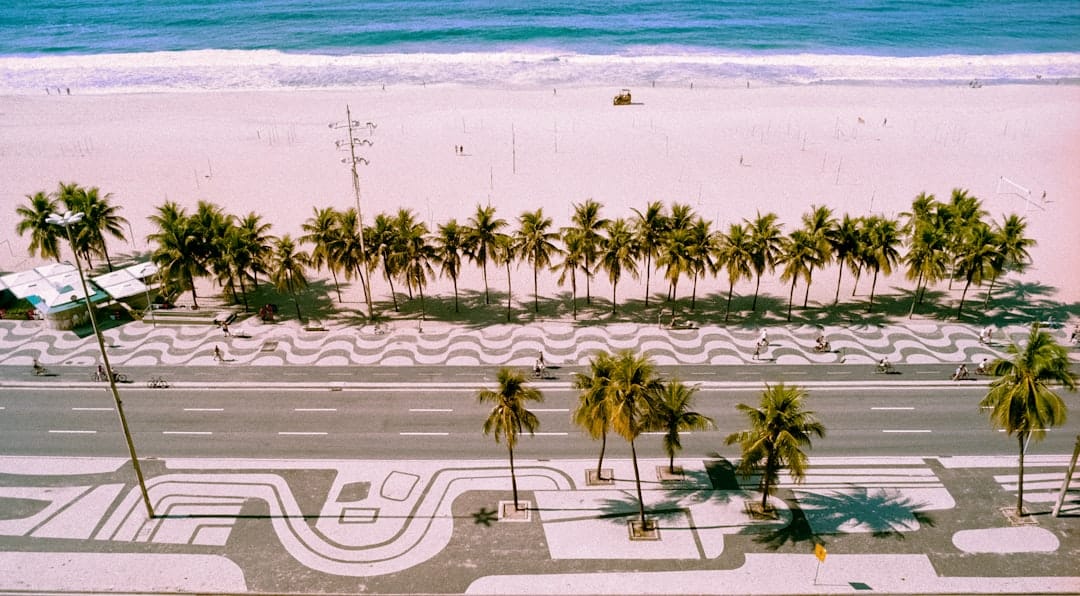
These aren't just beaches, they're the operating system of the city, and they're free. Copacabana is the 4-kilometre crescent with the black-and-white Portuguese wave-pattern promenade; it's busier, more mixed, and lined with kiosks. Ipanema, one headland south, is more polished — aim for the stretch between postos (lifeguard stations) 8 and 9, the classic see-and-be-seen zone. Rent a chair and umbrella from a vendor for around R$20–40 for the day and buy a Globo biscuit and a mate iced tea from the walking sellers.

Insider tip: walk to the rocks of Arpoador, the point dividing Ipanema from Copacabana, about 45 minutes before sunset. Cariocas gather on the flat rocks and applaud when the sun drops behind the Dois Irmãos peaks — it's a genuine nightly ritual, not a tourist invention. Bring only what you can afford to lose: phone-snatching on the sand is the city's most common street crime, and the golden rule is to never leave belongings unattended and never stay on the beach after dark.
4. Escadaria Selarón (the Selarón Steps)
These 215 steps connecting Lapa and Santa Teresa were the 20-year obsession of Chilean-born artist Jorge Selarón, who tiled them in red, yellow and green — a tribute to Brazil — using more than 2,000 ceramic tiles sent from over 60 countries. He worked on them from 1990 until his death on the steps in 2013. It's free, open at all hours, and takes 20 minutes to see properly.

Insider tip: arrive before 9am. By late morning the staircase is shoulder-to-shoulder with tour groups and you'll wait for every photo; early on you'll have Selarón's hand-painted pregnant-woman tiles and hidden signatures almost to yourself. It sits right at the bottom of Santa Teresa, so pair it with the tram (below) rather than making a separate trip. Keep your phone in your pocket on the surrounding Lapa streets, which quiet down and get sketchier after dark.
5. Santa Teresa & the Bonde (Tram)
Santa Teresa is Rio's hillside artists' quarter — cobbled lanes, faded mansions, ateliers and boteco bars, reachable by the last working bonde (tram) in the city. The yellow tram rattles out from a station near the Petrobras building in Centro, crosses the arches of the 18th-century Arcos da Lapa aqueduct, and climbs to Largo dos Guimarães. A round-trip ticket is R$20 (about $4 / €3.40), and it runs roughly every 20 minutes, weekdays from 8am.
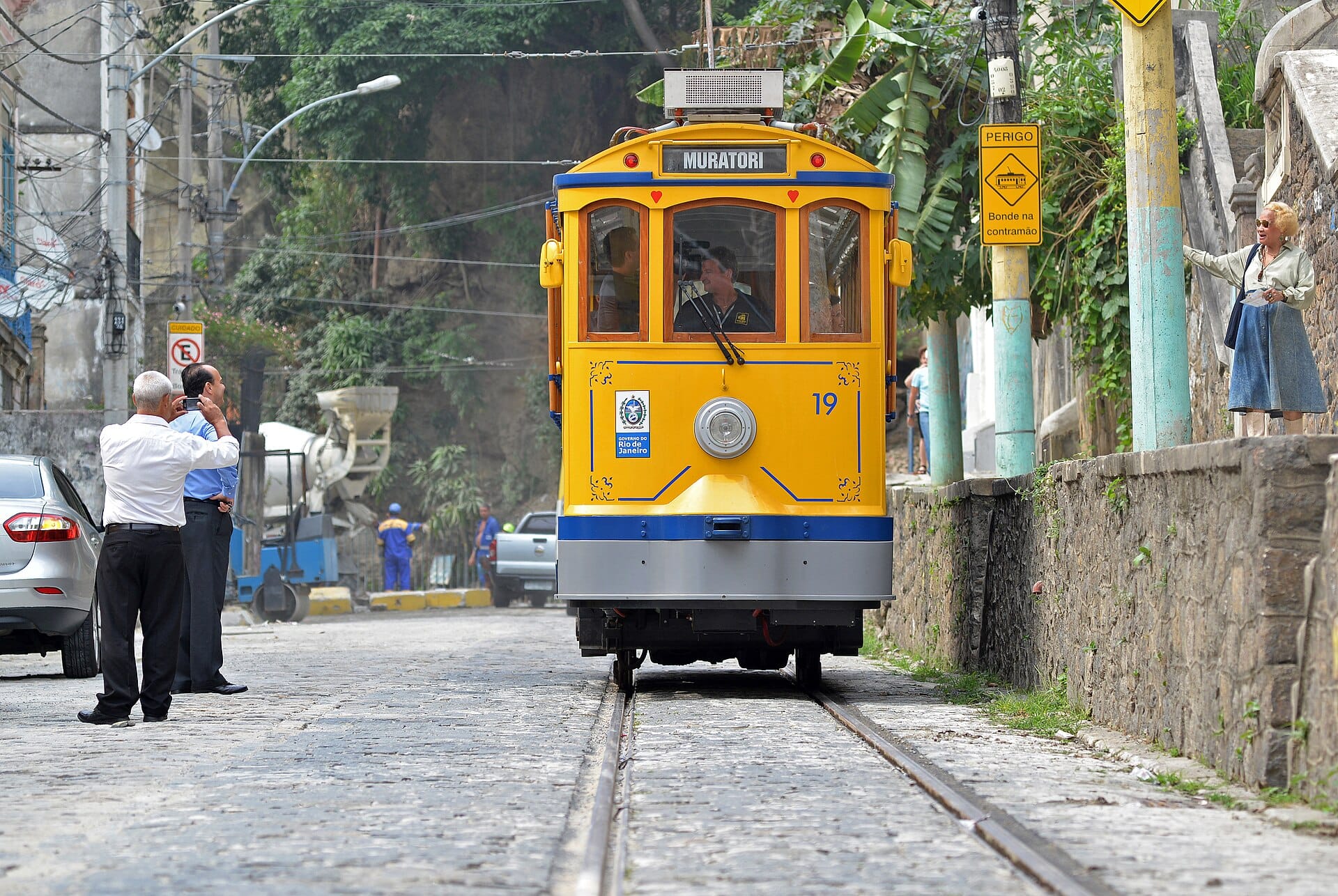
Insider tip: sit on the left-hand side going up for the view over the aqueduct and Centro. Get off at Largo dos Guimarães, wander to the quieter Largo das Neves square for a beer at a neighbourhood bar, and have lunch at Bar do Mineiro, a tile-walled institution famous for its Saturday feijoada. Santa Teresa is charming by day but steep, dim and empty at night — take a taxi or Uber back down rather than walking.
6. Jardim Botânico (Botanical Garden)
Founded in 1808 by the Portuguese prince regent Dom João VI, this 140-hectare garden is the calmest few hours you'll spend in Rio. The signature sight is the Avenida das Palmeiras Imperiais, a 750-metre avenue of 40-metre imperial palms descended from a single tree planted at the garden's founding. There's an orchid house, an Amazon section with giant Victoria water lilies, and resident tufted-ear marmosets and toucans. Entry for foreign visitors is R$80 (about $16 / €14); open Tuesday to Sunday 8am–5pm, Mondays from noon.
Insider tip: come on a weekday morning when the light filters through the palms and the marmosets are active near the café. The garden backs onto Parque Lage (see below), and you can pair the two into one relaxed morning away from the beach crowds. Buy the timed ticket online via jbrj.eleventickets.com to skip the box-office queue.
7. Maracanã Stadium
The Maracanã is where Brazilian football lives — site of the 1950 and 2014 World Cup finals and the 2016 Olympic opening ceremony. If you can't get to a match, the guided stadium tour takes you pitchside, through the dressing rooms and past the hall of fame; a full ticket is R$94 (about $18 / €16), with the box office open 8:30am–4:30pm (reduced on match days).
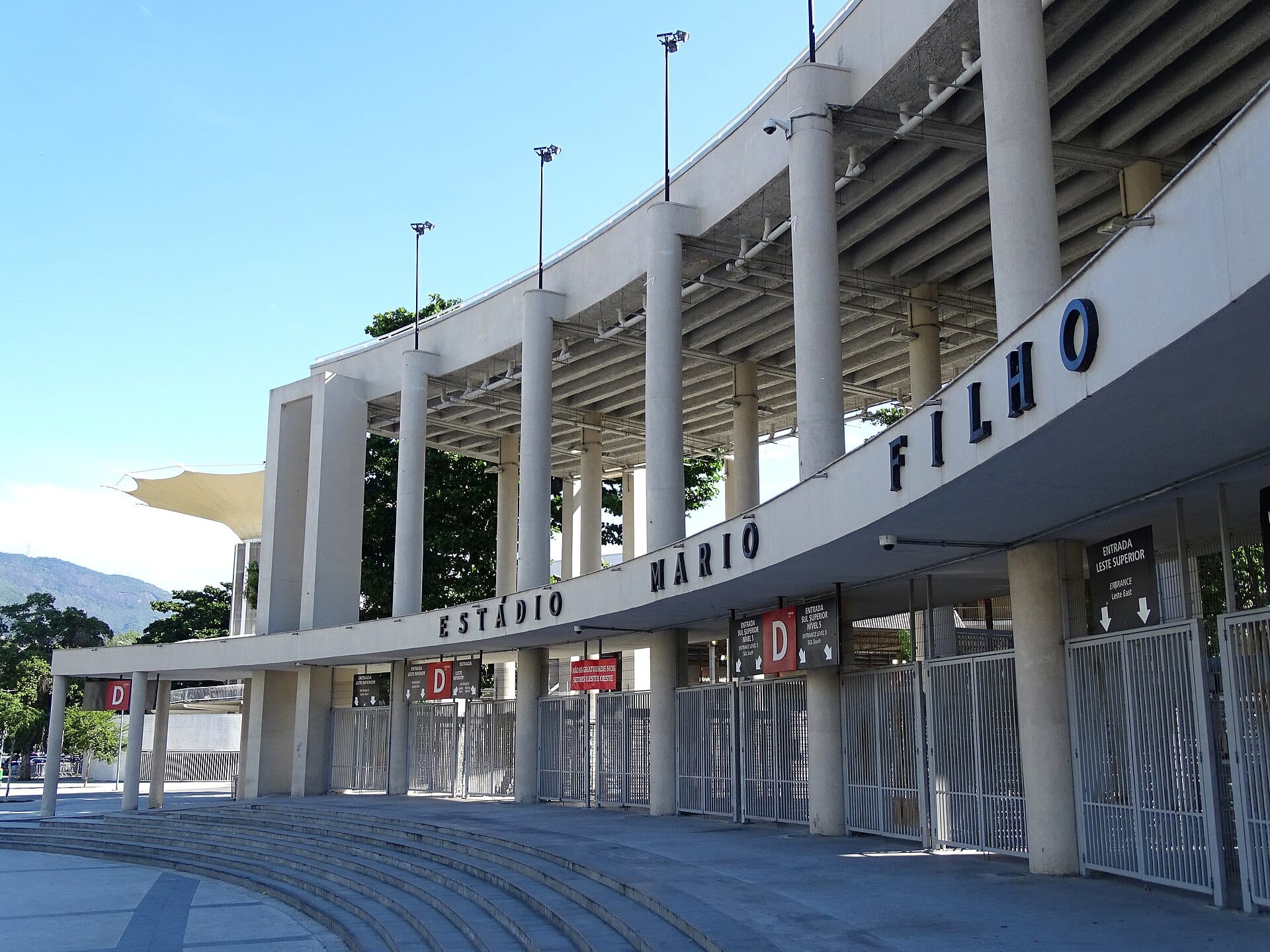
Insider tip: a live game beats the tour every time if the schedule lines up — buy tickets through the official club channels rather than a tout outside, sit in a numbered cadeira section rather than behind the goal if it's your first time, and don't wear the away team's colours. The stadium has its own Metro station (Maracanã, Line 2), so getting there is easy and cheap at R$7.90.
8. Parque Lage
At the foot of Corcovado sits Parque Lage, a free public park built around a 1920s Italianate mansion with a courtyard café framed — if the clouds cooperate — by the Christ statue directly above. It's the prettiest free spot in the city and the trailhead for the (guided-only) hike up to Corcovado.

Insider tip: get there when it opens at 8am, order a coffee in the courtyard café and you'll have the mansion's reflecting pool and the Christ-framed archway before the Instagram queue forms. Entry is free; the short jungle loop trail behind the mansion is an easy 30 minutes and often has monkeys.
🗓️ A 3-Day Itinerary
Day 1 — The Two Peaks
Start early with the first Trem do Corcovado up to Christ the Redeemer (R$134) while the air is clear — you want to be at the summit by 8:30am. Back down by late morning, head to Copacabana for lunch at a beach kiosk and a couple of hours on the sand. In the afternoon, taxi or Uber to Praia Vermelha (about R$25 / $5 across the Zona Sul) and ride the Sugarloaf cable car (R$205) up for sunset. Come down into Urca and end the night sitting on the Mureta da Urca seawall with a cold Antarctica beer and a plate of pastéis, elbow to elbow with locals — the most Carioca thing you can do for under $10.
Day 2 — Beaches, Centro & Lapa
Have a slow beach morning at Ipanema, posto 9, then walk to Arpoador. After lunch, take Metro Line 1 into Centro (R$7.90) and go straight to Confeitaria Colombo on Rua Gonçalves Dias, a belle-époque café open since 1894, for a coffee under the Belgian mirrors. From there it's a short ride to the Escadaria Selarón, then the Santa Teresa tram (R$20) up the hill for late-afternoon wandering and dinner at Bar do Mineiro. Finish in Lapa, which comes alive Friday and Saturday nights with samba spilling out of the bars under the arches — Rio Scenarium is the famous three-storey option, but the street party itself is free.
Day 3 — Gardens, Football & Farewell
Spend the morning in green Rio: Jardim Botânico (R$80) and next-door Parque Lage (free) make an easy two-to-three-hour combo. After lunch in the leafy Jardim Botânico neighbourhood, ride the Metro to the Maracanã (R$7.90) for the stadium tour (R$94) or, ideally, a live match. For your last evening, head back to Leblon or Ipanema for a proper dinner and a final caipirinha — Jobi in Leblon has been pouring them since 1956. Total spend on paid attractions across three days lands around R$533 / $105 / €91 per person, before food and transport.
🧠 Essential Tips
When to Go
The sweet spots are April–May and September–November, when temperatures sit around 22–28°C (72–82°F), the summer storms have eased, and hotel prices drop 20–40% off peak. Deep winter (June–August) is Rio's driest, quietest and cheapest window — cooler at 18–25°C and better for sightseeing than swimming. Peak season is December to March: hot, humid, crowded and expensive, but that's also when the city's two great spectacles happen. Réveillon on 31 December packs around two million people dressed in white onto Copacabana beach for fireworks, and Carnival 2026 falls on 13–17 February — book accommodation months ahead and expect triple rates.
Getting Around
The MetrôRio subway is the fastest, safest way across the Zona Sul and into Centro — three lines, a flat R$7.90 single fare, and stations at Copacabana, Ipanema/General Osório, Botafogo and Maracanã. For everything else, use Uber or 99 (the local ride app), both cheap and far safer than hailing a street cab; a cross-Zona-Sul hop is R$20–35. From Galeão International Airport (GIG), your options are the Premium/"frescão" airport bus at R$24.85 (about 50–90 minutes to the beaches), an Uber at roughly R$50–90, or a prepaid taxi at R$80–150. Skip ordinary street buses if you're carrying anything valuable — they carry a higher robbery risk.
Staying Safe
Rio rewards street-smarts, not paranoia. Concrete rules that locals actually follow: don't walk on the beach after dark; carry a cheap "beach phone" or keep your main one out of sight, since Rio records roughly one phone snatched every seven minutes and beaches are the hotspot; never enter a favela without a reputable organised tour; and if you're robbed, hand it over — nothing you're carrying is worth resisting for. Watch for arrastões (fast group grab-and-runs through crowds) and people impersonating police asking to "check" your wallet — real officers don't. Centro empties out and turns eerie on weekends and after office hours, and the hiking trails up to Corcovado have a robbery history — use the train or a guide.
Food & Drink
Eat feijoada — the black-bean-and-pork stew — on a Saturday, the traditional day for it; Casa da Feijoada in Ipanema serves it all week if your timing's off. Order pão de queijo (cheese bread) with your morning coffee, an açaí bowl after the beach, and picanha (rump cap) at any churrascaria. The national drink is the caipirinha, cachaça muddled with lime and sugar. For the full Carioca experience, do a boteco crawl — cheap open-fronted bars where you order ice-cold draft beer (a chopp) and small plates; Jobi in Leblon and the Urca seawall kiosks are institutions. Many restaurants run comida a quilo (pay-by-weight) buffets at lunch, an easy, cheap way to eat well.
🏨 Accommodation Guide
Budget (under $30 / R$150 a night): Base yourself in Copacabana, Botafogo or bohemian Lapa. Hostel dorm beds run R$60–110 ($12–22), and spots like Books Hostel in Lapa and the hostels around Botafogo put you near the Metro and nightlife. Copacabana also has plenty of no-frills guesthouses a block back from the beach.
Mid-range ($90–170 / R$460–870 a night): Ipanema and Leblon are the sweet spot for comfort, safety and walkability. The Arpoador Inn sits directly on the sand at Arpoador with beachfront rooms at the lower end of this range; boutique hotels around Rua Vinícius de Moraes in Ipanema fill out the rest. You'll be a short walk from the best beach stretch and the Metro.
Luxury ($400+ / R$2,000+ a night): The grande dame is the Copacabana Palace, A Belmond Hotel, open since 1923 on Avenida Atlântica, with rooms from around $446 and suites well past $1,000. In Ipanema, the Hotel Fasano brings a rooftop infinity pool overlooking the beach, and the Emiliano Rio on the Copacabana seafront rounds out the top tier.
🎭 Beyond the Tourist Trail
For Rio the way Cariocas live it, skip a fourth beach day. Pedra do Sal, a stone staircase in the old port district of Saúde, is considered a birthplace of samba; on Monday and Friday nights a free roda de samba (samba circle) fills the square with musicians, dancers and beer vendors — go early, keep your phone away, and stay with the crowd. In the hills, the pacified Vidigal favela between Ipanema and São Conrado has community-run guesthouses and the Arvrão and Bar da Laje viewpoints looking straight down the coast; visit with a local guide or a reputable operator. For a food pilgrimage, the covered Feira de São Cristóvão (officially the Centro Luiz Gonzaga) is a Northeastern-Brazilian fair of forró music and regional dishes, busiest Friday night through Sunday.
Photographers should make the trip out to Pedra do Telégrafo in Barra de Guaratiba, west of the city — a 40-minute hike leads to a low rock ledge where a forced-perspective photo makes you look like you're dangling off a cliff over the ocean. It's a genuinely fun morning if you go early to beat the queue for the shot, and a reminder that Rio's wild edges start closer to the postcard than you'd think.
❤️ Plan Your Rio Trip with VoyaBear
Rio packs a mountain-top statue, two granite peaks, the world's most famous beaches and a living samba scene into a city you can cover in three well-planned days — but the difference between a great trip and a frustrating one is timing the Corcovado clouds, booking Sugarloaf for sunset, and knowing which streets to skip after dark. That's where VoyaBear comes in. Tell us your dates, budget and travel style, and we'll build a personalised, day-by-day Rio itinerary with the bookings, timings and local tips already sorted — so all you have to do is show up at Arpoador in time for the applause. Start planning your Rio de Janeiro trip with VoyaBear today.
Want this as an actual itinerary?
VoyaBear turns a guide like this into a day-by-day plan built around how you travel.
Plan my trip free