Valencia 2026: The Complete Guide to Spain's Sun, Rice and Riverbed City
20 September 2026 · 11 min read
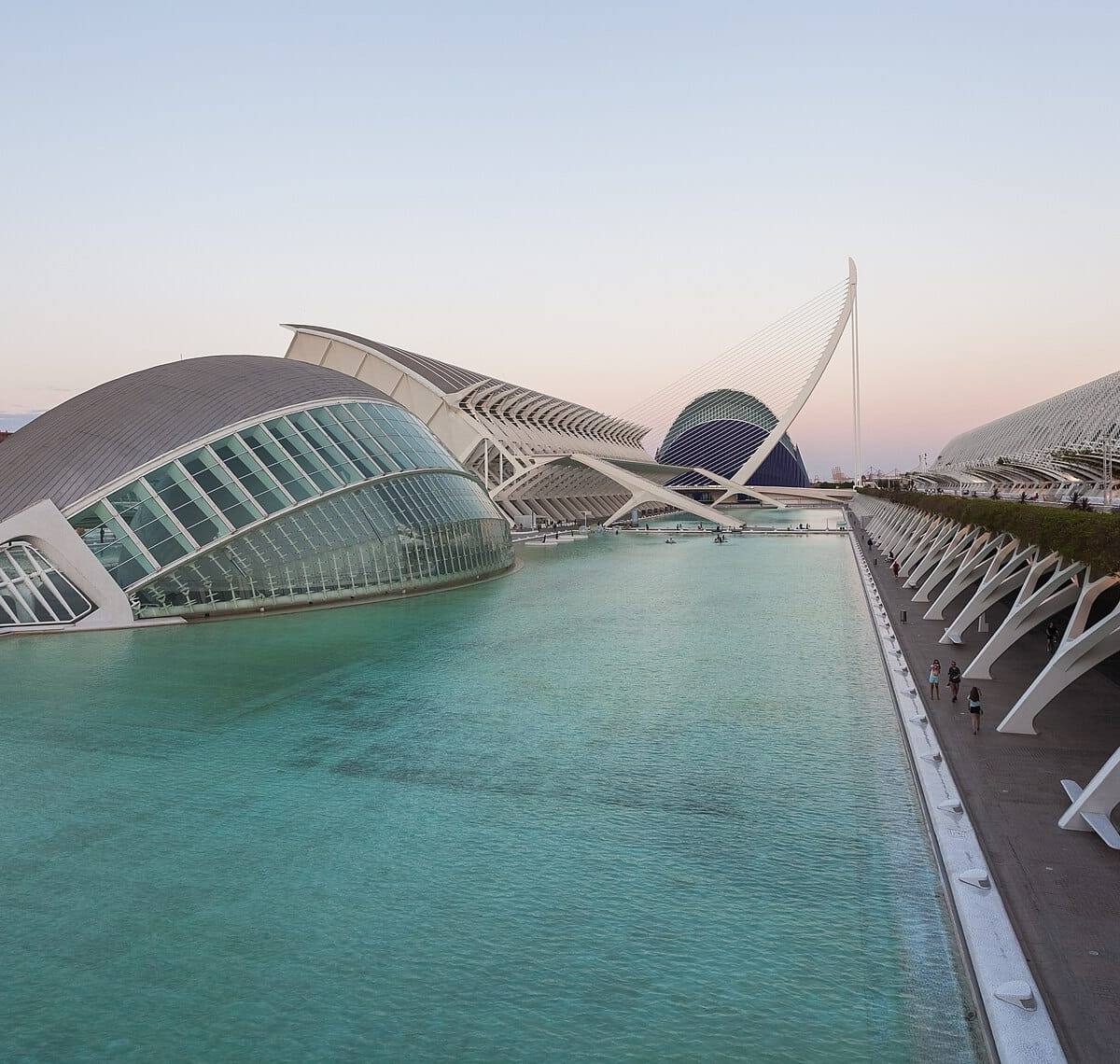
Valencia spent decades as the city Spanish travelers drove past on the way to somewhere else. That ended when everyone realized the country's third-largest city has a nine-kilometre park where a river used to be, the actual birthplace of paella 18 kilometres south, and Europe's largest aquarium — all reachable on foot or a €1.50 metro ride, with a fraction of Barcelona's crowds and roughly two-thirds of its hotel prices. In 2026 it is the rare big European city where you can climb a Gothic bell tower in the morning, eat rice cooked over orange wood at the beach for lunch, and cycle a dry riverbed home before dinner. Here is how to do it without wasting a euro or an afternoon.
🏙️ Essential Experiences
The City of Arts and Sciences
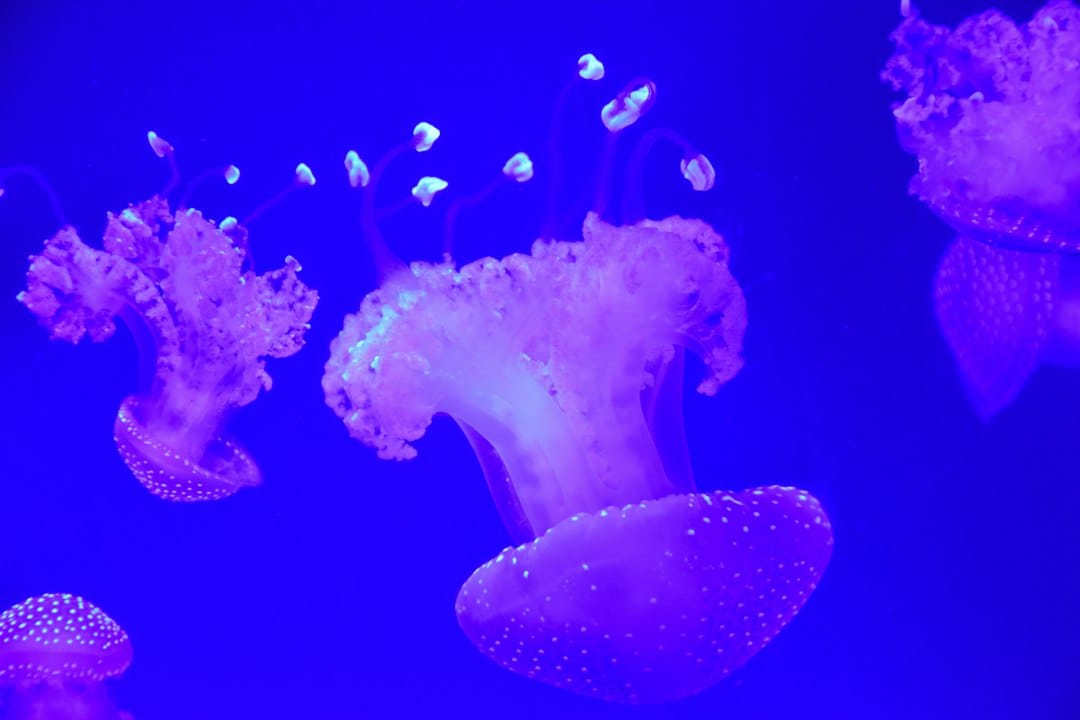
Santiago Calatrava's white, spiky complex sits in the old Turia riverbed and looks like a beached fleet of alien ships — it's the image that sells Valencia, and unlike most postcard sights it earns the visit. The unmissable building is the Oceanogràfic, the largest aquarium in Europe, where a glass tunnel runs under sharks and a separate dome holds a beluga whale pod. The Hemisfèric is an IMAX dome shaped like a giant eye, and the Museu de les Ciències is a hands-on science museum good for a rainy afternoon. A combined ticket for all three costs €47.75 for adults; if your time is limited, skip the combo and buy the Oceanogràfic alone, since it needs three to four hours on its own. Insider tip: book the earliest morning slot online — the aquarium's tunnels and the dolphin show fill with school groups and cruise-day crowds by late morning, and the exterior reflecting pools photograph best before the wind picks up and ripples them.
Valencia Cathedral and the Holy Grail
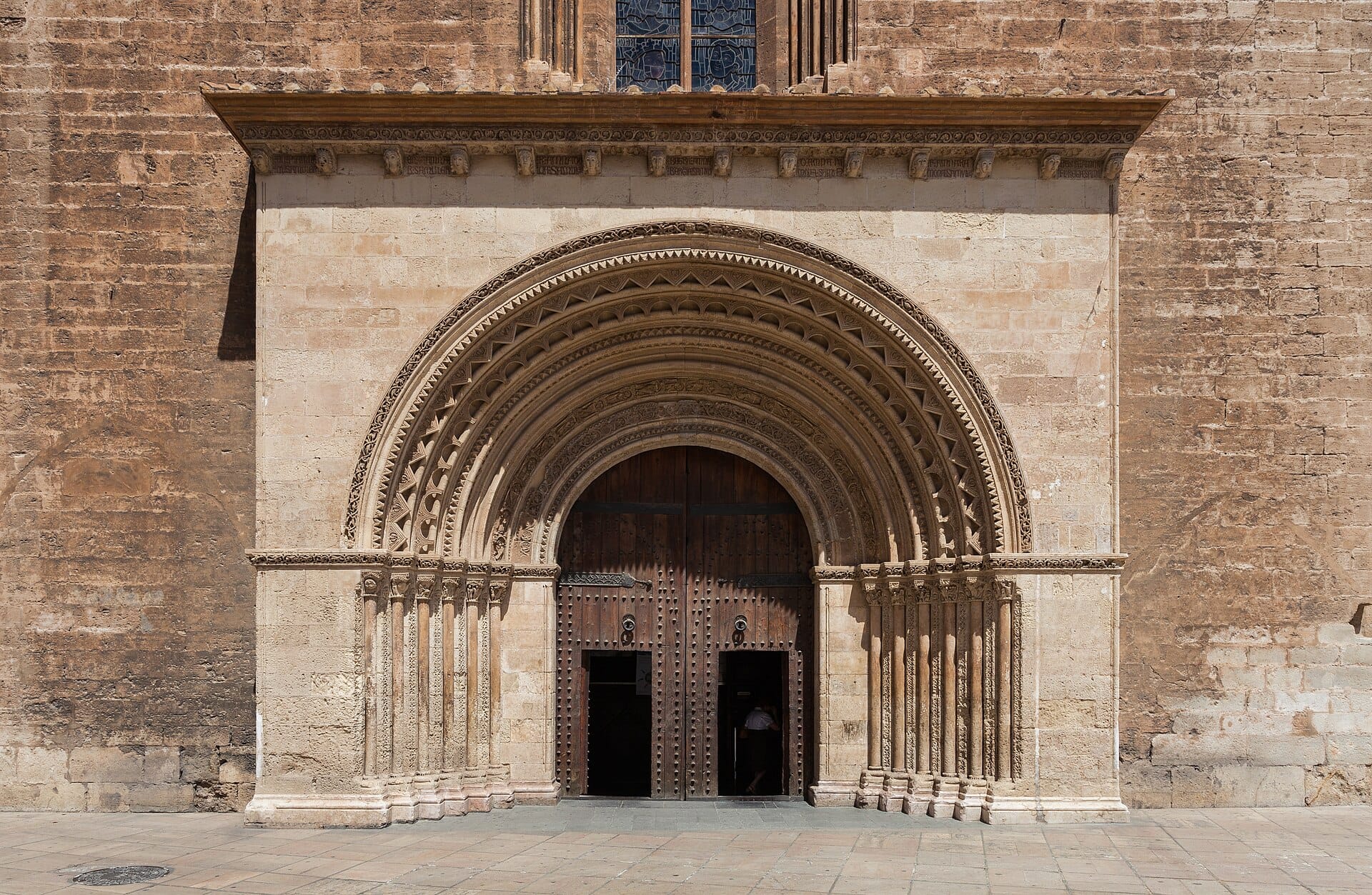
The cathedral's headline claim is bold: a plain agate cup in the Holy Chalice Chapel that the Vatican recognises as a strong candidate for the actual Holy Grail, dated to the 1st century and used in papal masses as recently as Benedict XVI's 2006 visit. Believe it or not, the building around it is worth the €12 cultural-visit ticket, which includes a ten-language audioguide and two genuine Goya paintings in a side chapel. The real prize is next door: climb the Miguelete (El Micalet) bell tower, 207 spiralling steps for just €3, for the best rooftop view in the city — a sea of terracotta tiles ending at the Mediterranean. Insider tip: the tower staircase is a single narrow spiral with two-way traffic, so go right at the 10:00 opening before the queue forms; by noon you'll be pressed against the wall letting people pass.
Mercado Central
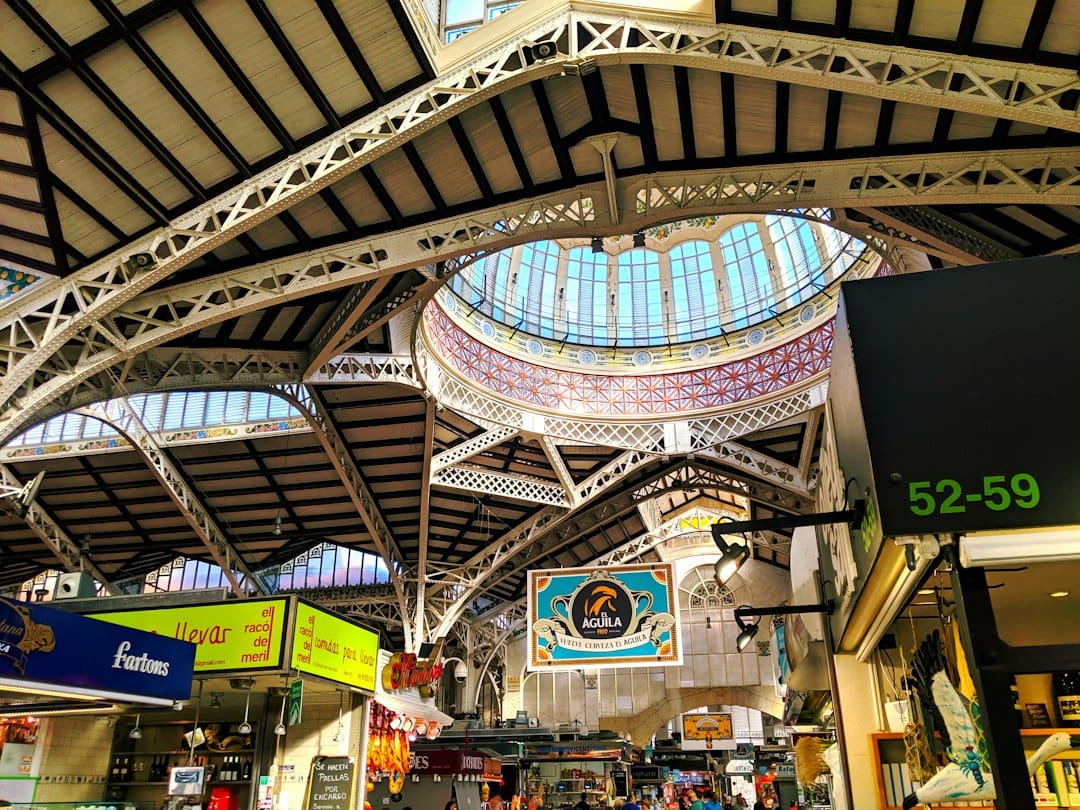
Valencia's Central Market opened in 1928 and remains one of the largest working food markets in Europe, with more than 250 stalls under a modernist roof of iron, tiled domes and stained glass — a weathervane shaped like a parrot sits on top. This is not a food-court tourist trap; locals genuinely shop here for the day's fish, jamón and produce. Come hungry and graze: buy a wedge of manchego, a paper cone of jamón, and a glass of horchata, then watch fishmongers filet the morning's catch. Insider tip: it's open Monday to Saturday, 7:30 to 15:00, and closed Sundays, so plan around it — arrive before 10:00 for the freshest stalls and the shortest lines at Central Bar, chef Ricard Camarena's tapas counter inside, where the signature bikini toasted sandwich is worth the wait. Entry is free.
La Lonja de la Seda
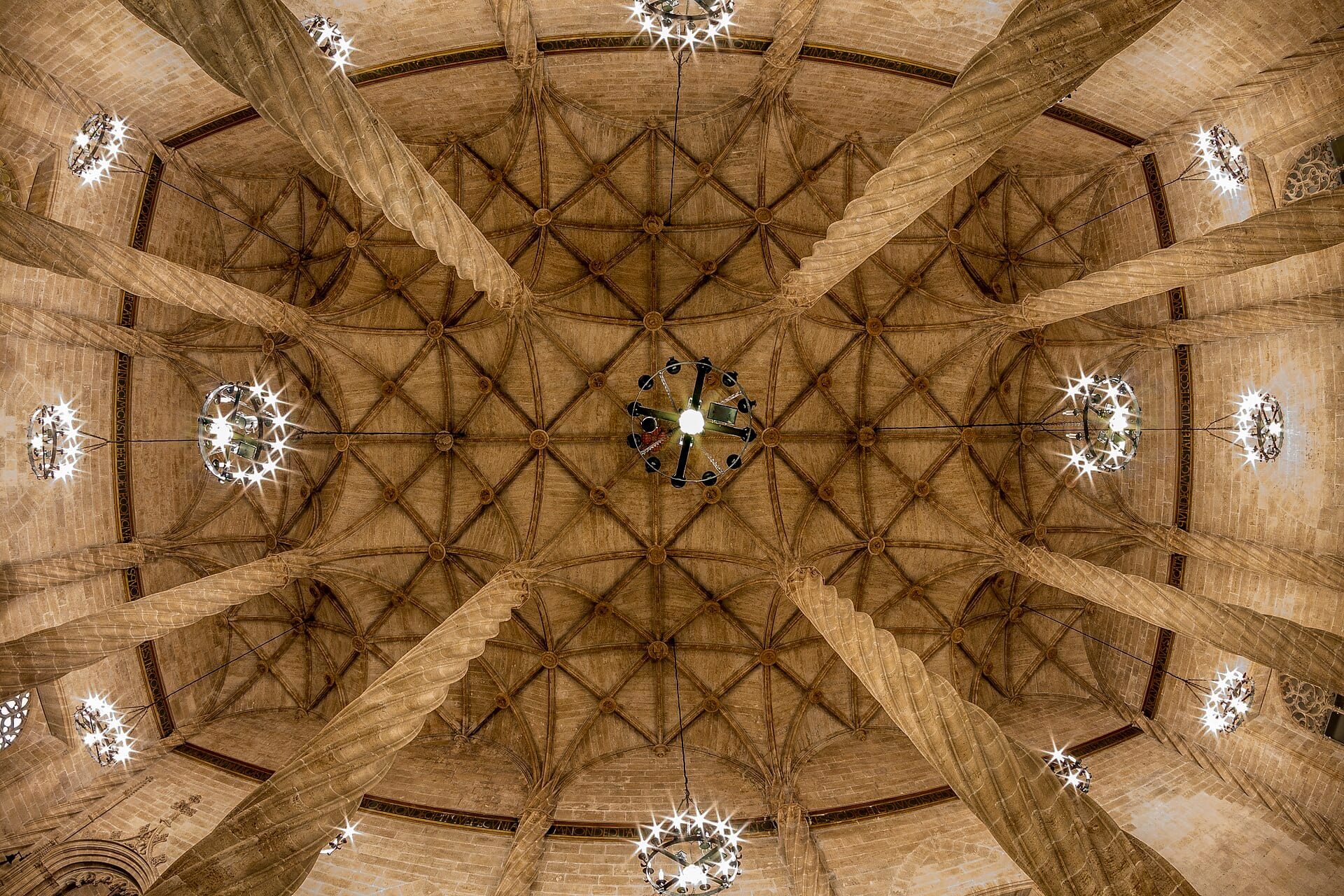
Directly across the square from the market stands the Silk Exchange, a UNESCO World Heritage site since 1996 and the finest Gothic civil building in Spain. Step into the main trading hall and look up: slender helical columns twist upward and fan into the vaulted ceiling like stone palm trees, a bravado piece of engineering built between 1483 and 1498 when Valencia's silk trade made it one of the richest cities in the Mediterranean. It takes maybe 40 minutes to see properly, and at €2 it's one of the cheapest UNESCO sites in Europe. Insider tip: go on a Sunday or a public holiday, when admission is free for everyone, and don't skip the walled orange-tree courtyard out back — most visitors photograph the columns and leave without seeing it.
The Turia Gardens
In 1957 the Turia river flooded and killed at least 81 people, so Franco's government diverted it south of the city entirely. Rather than pave the empty riverbed into a motorway, Valencia turned all nine kilometres of it into a car-free park that loops through the whole city — you can walk or cycle from the historic centre to the beach without crossing a single road. It's free, open 24 hours, and it's how locals actually use their city: joggers, dog-walkers, football pitches, rose gardens and eighteen old bridges arching overhead. At the eastern end is Parque Gulliver, a 70-metre concrete giant lying pinned to the ground, his body a maze of slides and ramps that kids (and unsupervised adults) climb for free. Insider tip: rent a bike from Valenbisi or a shop near the Torres de Serranos and ride the full length to the sea in about 40 minutes — it's the single best-value hour in Valencia and costs almost nothing.
Bioparc Valencia
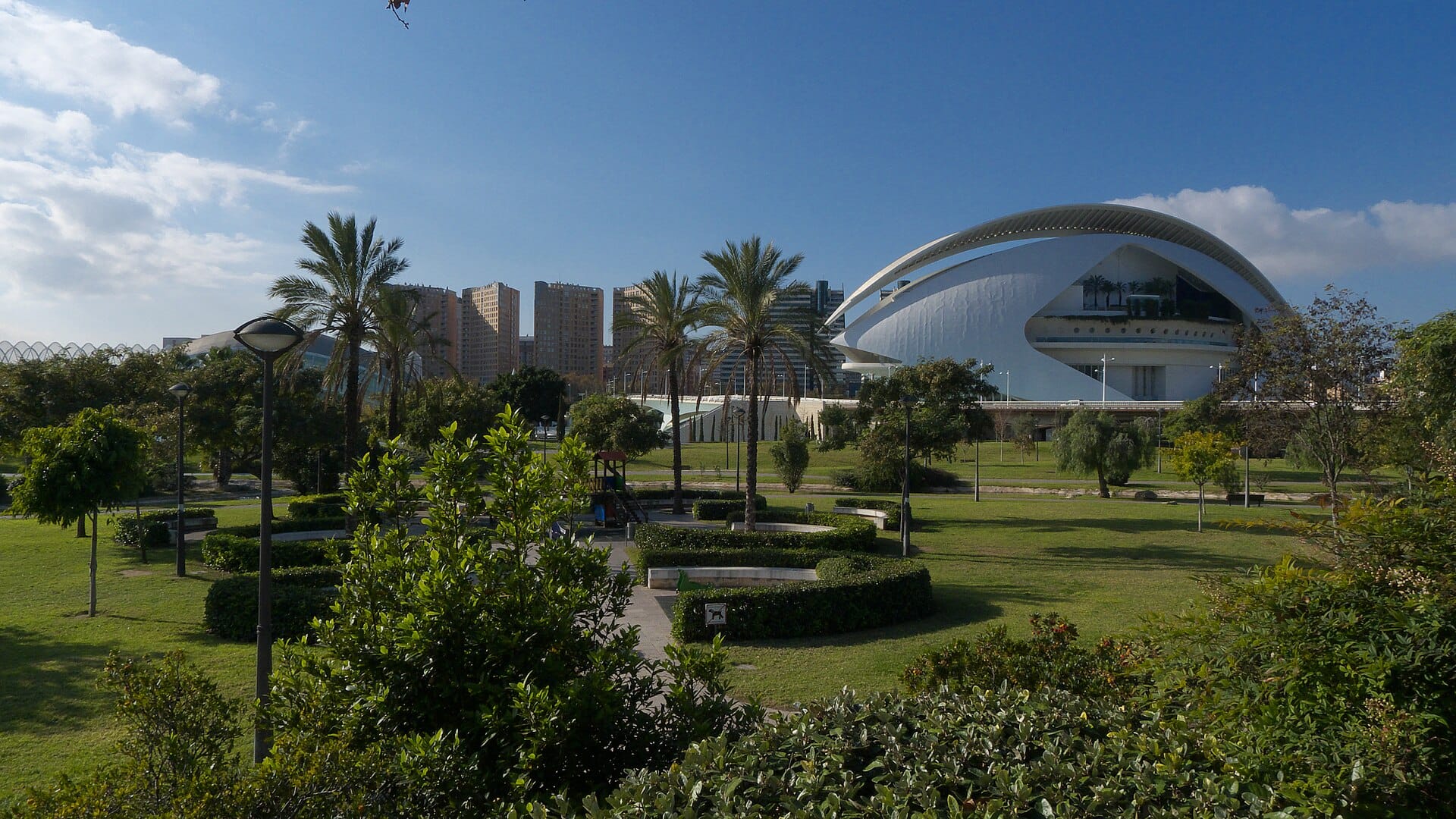
Most city zoos are depressing; Bioparc is the exception. Opened in 2008 on the western edge of the Turia park, it uses hidden moats and rockwork instead of visible fences, so you look at African elephants, gorillas and hippos across what appears to be open savanna. The gorilla island and the walk-through Madagascar section are the highlights, and the whole thing takes about four hours. Adult admission is €32.50. Insider tip: book the 10:00 slot — the animals are active in the cooler morning, the big-cat and bird feeding talks happen before lunch, and by mid-afternoon the Valencian sun sends everything into the shade to sleep.
Malvar-rosa Beach and El Cabanyal
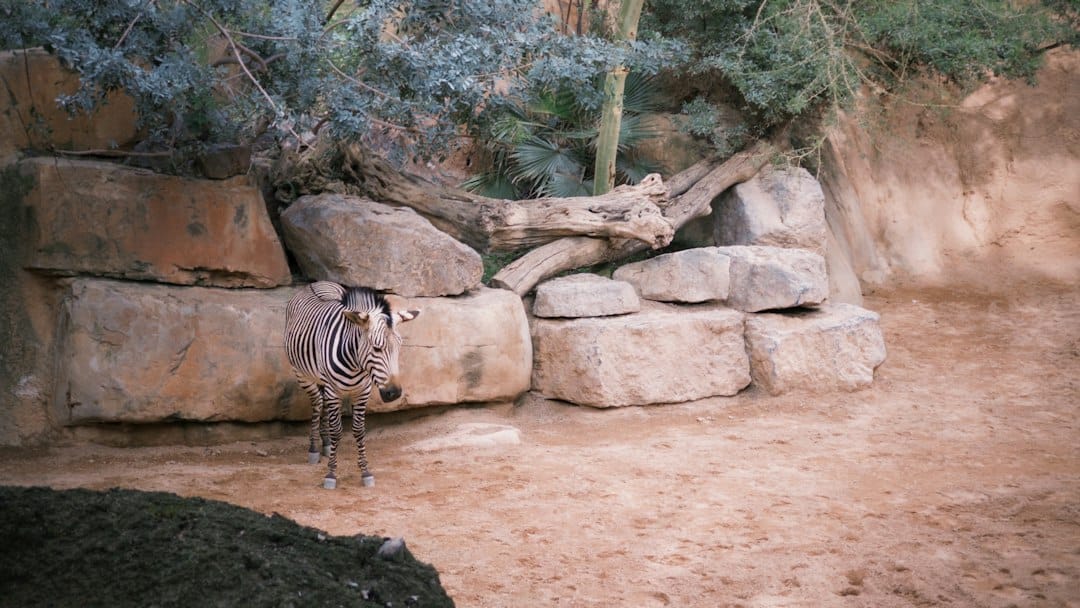
Valencia's beach is a wide, straight ribbon of clean sand backed by a promenade of paella restaurants, and it's a 20-minute tram ride or a downhill bike from the centre. The stretch called Malvarrosa runs into Las Arenas, both with lifeguards, showers and a flat paved paseo for rollerbladers. Behind it sits El Cabanyal, the old fishermen's quarter, a grid of narrow streets lined with modernist houses covered in coloured ceramic tiles — long neglected, now half-restored and full of new bars. This is where you eat the city's best rice. Insider tip: for lunch, walk five minutes back from the sand to Casa Carmela, which has cooked paella over an open orange-wood fire since 1922; book ahead, because it fills, and remember paella is a midday dish here — any beachfront place pushing "paella" at 8pm is cooking for tourists.
Barrio del Carmen and the Torres de Serranos
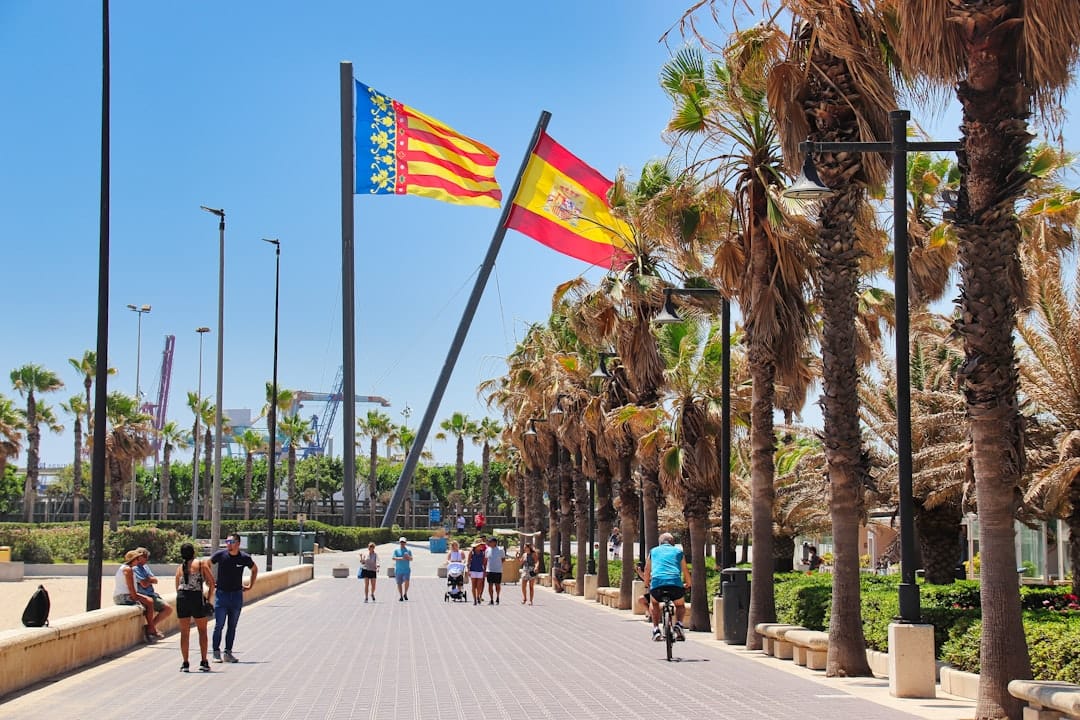
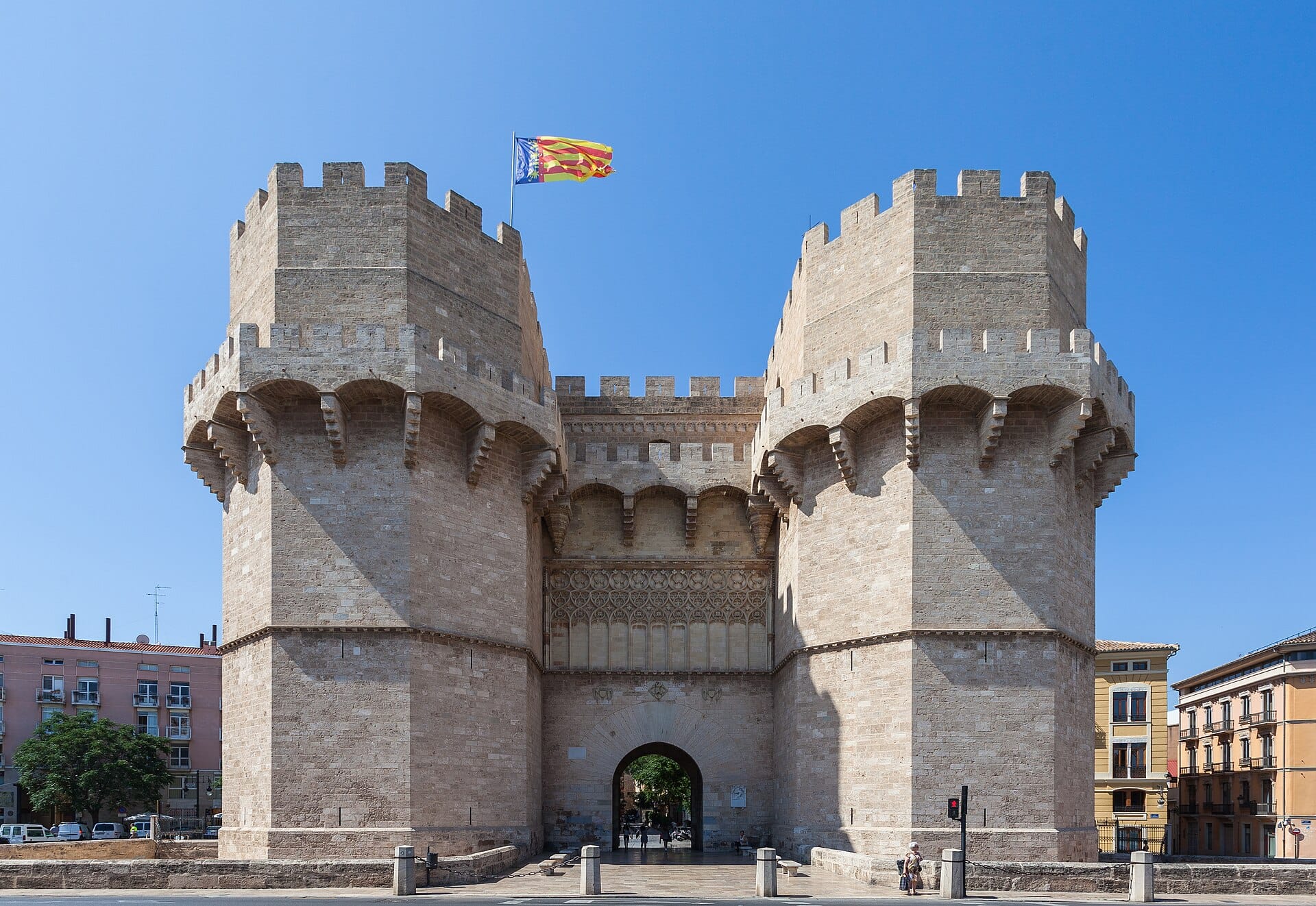
El Carmen is the tangled medieval heart of the old town, best explored with no plan at all — dead-end alleys, Roman-era foundations, ambitious street art on centuries-old walls, and a plaza with a tapas bar every few metres. Anchor your wander at the Torres de Serranos, the enormous 14th-century twin-towered gate that once guarded the city's northern entrance. You can climb it for €2 (free on Sundays) for a view straight down the Turia park. Insider tip: come back to the towers at dusk — the stone glows gold, the crowds thin, and you're a two-minute walk from the neighbourhood's aperitivo bars for an agua de Valencia before dinner.
🗓️ A 3-Day Itinerary
Day 1 — The old town on foot
Start at the Mercado Central when it opens at 7:30 for breakfast — coffee and a slice of tortilla, or horchata and fartons from a stall (around €4). Cross the square to La Lonja de la Seda (€2, or free if it's Sunday), 40 minutes. Walk 10 minutes north to Valencia Cathedral (€12) and climb the Miguelete (€3) before the queue. Lunch in Plaza de la Reina, then lose the afternoon in El Carmen, ending at the Torres de Serranos (€2) at golden hour. Dinner is tapas in the same quarter — figure €25–35 (about $27–38 / €25–35) a head with wine. Everything today is within a 20-minute walk; you won't touch transport.
Day 2 — Science, park and beach
Take the metro or a bike down the Turia park to the City of Arts and Sciences; open at the Oceanogràfic (€47.75 combined, or the aquarium alone) for the morning. Grab a light lunch on site, then cycle or tram east through the park to Malvarrosa beach for an afternoon swim (the sea is warm enough May through October). Time your day around a late paella lunch at Casa Carmela — paella is strictly a midday dish here — where a full chicken-and-vegetable Valencian rice for two runs about €40–55 (roughly $43–60). Walk it off along the promenade, then wander El Cabanyal's tiled streets on your way back.
Day 3 — Wildlife and the lagoon that made paella
Spend the morning at Bioparc (€32.50) on the park's western edge — arrive for the 10:00 opening. In the afternoon, take EMT bus 25 (about 45 minutes, €1.50) south to La Albufera, the freshwater lagoon and rice-paddy wetland where paella was actually invented. Book a flat-bottomed boat trip from the village of El Palmar (roughly €4–6 per person for 30–40 minutes) timed for sunset, when the light hits the water and thousands of birds come in to roost. Dinner in El Palmar is the real thing: all i pebre, an eel-and-potato stew, and rice cooked the way the locals have done it for two centuries.
🧠 Essential Tips
When to go
The sweet spots are May–June and September–October: daytime highs around 25°C, the Mediterranean warm enough to swim in September, and none of August's heat or price spikes. August is hot (regularly above 30°C) and, ironically, half-empty of locals who flee to cooler spots. If you can only come in March, come for Las Fallas (1–19 March 2026), Valencia's UNESCO-listed fire festival: neighbourhoods build enormous satirical papier-mâché monuments, a deafening daytime firework display called the mascletà goes off at 2:00pm daily in Plaza del Ayuntamiento, and on the night of the 19th (La Cremà) every monument but one is burned to the ground. Book accommodation months ahead for Fallas — the city triples in size.
Getting around
From the airport, take Metro Line 3 or 5 straight into the centre (Xàtiva or Colón stations) in about 25 minutes. A single airport journey costs €4.80 plus a reusable card; better value is the SUMA 10 "AB+" card at €12.60 for ten journeys (make sure it's the AB+ version — a plain Zone A card won't cover the airport), or a T2+ unlimited 48-hour pass at €14 that also includes the airport run. Within the centre almost everything is walkable, and the flat streets make this one of Europe's best cycling cities — grab the public Valenbisi bikes or an e-scooter. Download the Metrovalencia app for trains and trams and the EMT València app for buses; those are what locals actually use.
Staying safe and eating well
Valencia is one of Spain's safer large cities, but the ride to and from the airport on Lines 3 and 5, and the crush around the Central Market and Plaza de la Reina, are prime pickpocket territory — keep bags zipped and in front. The clearest tourist trap is the "paella" itself: real Valencian paella is a lunch dish of chicken, rabbit, snails and flat green garrofó beans (never chorizo, never at dinner), so a restaurant near the cathedral pushing a photo-menu seafood paella at night is a warning sign — walk to El Cabanyal or El Palmar instead. Beyond rice, seek out horchata de chufa with fartons at Horchatería Santa Catalina in the old town, esgarraet (shredded salt cod with roasted red peppers), and an agua de Valencia — the local cava-and-orange-juice cocktail that goes down far too easily — at Café de las Horas in El Carmen.
🏨 Accommodation Guide
Budget (€22–70/night): Base yourself in Ciutat Vella (the old town) or El Carmen, where hostel dorm beds run roughly €22–35 and simple hotel doubles start around €55–70. You'll walk to nearly every sight on this list. Look at central hostels near the Mercado or a small boutique like Cosmo Hotel Boutique.
Mid-range (€90–170/night): Russafa (Ruzafa) is the move — a former working-class district turned into Valencia's most interesting neighbourhood, packed with independent cafés, galleries and its own smaller market, a 15-minute walk from the old town. Petit Palace Ruzafa and similar boutique hotels sit in this band. For beach mornings, the tiled townhouses of El Cabanyal now hold stylish guesthouses like Hotel Boutique Balandret.
Luxury (€220–450+/night): The Caro Hotel in El Carmen is built over Roman and Arab walls with a preserved 12th-century section under glass; Only YOU Hotel Valencia anchors the old town in polished style; and beachfront Las Arenas Balneario Resort pairs a historic 1930s spa with direct sand access. All three sit well below what an equivalent room costs in Barcelona or Madrid.
🎭 Beyond the Tourist Trail
Give an evening to Russafa, the neighbourhood locals go out in rather than the one guidebooks point at. Start at the Mercat de Russafa for produce, then work the surrounding streets — Carrer de Sueca and Carrer de Cadis are lined with vermouth bars, third-wave coffee roasters and vintage shops, and the crowd is Valencian, not tour-group. For a full half-day, get properly out of the city to La Albufera Natural Park: 21,000 hectares of lagoon, dune forest and rice paddies 18km south, reachable on the €1.50 bus 25. This is where paella was born out of the rice farmers' need for a one-pan field lunch, and a sunset boat ride from El Palmar — flat water, migrating birds, the paddies turning pink — is the quietest, cheapest beautiful hour you'll spend here. If your dates are flexible, the Gran Fira de València fills July with free open-air concerts, fireworks and a "battle of flowers" parade down the old riverbed.
❤️ Plan Your Valencia Trip with VoyaBear
Valencia rewards the traveller who knows that paella is a lunch, that the Silk Exchange is free on Sundays, and that the best hour in the city costs the price of a bike rental down a dry river. Stringing all of that into three well-paced days — matched to your budget, your pace, and whether you're chasing Fallas fireworks or an empty September beach — is exactly what VoyaBear does. Tell us how you like to travel and we'll build you a personalised, day-by-day Valencia itinerary with the bookings, timings and neighbourhood picks already sorted. Start planning your trip at VoyaBear and spend your time in Valencia eating rice, not reading menus.
Want this as an actual itinerary?
VoyaBear turns a guide like this into a day-by-day plan built around how you travel.
Plan my trip free